
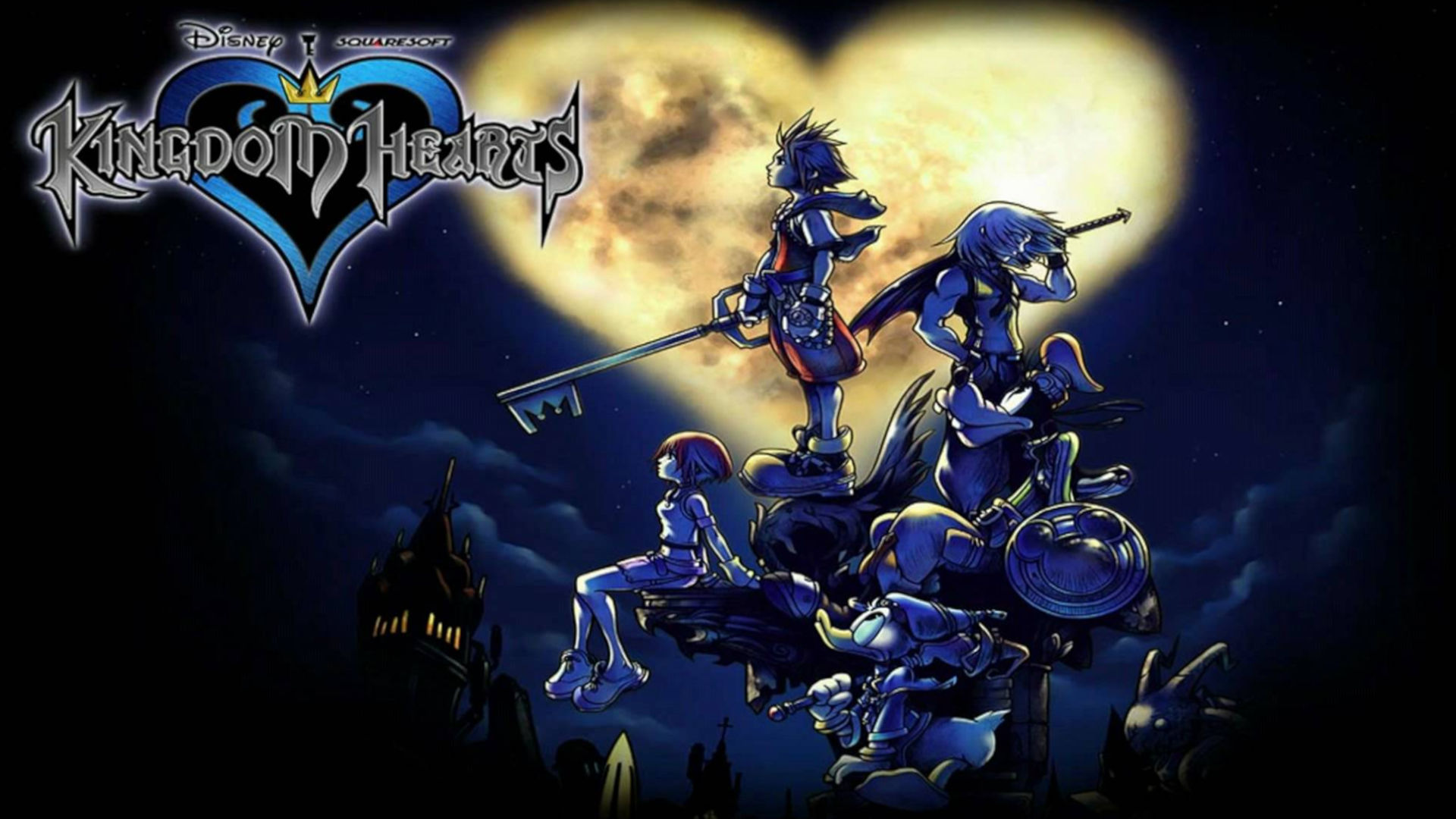
In the landscape of interactive entertainment, few titles represent a more significant technical and creative milestone than the original Kingdom Hearts. Released in 2002 for the Sony PlayStation 2, the first game in this sprawling franchise was more than just a crossover between Square Enix’s role-playing mastery and Disney’s cinematic storytelling. It was a rigorous exercise in software engineering, pushing the boundaries of what early sixth-generation hardware could achieve. Understanding the first Kingdom Hearts game requires looking past the nostalgia and examining the technical architecture that allowed two vastly different visual and mechanical philosophies to coexist within a single software environment.

The Architectural Foundation: Developing for the PlayStation 2
The development of the first Kingdom Hearts began in February 2000, led by Director Tetsuya Nomura. At the time, the PlayStation 2 was the cutting edge of consumer technology, powered by the “Emotion Engine” CPU. For the developers at Square (now Square Enix), the challenge was to create a game that could handle high-fidelity 3D environments while maintaining the fluid animations characteristic of Disney’s hand-drawn legacy.
The Emotion Engine and Vector Processing Units
The PlayStation 2’s architecture was notoriously difficult to master. To bring Kingdom Hearts to life, the programming team had to leverage the dual Vector Processing Units (VPU0 and VPU1). These units were essential for calculating the complex physics of Sora’s hair, the flowing capes of Disney villains, and the real-time lighting of magical spells. The first game was a pioneer in using these units to manage “skeletal animation,” which allowed characters to move more naturally than the rigid models seen in previous 32-bit generations.
Merging Square’s Engine with Disney’s Aesthetic
Technically, the first Kingdom Hearts had to bridge the gap between the detailed, high-polygon counts of Final Fantasy and the clean, bold lines of Disney animation. This required a custom rendering pipeline. The developers used a specific texture-mapping technique to ensure that characters like Donald Duck and Goofy looked like their 2D counterparts while existing in a fully 3D space. This blending of art styles was a massive software hurdle, requiring a bespoke engine capable of rendering diverse environments—from the dark, gothic architecture of Hollow Bastion to the bright, cel-shaded aesthetics of the 100 Acre Wood.
Technical Innovations in Action RPG Mechanics
When the first Kingdom Hearts launched, the “Action RPG” genre was still finding its footing. Most JRPGs (Japanese Role-Playing Games) relied on turn-based combat. The technical achievement of Kingdom Hearts lay in its ability to process real-time combat, complex AI, and environmental collisions simultaneously without significant frame rate drops.
Real-Time Combat and the Command Menu UI
One of the most enduring technical features of the first game is the “Command Menu.” Located in the bottom-left corner of the screen, this UI (User Interface) element allowed players to navigate spells and items in real-time while the action continued. This necessitated a sophisticated input-handling system. The game had to track Sora’s position, the enemy’s hitbox, and the player’s menu selection all within milliseconds. This seamless integration of menu-driven commands and real-time movement was a precursor to the modern “hybrid” combat systems seen in games like Final Fantasy VII Remake.
AI Design: The Logic of Companion Characters
A significant portion of the game’s backend code was dedicated to the AI of Donald and Goofy. Unlike previous RPGs where companions were controlled by the player in turns, Kingdom Hearts utilized an “Autonomous Companion Logic.” Players could go into the settings and adjust the frequency of Donald’s healing or Goofy’s defensive maneuvers. This was a complex feat of software scripting for 2002; the AI had to navigate 3D terrain, avoid obstacles, and react to enemy patterns dynamically. While early AI was often criticized for its “unreliability,” it represented an ambitious step forward in NPC (Non-Player Character) interaction.
Visual Engineering and 3D Asset Management
Maintaining visual consistency across the first Kingdom Hearts required a rigorous approach to asset management. Since the game was stored on a DVD-ROM with limited capacity, the developers had to be creative with how they loaded and rendered data.
Facial Animation and Vertex Manipulation
One of the technical “secrets” of the first game was its dual-model system for faces. For cutscenes, the game used high-resolution models with complex vertex manipulation to allow for expressive facial movements—smiles, frowns, and lip-syncing. During gameplay, these were swapped for “flat” textured faces to save on processing power. This seamless swapping, often triggered by the distance of the camera from the character, allowed the game to maintain a high level of visual storytelling without overtaxing the PS2’s 32MB of System RAM.
Navigating the Challenges of the 3D Camera
In the original 2002 release, the camera system was mapped to the L2 and R2 shoulder buttons, as the developers were still perfecting the logic of a fully rotatable 3D camera. This was a major technical pain point. The camera had to “collision check” against every wall and object in the environment to prevent it from clipping through the world. While the original system was clunky by modern standards, the underlying code for object-occlusion and camera-panning laid the groundwork for the more refined systems seen in the later “Final Mix” versions and sequels.
Software Iteration: From Original Release to HD Remasters
The first Kingdom Hearts game did not remain static. Its evolution through various technical iterations provides a fascinating look at how software is optimized over time.
The Final Mix Expansion and Technical Refinement
Originally released only in Japan, Kingdom Hearts Final Mix was an updated version that introduced new textures, cutscenes, and—most importantly—technical balance. The developers optimized the loading times and refined the hit-detection code. This version became the “gold standard” for the game’s software architecture, serving as the basis for all future ports.
The Leap to HD: 1.5 Remix and Beyond
When Square Enix decided to bring the first game to the PlayStation 3 (and later PS4, Xbox One, and PC), they faced a massive technical hurdle: much of the original source code had been lost. The team had to essentially “reverse-engineer” the game from the retail disc. This involved:
- Asset Upscaling: Manually redrawing thousands of textures to suit 1080p and 4K resolutions.
- Frame Rate Optimization: Moving the game from 30 FPS (Frames Per Second) to a stable 60 FPS, which required rewriting the physics engine, as many of the game’s original animations were tied directly to the frame rate.
- Cloud Computing: The most recent technical iteration involves the Nintendo Switch “Cloud Version,” where the game is processed on a remote server and streamed to the device, showcasing the shift from local hardware reliance to high-speed data transmission.
The Lasting Impact on Modern Game Development Tech
The first Kingdom Hearts was not just a successful game; it was a technical proof-of-concept that influenced an entire generation of developers. It proved that complex, real-time action could be merged with deep RPG systems on consumer-grade hardware.
Influence on Action RPG Software
The “Command Menu” and the “Lock-on” mechanics pioneered in the first game are now staples in the industry. The technical logic used to keep the camera focused on a specific target while allowing free movement became a blueprint for third-person action titles. Furthermore, the game’s success pushed Square Enix to invest in their proprietary engines, eventually leading to the creation of the Crystal Tools and Luminous Engine, before they eventually transitioned to Unreal Engine 4 for Kingdom Hearts III.

Cross-Platform Optimization and Scalability
Today, the first Kingdom Hearts game is available on nearly every major platform, including PC via the Epic Games Store and Steam. The journey from a PS2-exclusive title to a cross-platform masterpiece highlights the importance of scalable software architecture. Developers today look to the Kingdom Hearts HD collections as a masterclass in how to preserve legacy software while updating the technical backend for modern hardware architectures, API standards (like DirectX 12), and input methods.
In conclusion, the first Kingdom Hearts game is a landmark of technical achievement. It was a project that required the perfect synchronization of hardware-specific programming, innovative UI design, and creative asset management. By pushing the PlayStation 2 to its limits and evolving through decades of remasters, it remains a vital case study for anyone interested in the intersection of software engineering and interactive media. Whether it is the way it handles real-time AI or its transition to cloud-based gaming, the technical DNA of the original 2002 release continues to influence the gaming landscape today.
aViewFromTheCave is a participant in the Amazon Services LLC Associates Program, an affiliate advertising program designed to provide a means for sites to earn advertising fees by advertising and linking to Amazon.com. Amazon, the Amazon logo, AmazonSupply, and the AmazonSupply logo are trademarks of Amazon.com, Inc. or its affiliates. As an Amazon Associate we earn affiliate commissions from qualifying purchases.