
In the complex machinery of global commerce, the financial analyst serves as both the navigator and the engine. Often described as the “detectives of the business world,” these professionals are responsible for sifting through mountains of data to find the patterns that inform multi-million dollar decisions. Whether they are working for a boutique investment firm, a massive multinational corporation, or a government agency, the core mission of a financial analyst remains the same: to analyze historical economic data and current market trends to project future financial performance.
As the financial landscape becomes increasingly volatile and data-driven, the role of the financial analyst has evolved from a back-office support function to a front-line strategic necessity. They are the bridge between raw information and actionable intelligence. By evaluating investment opportunities, assessing the health of a business, and providing a roadmap for growth, financial analysts ensure that capital is allocated efficiently and risks are mitigated effectively.
Defining the Role and Core Responsibilities
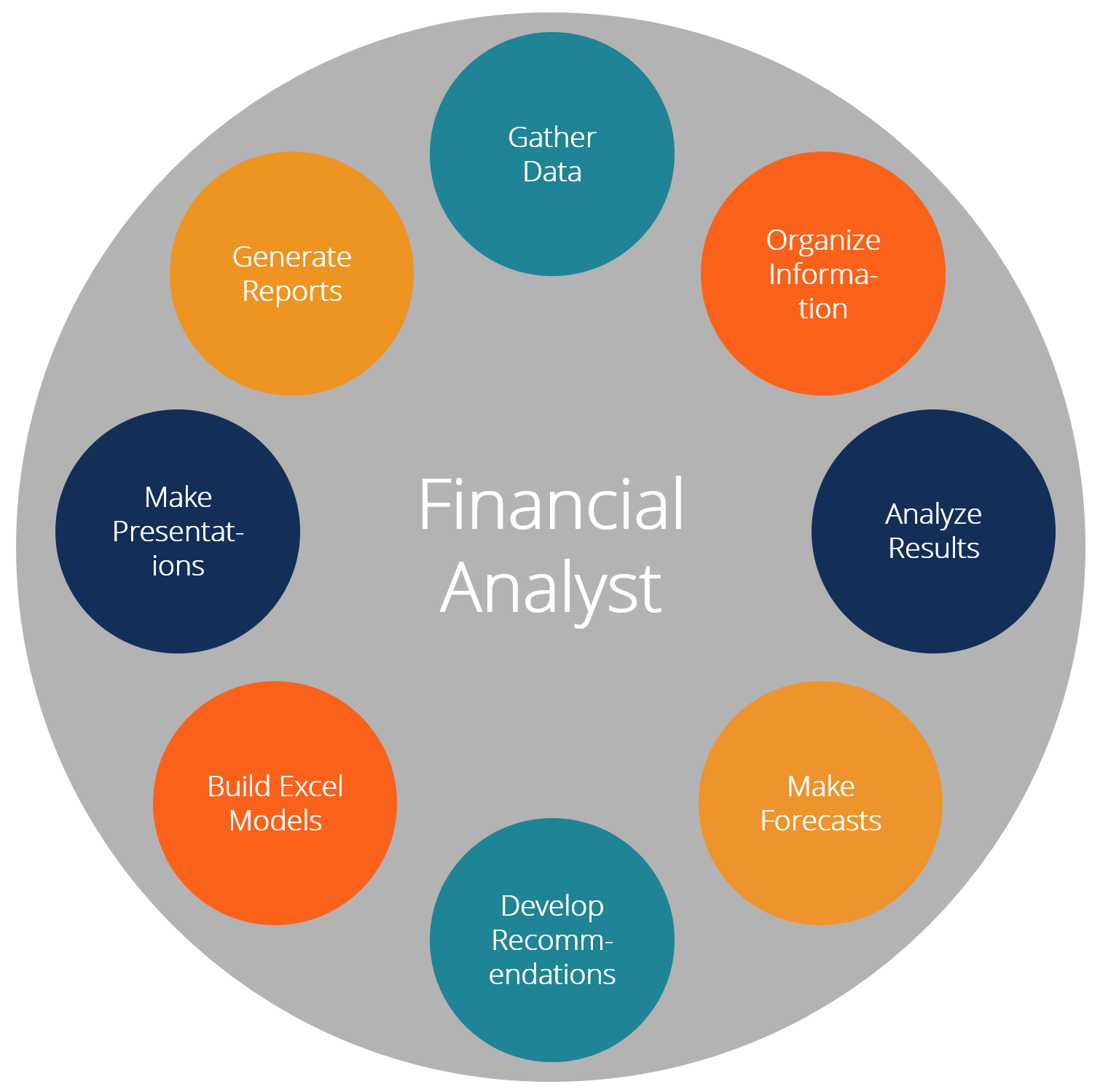
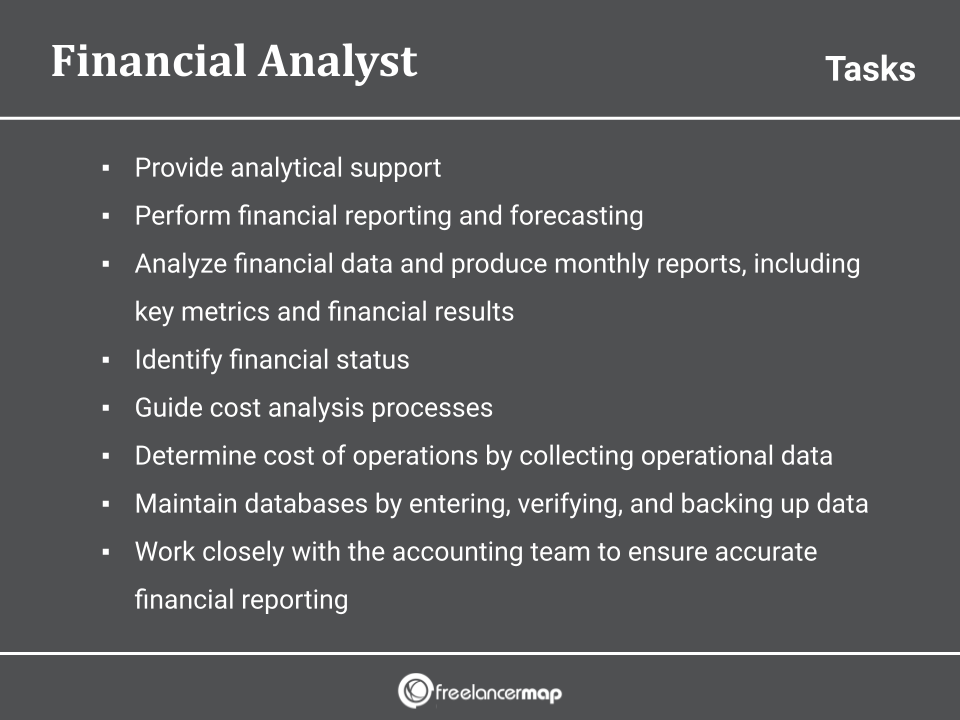
At its most fundamental level, a financial analyst is responsible for examining financial statements—income statements, balance sheets, and cash flow statements—to determine the value of a business or a specific project. However, the scope of the work extends far beyond simple accounting. Analysts must look outward at the broader economy and inward at the specific operational efficiencies of an organization.
Data Collection and Interpretation
The first pillar of the financial analyst’s work is data management. In the modern era, this does not mean just looking at spreadsheets; it means aggregating data from a variety of sources, including macroeconomic reports, proprietary internal databases, and real-time market feeds. An analyst must be able to distinguish between signal and noise. For instance, a temporary dip in a company’s quarterly earnings might be a sign of a structural problem, or it could simply be an accounting anomaly related to a one-time capital expenditure. The analyst’s job is to interpret these nuances and provide a clear narrative to stakeholders.
Financial Modeling and Forecasting
Perhaps the most technical aspect of the role is financial modeling. This involves creating mathematical representations of a company’s operations or a specific investment’s potential. A common example is the Discounted Cash Flow (DCF) model, where an analyst projects a company’s future cash flows and “discounts” them back to their present value to determine if a stock is undervalued or overvalued.
Beyond DCF models, analysts use “what-if” scenarios to conduct sensitivity analysis. They might ask: “How will our profit margins change if the cost of raw materials increases by 15%?” or “What happens to our debt-to-equity ratio if interest rates rise by 100 basis points?” These models allow executives to see the future in a controlled, mathematical environment before committing real capital.
Reporting and Recommendations
Analysis is useless if it is not communicated effectively. A significant portion of a financial analyst’s time is spent drafting research reports and presentations. These reports summarize the analyst’s findings, highlight key risks, and culminate in a specific recommendation: buy, sell, hold, or invest. In a corporate setting, this might involve a “go” or “no-go” recommendation on a potential merger or a new product line. This requires a unique blend of quantitative skill and persuasive communication; the analyst must be able to defend their assumptions against rigorous questioning from senior leadership or portfolio managers.
The Two Primary Paths: Buy-Side vs. Sell-Side
To understand what a financial analyst is, one must understand where they sit in the financial ecosystem. The industry is generally split into two distinct camps: the “buy-side” and the “sell-side.” While the technical skills required are similar, the objectives and the daily pressures differ significantly.
The Sell-Side: Serving the Market
Sell-side analysts typically work for investment banks (like Goldman Sachs or J.P. Morgan) or commercial brokerage firms. Their primary objective is to evaluate companies and issue research reports that encourage the firm’s clients to trade. Because their firm makes money through trading commissions and investment banking fees, the sell-side analyst’s work is highly public and often influences market sentiment.
These analysts often specialize in a specific sector, such as technology, healthcare, or energy. They spend their days talking to company executives, attending industry conferences, and building massive models to predict the earnings of the companies they cover. Their success is often measured by the accuracy of their “earnings per share” (EPS) estimates and how well their stock recommendations perform relative to the market.
The Buy-Side: Managing the Capital
Buy-side analysts work for institutional investors, such as mutual funds, hedge funds, pension funds, and private equity firms. Unlike their sell-side counterparts, their research is proprietary and is not shared with the public. Their goal is not to generate trades for others, but to make profitable investment decisions for their own firm’s fund.
The pressure on the buy-side is intense because the analyst’s recommendations directly impact the fund’s performance. If a buy-side analyst recommends a stock and it crashes, the firm loses real money. This environment requires a deep level of conviction and an even more rigorous approach to risk management. Buy-side analysts use sell-side research as a starting point but often perform their own deep-dive “primary research” to find an edge that the rest of the market has missed.
Essential Skills and Educational Foundations
Entering the field of financial analysis requires a high level of academic preparation and a specific set of technical competencies. While a degree in finance, economics, or accounting is the standard entry point, the bar for entry continues to rise as the field becomes more competitive.
Quantitative Proficiency and Software Mastery
A financial analyst must be a master of numbers. This goes beyond basic arithmetic; it involves a deep understanding of statistics, probability, and calculus. In terms of tools, Microsoft Excel remains the “industry standard” language of finance. A professional analyst must be proficient in advanced Excel functions, including VLOOKUPs, pivot tables, and VBA (Visual Basic for Applications) for automation.
However, the modern toolkit is expanding. Many analysts are now expected to know SQL for database management and Python or R for data science. As data sets grow larger, the ability to automate data cleaning and run complex simulations using code is becoming a significant competitive advantage. Additionally, familiarity with financial terminals like Bloomberg or FactSet is essential for accessing real-time market data.
Certifications: The CFA and Beyond
While a degree gets you in the door, certifications often determine how far you climb. The Chartered Financial Analyst (CFA) designation is widely considered the gold standard in the investment industry. It consists of three grueling levels of exams covering ethics, portfolio management, and asset valuation. Earning a CFA is often equated to a specialized master’s degree and signals a high level of expertise and ethical commitment.
For those in corporate finance, the Certified Public Accountant (CPA) or Certified Management Accountant (CMA) designations may be more relevant. These focus more on the internal financial health of a company, including auditing, taxation, and cost management. Regardless of the specific path, the hallmark of a successful financial analyst is a commitment to continuous learning in an ever-changing regulatory environment.
The Modern Evolution of Financial Analysis
The role of the financial analyst is not static. In recent years, two major forces have begun to reshape the profession: the rise of Financial Technology (FinTech) and the growing importance of Environmental, Social, and Governance (ESG) criteria.
FinTech and the Role of Big Data
In the past, an analyst’s value was in their ability to find data. Today, data is everywhere. The challenge is now “Big Data”—processing millions of data points that were previously ignored, such as satellite imagery of retail parking lots to predict sales or sentiment analysis of social media posts to gauge brand health.
Artificial Intelligence (AI) and Machine Learning (ML) are not replacing financial analysts; instead, they are augmenting them. AI can handle the repetitive tasks of data entry and basic trend identification, allowing the analyst to focus on higher-level strategy and qualitative judgment. The modern analyst must be “digitally fluent,” capable of working alongside algorithms to find insights that neither a human nor a machine could find alone.
ESG and Sustainable Investing Analysis
Another major shift is the move toward “stakeholder capitalism.” Investors are no longer just looking at the bottom line; they want to know a company’s impact on the planet and society. Financial analysts are now tasked with quantifying “non-financial” risks. For example, how will a carbon tax affect a shipping company’s long-term profitability? What is the reputational risk of a supply chain that lacks labor transparency? Integrating ESG metrics into traditional financial models is one of the fastest-growing areas of the profession, requiring a broader perspective on what constitutes “value.”

Career Outlook and Future Trends
The demand for skilled financial analysts remains robust. As businesses navigate a global economy characterized by rapid technological change and shifting geopolitical alliances, the need for expert financial guidance has never been higher. According to labor statistics, the field is expected to grow steadily, particularly in the areas of risk management and corporate development.
The career path for a financial analyst is often well-defined. Most begin as Junior Analysts, focusing on data collection and basic modeling. Within three to five years, they typically move into Senior Analyst roles, where they take on more responsibility for specific sectors or projects. From there, the path leads to Portfolio Management, Treasury Management, or executive leadership roles such as Chief Financial Officer (CFO).
Ultimately, a financial analyst is more than just a “number cruncher.” They are the architects of financial stability and the scouts of economic opportunity. By turning raw data into a coherent story of value and risk, they provide the clarity that leaders need to move forward with confidence. In the world of money, where uncertainty is the only constant, the financial analyst is the steady hand that guides the way.
aViewFromTheCave is a participant in the Amazon Services LLC Associates Program, an affiliate advertising program designed to provide a means for sites to earn advertising fees by advertising and linking to Amazon.com. Amazon, the Amazon logo, AmazonSupply, and the AmazonSupply logo are trademarks of Amazon.com, Inc. or its affiliates. As an Amazon Associate we earn affiliate commissions from qualifying purchases.