
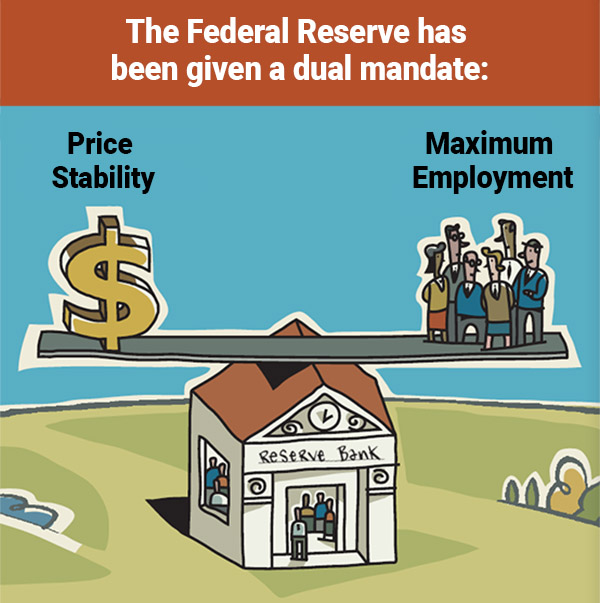
The Federal Reserve, often simply called “the Fed,” stands as the central banking system of the United States, a powerful institution whose decisions ripple through global financial markets and directly influence the economic realities of millions of Americans. Unlike many other central banks, the Fed operates under a unique legislative directive known as the “dual mandate.” This mandate, enshrined by Congress, charges the Fed with two primary, co-equal objectives: achieving maximum employment and maintaining price stability. Understanding this dual mandate is crucial for anyone seeking to comprehend the Federal Reserve’s actions, their impact on personal finances, investment strategies, and the broader economic landscape.
Understanding the Federal Reserve’s Role
The Federal Reserve was established by Congress in 1913, primarily in response to a series of financial panics that plagued the nation, highlighting the need for a stable and flexible financial system. Its structure is intentionally complex, designed to be independent of partisan political pressures while remaining accountable to the public and Congress.
A Brief History and Structure
The Federal Reserve System comprises a Board of Governors in Washington, D.C., 12 regional Federal Reserve Banks, and numerous member banks. This decentralized structure aims to incorporate regional economic perspectives into national monetary policy. While the President appoints the seven members of the Board of Governors (subject to Senate confirmation), and they serve staggered 14-year terms, ensuring a degree of insulation from short-term political cycles, the ultimate authority for setting monetary policy lies with the Federal Open Market Committee (FOMC). The FOMC consists of the seven governors, the president of the Federal Reserve Bank of New York, and presidents of four other Federal Reserve Banks on a rotating basis.
The Importance of Central Bank Independence
Central bank independence is a cornerstone of effective monetary policy. By operating independently from direct governmental control, the Fed can make decisions based purely on economic analysis and its dual mandate, rather than being swayed by political pressures that might prioritize short-term gains over long-term economic health. This independence is critical for maintaining credibility, which in turn influences market expectations and the effectiveness of its policies. However, this independence also necessitates transparency and accountability to Congress and the public, which the Fed strives to achieve through regular reports, testimonies, and detailed minutes of its meetings.
The First Mandate: Maximum Employment
The first pillar of the Fed’s dual mandate is maximum employment. This objective is not about achieving zero unemployment, which is neither feasible nor economically desirable due to frictional and structural factors in any dynamic economy. Instead, it refers to the highest level of employment the economy can sustain without generating excessive inflation.
Defining “Maximum Employment”
Economists often refer to “maximum employment” as the natural rate of unemployment or NAIRU (Non-Accelerating Inflation Rate of Unemployment). This is the unemployment rate that prevails when the economy is operating at its full potential, with no cyclical unemployment. At this point, demand for labor matches supply, and wage pressures are stable, not accelerating to fuel inflation. Determining this precise rate is challenging, as it can shift over time due to demographic changes, technological advancements, labor market policies, and other structural factors. The Fed continuously monitors a wide array of labor market indicators to assess the health and capacity of the job market.
Indicators and Metrics
To gauge progress toward maximum employment, the Fed closely monitors several key metrics:
- Unemployment Rate: The percentage of the labor force that is unemployed but actively seeking work.
- Nonfarm Payrolls: The monthly change in the number of jobs outside of the agricultural sector, indicating job creation or loss.
- Labor Force Participation Rate: The percentage of the working-age population that is either employed or actively looking for work, reflecting the overall engagement of the population in the labor market.
- Underemployment Rate (U-6): A broader measure of unemployment that includes discouraged workers and those working part-time for economic reasons.
- Wage Growth: Tracking average hourly earnings provides insight into labor market tightness and potential inflationary pressures from rising labor costs.
- Job Openings and Labor Turnover Survey (JOLTS): Data on job vacancies, hires, and quits can indicate labor demand and worker confidence.
Monetary Policy Tools for Employment
When employment falls short of its maximum sustainable level, the Fed typically employs expansionary monetary policy to stimulate economic activity and job creation.
- Interest Rate Adjustments (Federal Funds Rate): The primary tool. By lowering the target range for the federal funds rate (the interest rate banks charge each other for overnight borrowing of reserves), the Fed encourages banks to lend more. This, in turn, reduces borrowing costs for businesses and consumers, stimulating investment, spending, and thus job creation.
- Quantitative Easing (QE): In severe economic downturns or when interest rates are already near zero, the Fed may resort to QE. This involves purchasing large quantities of government bonds and other securities to inject liquidity into the financial system, further lowering long-term interest rates, and encouraging investment and spending.
- Forward Guidance: The Fed communicates its future policy intentions to the public and markets. Clear guidance on the likely path of interest rates or other policies can influence long-term interest rates and economic expectations, helping to stimulate or restrain economic activity.
The Second Mandate: Price Stability
The second pillar of the Fed’s dual mandate is price stability, meaning a low and stable rate of inflation. This objective is crucial because high or volatile inflation can erode purchasing power, create economic uncertainty, distort investment decisions, and ultimately hinder long-term economic growth.
Defining “Price Stability” and Inflation Targets
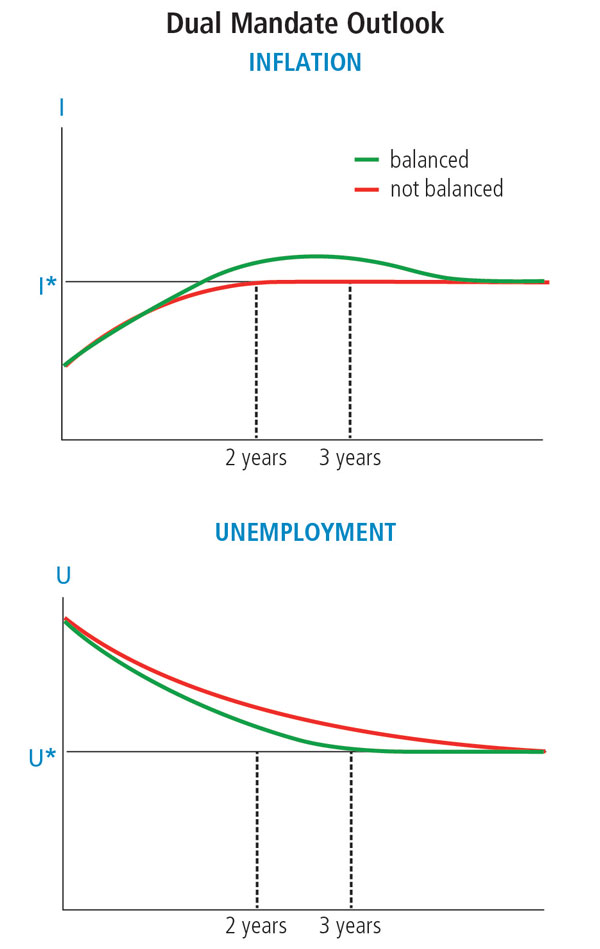
Price stability does not mean zero inflation. A modest, positive rate of inflation is generally considered healthy for a dynamic economy, providing a buffer against deflation (a persistent decline in prices, which can be far more damaging than moderate inflation) and allowing for easier adjustment of relative prices and wages. Since January 2012, the FOMC has explicitly adopted a long-run goal of 2 percent inflation, as measured by the annual change in the Personal Consumption Expenditures (PCE) price index. This target is symmetrical, meaning the Fed aims to keep inflation around 2 percent, not consistently below it, and it will respond to inflation persistently above or below this target.
The Dangers of Inflation and Deflation
- High Inflation: When prices rise too quickly, money loses its value, and people’s purchasing power diminishes. This disproportionately affects those on fixed incomes and can lead to a wage-price spiral, where workers demand higher wages to compensate for rising costs, prompting businesses to raise prices further. High inflation also creates uncertainty, discouraging long-term investment.
- Deflation: While seemingly beneficial, a sustained period of falling prices can be extremely dangerous. Consumers may postpone purchases, anticipating even lower prices, which reduces demand, production, and employment. Businesses face declining revenues, making it harder to repay debts and leading to layoffs, creating a vicious cycle of economic contraction.
Monetary Policy Tools for Price Stability
When inflation rises above the Fed’s target or threatens to do so, the Fed typically employs contractionary monetary policy to cool down the economy.
- Interest Rate Adjustments (Federal Funds Rate): Raising the target range for the federal funds rate makes borrowing more expensive for banks, businesses, and consumers. This slows down lending, investment, and spending, reducing overall demand in the economy and thereby curbing inflationary pressures.
- Open Market Operations (OMOs): The buying and selling of government securities in the open market are the primary means by which the Fed adjusts the federal funds rate. To raise rates and reduce money supply, the Fed sells securities, withdrawing reserves from the banking system. To lower rates and increase money supply, it buys securities, injecting reserves.
- Reserve Requirements: While less frequently used now, the Fed can adjust the percentage of deposits that banks must hold in reserve. Increasing reserve requirements reduces the amount of money banks have available to lend, tightening credit and potentially slowing inflation.
The Interplay and Challenges of the Dual Mandate
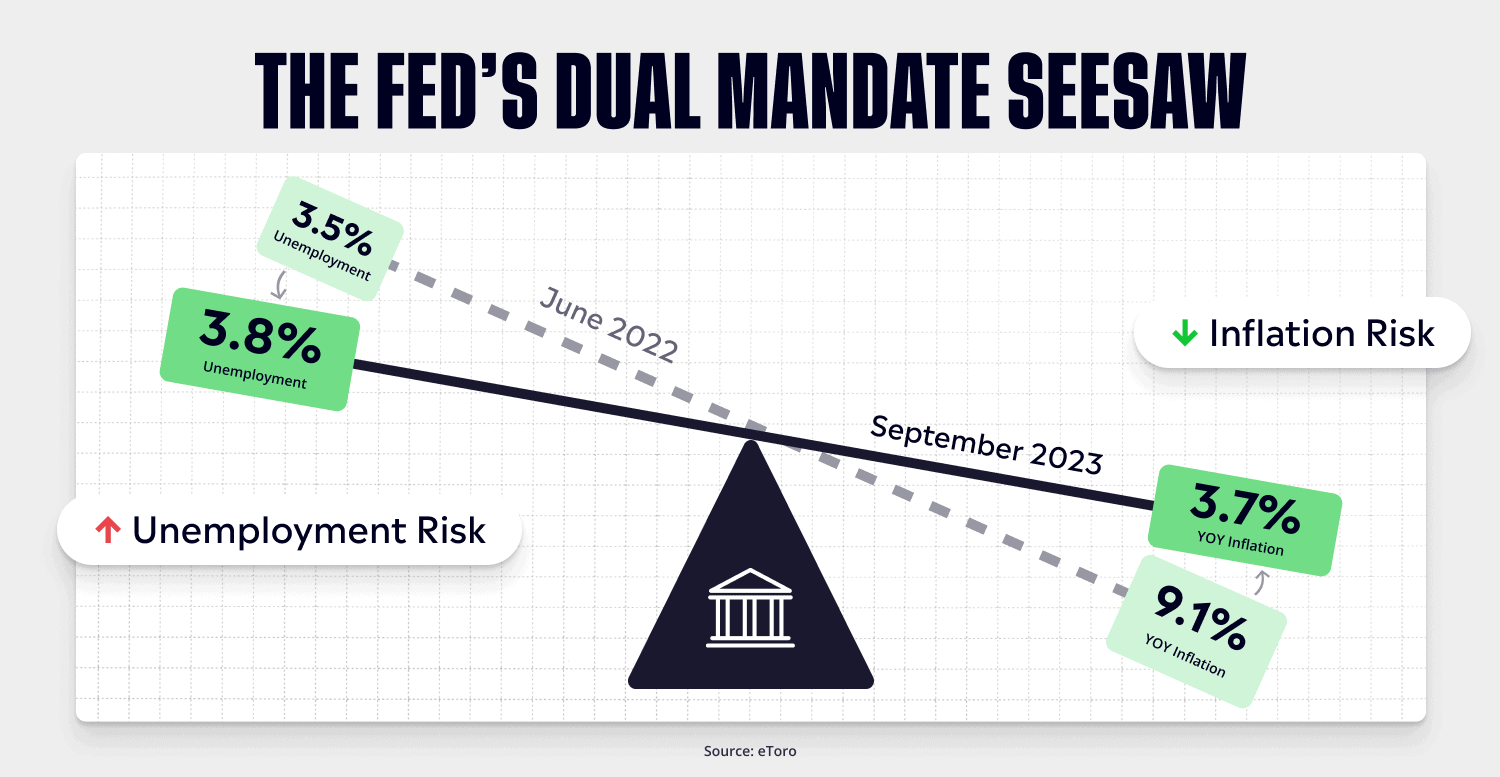
The Fed’s dual mandate presents an ongoing balancing act. At times, the two objectives – maximum employment and price stability – can appear to be in conflict, requiring careful judgment and strategic decision-making.
The Phillips Curve Dilemma: A Trade-off?
Historically, the Phillips curve posited an inverse relationship between unemployment and inflation: lower unemployment was often associated with higher inflation, and vice versa. This suggested a potential trade-off, where the Fed might have to choose between slightly higher employment and slightly higher inflation. However, the stability of this relationship has been questioned over time, particularly during periods of “stagflation” (high inflation and high unemployment) in the 1970s. Modern central banking aims to achieve both objectives simultaneously over the long run, believing that a healthy, fully employed economy with stable prices is the optimal state. Still, in the short run, policymakers often face situations where one objective requires more immediate attention than the other, or where actions taken to address one might have unintended consequences for the other.
Navigating Economic Shocks and Crises
Economic crises, such as the 2008 financial crisis or the COVID-19 pandemic, present immense challenges to the dual mandate. These events can simultaneously lead to soaring unemployment and disinflationary pressures (or, conversely, supply-side shocks that cause inflation while output falls). The Fed must act decisively, often deploying unconventional tools like quantitative easing or emergency lending facilities, to stabilize the financial system and prevent a deeper collapse, all while keeping an eye on both employment and inflation trajectories. The sheer scale and speed of these interventions underscore the critical role the Fed plays in mitigating economic damage.
Transparency and Accountability
Given the immense power wielded by the Federal Reserve, transparency and accountability are paramount. The Fed’s commitment to regularly explaining its policy decisions, economic outlook, and the rationale behind its strategies to Congress and the public helps build trust and ensures that markets understand its intentions. This open communication is essential for its policies to be effective, as market participants’ expectations about future Fed actions can significantly influence current economic behavior.
Impact on Everyday Finance and the Economy
The Federal Reserve’s pursuit of its dual mandate is not an abstract economic exercise; its policy decisions profoundly impact the financial lives of individuals and the operational realities of businesses.
How Interest Rates Affect Borrowing and Saving
Changes in the federal funds rate directly influence the interest rates on various consumer and business loans. When the Fed raises rates to combat inflation, mortgage rates, auto loan rates, credit card APRs, and business borrowing costs typically increase. This makes it more expensive to borrow, which can cool demand but also means higher monthly payments for existing variable-rate loans. Conversely, lower rates (to stimulate employment) make borrowing cheaper, encouraging spending and investment. For savers, higher rates mean better returns on savings accounts and certificates of deposit, while lower rates can diminish the incentive to save.
Inflation’s Erosion of Purchasing Power
The Fed’s success in maintaining price stability directly affects the purchasing power of your money. If inflation consistently runs high, the dollars you earn today will buy less tomorrow. This erodes the value of savings, makes retirement planning more challenging, and necessitates higher wage growth to maintain living standards. A stable 2% inflation target aims to provide predictable price changes, allowing individuals and businesses to plan more effectively without the corrosive effects of runaway inflation or the dangers of deflation.
The Fed’s Influence on Investments
Monetary policy is a primary driver of financial markets. Lower interest rates generally make stocks more attractive relative to bonds, as borrowing costs for companies decrease and the discount rate for future earnings falls. Higher rates can make bonds more appealing, drawing money out of riskier assets. Real estate values are also heavily influenced by mortgage rates. Investors constantly monitor Fed announcements and economic data, attempting to anticipate policy shifts and position their portfolios accordingly. The Fed’s dual mandate, therefore, serves as the guiding star for economic policy, constantly recalibrating the economy for maximum benefit across employment and price stability, and in doing so, shaping the financial landscape for all.
aViewFromTheCave is a participant in the Amazon Services LLC Associates Program, an affiliate advertising program designed to provide a means for sites to earn advertising fees by advertising and linking to Amazon.com. Amazon, the Amazon logo, AmazonSupply, and the AmazonSupply logo are trademarks of Amazon.com, Inc. or its affiliates. As an Amazon Associate we earn affiliate commissions from qualifying purchases.