
A Foundational Act of Nation-Branding
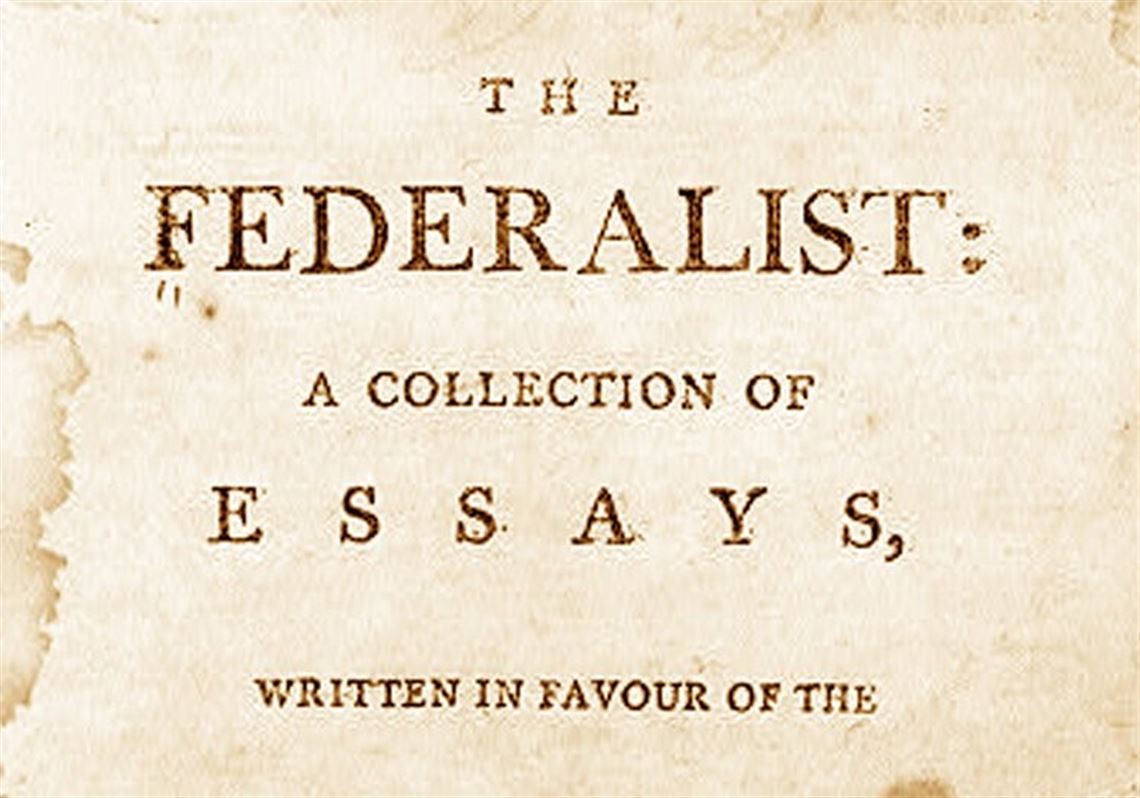
The Federalist Papers are more than just a collection of historical essays; they represent one of history’s most compelling and successful early exercises in political branding and strategic communication. Penned between October 1787 and August 1788 by Alexander Hamilton, James Madison, and John Jay under the collective pseudonym “Publius,” these 85 essays were a sophisticated public relations campaign. Their singular “brand objective” was to persuade the citizens of New York—and by extension, the broader American public—to ratify the newly proposed United States Constitution. This was not merely a legislative debate; it was an ambitious rebranding effort for a nascent nation, aimed at transforming public perception from a fractured confederation to a cohesive, stable, and prosperous federal union.

The authors sought to establish a clear “brand identity” for the new government: one characterized by strength, stability, and a commitment to republican principles, all while safeguarding individual liberties. This vision stood in stark contrast to the perceived weaknesses and disunity under the Articles of Confederation, which represented the “old brand” of American governance. The Federalist Papers, therefore, served as the core “brand messaging” and “corporate identity” manual for what the United States was to become.
Crafting the Constitutional Narrative
At its core, the Federalist Papers’ genius lay in its ability to craft a compelling narrative around the Constitution. The authors weren’t merely explaining legal clauses; they were constructing a powerful story that defined the necessity and benefits of a strong central government for national defense, economic prosperity, and the preservation of internal order. This narrative was designed to resonate with a diverse audience, from farmers apprehensive of centralized power to merchants seeking stable commerce.
They articulated the “value proposition” of the new system: enhanced security against foreign adversaries, economic stability through uniform commercial policies, and protection against internal factionalism. The Constitution, as presented by Publius, was the ultimate “product” offering these tangible “benefits” to its “consumers”—the American citizenry. Crucially, the narrative also proactively addressed potential “brand weaknesses” or “customer objections” by assuaging fears about a powerful federal government infringing on state sovereignty or individual liberties. Through meticulously reasoned arguments, they showcased the built-in “design features” of checks and balances, separation of powers, and representative government as safeguards for liberty.
The Authors as Strategic Communicators
Alexander Hamilton, James Madison, and John Jay functioned as a formidable team of “brand strategists” and “public relations experts” of their era. Their decision to write under a single pseudonym, “Publius,” was a masterful stroke, establishing a unified “brand voice” that conveyed authority and consistency, even though each author brought unique perspectives. This strategic cohesion was paramount for building credibility in a skeptical environment.
Each contributor played a distinct role in this branding endeavor: Hamilton, often seen as the “Chief Marketing Officer,” focused on energetic government and national finance, highlighting the economic vitality the Constitution would bring. Madison, the “Chief Brand Architect,” delved deep into republican theory and political philosophy, elucidating the innovative design principles of the new system. Jay, the “External Relations Lead,” contributed insights on foreign policy and the diplomatic advantages of a unified nation. Their collective effort demonstrated a profound understanding of their target audience, tailoring arguments with rhetorical skill, logical reasoning, and historical precedents to build trust and overcome significant political resistance. It was, in essence, a sophisticated “marketing campaign” for a groundbreaking political ideal.
Marketing a New Vision for Governance

The Federalist Papers engaged in a direct and unprecedented “marketing” effort, not in the commercial sense, but in the propagation of an idea and the meticulous building of consensus for its adoption. Published serially in newspapers, these essays utilized the predominant media channel of the time to reach a wide, literate public, serving as a comprehensive “public education” and “opinion shaping” tool. Their primary goal was to differentiate the proposed Constitution from both its predecessor, the Articles of Confederation, and the arguments of its critics, the Anti-Federalists, presenting it as the optimal and indispensable solution for the young nation’s multifaceted challenges. This involved a detailed “competitive analysis” against alternative governmental structures and critiques.
Addressing Stakeholder Concerns
A hallmark of any successful brand strategy is the proactive and thorough addressing of stakeholder concerns. The Federalist Papers meticulously tackled objections raised by the Anti-Federalists, functioning as a comprehensive “FAQ” or “objection handling” manual for the Constitution. Concerns about a potentially tyrannical executive, an overreaching judiciary, the absence of an initial Bill of Rights, and the dilution of state power were systematically dismantled with rigorous argumentation.
For instance, in Federalist No. 10, James Madison directly confronted the pervasive problem of factions, offering the extended republican form of government as a “design solution” that would mitigate their dangers, thereby enhancing the “stability brand” of the proposed system. In Federalist No. 78, Hamilton articulated the carefully defined role and limitations of the judiciary, building crucial “trust” in what many feared would be an unchecked branch of government. This proactive engagement with potential detractors was a masterful stroke of “crisis communication” and “reputation management” for the nascent federal “brand,” demonstrating foresight and strategic responsiveness.
The Power of Persuasion and Public Opinion
The Federalist Papers stand as a testament to the immense power of sustained, reasoned persuasion in shaping public opinion. They were not merely academic treatises intended for intellectual elites; they were instruments of political advocacy specifically designed to win over hearts and minds across various demographics. By consistently publishing well-reasoned arguments, they created a dominant public discourse around the Constitution, effectively framing the debate and setting the terms for discussion. This mirrors how a strong brand can dominate its market segment by establishing thought leadership and controlling the narrative through effective messaging. The eventual success of the ratification process, while influenced by many factors, underscores their significant influence in tipping the scales, particularly in pivotal states like New York. They became the “go-to reference” for understanding the “product features” and underlying “brand values” of the Constitution.
Enduring Brand Equity: The Legacy of the Papers
More than two centuries after their publication, the Federalist Papers retain immense “brand equity” and an unparalleled stature. They are far from mere historical artifacts; they are living documents that continue to profoundly shape constitutional interpretation, inform contemporary political discourse, and guide legal reasoning in the United States. Their longevity is a testament to the power of their original persuasive arguments and the enduring relevance of the constitutional “brand” they helped establish.
Shaping National Identity and Constitutional Interpretation
The arguments and political philosophies articulated within the Federalist Papers became intrinsically woven into the “national brand identity” of the United States. They helped define what it meant to be an American citizen operating under a federal republic, establishing core values such as federalism, the separation of powers, and the nuances of republican representation. Judges, lawyers, and politicians consistently refer to them as authoritative sources for understanding the “original intent” of the Constitution’s framers. In this sense, they serve as a foundational “brand guideline” for interpreting the nation’s core legal and political framework, providing a continuous reference point for how the “American experiment” should function. Their influence extends beyond legal circles, acting as a crucial touchstone in discussions about American exceptionalism, the nature of liberty, and the intricate balance of governmental power, continually reinforcing and evolving the national “brand narrative.”
A Blueprint for Political Persuasion
Beyond their specific constitutional content, the Federalist Papers offer an enduring case study in effective political persuasion and strategic communication that resonates even in modern branding efforts. They demonstrate the critical importance of clarity, consistency, intellectual rigor, and a deep understanding of the audience in any endeavor to advocate for a complex idea or build widespread support for a new system. For contemporary strategists studying brand strategy, corporate identity, or the art of marketing ideas, the Federalist Papers stand as a monumental historical example of how to successfully introduce, explain, and defend a complex “product”—in this case, a groundbreaking form of government—to secure its adoption and ensure its long-term viability and “market acceptance.” They represent a masterclass in establishing and sustaining a powerful “brand” for a nation, proving that well-articulated ideas can possess enduring power and influence.
aViewFromTheCave is a participant in the Amazon Services LLC Associates Program, an affiliate advertising program designed to provide a means for sites to earn advertising fees by advertising and linking to Amazon.com. Amazon, the Amazon logo, AmazonSupply, and the AmazonSupply logo are trademarks of Amazon.com, Inc. or its affiliates. As an Amazon Associate we earn affiliate commissions from qualifying purchases.