
The federal estate tax, often referred to as the “death tax,” is a levy on the transfer of a person’s assets after their death. While it only impacts a relatively small number of estates, understanding its mechanics and the current exemption levels is crucial for comprehensive financial planning, especially for high-net-worth individuals and families. For 2024, the federal estate tax exemption has reached a significant new high, a detail that has considerable implications for estate planning strategies across the United States.
Understanding the Federal Estate Tax Landscape
At its core, the federal estate tax is a tax on the right to transfer property at death. It is not a tax on the inheritance received by beneficiaries, but rather on the value of the deceased’s total estate before distribution. The primary purpose of this tax, historically, has been to generate revenue for the government and, to some extent, to prevent the concentration of wealth over generations.

The estate tax applies to the “taxable estate,” which is the gross estate (all assets owned at death, including real estate, investments, life insurance proceeds, retirement accounts, and personal property) minus allowable deductions. These deductions can include funeral expenses, administrative costs of the estate, debts of the deceased, certain taxes, charitable bequests, and the marital deduction for assets passing to a surviving spouse.
While the concept of an estate tax can seem daunting, the vast majority of Americans will never owe federal estate taxes due to the substantial exemption amount. This high threshold means the tax is primarily a concern for affluent individuals and families, making proactive and strategic planning essential for those whose estates might approach or exceed these limits.
The 2024 Exemption: A Closer Look
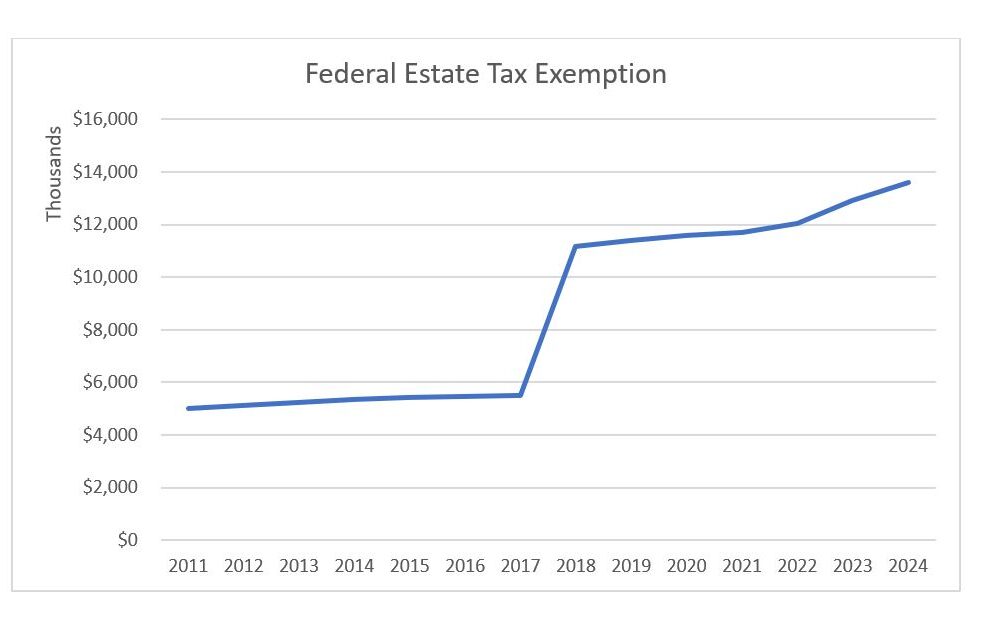
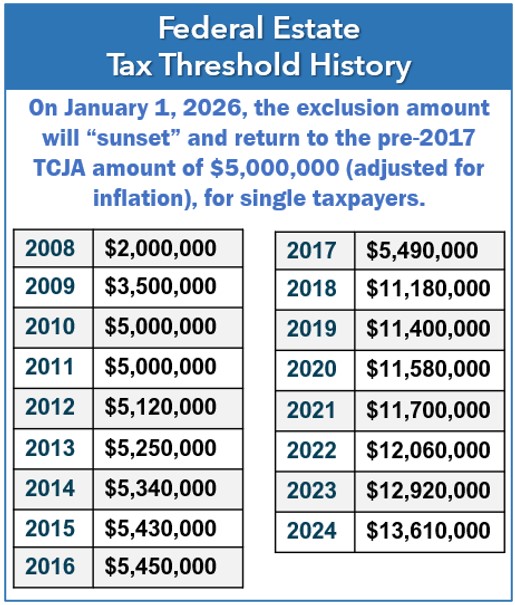
For 2024, the federal estate tax exemption has been increased to $13.61 million per individual. This represents an increase from $12.92 million in 2023, reflecting an adjustment for inflation. This substantial figure means that an individual’s estate would need to exceed $13.61 million in value before any federal estate tax liability would even be considered.
For married couples, the exemption effectively doubles due to a provision known as “portability.” This allows a surviving spouse to utilize any unused portion of their deceased spouse’s federal estate tax exemption. Consequently, a married couple can collectively shield up to $27.22 million from federal estate taxes in 2024, assuming proper elections are made on the first spouse’s estate tax return (Form 706). This portability feature is a cornerstone of modern estate planning for couples, allowing for significant flexibility and maximization of tax-free transfers.
This elevated exemption is a direct result of the Tax Cuts and Jobs Act (TCJA) of 2017, which significantly increased the base exemption amount and indexed it for inflation. Understanding this figure is the starting point for any estate planning discussion, as it dictates the threshold at which more complex tax-minimization strategies become necessary.
How the Exemption is Applied
The application of the federal estate tax exemption involves a straightforward, yet critical, calculation. First, the value of the deceased’s gross estate is determined. This includes everything from bank accounts and investment portfolios to real estate, business interests, and even the face value of life insurance policies payable to the estate.
From this gross estate, various deductions are subtracted. Common deductions include:
- Debts: Mortgages, credit card balances, and other liabilities.
- Funeral and Administrative Expenses: Costs associated with burial, estate settlement, legal fees, and executor commissions.
- Charitable Deductions: The full value of property passing to qualifying charities.
- Marital Deduction: An unlimited deduction for assets passing to a surviving spouse who is a U.S. citizen.
The remaining amount, after these deductions, is the “taxable estate.” If the taxable estate exceeds the individual’s available federal estate tax exemption ($13.61 million for 2024, or potentially more if portability is utilized), then the excess amount is subject to the federal estate tax. The top marginal federal estate tax rate is currently 40%.
It’s also important to note that the federal estate tax exemption is unified with the federal gift tax exemption. This means that any taxable gifts made during your lifetime reduce the amount of your available estate tax exemption at death.
Strategies for Estate Tax Planning
Even with the high exemption levels, proactive estate planning remains invaluable. For most individuals, planning focuses on probate avoidance, ensuring assets pass smoothly to desired beneficiaries, and establishing guardianships for minor children. However, for those with estates approaching or exceeding the federal exemption, sophisticated strategies become essential to minimize potential tax liabilities and ensure wealth transfer aligns with generational goals.
Gifting Strategies
Making gifts during your lifetime is a powerful way to reduce the size of your taxable estate. For 2024, the annual gift tax exclusion allows individuals to gift up to $18,000 per recipient without incurring gift tax or utilizing any of their lifetime exemption. For married couples, this effectively doubles to $36,000 per recipient if gifts are split. These annual exclusion gifts can significantly reduce the value of an estate over time, especially when gifted to multiple beneficiaries over many years.
Beyond the annual exclusion, individuals can also use their lifetime gift tax exemption, which is unified with the estate tax exemption ($13.61 million for 2024). While using this exemption during your lifetime reduces the amount available at death, it can be advantageous to remove appreciating assets from your estate before they grow further in value.
Irrevocable Trusts
Irrevocable trusts are a cornerstone of advanced estate planning for high-net-worth individuals. Once assets are placed into an irrevocable trust, they are generally removed from the grantor’s taxable estate. Common types include:
- Irrevocable Life Insurance Trusts (ILITs): These trusts are designed to own life insurance policies, keeping the death benefit out of the insured’s taxable estate. The trustee typically uses annual exclusion gifts to pay policy premiums.
- Grantor Retained Annuity Trusts (GRATs): Used to transfer appreciating assets to beneficiaries with minimal gift tax implications, especially useful in low-interest-rate environments.
- Spousal Lifetime Access Trusts (SLATs): A spouse creates an irrevocable trust for the benefit of the other spouse, allowing the beneficiary spouse access to the trust assets while removing those assets from the grantor spouse’s estate. Upon the death of the beneficiary spouse, the assets can pass to other beneficiaries, such as children, free of estate tax in both spouses’ estates.
Charitable Planning
For philanthropically inclined individuals, charitable giving can significantly reduce estate tax liability. Direct charitable bequests made through a will or trust are 100% deductible from the gross estate. Additionally, strategies like Charitable Remainder Trusts (CRTs) or Charitable Lead Trusts (CLTs) can provide income streams for beneficiaries or the donor for a period, with the remainder passing to charity, offering both income tax and estate tax benefits.
Business Succession Planning
For business owners, integrating business succession into estate planning is crucial. Strategies such as recapitalizations, buy-sell agreements funded by life insurance, or gifting minority interests can help transfer business value to the next generation while managing tax implications and ensuring business continuity. Discounts for lack of marketability or control can also be applied to certain business interests, further reducing their taxable value.
The Gift Tax and Generation-Skipping Transfer (GST) Tax
It is critical to understand that the federal estate tax does not operate in a vacuum. It is closely linked with the federal gift tax and the Generation-Skipping Transfer (GST) tax.
As mentioned, the federal estate tax exemption and the federal gift tax exemption are unified. This means the $13.61 million exemption applies cumulatively to taxable gifts made during your lifetime and transfers made at death. Every dollar of taxable gift (i.e., gifts exceeding the annual exclusion amount) reduces the amount of exemption available for your estate at death. The gift tax aims to prevent individuals from avoiding estate tax simply by giving away all their assets before death.
The Generation-Skipping Transfer (GST) tax is another vital component for those planning multi-generational wealth transfer. This tax applies to transfers, either outright or in trust, to “skip persons” – typically grandchildren or more remote descendants – who are two or more generations younger than the donor. The purpose of the GST tax is to ensure that wealth transferred across generations does not escape estate or gift taxation at each intervening generation. For 2024, the GST tax exemption also mirrors the federal estate and gift tax exemption at $13.61 million per individual. Like the estate tax, the GST tax rate is 40% on transfers exceeding the exemption. Strategic use of the GST exemption is paramount for families aiming to create lasting dynastic wealth.
Potential Future Changes and Considerations
While the current federal estate tax exemption is historically high, its future is not guaranteed. The significant increase introduced by the TCJA in 2017 is set to sunset at the end of 2025. Absent new legislation, the exemption amount is projected to revert to approximately $5 million per individual (adjusted for inflation) starting January 1, 2026. This potential reduction could drastically increase the number of estates subject to federal estate tax and reshape planning strategies for many high-net-worth individuals.
The political landscape also plays a significant role in the ongoing debate around wealth transfer taxes. Depending on future administrations and legislative priorities, there could be proposals to further adjust the exemption, alter tax rates, or introduce new mechanisms for taxing wealth.
Given these uncertainties, a core principle of effective estate planning is flexibility and regular review. Estate plans should not be static documents but rather living frameworks that adapt to changes in tax law, personal circumstances, and financial goals. Engaging with a team of qualified professionals – including estate attorneys, financial advisors, and tax professionals – is crucial. These experts can help interpret current laws, anticipate potential future changes, and craft robust strategies that align with your objectives for wealth preservation and transfer. Understanding the 2024 federal estate tax exemption is an essential first step in this ongoing process.
aViewFromTheCave is a participant in the Amazon Services LLC Associates Program, an affiliate advertising program designed to provide a means for sites to earn advertising fees by advertising and linking to Amazon.com. Amazon, the Amazon logo, AmazonSupply, and the AmazonSupply logo are trademarks of Amazon.com, Inc. or its affiliates. As an Amazon Associate we earn affiliate commissions from qualifying purchases.