
Leveraging Advanced Technology for Real-time Microburst Analysis
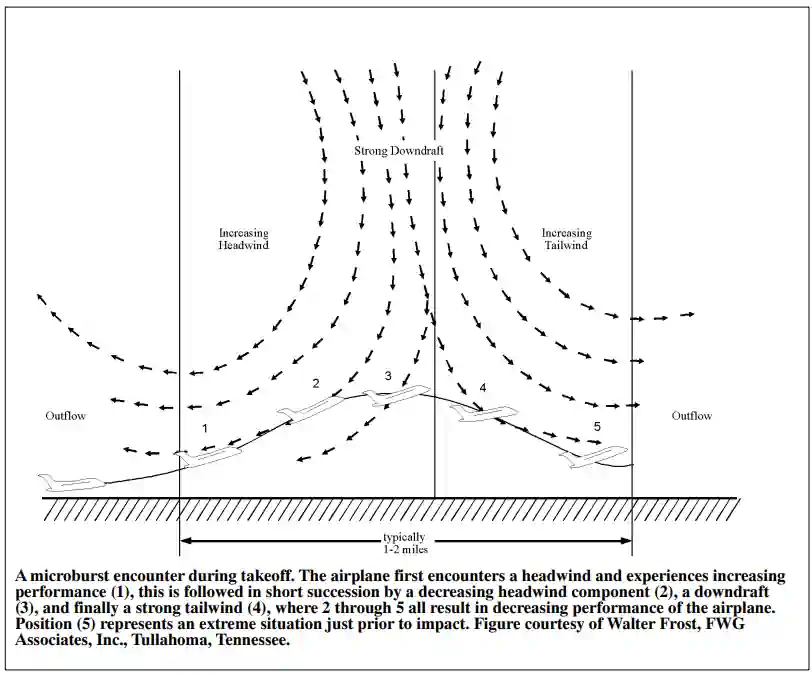
Understanding the duration of an individual microburst is a crucial element in mitigating its potentially devastating impacts. This seemingly meteorological question is, at its core, a challenge in real-time data acquisition, processing, and interpretation—a domain increasingly dominated by cutting-edge technology. Microbursts, characterized by highly localized columns of sinking air that produce damaging straight-line winds, typically last only a few seconds to several minutes, rarely exceeding 15 minutes. Pinpointing this brief, yet intense, window requires sophisticated technological infrastructure capable of rapid detection and precise measurement.
Doppler Radar and its Evolution
The primary technological workhorse for microburst detection has long been Doppler radar. Unlike conventional radar, Doppler radar systems can measure the velocity of precipitation particles moving directly towards or away from the radar antenna. This capability allows meteorologists to identify signatures of wind shear characteristic of microbursts, such as divergent outflow patterns at low altitudes.
Modern Doppler radar networks, like the NEXRAD system in the United States, have evolved significantly. Dual-polarization technology, for instance, provides more detailed information about the shape and size of precipitation particles, helping to distinguish between rain, hail, and even debris lofted by strong winds. This differentiation aids in identifying the leading edge and core of a microburst with greater precision, thereby improving estimates of its onset and potential duration. Furthermore, advancements in radar signal processing and data assimilation algorithms allow for faster scanning rates and higher spatial resolution, crucial for capturing the fleeting dynamics of a microburst as it develops and dissipates. The continuous streaming of this high-resolution data forms the backbone for subsequent analytical layers, enabling quicker response times.
High-Resolution Sensor Arrays and IoT Integration
While Doppler radar provides a macro-level view, understanding the exact duration and impact of a microburst on the ground often requires more localized data. This is where high-resolution ground-based sensor arrays and the Internet of Things (IoT) come into play. Networks of anemometers, pressure sensors, and even acoustic sensors deployed across urban and rural landscapes can provide invaluable ground-truth data.
These distributed sensor networks, often integrating with existing smart city infrastructure, offer hyper-local insights into wind speeds, temperature drops, and pressure changes characteristic of a microburst. The real-time data stream from these IoT devices can be wirelessly transmitted to central processing units, providing a mosaic of meteorological conditions that complements radar observations. By correlating ground sensor data with radar signatures, technologists can more accurately gauge the specific moment a microburst touches down, its path of destruction, and when its damaging winds subside. This fine-grained temporal and spatial data is essential not only for immediate warning systems but also for post-event analysis and the refinement of predictive models, closing the loop on continuous technological improvement.
AI and Predictive Analytics in Microburst Duration Forecasting
The sheer volume and velocity of meteorological data generated by modern sensor networks and radar systems necessitate advanced computational approaches. Artificial Intelligence (AI) and sophisticated predictive analytics are rapidly becoming indispensable tools in accurately forecasting not just the occurrence of a microburst, but also its critical duration.
Machine Learning Models for Rapid Assessment
Machine learning (ML) algorithms are being trained on vast datasets encompassing historical radar imagery, ground sensor readings, atmospheric soundings, and observed microburst durations. These models can identify complex patterns and correlations that might be missed by human meteorologists or traditional rule-based systems. For instance, convolutional neural networks (CNNs) are particularly adept at recognizing spatial patterns in radar reflectivity and velocity data that precede or accompany microburst formation.
Once a microburst is detected, ML models can ingest real-time data streams to make dynamic predictions about its remaining lifespan. Factors like the atmospheric instability (CAPE), wind shear profiles, and the current intensity of the microburst are fed into algorithms that have learned from thousands of past events. These models can quickly estimate whether a microburst is intensifying, maintaining its strength, or beginning to decay, thereby providing a continually updated duration estimate. The speed of ML inference—often within milliseconds—is critical for delivering timely warnings and enabling rapid decision-making in high-stakes situations.

Enhancing Numerical Weather Prediction (NWP) with AI
Numerical Weather Prediction (NWP) models use complex mathematical equations to simulate atmospheric processes. While NWP models have advanced significantly, accurately resolving the small-scale, short-lived phenomena like microbursts remains a computational challenge due to their high resolution demands. AI is beginning to augment NWP in several key ways.
One approach involves using ML for “downscaling” NWP outputs, translating coarser model resolutions into finer-grained predictions relevant to microbursts. Another involves “hybrid” models where AI components learn from NWP biases and errors, dynamically correcting them in real-time. Furthermore, data assimilation techniques, which blend observational data with NWP forecasts, are being enhanced with AI to more effectively incorporate the high-resolution, heterogeneous data from radars and IoT sensors. This allows NWP models to initialize with a more accurate representation of the atmosphere, leading to more precise forecasts of convective storms and the embedded microbursts, including their predicted duration and intensity. The synergy between AI and NWP promises to unlock unprecedented accuracy in short-term, localized weather forecasting.
Software Applications and Digital Platforms for Dissemination
The value of accurate microburst duration estimates lies in their timely and accessible dissemination. Software applications and digital platforms serve as the critical interface between complex meteorological data and the end-users who need to act on that information, from air traffic controllers to emergency services and the general public.
Real-time Alerting Systems
Sophisticated software platforms integrate data feeds from radar, ground sensors, and AI/NWP models to generate automated, real-time alerts. These systems are designed for high availability and low latency, ensuring that warnings reach stakeholders as quickly as possible. For aviation, specialized software within air traffic control towers and cockpit display systems provide immediate visual and auditory alerts of microburst activity on runways or approach paths, detailing projected duration and intensity. For ground-based operations, mobile applications and public alert systems leverage geofencing and precise location data to notify individuals and businesses in an affected area. The design of these applications prioritizes clarity and actionable information, translating complex meteorological insights into easy-to-understand messages about the current threat and its anticipated duration.
Data Visualization and Decision Support Tools
Beyond simple alerts, advanced software tools provide meteorologists and emergency managers with rich, interactive data visualizations. These platforms allow users to overlay various data sources—radar reflectivity, wind velocity, model outputs, and ground observations—to gain a comprehensive understanding of a microburst’s characteristics, including its real-time and predicted duration. Features like temporal playback and scenario modeling enable forecasters to analyze the evolution of a microburst and communicate potential impacts more effectively. Decision support systems, often incorporating expert rules and AI-driven recommendations, can help guide responses, from issuing evacuation orders to rerouting flights. These digital environments are critical for synthesizing vast amounts of technical data into coherent, actionable intelligence that supports rapid and informed decision-making in the face of a dynamic and dangerous meteorological event.
The Future of Microburst Duration Forecasting: Trends and Challenges
The quest to accurately predict the duration of an individual microburst is an ongoing technological endeavor, with several key trends shaping its future.
Cloud Computing and Big Data Analytics
The exponential growth in meteorological data, combined with the computational demands of AI and high-resolution NWP, is driving a greater reliance on cloud computing infrastructure. Cloud platforms provide scalable processing power and storage capabilities, enabling the rapid ingestion, analysis, and archiving of vast datasets. Big data analytics techniques, including stream processing and distributed computing, are crucial for extracting meaningful insights from this continuous deluge of information, allowing for ever-improving models for microburst detection and duration forecasting. This paradigm shift will facilitate collaboration among research institutions and operational centers, accelerating the development and deployment of next-generation tools.

Towards Fully Autonomous Detection and Prediction Systems
The ultimate goal in this domain is the development of increasingly autonomous systems that can detect, track, predict the duration of, and issue warnings for microbursts with minimal human intervention. This involves advancements in AI, particularly in areas like reinforcement learning, where models can learn to optimize their performance based on real-world outcomes. Integrating AI with edge computing, where processing occurs closer to the data source (e.g., within radar units or advanced ground sensors), could further reduce latency in detection and prediction. While human oversight will remain critical for complex scenarios and decision-making, these autonomous systems promise to enhance the speed and consistency of microburst duration estimation, leading to more effective early warning systems and ultimately, greater public safety. However, challenges remain in ensuring the robustness and interpretability of these complex AI models, alongside the crucial task of maintaining the digital security of the entire forecasting infrastructure against potential threats.
aViewFromTheCave is a participant in the Amazon Services LLC Associates Program, an affiliate advertising program designed to provide a means for sites to earn advertising fees by advertising and linking to Amazon.com. Amazon, the Amazon logo, AmazonSupply, and the AmazonSupply logo are trademarks of Amazon.com, Inc. or its affiliates. As an Amazon Associate we earn affiliate commissions from qualifying purchases.