
The concept of the ego, a cornerstone of psychological understanding, often sparks curiosity. While its origins lie in the realm of Freudian psychoanalysis, the ego’s influence extends far beyond the therapist’s couch, subtly shaping how we interact with the world, especially in today’s hyper-connected and commercially driven landscape. Understanding the ego is not just an academic pursuit; it’s crucial for navigating our personal and professional lives, from optimizing our use of AI tools to building a compelling personal brand and managing our financial well-being.

The Psychoanalytic Roots: Freud’s Tripartite Model
To grasp the modern implications of the ego, we must first journey back to its foundational understanding within Sigmund Freud’s psychoanalytic theory. Freud proposed a tripartite model of the psyche, consisting of the id, ego, and superego. Each of these components plays a distinct, yet interconnected, role in shaping our thoughts, feelings, and behaviors.
The Id: The Primal Drive
At the base of this model lies the id. This is the most primitive part of our personality, present from birth. The id operates entirely on the pleasure principle, seeking immediate gratification of desires and instincts. It’s the impulsive voice that urges you to indulge in instant pleasures, regardless of consequences. Think of it as the unbridled urge for that new gadget you saw advertised, the immediate desire for a luxurious purchase when you see it online, or the temptation to spend impulsively when you have extra income. The id is amoral; it doesn’t understand right from wrong, only what feels good.
The Ego: The Mediator of Reality
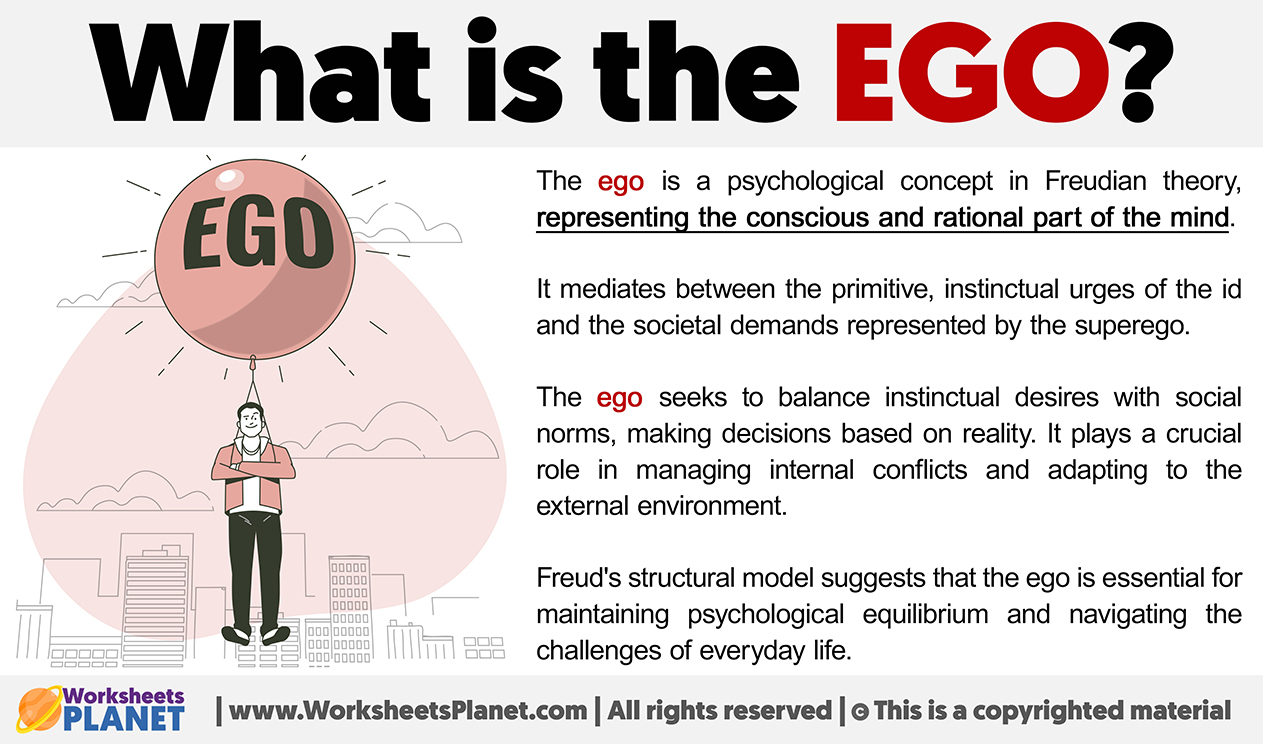
The ego emerges from the id, developing as the child learns to interact with the external world and its limitations. The ego operates on the reality principle. Its primary function is to mediate between the unrealistic demands of the id and the external world, as well as the moralistic constraints of the superego. The ego doesn’t deny desires but seeks to fulfill them in realistic and socially acceptable ways. It’s the part of us that understands that while you might want that latest software update immediately, you need to wait for the download to complete, or that you can’t simply swipe your credit card for every appealing product without considering your budget.
The ego’s role is crucial in our daily lives. It’s responsible for:
- Decision-making: Weighing options, considering consequences, and choosing a course of action.
- Problem-solving: Finding practical solutions to challenges.
- Perception: Interpreting sensory information from the environment.
- Memory: Storing and retrieving past experiences.
- Defense Mechanisms: Employing unconscious strategies to protect itself from anxiety and unacceptable impulses. Examples include repression (pushing unwanted thoughts into the unconscious), denial (refusing to accept reality), and projection (attributing one’s own unacceptable feelings to others).
In essence, the ego is the executive branch of our personality, striving for balance and navigating the complexities of existence.
The Superego: The Moral Compass
Finally, the superego develops later in childhood, internalizing societal and parental morals, values, and standards. It acts as our conscience, dictating what is right and wrong. The superego can be punitive, filling us with guilt and shame when we transgress its rules. It represents the idealized version of ourselves, striving for perfection. In the context of the website’s themes, the superego might be the voice that cautions against overspending, urges you to research AI tools thoroughly before integrating them, or encourages ethical practices in your personal branding.
The interplay between these three components is dynamic. A healthy ego is one that can effectively manage the impulses of the id and the demands of the superego, allowing for adaptive and functional behavior in the real world.
The Ego in the Digital Age: Technology, Brand, and Money
The principles of ego psychology remain incredibly relevant today, particularly as we navigate the interconnected spheres of technology, branding, and finance. Our digital lives offer a fertile ground for the ego to both manifest and be influenced.
Navigating the Tech Landscape: Ego and the Pursuit of Innovation
Technology, with its rapid advancements and constant influx of new tools and gadgets, presents unique challenges and opportunities for the ego.
AI Tools and the Ego’s Drive for Efficiency and Superiority
Artificial Intelligence (AI) tools, from sophisticated writing assistants to advanced data analysis software, tap into the ego’s desire for enhanced capabilities. The ego might be driven to adopt the latest AI tools not just for practical reasons but also to feel more knowledgeable, efficient, or even superior to peers. This can manifest as:
- The “Early Adopter” Ego: The satisfaction of being among the first to master a new AI tool, feeling ahead of the curve.
- The “Productivity Guru” Ego: Leveraging AI to achieve unprecedented levels of output, bolstering a sense of competence and effectiveness.
- The “Creative Genius” Ego: Using AI to generate novel ideas or sophisticated content, enhancing self-perception as an innovator.
However, an unchecked ego can lead to an unhealthy reliance on AI, potentially hindering the development of fundamental skills or leading to a fear of being replaced by technology. Understanding the ego’s motivations here allows for a more balanced approach, using AI as a tool to augment rather than replace our own cognitive abilities.
Gadgets and the Ego’s Quest for Status and Identity

The allure of new gadgets often plays directly into the ego’s need for validation and self-expression. The latest smartphone, the sleekest laptop, or the most advanced smart home device can become extensions of our identity. This is where the ego’s desire for status and belonging comes into play. Owning certain brands or having cutting-edge technology can signal our place in a social hierarchy or align us with a particular group. The ego uses these possessions to craft a narrative about who we are, influencing how we perceive ourselves and how we wish to be perceived by others.
The ego’s interaction with technology can also be observed in our digital security practices. A rational ego will prioritize strong passwords and privacy settings. However, a more impulsive ego might overlook these precautions in the rush to access services or share information, driven by the immediate desire for convenience or connection.
The Ego in the Spotlight: Personal Branding and Corporate Identity
The realm of branding is perhaps where the ego’s influence is most overtly apparent. Both personal and corporate branding are, in many ways, about constructing and managing a specific version of oneself or an entity.
Personal Branding: Crafting the Ideal Self
Personal branding is the conscious effort to shape how others perceive you, professionally and personally. This process is deeply intertwined with the ego. The ego actively seeks to present an idealized version of itself to the world, often emphasizing strengths and downplaying weaknesses.
- The Narrative of Success: Personal branding involves crafting a compelling narrative about your skills, achievements, and values. The ego plays a significant role in selecting which aspects of your life to highlight, often focusing on successes that reinforce a positive self-image.
- Reputation Management: The ego is highly sensitive to external validation. Building a strong reputation through consistent and positive branding aims to cultivate admiration, respect, and trust, all of which feed the ego.
- Authenticity vs. Performance: A key challenge in personal branding is the balance between authentic self-expression and the curated performance that the ego might favor. While authenticity is often lauded, the ego might be tempted to over-polish or present a persona that isn’t entirely genuine to achieve desired outcomes.
The ego’s involvement in personal branding can be seen in the careful selection of social media content, the crafting of professional bios, and even the way one presents themselves in networking situations.
Corporate Identity: The Collective Ego
At a larger scale, corporate identity is the collective expression of an organization. The ego of a company is shaped by its mission, values, brand strategy, and marketing efforts. A strong corporate identity can foster a sense of pride among employees and loyalty among customers, both of which are desirable outcomes for the “corporate ego.”
- Brand Strategy as Ego Defense: A well-defined brand strategy can act as a defensive mechanism for a company, helping it navigate market competition and maintain a distinct position.
- Design and Aesthetics: Visual elements like logos and marketing materials are designed to evoke specific emotions and associations, appealing to the collective ego of consumers and reinforcing the desired brand perception.
- Case Studies and Reputation: Showcasing successful case studies and managing reputation are crucial for bolstering the corporate ego. Positive recognition validates the company’s existence and effectiveness in the marketplace.
The ego’s influence here is about creating a consistent, desirable, and often aspirational image that resonates with its target audience.
The Ego and the Pursuit of Financial Security
The realm of money is another domain where the ego’s desires, fears, and aspirations are profoundly at play. Personal finance and investing decisions are often influenced by more than just rational calculations.
Personal Finance: The Ego’s Relationship with Spending and Saving
Our relationship with money is deeply personal and heavily influenced by the ego. The ego might drive us to spend impulsively on luxury items to feel a sense of accomplishment or to keep up with perceived social standards. Conversely, a more cautious ego might lead to excessive saving, driven by a fear of scarcity.
- The “Lifestyle Inflation” Ego: The ego’s desire for comfort and status can lead to increasing expenses as income rises, a phenomenon known as lifestyle inflation. This pursuit of external validation through possessions can overshadow long-term financial goals.
- The “Financial Security” Ego: The ego’s need for safety and control can manifest as a strong desire for financial security, leading to diligent saving and prudent investing. However, an overzealous ego in this area might lead to anxiety and an unwillingness to take calculated risks.
Investing and Online Income: The Ego’s Appetite for Growth and Risk
Investing decisions are often a battleground for the ego. The desire for wealth accumulation can be fueled by the ego’s ambition and its need for a sense of power or control over one’s future.
- The “Market Master” Ego: The ego can be susceptible to overconfidence in investment strategies, believing it can consistently outperform the market. This can lead to taking on excessive risk or making impulsive decisions based on short-term market fluctuations.
- The “Side Hustle” Ego: The pursuit of online income or side hustles can be driven by the ego’s desire for independence, recognition, or the thrill of building something of one’s own. The ego can be very invested in the success of these ventures, sometimes leading to burnout if not managed carefully.
- Financial Tools as Ego Augmentation: Financial tools, whether budgeting apps or investment platforms, can be used by the ego to feel more organized, in control, and capable of achieving its financial ambitions.
Understanding the ego’s role in our financial lives is critical for making sound decisions, avoiding impulsive behaviors, and building a sustainable financial future. It encourages us to examine our motivations for earning, spending, and investing, ensuring they align with our long-term well-being rather than just immediate ego gratification.
Conclusion: Cultivating a Balanced Ego for Holistic Well-being
The ego, as a concept in psychology, is far from a mere abstract idea. It is the dynamic force that shapes our engagement with the world, influencing our interactions with technology, our approach to branding, and our management of finances. By understanding the ego’s roots in psychoanalytic theory and observing its manifestations in our modern lives, we can develop a more nuanced self-awareness.
In the fast-paced digital era, where trends in tech, branding, and finance are constantly evolving, a well-balanced ego is our greatest asset. It allows us to harness the power of AI tools without becoming dependent, build authentic personal brands that reflect our true selves, and make informed financial decisions that prioritize long-term security over fleeting ego gratification. By recognizing and managing the ego’s impulses, we can cultivate a more integrated and fulfilling existence, navigating the complexities of the modern world with greater wisdom and resilience.
aViewFromTheCave is a participant in the Amazon Services LLC Associates Program, an affiliate advertising program designed to provide a means for sites to earn advertising fees by advertising and linking to Amazon.com. Amazon, the Amazon logo, AmazonSupply, and the AmazonSupply logo are trademarks of Amazon.com, Inc. or its affiliates. As an Amazon Associate we earn affiliate commissions from qualifying purchases.