
Embarking on the journey into computer programming can seem daunting, with an array of languages each boasting unique strengths and use cases. For many aspiring developers, the initial hurdle is identifying the entry point: “What is the easiest computer programming language to learn?” While “easy” can be subjective, influenced by prior experience, learning style, and ultimate goals, certain languages consistently rank higher for their beginner-friendliness due to their syntax, community support, and immediate utility.
Defining “Easy”: More Than Just Syntax
The concept of an “easy” programming language extends far beyond its grammatical rules or the number of symbols required for basic operations. While clear, concise syntax certainly plays a role, a truly easy-to-learn language is one that offers a gentle learning curve, immediate feedback, and a supportive ecosystem that helps novices overcome challenges.
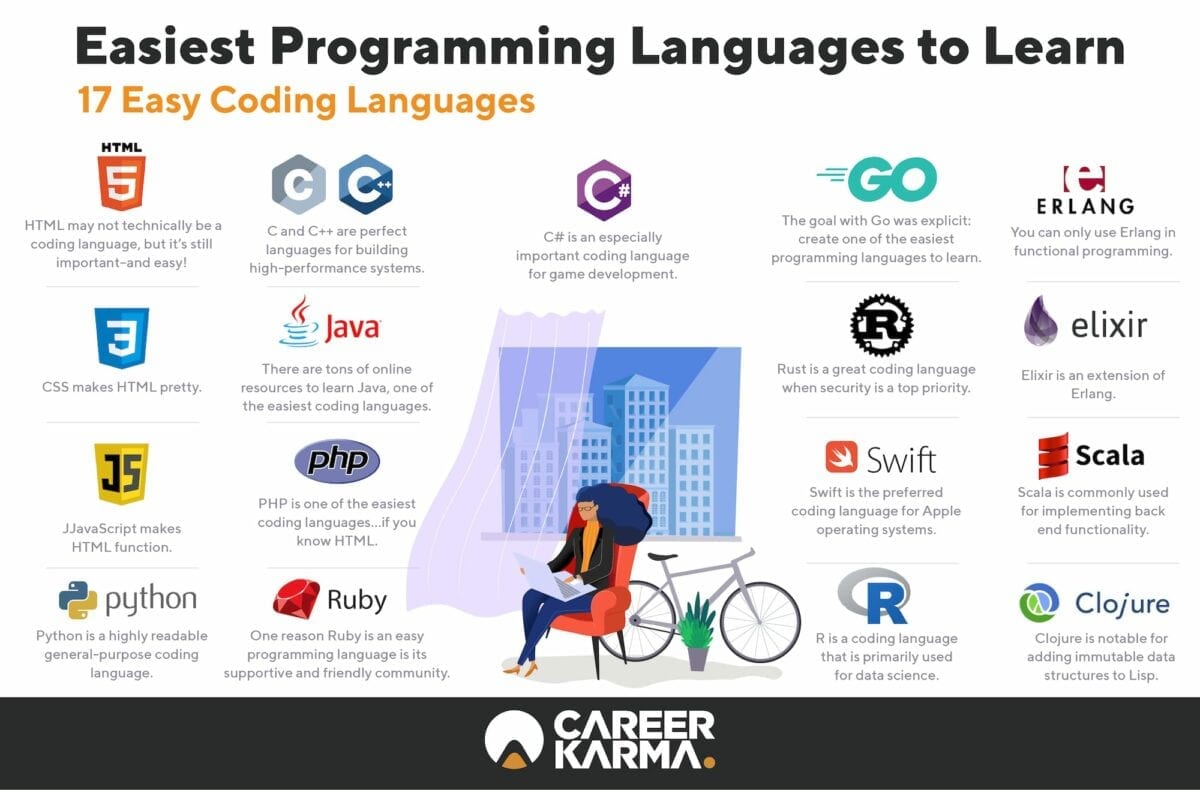
Readability and Simplicity: A language with a syntax that closely resembles human language, or requires less boilerplate code to achieve a simple task, is inherently easier to grasp. This reduces cognitive load, allowing learners to focus on computational logic rather than memorizing obscure commands. Indentation-based structures, clear function definitions, and intuitive variable assignments contribute significantly to readability.
Ecosystem and Resources: The availability of high-quality learning materials — including tutorials, documentation, online courses, and textbooks — is paramount. An active and helpful community forum or online platform where beginners can ask questions and receive timely assistance also dramatically smooths the learning process. Without comprehensive resources, even a simple language can feel impenetrable.
Immediate Gratification and Practical Application: Nothing motivates a learner more than seeing tangible results quickly. Languages that allow beginners to build simple, working applications or scripts within hours or days of starting, provide crucial encouragement. The ability to apply newfound knowledge to practical tasks, whether it’s automating a simple chore or building a basic webpage, reinforces learning and maintains momentum.
Error Messages and Debugging: How a language handles errors and the clarity of its error messages can greatly impact a beginner’s experience. Vague or cryptic error outputs can be frustrating and difficult to debug, whereas clear, descriptive messages guide the learner toward understanding and correcting their mistakes. Tools and environments that simplify the debugging process are also invaluable.
Top Contenders for Beginner-Friendliness
Considering these multifaceted aspects of “ease,” several programming languages consistently emerge as top recommendations for newcomers to the world of coding.
Python: The Ubiquitous Beginner’s Choice
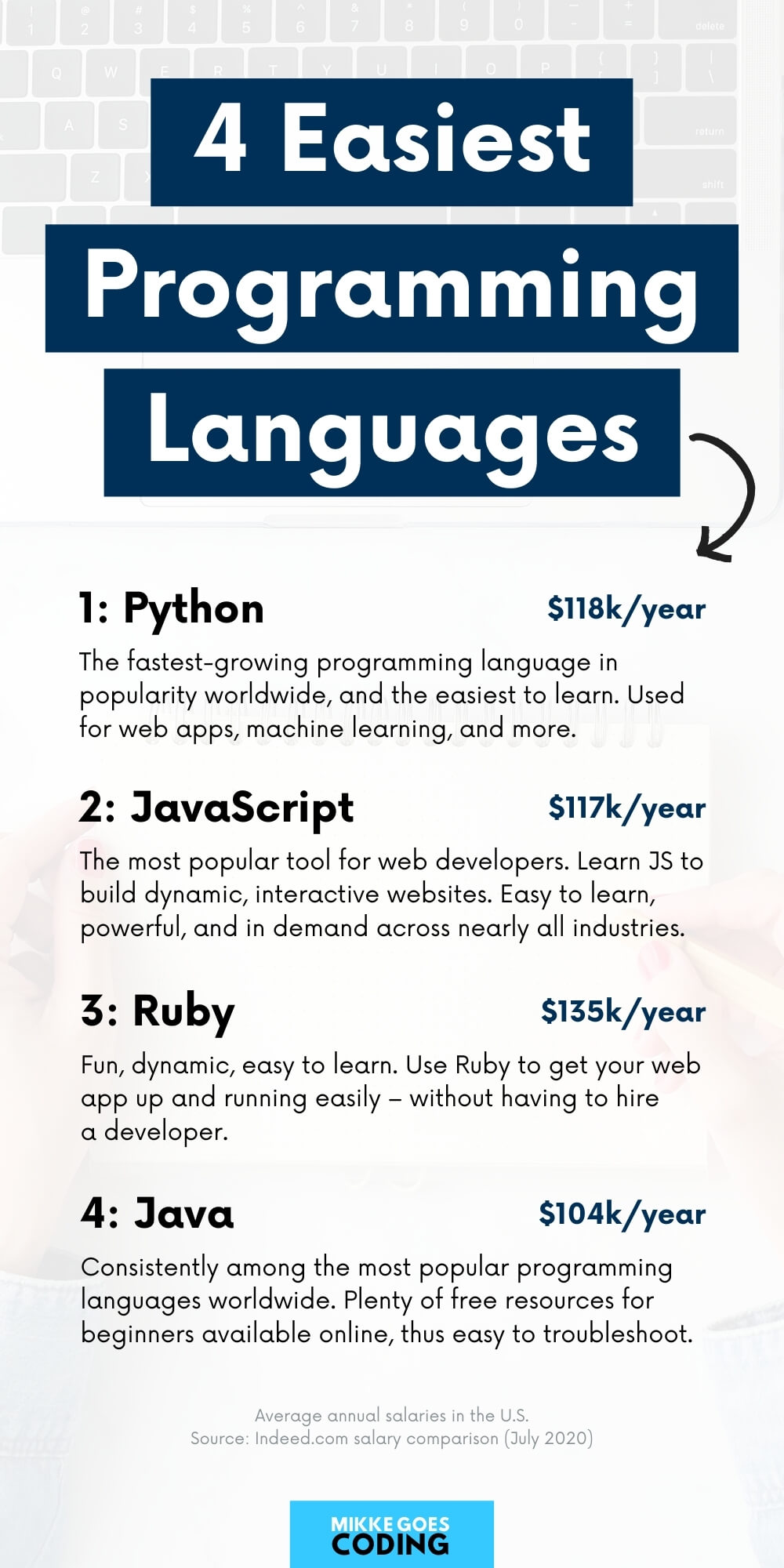
Python stands almost universally as the go-to language for beginners, and for good reason. Its design philosophy emphasizes readability and simplicity, making it incredibly accessible.
- Human-Readable Syntax: Python’s syntax is often described as resembling plain English. For instance, declaring a variable, performing a loop, or defining a function requires minimal special characters and relies heavily on natural language keywords like
if,else,for,while, anddef. This reduces the initial cognitive load and allows new programmers to focus on logical thinking rather than wrestling with complex syntax. - Versatility: Beyond its ease of learning, Python is incredibly versatile. It’s used in web development (Django, Flask), data science and machine learning (NumPy, Pandas, TensorFlow), automation, scripting, game development, and more. This broad applicability means that skills learned in Python are highly transferable and immediately useful across a wide range of tech disciplines, offering a compelling return on the learning investment.
- Rich Ecosystem and Community: Python boasts an enormous and highly active community. This translates into an abundance of high-quality documentation, tutorials, courses (both free and paid), and open-source libraries. If you encounter an issue, chances are someone else has faced it, and a solution or explanation is readily available online. The Python Package Index (PyPI) hosts hundreds of thousands of third-party libraries, enabling beginners to add complex functionalities to their projects with relative ease.
JavaScript: The Language of the Web (and Beyond)
JavaScript is another powerhouse for beginners, especially those interested in web development. It’s the only programming language native to web browsers, making it indispensable for interactive web experiences.
- Browser-Native: The ability to write code and immediately see its effects in a web browser offers instant gratification that few other languages can match. You don’t need complex development environments to get started; a simple text editor and a web browser are often sufficient. This low barrier to entry makes experimenting and learning highly accessible.
- Full-Stack Capabilities: With the advent of Node.js, JavaScript transcended its browser-only limitations. It can now be used for backend development, allowing developers to build entire web applications using a single language (“full-stack JavaScript”). This consistency reduces the overhead of learning multiple languages for different parts of a project.
- Massive Demand and Resources: JavaScript is arguably the most in-demand programming language in the job market, especially for front-end and full-stack roles. Consequently, there’s an overwhelming wealth of learning resources, frameworks (like React, Angular, Vue), and a vibrant community continuously pushing its capabilities.
Scratch: Visual Learning for the Absolute Novice
While perhaps not a “traditional” text-based programming language, Scratch is invaluable for absolute beginners, especially children and those new to computational thinking.
- Visual, Drag-and-Drop Interface: Developed by MIT, Scratch uses a block-based visual programming interface. Users drag and snap together colored blocks that represent commands, events, and controls. This eliminates syntax errors entirely, allowing learners to focus purely on logic and problem-solving.
- Immediate Feedback and Engagement: Creating interactive stories, animations, and games with Scratch is incredibly intuitive and provides instant visual feedback. This hands-on, creative approach makes learning fun and highly engaging, fostering an understanding of core programming concepts like loops, conditionals, and variables without the frustration of textual syntax.
- Foundation for Text-Based Languages: Scratch serves as an excellent stepping stone. Once a learner understands the fundamental concepts of programming through Scratch, transitioning to text-based languages like Python or JavaScript becomes significantly easier, as the underlying logic is already familiar.
Ruby: Emphasizing Developer Happiness
Ruby, often paired with the Ruby on Rails web framework, is known for its elegant syntax and focus on developer productivity and happiness.
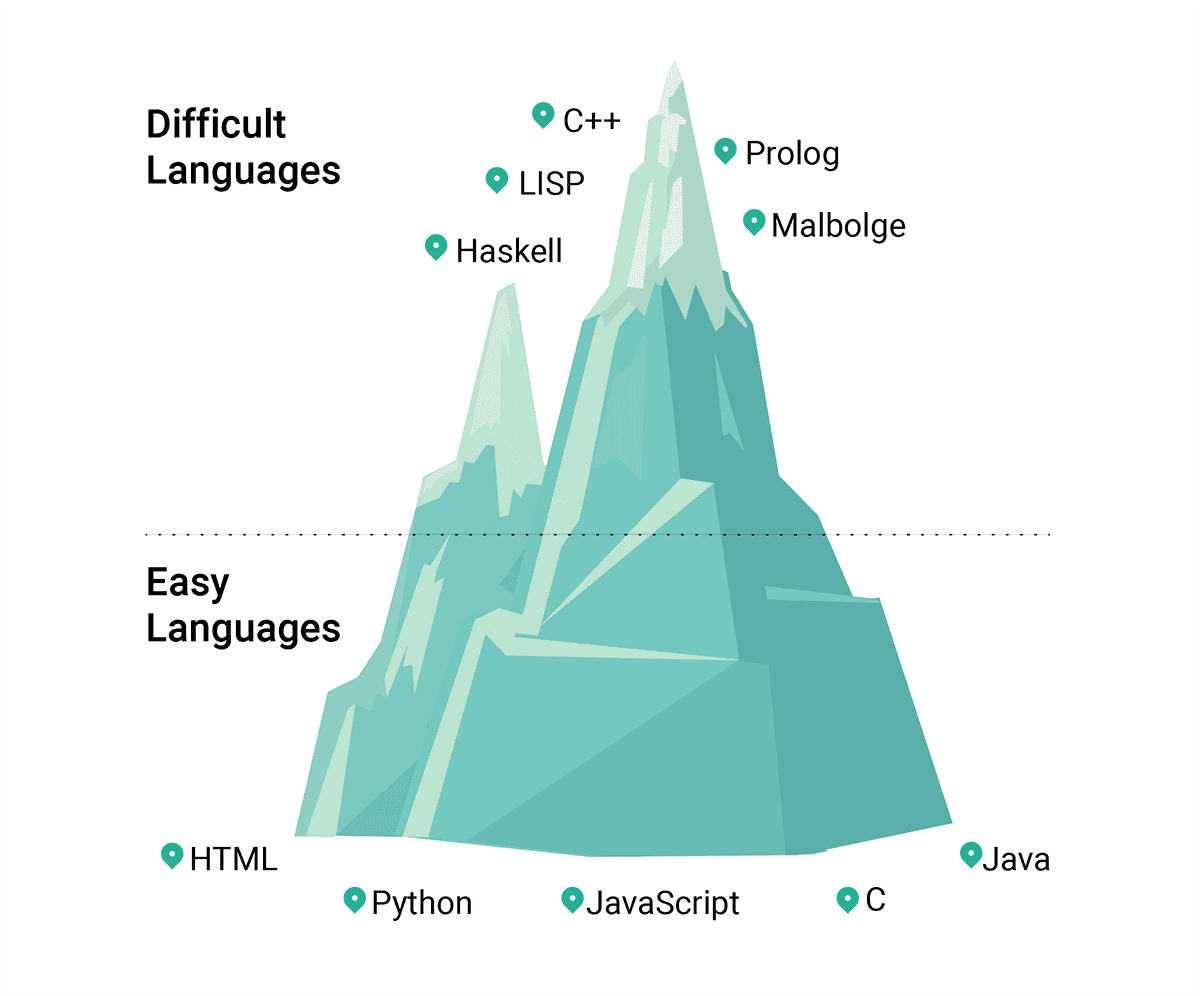
- Intuitive and Expressive Syntax: Like Python, Ruby’s syntax is highly readable and expressive, often allowing developers to achieve complex tasks with fewer lines of code. It’s designed to be natural and powerful, reducing the time spent understanding arcane syntax.
- Ruby on Rails Framework: For those interested in web development, Ruby on Rails (RoR) is a powerful “opinionated” framework that makes building complex web applications remarkably fast. RoR emphasizes convention over configuration, which means less decision-making for beginners and more focus on building features.
- Supportive Community: Ruby has a dedicated and passionate community that values clear communication and support for newcomers. This, combined with excellent documentation, makes it a welcoming environment for learning.
Factors Beyond the Language Itself
While the inherent characteristics of a programming language significantly impact its ease of learning, several external factors also play a crucial role in a beginner’s success.
Robust Documentation and Community Support
An extensive and well-maintained set of documentation for a language provides the authoritative reference point for its features and functions. This, coupled with an active online community (e.g., Stack Overflow, GitHub forums, Reddit communities), creates a safety net for learners. The ability to quickly find answers to common questions, troubleshoot issues, or seek advice from experienced developers drastically reduces frustration and accelerates the learning process. Languages with mature ecosystems tend to excel in this regard.
Abundant Learning Resources (Courses, Tutorials, Books)
The sheer volume and quality of available learning materials can make a monumental difference. Whether through free online tutorials, structured MOOCs, interactive coding platforms, or comprehensive textbooks, having diverse options allows learners to choose resources that best suit their individual learning styles. Languages popular with beginners, like Python and JavaScript, benefit from an almost overwhelming selection of high-quality educational content.
Development Environment Simplicity
Setting up a development environment can be a significant hurdle for newcomers. Languages that offer straightforward installation processes, simple code editors, or even web-based integrated development environments (IDEs) lower the barrier to entry. For instance, writing JavaScript directly in a browser’s developer console or using an online Python interpreter eliminates the complexities of local setup, allowing beginners to start coding immediately.
Immediate Practical Applications
The ability to build something tangible early on is incredibly motivating. Languages that lend themselves to quick projects, such as simple web pages, basic scripts for automation, or small data analysis tasks, provide rapid feedback and reinforce learning. Seeing code come to life and solving a real problem, no matter how small, validates the effort and encourages deeper exploration.
Aligning “Easy” with Your Goals
Ultimately, the “easiest” language is often the one that most directly aligns with your personal goals and interests. Learning becomes easier when you are intrinsically motivated by the desire to build something specific.
Web Development Aspirations
If your goal is to build interactive websites and web applications, JavaScript is arguably the easiest starting point because it’s the native language of the web browser. You can start creating interactive elements almost immediately. Learning HTML and CSS alongside it will give you a complete front-end skill set.
Data Science and AI Interests
For those drawn to data analysis, machine learning, and artificial intelligence, Python is the undisputed champion. Its extensive libraries (Pandas, NumPy, SciPy, scikit-learn, TensorFlow, PyTorch) and straightforward syntax make it the industry standard, and learning resources for these specific applications are plentiful.
Game Development Paths
For 2D game development, especially for beginners, Python with libraries like Pygame can be a gentle introduction. For visual, drag-and-drop game creation, Scratch is excellent. For more serious or 3D game development, languages like C# (with Unity) or C++ (with Unreal Engine) are dominant, but they come with a steeper learning curve.
Mobile App Creation
If mobile app development is your target, JavaScript (with frameworks like React Native) allows you to build cross-platform apps using web technologies. For native Android apps, Kotlin (or Java) is used, and for iOS apps, Swift is the language of choice. While Swift is designed to be relatively easy, the ecosystem for native mobile development can be more complex than web.
In conclusion, while Python frequently earns the title of the easiest programming language to learn due to its readability, versatility, and robust community, the ideal choice ultimately depends on an individual’s specific aspirations and preferred learning style. The most effective approach is to select a language that genuinely excites you and aligns with the projects you envision building, as this inherent motivation will be your greatest asset in overcoming any learning challenges.
aViewFromTheCave is a participant in the Amazon Services LLC Associates Program, an affiliate advertising program designed to provide a means for sites to earn advertising fees by advertising and linking to Amazon.com. Amazon, the Amazon logo, AmazonSupply, and the AmazonSupply logo are trademarks of Amazon.com, Inc. or its affiliates. As an Amazon Associate we earn affiliate commissions from qualifying purchases.