
For many, the question of “when can I start collecting Social Security?” marks a pivotal moment in their retirement planning journey. Social Security benefits represent a cornerstone of financial security for millions of Americans, providing a crucial income stream during their golden years. Understanding the intricacies of these benefits, particularly the earliest age at which they can be claimed, is paramount for making informed decisions that will impact your financial well-being for decades. While the allure of receiving benefits sooner might be strong, a closer look reveals a complex interplay of factors that can significantly affect your overall lifetime income. This article delves into the earliest age for claiming Social Security, exploring the pros and cons, financial implications, and essential considerations for making the best choice for your personal circumstances.
Understanding Social Security Basics and Early Claiming
Social Security is a comprehensive federal program designed to provide retirement, disability, and survivor benefits. Your eligibility and the amount of your benefit are primarily determined by your earnings history and the age at which you choose to start collecting. While there’s a specific “full retirement age” (FRA) when you’re entitled to 100% of your earned benefits, the program also offers flexibility for those who wish to claim earlier or later.
The Earliest Eligibility Age: 62
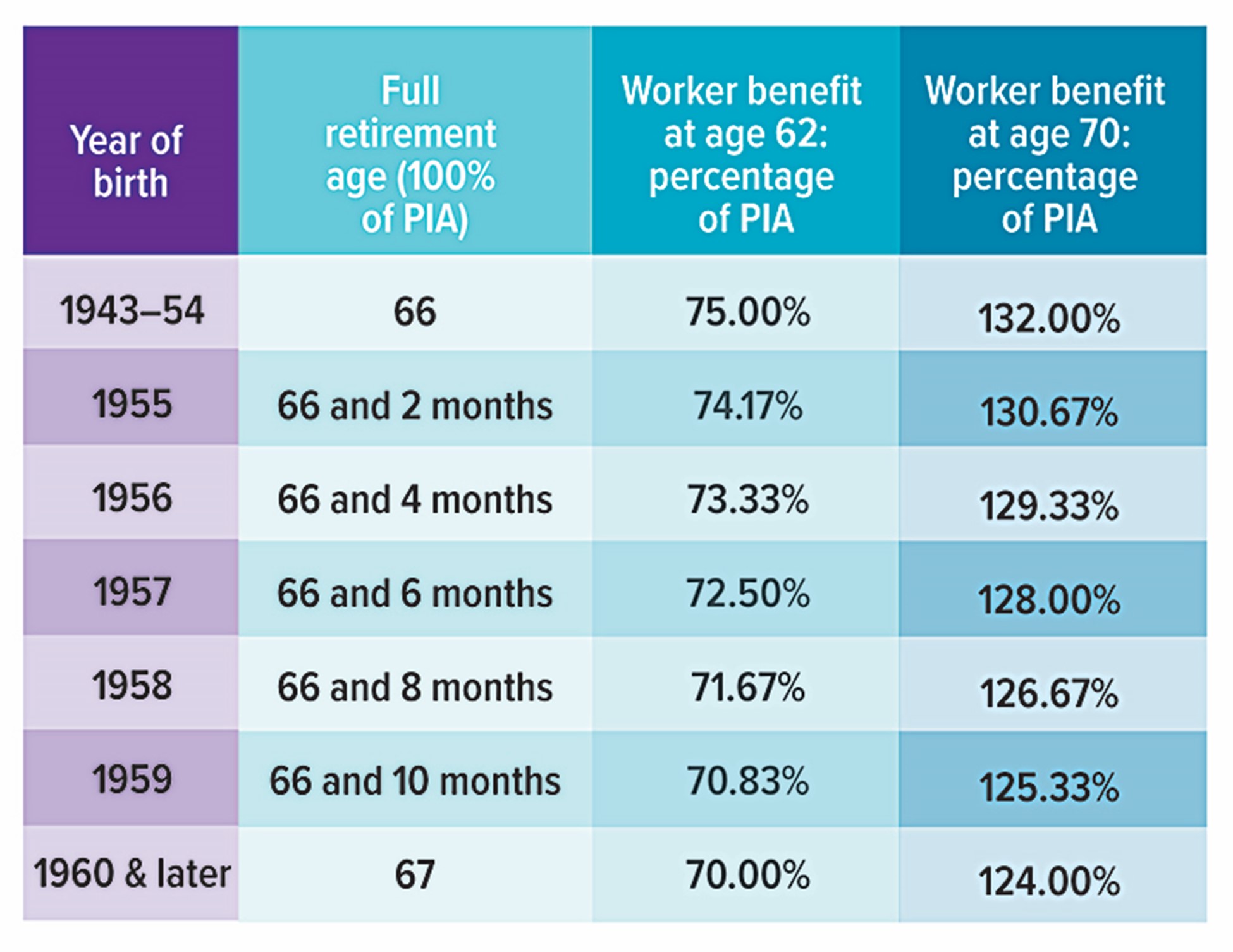
The earliest age you can begin receiving Social Security retirement benefits is 62. This option is available to almost all eligible workers, provided they have accumulated at least 40 work credits (equivalent to 10 years of work, with up to four credits earned per year). While claiming at age 62 offers immediate access to a stable income stream, it comes with a significant and permanent reduction in your monthly benefit amount. This reduction is not temporary; it lasts for the entirety of your benefit collection period. The rationale behind this reduction is actuarial: by starting benefits earlier, you are likely to collect for a longer period, so the monthly payment is adjusted downwards to balance the total payout over your expected lifespan compared to someone who waits until their Full Retirement Age. For instance, someone born in 1960 or later, with a Full Retirement Age of 67, would see their monthly benefit reduced by approximately 30% if they claim at 62.
What is Your Full Retirement Age (FRA)?
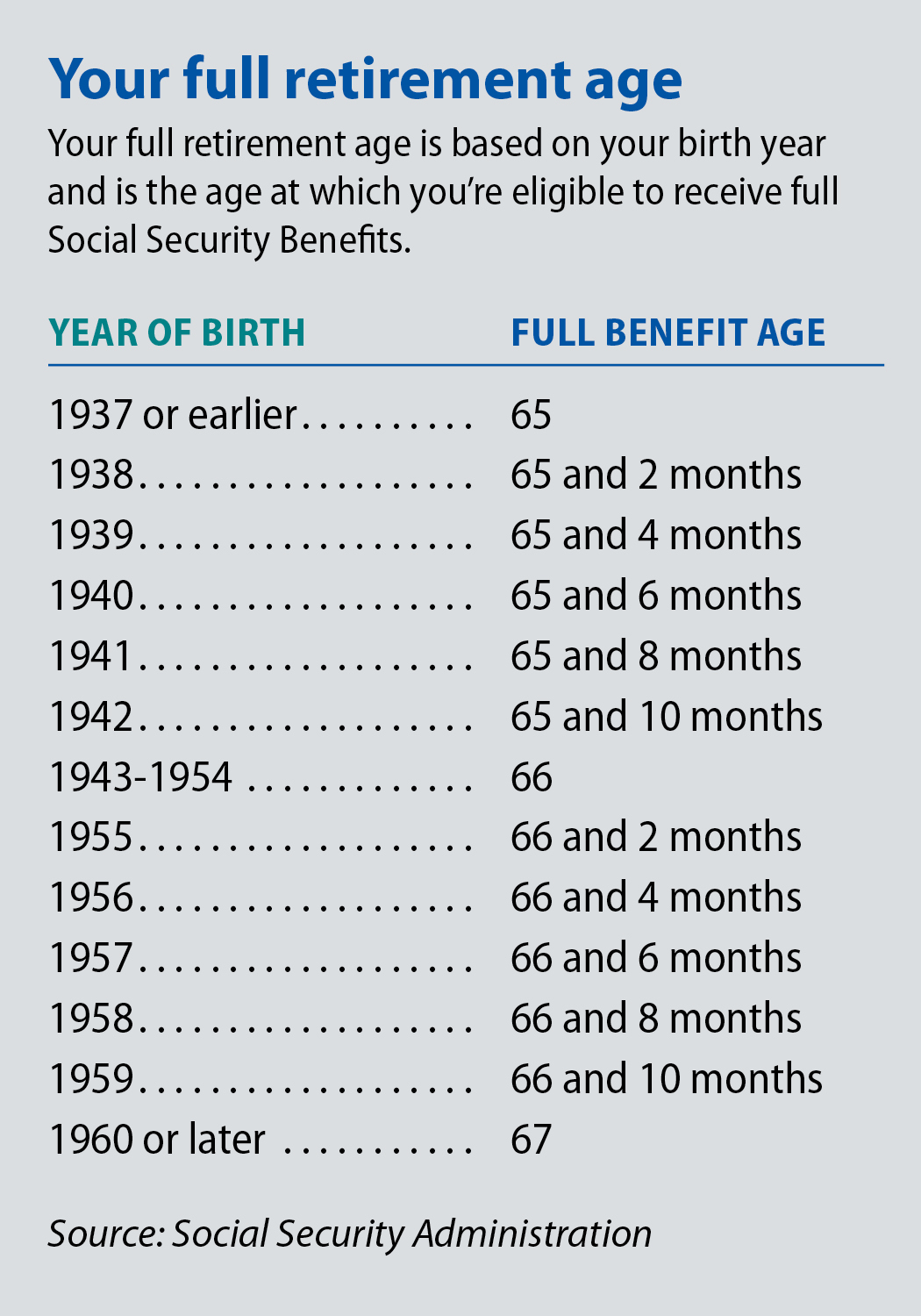
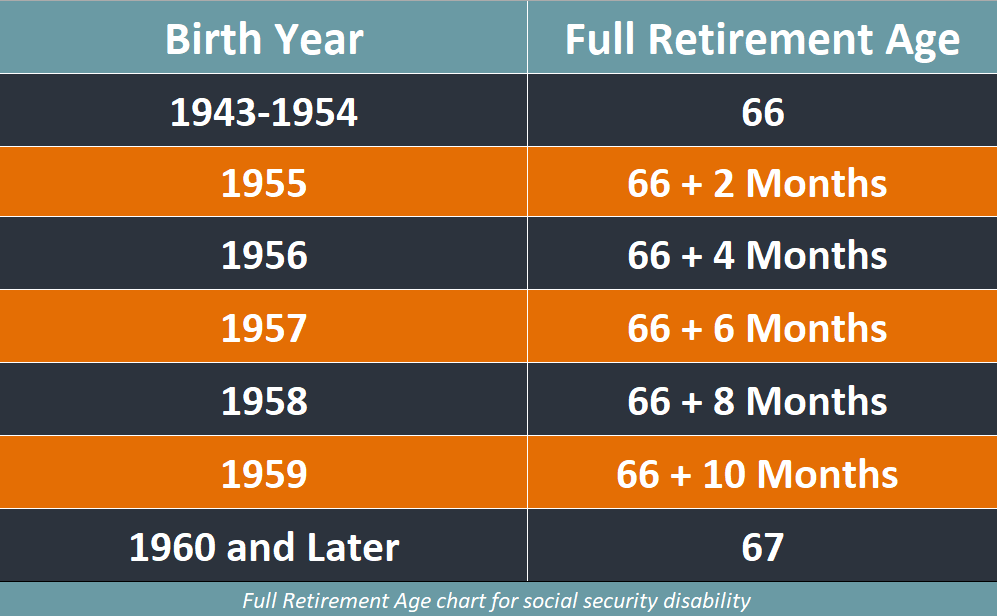
Your Full Retirement Age (FRA) is the age at which the Social Security Administration (SSA) determines you are eligible to receive 100% of your primary insurance amount (PIA), which is your earned benefit based on your average indexed monthly earnings. The FRA is not universal; it depends on your birth year. For individuals born between 1943 and 1954, the FRA is 66. It gradually increases by a few months for those born between 1955 and 1959, reaching 67 for anyone born in 1960 or later. Understanding your specific FRA is critical because it serves as the benchmark against which early or delayed claiming benefits are calculated. Claiming before your FRA results in a reduced benefit, while claiming after your FRA (up to age 70) results in an increased benefit due to delayed retirement credits. Each year you delay past your FRA, up to age 70, you earn an additional 8% in annual credits, leading to a substantially higher monthly payout for the rest of your life.
How Early Claiming Reduces Benefits
The reduction in benefits for claiming early is a direct consequence of starting payments before your Full Retirement Age. For each month you claim before your FRA, your monthly benefit is permanently reduced. The formula for this reduction is fairly straightforward:
- If you claim benefits up to 36 months early, your benefit is reduced by 5/9 of 1% for each month.
- If you claim more than 36 months early (which is possible if your FRA is 67 and you claim at 62), the additional months are reduced by 5/12 of 1% each month.
This might seem like small percentages, but they add up significantly over a lifetime. For someone with an FRA of 67, claiming at 62 means collecting benefits five years (60 months) early. The cumulative reduction can lead to a monthly benefit that is 25% to 30% lower than what you would receive at your FRA. This permanent reduction is a key factor to consider, as it impacts not only your personal benefit but potentially spousal and survivor benefits as well. The decision to claim early, therefore, shouldn’t be taken lightly, as it locks in a lower payment amount for your entire retirement.
Factors to Weigh Before Claiming Early
Deciding when to claim Social Security is a deeply personal financial decision with no one-size-fits-all answer. While age 62 offers immediate relief or flexibility, a thorough evaluation of various personal circumstances is essential.
Your Health and Life Expectancy
One of the most significant factors influencing the Social Security claiming decision is your health and projected life expectancy. If you anticipate a shorter-than-average lifespan due due to chronic health conditions or family history, claiming benefits at age 62 might be a financially advantageous strategy. In such scenarios, collecting a smaller amount over a shorter period could result in a higher total lifetime benefit received compared to waiting for a higher monthly amount that you might not collect for as long. Conversely, if you are in excellent health and have a family history of longevity, delaying benefits until your FRA or even age 70 could prove more beneficial, allowing you to maximize your total lifetime payout with a higher monthly sum over a longer period. This requires an honest assessment of your personal health outlook, ideally in consultation with medical professionals.
Other Income Sources and Retirement Savings
Your current and future financial landscape plays a critical role. If you have substantial retirement savings, pensions, or other income streams (e.g., rental income, part-time work), you might have the financial flexibility to delay claiming Social Security. Delaying allows your Social Security benefit to grow, providing a larger inflation-adjusted income in later years when other savings might be depleted. On the other hand, if Social Security will be your primary or sole source of retirement income, claiming at 62 might be a necessity to cover immediate living expenses. However, this immediate need must be balanced against the permanent reduction, which can lead to financial strain in very old age. Analyzing your comprehensive financial plan, including your spending habits, debts, and potential for additional income, is crucial.
Spousal and Survivor Benefits
The claiming decision of one spouse can significantly impact the benefits received by the other, particularly spousal and survivor benefits. If you claim your benefits early at age 62, it not only reduces your own primary benefit but also potentially reduces the maximum spousal benefit your partner could receive based on your record. A spouse can typically claim up to 50% of your Full Retirement Age benefit, but if you claim early, their spousal benefit might also be reduced.
For survivor benefits, the decision of when the deceased spouse claimed can impact the surviving spouse’s benefit. If you claim early and then pass away, the survivor benefit your spouse receives based on your work record will be lower than if you had waited to claim at your FRA or later. This is particularly important for the lower-earning spouse or the spouse with a shorter life expectancy. Strategic coordination between spouses, including understanding “file and suspend” (which is largely phased out but existed), or “restricted application” strategies (available to certain age groups), is vital to maximize joint lifetime benefits.
Continued Employment and Earnings Limit
If you plan to continue working while collecting Social Security benefits before your Full Retirement Age, you must be aware of the Social Security earnings limit. For 2024, if you are under your FRA for the entire year, the SSA will deduct $1 from your benefits for every $2 you earn above $22,320. In the year you reach your FRA, a different rule applies: the SSA deducts $1 for every $3 you earn above a higher limit ($59,520 for 2024) until the month you reach your FRA. Once you reach your FRA, the earnings limit no longer applies, and you can earn as much as you want without affecting your benefits.
This earnings limit can significantly impact the net benefit received by early claimants who also work. While the benefits withheld due to the earnings limit are not permanently lost (they are factored into a recalculation at your FRA, potentially increasing your future benefit), they can undermine the immediate financial advantage of claiming early. Therefore, if you intend to work, carefully calculate how your earnings might affect your Social Security payments and whether waiting to claim until your FRA makes more financial sense.
The Financial Implications of Early vs. Delayed Claiming
The decision to claim Social Security benefits early or delay them carries significant financial weight, impacting your monthly income for the rest of your life and influencing your overall retirement security. Understanding these implications is crucial for making an informed choice.
The Permanent Reduction in Monthly Benefits
As discussed, claiming Social Security at age 62 results in a permanent reduction in your monthly benefit amount compared to what you would receive at your Full Retirement Age (FRA). This reduction can be substantial, often ranging from 25% to 30% for someone whose FRA is 67. For example, if your FRA benefit is $2,000, claiming at 62 could reduce it to $1,400. This $600 difference per month translates to $7,200 less per year. Over a 20- or 30-year retirement, this seemingly small monthly reduction compounds into hundreds of thousands of dollars in lost lifetime income. It’s a trade-off: immediate access to funds versus a permanently lower income stream. This permanent reduction also affects cost-of-living adjustments (COLAs), as future increases are applied to your already reduced base amount.
Break-Even Analysis: When Does Delaying Pay Off?
A common analytical tool in Social Security planning is the “break-even analysis.” This involves calculating the point in time (age) when the cumulative higher payments from delaying benefits surpass the cumulative lower payments received by claiming early. For instance, while someone claiming at 62 receives benefits for several years before someone claiming at 67 even starts, the person who delayed will eventually receive higher monthly payments. There will be an age where the total amount received by the delayed claimant catches up to, and then surpasses, the total amount received by the early claimant.
Typically, the break-even age for delaying from 62 to 67 is somewhere in the late 70s or early 80s. If you expect to live past this break-even point, delaying your benefits will result in a higher total lifetime payout. If you anticipate a shorter lifespan, claiming early might yield a higher total benefit. This analysis is highly personalized and depends on your specific FRA, benefit amount, and life expectancy. It’s a critical calculation that helps quantify the financial impact of your decision.
Maximizing Lifetime Benefits: Strategies for Different Scenarios
Maximizing lifetime benefits requires a strategic approach tailored to your unique circumstances.
- For Singles with Good Health: Delaying benefits as long as possible, ideally to age 70, often yields the highest lifetime payout due to delayed retirement credits. This strategy assumes you have other financial resources to bridge the gap.
- For Individuals with Shorter Life Expectancy: Claiming at 62 might be the optimal strategy to ensure you receive benefits for as long as possible.
- For Couples: Strategic coordination is paramount. One common strategy (though some nuances have changed with recent legislation) involves the higher-earning spouse delaying benefits to maximize their primary benefit, which then provides a higher potential survivor benefit for the lower-earning spouse. The lower-earning spouse might claim their own reduced benefit early, or claim a spousal benefit later, depending on which yields a greater overall household income.
- For Those Still Working: If you are still working and your income exceeds the earnings limit, it might be more prudent to delay claiming until you are closer to or past your FRA to avoid benefit reductions and allow your own benefits to grow.
The optimal strategy is a complex equation involving your health, other assets, marital status, and income needs. It often warrants a detailed consultation with a financial advisor specializing in Social Security planning.
Navigating the Application Process and Making Your Decision
Once you’ve considered all the financial and personal factors, the next step is to understand how to apply for benefits and where to find reliable guidance. Making your final decision requires careful thought and often professional input.
Steps to Apply for Social Security Benefits
Applying for Social Security benefits is a relatively straightforward process, primarily managed through the Social Security Administration (SSA).
- Gather Necessary Documents: Before applying, ensure you have documents like your Social Security card, birth certificate, proof of U.S. citizenship or lawful alien status (if not born in the U.S.), W-2 forms or self-employment tax returns for the past year, and your bank account information for direct deposit.
- Create a mySocialSecurity Account: The SSA encourages individuals to create a free “mySocialSecurity” account online. This allows you to check your earnings record, estimate future benefits, and manage your benefits once you start receiving them.
- Apply Online, By Phone, or In Person: You can apply for retirement benefits online at the SSA website (ssa.gov), which is often the quickest and most convenient method. Alternatively, you can call the SSA’s toll-free number or visit your local Social Security office. It’s generally recommended to apply about three months before you want your benefits to start to allow for processing time.
- Review and Confirm: Once your application is submitted, the SSA will review it and notify you of their decision. If approved, you will receive information about your monthly benefit amount and when payments will begin.
Resources for Personalized Guidance
Given the complexity of Social Security rules and their significant impact on retirement income, seeking personalized guidance is often highly beneficial.
- Social Security Administration (SSA): The SSA’s website (ssa.gov) is an invaluable resource. It offers detailed information, benefit calculators, and publications explaining various aspects of the program. Their customer service representatives are also available by phone to answer general questions.
- Certified Financial Planners (CFPs) or Financial Advisors: Many financial advisors specialize in retirement planning and have expertise in optimizing Social Security claiming strategies. They can perform detailed break-even analyses, model different scenarios based on your personal financial situation, and advise on how Social Security fits into your overall retirement portfolio. Look for advisors with specific certifications or experience in Social Security optimization.
- Retirement Planning Software: Various online tools and software applications can help you model different claiming scenarios and their impact on your lifetime benefits. While these can be helpful, they often work best when guided by an understanding of the underlying principles or a financial professional.
Reviewing Your Social Security Statement
Regularly reviewing your Social Security Statement is a critical step in retirement planning. This statement, which you can access online through your mySocialSecurity account or receive by mail, provides a summary of your earnings history and estimates of your future benefits at different claiming ages (62, your Full Retirement Age, and 70).
- Check Your Earnings Record: It’s vital to ensure your earnings record is accurate. Errors can occur, and an incorrect earnings history could lead to lower benefits. If you find discrepancies, contact the SSA to correct them.
- Understand Your Benefit Estimates: The statement clearly shows your estimated monthly benefit at your earliest claiming age (62), Full Retirement Age, and age 70. This provides a baseline for your planning and allows you to visualize the financial trade-offs of different claiming decisions.
- Use it for Planning: Your Social Security statement is a cornerstone document for projecting your retirement income and integrating it with your other savings and investments. It empowers you to make informed choices about when to start collecting your benefits, aligning with your long-term financial goals.
The decision of when to claim Social Security is one of the most significant financial choices you will make in retirement. While age 62 offers the earliest opportunity, a careful and comprehensive analysis of your personal health, financial resources, family situation, and life expectancy is essential. By understanding the permanent reduction in benefits, considering the break-even points, and leveraging available resources, you can make a strategic decision that maximizes your financial security throughout your retirement years.
aViewFromTheCave is a participant in the Amazon Services LLC Associates Program, an affiliate advertising program designed to provide a means for sites to earn advertising fees by advertising and linking to Amazon.com. Amazon, the Amazon logo, AmazonSupply, and the AmazonSupply logo are trademarks of Amazon.com, Inc. or its affiliates. As an Amazon Associate we earn affiliate commissions from qualifying purchases.