
For over a century, the phrase “What is the Dow now?” has been a foundational question for investors, retirees, and policymakers alike. While it may seem like a simple inquiry into a numerical value, the answer provides a snapshot of the health of the American economy and, by extension, the global financial landscape. The Dow Jones Industrial Average (DJIA) is more than just a ticker symbol; it is a living history of industrial evolution, a psychological benchmark for market sentiment, and a critical tool for personal wealth management.

In this deep dive, we will explore the mechanics of the Dow, why it remains relevant in a high-tech world, and how you can use its movements to inform your personal finance and investment strategies.
Decoding the Dow Jones Industrial Average (DJIA)
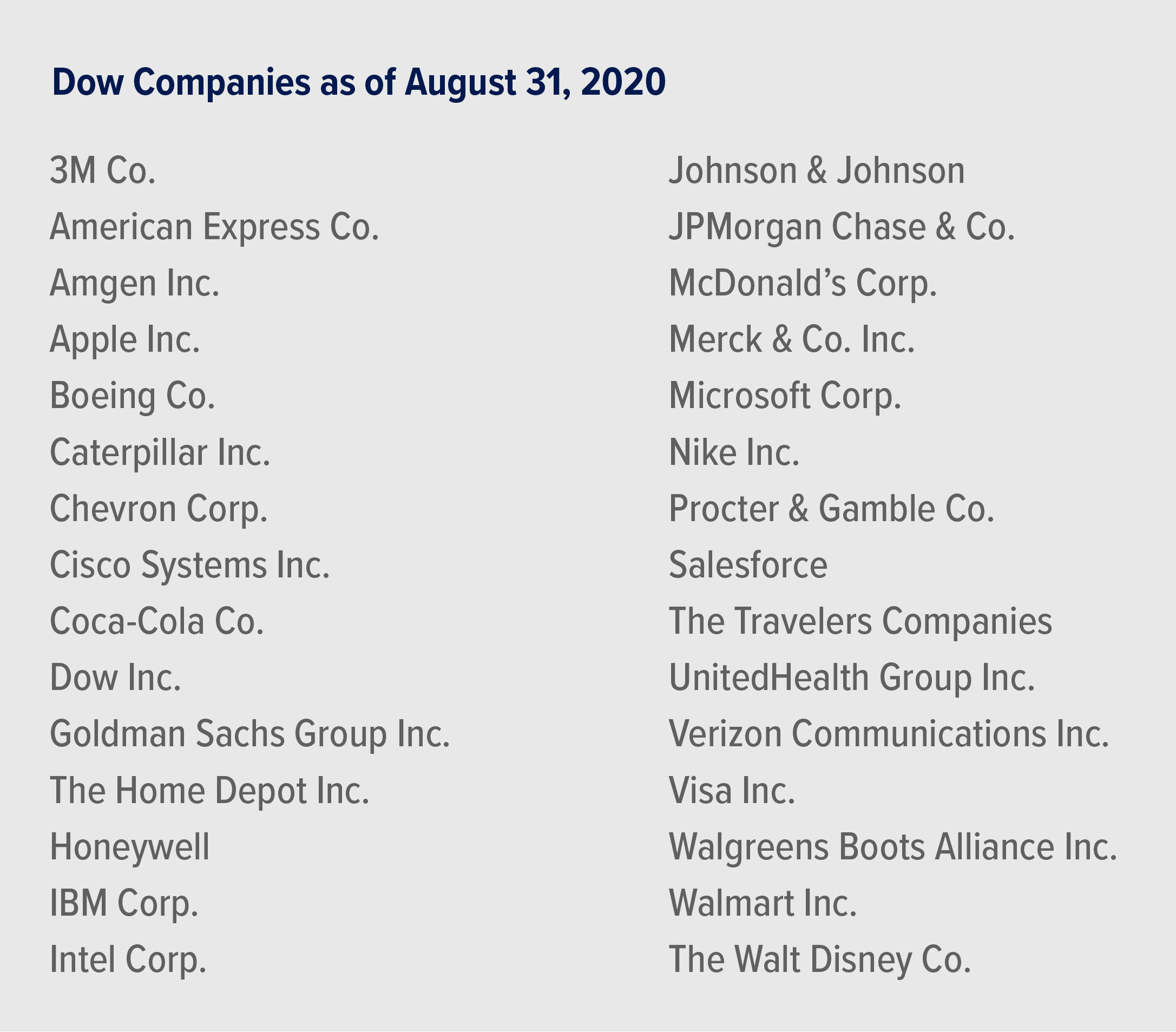
To understand what the Dow is today, we must first understand what it was intended to be. Created by Charles Dow and Edward Jones in 1896, the index originally tracked just 12 industrial companies. Today, it has expanded to 30 “blue-chip” companies, representing the elite of the American corporate world.
The History and Evolution of the Index
The Dow was born during a time when the United States was transitioning from an agrarian society to an industrial powerhouse. The original components included companies involved in sugar, tobacco, and oil. However, as the economy shifted, so did the Dow. Today, the “Industrial” in its name is largely a vestige of the past. The current components span across healthcare, technology, consumer goods, and financial services.
The evolution of the Dow is a mirror of the American Dream. When a company is added to the Dow, it is a signal that it has reached the pinnacle of corporate stability. Conversely, when a company like General Electric—an original member—is removed, it signals a fundamental shift in the economic drivers of the nation.
How the Dow is Calculated: Price-Weighted vs. Market Cap
One of the most unique and often misunderstood aspects of the Dow is its calculation method. Unlike the S&P 500 or the Nasdaq, which are market-capitalization-weighted (meaning larger companies have more influence), the Dow is price-weighted.
In a price-weighted index, the stock price per share determines how much influence a company has on the index’s movement. A company with a $400 stock price will move the Dow more than a company with a $40 stock price, even if the latter has a higher total market value. To keep the index consistent during stock splits or dividends, the “Dow Divisor” is used—a mathematical constant that adjusts the total sum of the 30 stock prices. This methodology is often criticized by modern economists for being “arbitrary,” yet it remains the most cited index in mainstream media.
Why “The Dow Now” Matters to Your Portfolio
Even if you don’t own individual stocks in the Dow 30, the index likely affects your net worth. Most 404(k) plans, pension funds, and mutual funds use the Dow as a benchmark for performance. When the Dow experiences a “bull run” or a “correction,” it sets the tone for investor confidence globally.
The Dow as a Barometer for Economic Health
The Dow is often seen as a “lagging indicator” that reflects the strength of established companies rather than speculative startups. When the Dow is high, it suggests that the core pillars of the economy—companies like Coca-Cola, Boeing, and JPMorgan Chase—are profitable and stable.
For the average investor, the Dow represents “Main Street” more than “Silicon Valley.” Because it focuses on companies with long histories of earnings and dividends, it serves as a gauge for the purchasing power of the American consumer and the stability of global trade.
Comparing the Dow to the S&P 500 and Nasdaq
To truly understand the value of the Dow, one must compare it to its peers. The S&P 500 tracks 500 companies and is generally considered a better representation of the overall stock market. The Nasdaq Composite is heavily weighted toward technology and growth stocks.
However, the Dow’s exclusivity is its strength. By tracking only 30 companies, it avoids the “noise” of smaller, more volatile stocks. During periods of market turbulence, the Dow often proves more resilient than the tech-heavy Nasdaq because its components are usually “value stocks” with massive cash reserves and steady business models.
The Modern Composition of the Dow
In recent years, the Dow has undergone a significant facelift to remain relevant in a digital-first economy. The inclusion of tech giants and service-oriented firms has fundamentally changed what a “Dow stock” looks like.

The Shift from Industrials to Modern Giants
The modern Dow is a far cry from the smokestacks of the 1900s. Today, companies like Apple, Microsoft, and Salesforce hold significant weight in the index. This shift reflects the reality that data and software are the “new oil” of the 21st century.
Furthermore, the addition of Amazon (replacing Walgreens) in early 2024 marked a major milestone. It signaled the index’s acknowledgement that retail and e-commerce are now the primary drivers of consumer spending, taking precedence over traditional brick-and-mortar pharmacies. By integrating these giants, the Dow has maintained its status as a relevant indicator of where money is flowing.
Understanding the Entry and Exit Criteria
Selection for the Dow is not automated. Unlike the S&P 500, which has strict quantitative rules for inclusion, Dow components are selected by a committee at S&P Dow Jones Indices. There are no permanent rules, but the committee generally looks for companies with excellent reputations, sustained growth, and interest among a broad range of investors.
When a company is “booted” from the Dow, it can lead to a temporary drop in its stock price as institutional funds that track the index sell off their shares. For investors, monitoring these changes is vital for understanding which sectors are falling out of favor with the “smart money.”
Investing Strategies Centered Around the Dow
For those looking to build wealth, the Dow offers several battle-tested strategies. Whether you are a passive investor or a dividend seeker, the 30 stocks of the Dow provide a reliable framework for capital allocation.
Index Funds and ETFs: Tracking the 30
The simplest way to invest in the Dow is through an Exchange-Traded Fund (ETF). The most famous of these is the SPDR Dow Jones Industrial Average ETF Trust (Ticker: DIA), often referred to as “Diamonds.”
By purchasing shares of DIA, an investor gains exposure to all 30 companies in the index with a single transaction. This provides instant diversification across multiple sectors—healthcare, finance, tech, and retail. For a long-term retirement strategy, holding a Dow-based ETF can provide steady growth with lower volatility compared to individual stock picking.
Dividend Investing and the “Dogs of the Dow” Strategy
Many Dow companies are famous for their “Dividend Aristocrat” status—meaning they have consistently paid and increased dividends for decades. This makes the index a favorite for income-focused investors.
A popular strategy is the “Dogs of the Dow.” This involves identifying the 10 companies in the index with the highest dividend yields at the beginning of the year and investing an equal amount in each. The logic is that these companies are temporarily undervalued, and their high yields will provide a “cushion” while the investor waits for the stock price to recover. Historically, this strategy has frequently outperformed the broader index, offering a disciplined approach to value investing.
The Future of the Dow in a Digital Economy
As we look toward the future, critics often ask: Is a 30-stock index still relevant in a global economy of thousands of public companies?
Is a 30-Stock Index Still Relevant?
While 30 stocks may seem like a small sample size, these 30 companies represent a massive portion of the total U.S. market capitalization. They are “too big to fail” entities that influence global supply chains and labor markets.
The Dow’s relevance persists because of its simplicity. While professional traders might look at complex derivatives and the Russell 2000, the general public looks at the Dow. This creates a self-fulfilling prophecy: because people believe the Dow represents the market, their buying and selling behavior is influenced by its movement.
Adapting to AI and the Green Energy Transition
The next decade will likely see the Dow adapt to the rise of Artificial Intelligence and the transition to renewable energy. We may see traditional energy companies replaced by EV manufacturers or AI infrastructure firms.
For the individual investor, “what the Dow is now” is a lesson in adaptability. It teaches us that even the most established giants must innovate to survive. By following the Dow, you aren’t just watching numbers change; you are watching the ongoing story of corporate resilience and economic transformation.
Conclusion: Making the Dow Work for You
In the world of money and personal finance, information is only as good as the action it inspires. Knowing “what the Dow is now” is the first step, but the second step is understanding how that movement affects your financial goals.
Whether you are using the index as a gauge for when to buy more shares, or as a benchmark to see if your portfolio is keeping pace with the titans of industry, the Dow remains an indispensable tool. It is a reminder that while the market will always have its ups and downs, the long-term trajectory of established, high-quality companies has historically been one of growth and wealth creation. Keep your eyes on the Dow, but keep your heart in your long-term financial plan.
aViewFromTheCave is a participant in the Amazon Services LLC Associates Program, an affiliate advertising program designed to provide a means for sites to earn advertising fees by advertising and linking to Amazon.com. Amazon, the Amazon logo, AmazonSupply, and the AmazonSupply logo are trademarks of Amazon.com, Inc. or its affiliates. As an Amazon Associate we earn affiliate commissions from qualifying purchases.