
In the world of finance, few names carry as much weight or historical significance as the Dow Jones Industrial Average (DJIA). Whether you are watching the evening news, scrolling through a financial app, or listening to a podcast about the economy, “the Dow” is often the first metric cited to describe the health of the American stock market. But what exactly is this number, and why does it continue to command such attention more than a century after its inception?
For investors, understanding the Dow Jones Industrial Average is fundamental to navigating the complexities of the financial markets. It is not merely a collection of stock prices; it is a carefully curated barometer of the U.S. economy, a reflection of corporate evolution, and a tool used by millions to gauge market sentiment.

The History and Evolution of the Blue-Chip Index
To understand the Dow today, one must look back to the late 19th century. The index was the brainchild of Charles Dow, the founder of the Wall Street Journal, and his business partner, Edward Jones. When it was first published on May 26, 1896, the index was a simple calculation designed to provide a snapshot of the industrial health of the United States.
The Origins of the “Industrial” Label
At its birth, the Dow consisted of only 12 companies. These were primarily industrial giants of the era—companies involved in sugar, tobacco, oil, and rubber. In an economy that was rapidly transitioning from agrarian roots to an industrial powerhouse, these firms represented the engine of American growth. Of the original 12, only General Electric remained in the index for a significant duration, though it too was eventually removed in 2018, marking the end of an era.
Expansion to the “Top 30”
As the American economy grew in complexity and scale, the index expanded. In 1928, the Dow was increased to 30 stocks, a number that remains the standard today. While the name “Industrial” remains, the index has evolved to include companies from nearly every major sector, including technology, healthcare, entertainment, and retail. Today, the Dow represents “Blue Chip” companies—firms that are household names, financially sound, and leaders in their respective industries.
How the Dow Works: Understanding Price-Weighting
One of the most unique—and sometimes controversial—aspects of the Dow Jones Industrial Average is how it is calculated. Unlike the S&P 500 or the Nasdaq Composite, which are market-capitalization-weighted, the Dow is a price-weighted index.
Price-Weighting vs. Market-Cap Weighting
In a market-cap-weighted index, the size of the company (share price multiplied by the number of shares outstanding) determines its influence. In contrast, in a price-weighted index like the Dow, the price per share is the only factor that determines a company’s “weight” or influence on the index’s movement.
For example, if Company A has a stock price of $200 and Company B has a stock price of $50, a 1% move in Company A will have a much larger impact on the Dow’s total points than a 1% move in Company B, even if Company B is a larger corporation in terms of total market value.
The Role of the Dow Divisor
You might wonder how the index remains consistent when companies undergo stock splits or when one company is replaced by another. If the Dow were a simple average (adding 30 prices and dividing by 30), a stock split would cause the index to plummet artificially.
To prevent this, the “Dow Divisor” was created. The divisor is a continuously adjusted mathematical constant used to maintain the continuity of the index. When a stock split occurs or the components of the index change, the divisor is adjusted so that the numerical value of the Dow remains the same. As of recent years, the divisor is a value less than one, meaning that a $1 change in any component’s stock price actually moves the index by more than one point.

The Selection Process: Who Makes the Cut?
Unlike indices that follow a strict mathematical rule for inclusion (such as the top 500 companies by size), the Dow Jones Industrial Average is maintained by a selection committee. This adds an element of prestige to being a “Dow component.”
The Averages Committee
The components of the DJIA are selected by the Averages Committee, which includes the managing editor of the Wall Street Journal and representatives from S&P Dow Jones Indices. There are no rigid quantitative rules for a company to be included, but the committee generally looks for companies that have an excellent reputation, demonstrate sustained growth, and are of interest to a large number of investors.
Sector Representation and Modernization
Because the Dow only tracks 30 companies, the committee must be highly selective to ensure the index reflects the broader U.S. economy. This is why we have seen a shift away from traditional manufacturing and toward service and technology providers. In recent decades, the inclusion of companies like Microsoft, Apple, and Salesforce has ensured that the Dow remains relevant in a digital-first economy. When the committee removes a stock—such as the removal of ExxonMobil in 2020—it is often a signal that the specific industry’s dominance in the American economic narrative is shifting.
Criticisms and Limitations of the DJIA
Despite its fame, the Dow is not without its detractors in the professional finance community. Many institutional investors and economists prefer the S&P 500 as a more accurate reflection of the total market. Understanding these criticisms is vital for any investor using the Dow to make financial decisions.
The Problem of the Small Sample Size
The most obvious criticism is that 30 stocks cannot possibly represent the entirety of the U.S. equity market, which consists of thousands of publicly traded companies. Small-cap and mid-cap companies are entirely excluded, meaning the Dow only tells the story of the “titans.” If smaller companies are struggling while the 30 giants are thriving, the Dow may provide a misleadingly optimistic view of the economy.
Mathematical Quirks of Price-Weighting
Critics argue that price-weighting is an archaic method from a pre-computer era when a simple average was easier to calculate. Because the index ignores market capitalization, a company with a high stock price but a smaller total valuation can “bully” the index. This can lead to situations where the Dow moves in a different direction than the broader market simply because one high-priced stock had a volatile day.
Using the Dow as an Investment Tool
While the Dow is a price index, it is also the basis for various investment strategies and financial products. For many individual investors, the Dow is not just something to watch—it is something to own.
Investing in the Dow: ETFs and Futures
Investors who want to mirror the performance of the Dow Jones Industrial Average can do so through Exchange-Traded Funds (ETFs). The most famous of these is the SPDR Dow Jones Industrial Average ETF Trust, known by its ticker symbol “DIA” or “Diamonds.” By purchasing shares of this ETF, an investor gains exposure to all 30 components in their respective weights. Additionally, for those looking to hedge or speculate on market movements, Dow Futures are a popular instrument in the derivatives market.
The “Dogs of the Dow” Strategy
Within the niche of value investing, the Dow has inspired specific strategies, most notably the “Dogs of the Dow.” This strategy involves an investor purchasing the ten highest-yielding dividend stocks in the DJIA at the beginning of the year and rebalancing annually. The theory is that these blue-chip companies are temporarily undervalued, and their high dividend yields offer both income and the potential for capital appreciation when the market corrects their price.
Market Sentiment and the “Psychological” Dow
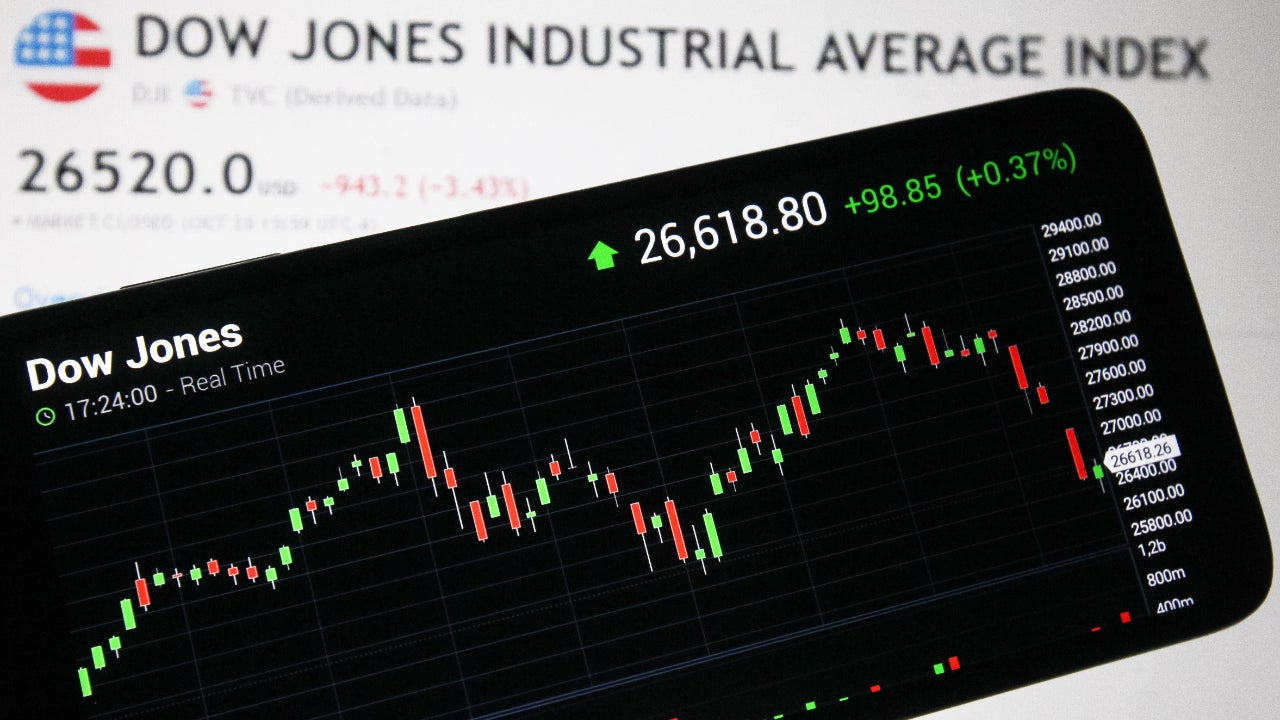
Perhaps the Dow’s greatest value is psychological. Because it has been tracked for over 125 years, it provides a sense of historical context that other indices lack. When the Dow hits a major milestone—such as 30,000 or 40,000 points—it captures the public imagination and can drive investor confidence. While professional analysts might look at more complex metrics, the Dow remains the “everyman’s” index, serving as a vital bridge between the complexities of Wall Street and the reality of Main Street.
In conclusion, the Dow Jones Industrial Average is more than just a relic of the industrial age. It is a living, breathing reflection of American corporate history. While it has its mathematical quirks and a limited scope, its ability to distill the performance of the world’s largest economy into a single, three-digit or five-digit number makes it an indispensable tool for anyone interested in the world of money and investing. Understanding how it is built, how it is calculated, and what it represents allows you to look past the daily headlines and gain a deeper insight into the financial forces that shape our world.
aViewFromTheCave is a participant in the Amazon Services LLC Associates Program, an affiliate advertising program designed to provide a means for sites to earn advertising fees by advertising and linking to Amazon.com. Amazon, the Amazon logo, AmazonSupply, and the AmazonSupply logo are trademarks of Amazon.com, Inc. or its affiliates. As an Amazon Associate we earn affiliate commissions from qualifying purchases.