
When investors, news anchors, and everyday professionals ask, “What is the Dow Jones doing today?” they are asking more than just a question about a numerical value. They are seeking a pulse check on the American economy and, by extension, the global financial landscape. The Dow Jones Industrial Average (DJIA), often simply referred to as “the Dow,” is the most iconic stock market index in the world. It tracks 30 prominent, “blue-chip” companies listed on stock exchanges in the United States.
Because the Dow represents a cross-section of diverse industries—from technology and healthcare to retail and heavy manufacturing—its daily movement serves as a vital barometer for market health. However, understanding today’s movement requires more than a glance at a green or red arrow. It requires a deep dive into the mechanics of the index, the macroeconomic forces at play, and the strategic mindset necessary to navigate financial volatility.

The Mechanics of the Dow: More Than Just a Number
To understand what the Dow is doing today, one must first understand how it is constructed. Unlike the S&P 500 or the Nasdaq, which are market-capitalization-weighted, the Dow is a price-weighted index. This means that companies with higher share prices have a greater influence on the index’s daily movement than those with lower share prices, regardless of the company’s actual total market value.
The Price-Weighted Paradox
This unique structure creates a specific dynamic in daily trading. For example, if a high-priced stock like UnitedHealth Group or Goldman Sachs experiences a 2% swing, it will move the “points” of the Dow much more significantly than a 2% swing in a lower-priced stock like Verizon or Coca-Cola. When you see the Dow is “up 300 points today,” a large portion of that movement might be attributed to just three or four heavy hitters within the 30-stock lineup. This makes the Dow a concentrated look at corporate leadership rather than a broad sweep of the entire market.
Why 30 Companies Represent the Broader Economy
Critics often argue that 30 companies cannot possibly represent the complexity of the modern financial system. However, the selection committee for the Dow ensures that the components are leaders in their respective fields with excellent reputations and sustained growth. Because these companies—such as Microsoft, Boeing, and JPMorgan Chase—are deeply intertwined with global supply chains and consumer spending, their daily performance reflects broader economic trends. When these titans move in unison, it signals a collective shift in investor confidence regarding the health of the American corporate engine.
Catalysts for Today’s Performance: The Macro Landscape
When the Dow Jones experiences a significant move today, it is rarely in a vacuum. The index reacts to a complex ecosystem of data points, policy shifts, and geopolitical events. For the modern investor, identifying these catalysts is essential for distinguishing between temporary “noise” and long-term trend shifts.
Monetary Policy and Interest Rate Sensitivity
One of the primary drivers of the Dow’s movement today is the stance of the Federal Reserve. The relationship between interest rates and the stock market is foundational to business finance. When the Fed signals a “hawkish” stance (maintaining or raising high interest rates to fight inflation), the Dow often reacts negatively. High rates increase the cost of borrowing for the industrial giants within the index, potentially squeezing profit margins. Conversely, a “dovish” signal (suggesting rate cuts) can send the Dow soaring as investors anticipate cheaper capital and increased consumer spending. Tracking the “today” performance often means tracking the latest comments from central bank officials.
Corporate Earnings Season Dynamics
Four times a year, the market enters “earnings season,” a period that dictates much of the Dow’s daily volatility. Because the index is comprised of only 30 stocks, an earnings beat or miss from a major component like Apple or Caterpillar can single-handedly dictate whether the index ends the day in positive or negative territory. Investors look beyond the “top-line” revenue and “bottom-line” profit; they focus on forward-looking guidance. If a Dow component suggests that demand is cooling or that input costs are rising due to supply chain issues, it can trigger a sell-off that drags the entire average down, even if other economic data remains positive.

Market Sentiment and the Psychology of Volatility
The Dow Jones is not just a mathematical formula; it is a reflection of human and algorithmic psychology. What the Dow is doing today is often a result of how “the street” perceives risk versus reward in the current moment.
Institutional vs. Retail Influence
While individual retail investors make up a significant portion of market participation, the heavy lifting on the Dow is often done by institutional investors—pension funds, hedge funds, and mutual funds. These entities often use programmatic trading, where algorithms execute massive trades based on specific technical levels. If the Dow crosses a “support” or “resistance” level—such as a round number like 35,000 or 40,000—it can trigger a cascade of buying or selling. Understanding today’s movement requires recognizing that sometimes the Dow moves not because of a news event, but because a technical threshold was crossed, triggering an automated response.
Identifying Trends Amidst the Noise
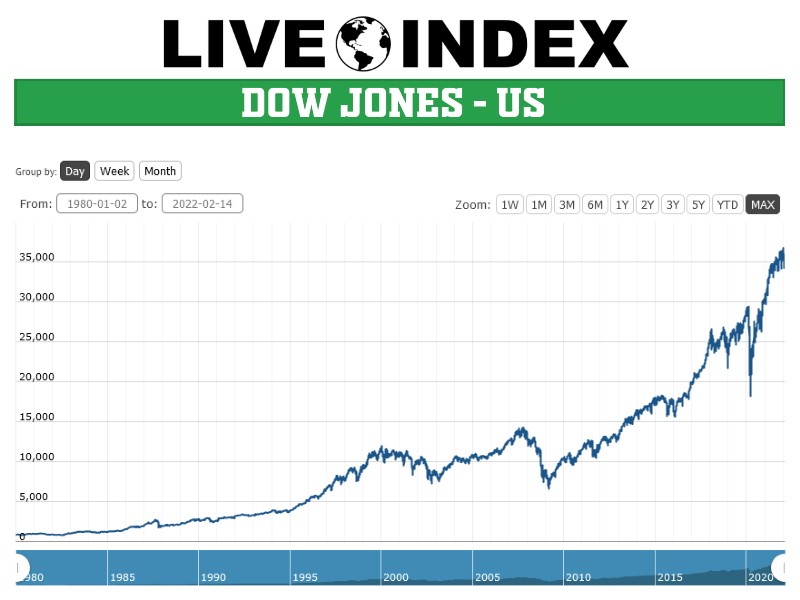
It is easy to get caught up in the minute-by-minute fluctuations of the Dow. Financial news outlets often use sensationalist language to describe a 1% drop as a “plunge” or a 1% gain as a “rally.” However, for those focused on building wealth, the goal is to identify whether today’s movement is part of a larger trend. Is the market in a “Bull” phase (characterized by optimism and rising prices) or a “Bear” phase (characterized by pessimism and falling prices)? Today’s specific movement is merely a single data point on a much longer timeline. Insightful investors look at the “Moving Average”—the average price over the last 50 or 200 days—to see if today’s action confirms a trend or represents an anomaly.
Strategic Asset Allocation in Response to Daily Shifts
The ultimate question for anyone tracking the Dow today is: “What should I do with this information?” In the world of personal finance and professional investing, the answer often lies in maintaining a disciplined strategy rather than reacting impulsively to daily headlines.
Avoiding the Pitfalls of Emotional Trading
The greatest enemy of a successful investment portfolio is emotion. When the Dow is doing poorly today, the natural human instinct is “loss aversion”—the desire to sell to prevent further pain. Conversely, when the Dow is hitting all-time highs, the “fear of missing out” (FOMO) can lead investors to buy at the peak. Professional financial strategy dictates that daily movements should rarely dictate a change in a long-term plan. Instead, these fluctuations should be viewed as opportunities for “rebalancing.” If a significant move in the Dow makes your portfolio too heavy in equities or too heavy in cash, today might be the day to adjust back to your target allocation.
Using the Dow as a Tool, Not a Final Decision
While the Dow Jones is an excellent indicator of the “Big Economy,” a modern portfolio should be much more diversified. Most successful investors use the Dow as a benchmark to compare their own performance. If the Dow is up 1% today but your portfolio is flat, it may be time to analyze your sector exposure. Are you too concentrated in tech? Do you lack exposure to the value-oriented industrial companies that drive the DJIA? By using the Dow as a diagnostic tool rather than a definitive guide, you can make more informed decisions about side hustles, business investments, and retirement planning.
Conclusion: The Long-View Perspective
“What is the Dow Jones doing today?” is a question that connects us to the global flow of capital. Whether it is rising on the back of a positive jobs report or retreating due to geopolitical tensions, the Dow remains the most visible scoreboard in the world of finance.
However, the most successful participants in the market are those who can observe today’s numbers without losing sight of tomorrow’s goals. The Dow Jones Industrial Average has survived depressions, world wars, and technological revolutions. Its daily fluctuations are the heartbeat of a living, breathing economic system. By understanding the mechanics of the index, the macro forces that move it, and the psychological factors at play, you can transform from a passive observer of the news into a strategic manager of your own financial future. Today’s points are temporary; the principles of sound investing are permanent.
aViewFromTheCave is a participant in the Amazon Services LLC Associates Program, an affiliate advertising program designed to provide a means for sites to earn advertising fees by advertising and linking to Amazon.com. Amazon, the Amazon logo, AmazonSupply, and the AmazonSupply logo are trademarks of Amazon.com, Inc. or its affiliates. As an Amazon Associate we earn affiliate commissions from qualifying purchases.