
When investors, news anchors, or casual observers ask, “How is the market doing today?” they are almost always referring to the Dow Jones Industrial Average (DJIA). Often simply called “the Dow,” this index is the world’s most famous barometer of the American stock market’s health. While it represents only 30 companies, its movements are parsed by millions of people daily to gauge the economic temperature of the United States.
Understanding the Dow today requires more than just looking at a flashing green or red number on a screen. It requires an understanding of what that number signifies, how it is calculated, and why it remains a cornerstone of the financial world over a century after its inception.

The Mechanics of the Dow: Beyond the Daily Number
To understand what the Dow is today, one must first understand its unique construction. Unlike most modern indices, which are weighted by market capitalization (the total value of a company’s shares), the Dow is a price-weighted index.
The History and Evolution of the “Blue-Chip” Index
Founded in 1896 by Charles Dow and Edward Jones, the index originally featured only 12 companies, primarily in the industrial sector—think railroads, cotton, and gas. Today, the index has expanded to 30 “blue-chip” companies. The term “blue-chip” comes from poker, where blue chips hold the highest value. In finance, these are large, well-established, and financially sound companies that have operated for many years and are leaders in their respective industries.
How the Price-Weighted System Works
In a price-weighted index like the Dow, stocks with higher share prices have a greater influence on the index’s daily movement than those with lower share prices. For example, if a stock trading at $200 moves by 1%, it has a much larger impact on the Dow’s point total than a stock trading at $20 moving by the same 1%.
This is calculated using the “Dow Divisor.” Because of stock splits, dividends, and other corporate actions, the Dow is not a simple average of the 30 stock prices. Instead, the sum of the prices is divided by a constantly adjusted divisor to ensure that the index remains consistent over time.
The Current Components of the Dow
The 30 companies in the Dow today represent a cross-section of the U.S. economy, ranging from technology (Microsoft and Apple) to retail (Walmart and Home Depot) and healthcare (UnitedHealth Group). The selection committee at S&P Dow Jones Indices chooses companies that have an excellent reputation, demonstrate sustained growth, and are of interest to a large number of investors. Notably, the “Industrial” part of the name is now largely historical, as the index includes companies from almost every sector except utilities and transportation.
Why Today’s Dow Movements Matter to Your Portfolio
While many sophisticated investors prefer the S&P 500 for its breadth, the Dow remains the ultimate psychological indicator for the “Money” niche. When the Dow hits a new “all-time high,” it triggers a specific type of investor behavior and media coverage that can drive market momentum.
The Dow as a Sentiment Indicator
The Dow is often the first thing people see when they check their financial apps. Because it consists of household names, its performance is viewed as a reflection of the “Main Street” economy. When the Dow is up, consumer confidence tends to rise. When it experiences a “correction” (a drop of 10% or more), it can trigger widespread anxiety, even if an individual’s personal portfolio is diversified into assets not represented in the index.
Correlation with Economic Health
Because the Dow 30 are massive global conglomerates, their quarterly earnings reports—which directly drive the Dow’s price—provide a window into global trade, consumer spending, and industrial production. If Dow components like Caterpillar are reporting strong sales, it suggests that global infrastructure spending is healthy. If Visa or American Express report high spending volumes, it indicates that the American consumer is resilient.

Comparing the Dow to the S&P 500 and Nasdaq
In the context of personal finance, it is crucial to understand that the Dow is a narrow slice of the market. While the Dow tracks 30 stocks, the S&P 500 tracks 500, and the Nasdaq Composite tracks over 2,500 (mostly tech-heavy) stocks. Today, the Dow is often seen as the “value” index. It tends to be less volatile than the Nasdaq because its components are mature companies that often pay dividends, making the Dow a favorite for conservative investors and those nearing retirement.
How to Use Dow Trends in Your Investment Strategy
Monitoring the Dow today isn’t just about watching a number; it’s about making informed decisions regarding your capital allocation. Successful investors use index trends to refine their long-term strategies.
Long-term Investing vs. Daily Volatility
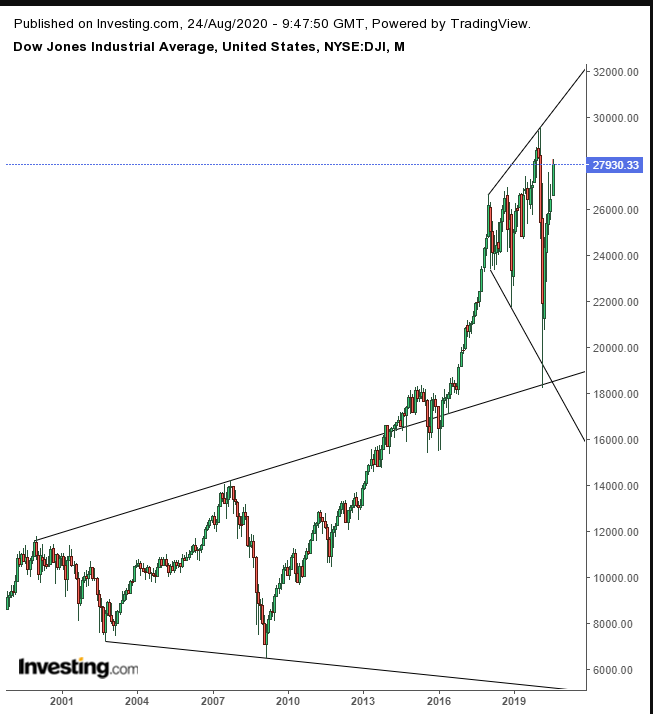
For the average person focused on personal finance, the “daily” movement of the Dow is often “noise.” However, the long-term trend of the Dow is a powerful visual of the compounding power of the U.S. economy. Since its inception, the Dow has trended upward despite wars, depressions, and pandemics. Using the Dow as a benchmark allows investors to see if their own managed portfolios are outperforming or underperforming a basket of the world’s most stable companies.
Hedging and Risk Management
If the Dow is experiencing high volatility today, it may signal a shift in the broader economic cycle. For example, if the Dow is falling while gold or bonds are rising, investors may be moving into “safe-haven” assets. Understanding these shifts helps you decide when to rebalance your portfolio. If your portfolio is too heavily weighted in one Dow component (like Apple or Goldman Sachs), you may be exposed to “idiosyncratic risk,” where a single company’s bad news drags down your entire net worth.
Investing via Index Funds and ETFs
You don’t have to buy all 30 stocks individually to benefit from the Dow’s growth. Financial tools like the SPDR Dow Jones Industrial Average ETF (DIA), colloquially known as “Diamonds,” allow investors to buy a single share that tracks the entire index. This is an efficient way to gain exposure to blue-chip stability with low fees, embodying a core tenet of modern personal finance: diversification and cost-efficiency.
Factors That Influence the Dow Today
Several macroeconomic levers move the Dow on a day-to-day basis. In the world of business finance, these factors are the primary drivers of volatility.
Interest Rates and the Federal Reserve
Perhaps no single entity influences the Dow today more than the Federal Reserve. When the Fed raises interest rates to combat inflation, it becomes more expensive for companies to borrow money and expand. This often leads to a dip in the Dow. Conversely, when rates are lowered, “cheap money” flows into the equity markets, typically driving the Dow to higher valuations.
Corporate Earnings Seasons
Four times a year, the companies within the Dow report their financial results. Because the index only has 30 stocks, a massive “miss” or “beat” by a high-priced component like UnitedHealth or Goldman Sachs can swing the entire index by hundreds of points. Investors watch “guidance”—what the company expects to happen in the future—even more closely than the current profit numbers.
Global Geopolitical Events and Trade Policy
Since the Dow components are global players, they are sensitive to international relations. Trade wars, fluctuations in the value of the U.S. Dollar, and geopolitical instability in energy-producing regions can all impact the bottom lines of companies like Chevron or Boeing. Today’s Dow reflects not just the American economy, but the interconnected nature of global commerce.
Conclusion: The Enduring Relevance of the Dow
So, what is the Dow Jones Industrial Average today? It is more than just a list of stocks; it is a living history of American capitalism. While critics argue that it is too narrow or that its price-weighted methodology is antiquated, it remains the most cited financial metric in the world for a reason. It represents the “titans” of industry—the companies that provide our software, manage our money, and power our homes.
For the modern investor, the Dow serves as a vital tool for assessing market sentiment and economic health. By understanding the mechanics behind the number, the strategic implications of its movements, and the macro factors that drive its daily fluctuations, you can move beyond being a passive observer of the news and become a more informed participant in your own financial future. Whether the Dow is up 500 points or down 500 points today, the key is to view it as one piece of a larger financial puzzle, guiding you toward disciplined, long-term wealth creation.
aViewFromTheCave is a participant in the Amazon Services LLC Associates Program, an affiliate advertising program designed to provide a means for sites to earn advertising fees by advertising and linking to Amazon.com. Amazon, the Amazon logo, AmazonSupply, and the AmazonSupply logo are trademarks of Amazon.com, Inc. or its affiliates. As an Amazon Associate we earn affiliate commissions from qualifying purchases.