
The question “what is the Dow at right now?” is perhaps the most frequently asked query in the world of finance. Whether you are a seasoned institutional investor or someone checking their 401(k) for the first time in months, the Dow Jones Industrial Average (DJIA) serves as the primary pulse of the American economy. However, the numerical value of the Dow at any given second is only a small part of a much larger narrative. To understand where the Dow is “at,” one must look beyond the flashing red and green numbers on a ticker tape and delve into the macroeconomic forces, corporate earnings, and investor psychology that drive the world’s most famous stock index.

Decoding the Dow: What “Right Now” Really Means in the Financial Markets
When an investor asks what the Dow is doing right now, they are usually looking for a snapshot of the current trading price. However, the Dow is not a single entity; it is a price-weighted index of 30 prominent companies listed on stock exchanges in the United States. Unlike the S&P 500, which is weighted by market capitalization, the Dow’s movement is dictated by the share prices of its components.
The Mechanics of a Price-Weighted Index
In a price-weighted index like the Dow, companies with higher share prices have a greater influence on the index’s total value than those with lower share prices. This means that a $1 movement in a high-priced stock like UnitedHealth Group or Goldman Sachs will move the Dow significantly more than a $1 movement in a lower-priced stock like Coca-Cola or Verizon. Understanding this quirk is essential for interpreting “what the Dow is at.” If the Dow is up 200 points, it might not mean the entire market is booming; it could simply mean that two or three high-priced components had a particularly strong morning.
Real-Time Data vs. Market Sentiment
In the digital age, “right now” translates to sub-second latency. Professional traders use Bloomberg Terminals to see price movements in real-time, while retail investors often see data delayed by 15 minutes unless they use specific trading platforms. But the numerical “level” of the Dow—whether it is at 38,000 or 40,000—is often less important than the velocity and direction of the movement. If the Dow is “at” a certain level but is trending downward on high volume, the sentiment is bearish, regardless of the absolute number. Conversely, a steady, low-volatility climb suggests a “climb the wall of worry” scenario that often characterizes healthy bull markets.
Factors Influencing the Dow Jones Industrial Average Today
The value of the Dow at any given moment is a reflection of the collective expectations of millions of market participants. These expectations are shaped by a complex interplay of domestic and international factors. To understand why the Dow is at its current level, we must examine the pillars of the current economic environment.
Federal Reserve Policy and Interest Rates
Perhaps no single factor influences the Dow more than the Federal Reserve’s monetary policy. When the Fed raises interest rates to combat inflation, the “cost of money” increases. This makes it more expensive for the 30 blue-chip companies in the Dow to borrow capital for expansion, and it also increases the discount rate used to value future cash flows. Historically, high-interest rate environments put downward pressure on the Dow. Conversely, when the Fed signals a “pivot” toward lowering rates, the Dow often rallies as investors anticipate cheaper capital and stronger consumer spending.
Corporate Earnings and Blue-Chip Performance
The Dow is comprised of “Blue Chip” companies—industry leaders with a history of stable earnings. Every quarter, during “earnings season,” these companies release their financial results. Because the Dow only contains 30 stocks, a surprise—either positive or negative—from a major component like Apple, Microsoft, or Boeing can cause a massive swing in the index. When the Dow is at a record high, it is usually because these 30 companies are reporting robust profit margins, strong revenue growth, and positive guidance for the future.
Geopolitical Events and Global Trade
The companies within the Dow Jones Industrial Average are massive multinationals. They earn a significant portion of their revenue from overseas markets. Therefore, the Dow’s level is highly sensitive to geopolitical stability. Trade tensions with China, conflicts in the Middle East, or economic instability in the Eurozone can all lead to “risk-off” sentiment. When global tensions rise, investors often pull money out of equities, causing the Dow to drop, even if the domestic U.S. economy remains fundamentally sound.
How to Track the Dow Like a Pro

To accurately answer “what is the Dow at right now,” one needs to know where to look and how to interpret the data. For the modern investor, there are several layers of information available, ranging from surface-level quotes to deep-dive technical indicators.
Using Financial News Terminals and Apps
For most people, a quick search on Google or a glance at a finance app like Yahoo Finance, CNBC, or MarketWatch provides the immediate answer. These platforms provide the current price, the “change from open,” and a percentage of movement. However, to track the Dow professionally, one should also look at the “Advancers vs. Decliners” ratio within the 30 stocks. If the Dow is up, but only 10 stocks are advancing while 20 are declining, it suggests the rally is “thin” and potentially unsustainable.
Understanding Index Futures and After-Hours Trading
The stock market is only open from 9:30 AM to 4:00 PM Eastern Time, but the Dow never truly sleeps. Dow Futures trade nearly 24 hours a day on the Chicago Mercantile Exchange (CME). If you want to know what the Dow will be at when the market opens tomorrow, you look at the “E-mini Dow Futures.” These contracts allow investors to hedge their positions and provide a glimpse into how the market is reacting to overnight news from Asia and Europe. Watching the futures can help you anticipate market “gaps”—where the Dow opens significantly higher or lower than it closed the previous day.
The Dow vs. The Broader Market: Contextualizing the Numbers
A common mistake among novice investors is assuming the Dow represents the entire stock market. While it is the most cited index, it is also one of the most concentrated. Comparing the Dow’s current level to other indices provides a clearer picture of the financial landscape.
Dow Jones vs. S&P 500: Concentration Risks
The S&P 500 tracks 500 companies and is market-cap weighted, making it a broader representation of the U.S. economy. There are times when the Dow is “at” a record high while the S&P 500 is struggling, or vice-versa. This divergence usually happens when “Value” stocks (which dominate the Dow) are outperforming “Growth” stocks (which dominate the S&P 500 and the Nasdaq). If the Dow is holding steady while tech-heavy indices are falling, it indicates a “rotation” where investors are seeking safety in established, dividend-paying industrial giants.
Why the Dow Still Matters in a Tech-Dominant Era
Critics often argue that the Dow is an antiquated index because it only tracks 30 stocks and ignores the thousands of smaller, high-growth companies that drive innovation. However, the Dow remains relevant because its components—such as JPMorgan Chase, Caterpillar, and Home Depot—are the bedrock of the global economy. These companies represent the “real” economy of banking, construction, and retail. When the Dow moves, it reflects the health of the consumer and the stability of the global financial infrastructure.
Strategic Takeaways for Individual Investors
Knowing what the Dow is at “right now” is a tactical observation, but long-term wealth is built on strategic action. Investors should use the Dow’s current level as a benchmark rather than a trigger for emotional decision-making.
Avoiding the Trap of Short-Term Volatility
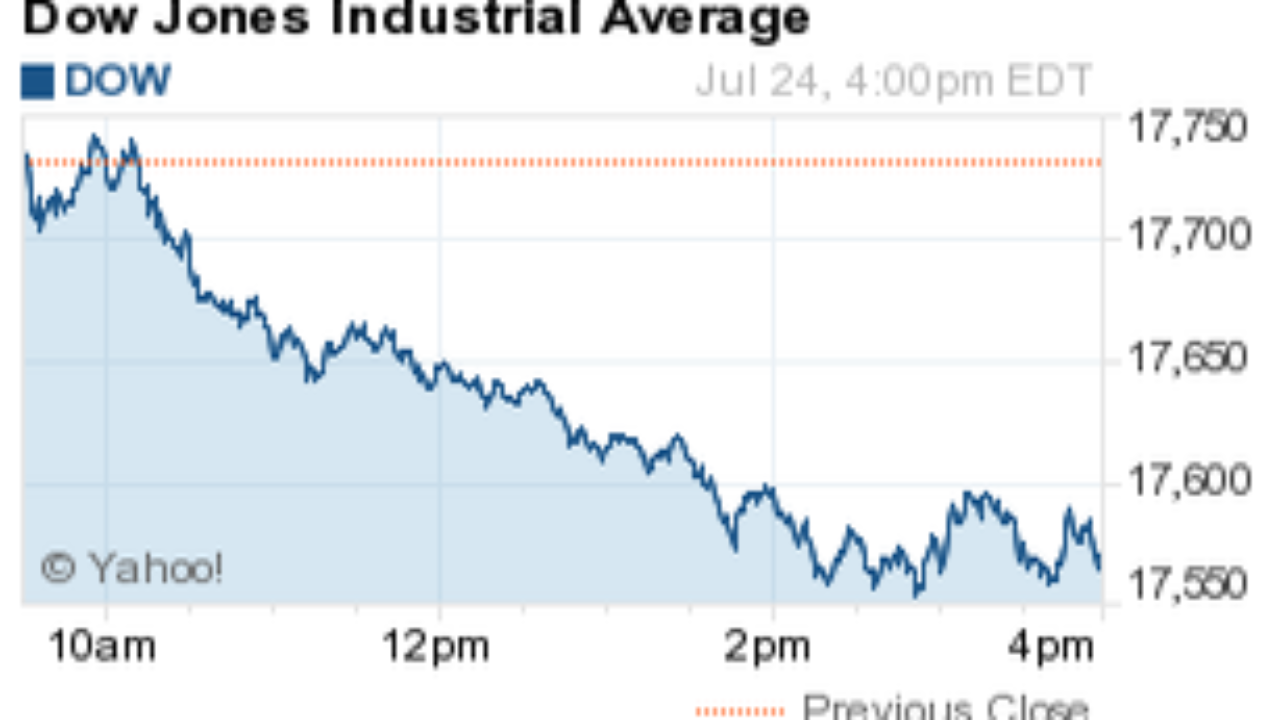
The daily fluctuations of the Dow—the “noise”—can be distracting. A 300-point drop might feel significant, but in a market where the index is at 35,000+, it represents a move of less than 1%. Successful investors focus on the long-term trend lines rather than the daily candles. If the Dow is at a level that seems “high,” it may be a time for rebalancing a portfolio; if it is “at” a low point due to temporary panic, it may represent a buying opportunity for those with a 10-year horizon.
Building a Resilient Portfolio Around Core Indices
While it is exciting to track the Dow’s “at” price, most financial advisors recommend a diversified approach. This involves owning a mix of assets that includes Dow-tracking ETFs (like the DIA), S&P 500 funds, and international equities. By understanding the components that make up the Dow, an investor can better understand their own exposure to different sectors. For example, if you realize the Dow is heavily weighted toward financials and healthcare right now, you might choose to balance your personal portfolio with more technology or emerging markets.
In conclusion, “what is the Dow at right now” is a question that opens the door to a vast world of economic inquiry. The index is a living, breathing representation of global commerce, influenced by everything from Federal Reserve interest rate hikes to the quarterly earnings of a single aircraft manufacturer. By understanding how the index is calculated, what drives its movement, and how it compares to the broader market, investors can move beyond the “number” and gain true insight into the financial health of the world.
aViewFromTheCave is a participant in the Amazon Services LLC Associates Program, an affiliate advertising program designed to provide a means for sites to earn advertising fees by advertising and linking to Amazon.com. Amazon, the Amazon logo, AmazonSupply, and the AmazonSupply logo are trademarks of Amazon.com, Inc. or its affiliates. As an Amazon Associate we earn affiliate commissions from qualifying purchases.