
The financial markets are a labyrinth of numbers, trends, and indicators, but few capture the public’s imagination quite like an all-time high in a major index. Among these, the Dow Jones Industrial Average (DJIA), often simply called “the Dow,” holds a special place. When the Dow reaches an all-time high, it’s more than just a statistical blip; it often signals robust economic health, strong corporate performance, and widespread investor confidence. For many, it’s a beacon of prosperity, while for others, a cause for cautious reflection. Understanding what an all-time high signifies for this venerable index, the forces that propel it, and its implications for personal finance and investing is crucial for anyone navigating the modern financial landscape.

An all-time high for the Dow represents the highest point the index has ever reached in its history, reflecting the cumulative growth and value creation of its constituent companies over more than a century. It’s a snapshot of peak market optimism and economic achievement, but also a moment that invites both celebration and critical analysis. This exploration will delve into the Dow’s significance, the dynamics behind its record-breaking surges, and what investors should consider when the market appears to be perpetually climbing new peaks.
Understanding the Dow Jones Industrial Average (DJIA)
To truly appreciate the significance of a Dow all-time high, one must first grasp what the Dow Jones Industrial Average represents. It is one of the oldest, most recognized, and most frequently quoted stock market indices in the world, often serving as a barometer for the overall health of the U.S. stock market and, by extension, the broader economy.
A Brief History and Its Purpose
Founded by Charles Dow, editor of The Wall Street Journal and co-founder of Dow Jones & Company, the DJIA first debuted on May 26, 1896. Initially, it comprised 12 predominantly industrial companies, a reflection of the economic powerhouse industries of the late 19th century. Its primary purpose was, and largely remains, to provide a clear, concise measure of the performance of a select group of America’s largest and most influential publicly traded companies. Over its long history, the composition of the Dow has evolved dramatically, adapting to shifts in the U.S. economic landscape, yet its role as a key market indicator has endured.
The “Industrials” and Modern Relevance
Despite its name, which harks back to an era dominated by heavy industry, the “Industrial” component of the DJIA today is a misnomer. The index now includes 30 diverse “blue-chip” companies spanning virtually every major sector of the U.S. economy, from technology and finance to healthcare and consumer goods. Giants like Apple, Microsoft, Goldman Sachs, Johnson & Johnson, and McDonald’s are among its current constituents. These companies are selected not just for their size, but for their widespread investor interest and their ability to reflect broad market movements. Consequently, the Dow’s performance is often seen as a proxy for the collective health and profitability of America’s corporate titans, whose fortunes ripple across the entire economy.
Price-Weighted vs. Market-Cap Weighted Indices
A crucial aspect differentiating the Dow from other major indices like the S&P 500 or the Nasdaq Composite is its methodology. The DJIA is a price-weighted index, meaning that companies with higher share prices have a greater influence on the index’s value, regardless of their total market capitalization (the total value of all their outstanding shares). This contrasts with market-capitalization-weighted indices, where companies with larger market caps (even if their share price is lower) exert more influence. While some critics argue this makes the Dow less representative of the broader market than market-cap-weighted indices, its long history and consistent visibility ensure its continued relevance and impact on investor sentiment.
Navigating the Peaks: Unpacking All-Time Highs
When the Dow surges past its previous peak, it captures headlines and often sparks a mix of excitement and apprehension. Understanding what constitutes these record-breaking levels and their implications is key for any astute investor.
The Latest Record-Breaking Milestones
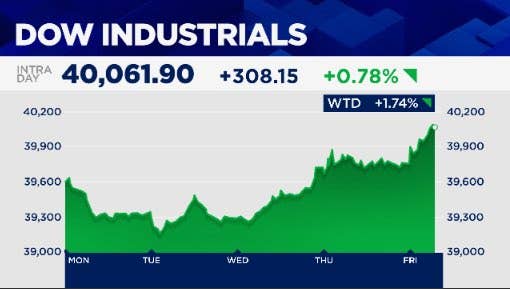
The specific numeric value of the Dow’s “all-time high” is a moving target, constantly being redefined as markets fluctuate. For instance, the Dow has crossed significant psychological thresholds like 10,000, 20,000, 30,000, and more recently, 40,000 points. Each new high marks a moment in financial history, often celebrated as a sign of economic progress and investor confidence. These milestones are typically reported in nominal terms – the absolute highest numerical value the index has reached. Staying abreast of the most current high requires real-time financial news sources, as these records can be broken and reset frequently during robust bull markets.
Nominal vs. Real (Inflation-Adjusted) Highs
While nominal all-time highs are what typically dominate headlines, a more nuanced and financially insightful perspective involves considering real, or inflation-adjusted, highs. Inflation erodes the purchasing power of money over time. A dollar today is worth less than a dollar ten or twenty years ago. Therefore, simply looking at the nominal peak can be misleading. To understand the true wealth creation, one must adjust historical Dow values for inflation. For example, a Dow at 30,000 in 2020 might have represented a greater increase in real wealth than a Dow at 35,000 in 2024, if inflation during those intervening years was significant. Smart investors look beyond the headline number to assess whether the market is truly creating new wealth or merely keeping pace with rising prices.
Why All-Time Highs Matter to Investors
All-time highs carry significant psychological weight. They can breed optimism, encouraging further investment (sometimes referred to as FOMO, or Fear Of Missing Out). This can create a positive feedback loop, pushing markets even higher. Conversely, approaching or being at an all-time high can also trigger caution. Investors might wonder if the market is overvalued, anticipating a correction. For long-term investors, new highs can validate their strategy, showing that patience and consistent investment generally pay off over time. For others, it might signal a time to rebalance portfolios, take some profits, or reassess risk exposure. The importance of an all-time high lies not just in its numerical value, but in its influence on investor behavior and market sentiment.
Driving Forces Behind Market Records
Market indices like the Dow do not achieve all-time highs by accident; they are the culmination of complex interplay between fundamental economic factors, corporate performance, government policies, and investor psychology.
Corporate Earnings and Economic Growth
At the core of any sustained market advance are strong corporate earnings. When the companies within the Dow consistently report robust profits, healthy revenue growth, and optimistic forward guidance, it provides a strong foundation for stock price appreciation. This, in turn, is often a direct reflection of broader economic growth: a healthy economy with rising employment, consumer spending, and business investment translates into higher demand for goods and services, boosting corporate bottom lines. Periods of sustained economic expansion are almost invariably accompanied by rising stock markets and new all-time highs.

Monetary Policy and Interest Rates
Central banks, most notably the U.S. Federal Reserve, wield significant influence over market direction through their monetary policy. Low interest rates, for example, make it cheaper for companies to borrow money for expansion and for consumers to finance purchases, stimulating economic activity. Lower rates also make bonds less attractive as an investment, prompting investors to seek higher returns in the stock market. Conversely, rising interest rates can make borrowing more expensive, potentially slowing economic growth and making equity investments less appealing as bond yields become more competitive. A sustained period of accommodative monetary policy is often a key ingredient in bull markets that culminate in all-time highs.
Technological Advancements and Innovation
Transformative technological advancements have historically been powerful drivers of market growth. From the industrial revolution to the dot-com boom and the age of artificial intelligence, innovation creates new industries, enhances productivity, and opens up new avenues for corporate profitability. Companies at the forefront of these innovations often see their stock prices soar, and if they are Dow constituents (or aspire to be), their success can lift the entire index to new heights. The impact of big tech on recent Dow performance is a clear testament to this trend.
Geopolitical Stability and Investor Sentiment
While less tangible than earnings or interest rates, geopolitical stability and overall investor sentiment play a critical role. A stable political environment, predictable regulatory frameworks, and a lack of major international conflicts tend to foster confidence, encouraging both domestic and foreign investment. Conversely, uncertainty, trade wars, or geopolitical tensions can quickly erode confidence, leading to market pullbacks. Positive sentiment, often fueled by optimism about the future, can itself become a self-fulfilling prophecy, drawing more money into the market and pushing prices higher, sometimes even beyond what underlying fundamentals might immediately suggest.
Investing at the Zenith: Strategies and Considerations
For individual investors, the notion of an all-time high presents a unique set of challenges and opportunities. While exhilarating, it can also induce anxiety about potential reversals or the feeling of having missed out.
The Peril of “Buying the Top” vs. Long-Term Investing
A common fear when markets are at all-time highs is “buying the top”—investing just before a significant correction. This fear can lead to paralysis, causing investors to sit on the sidelines and miss out on further gains. However, historical data suggests that markets spend a significant amount of time near or at all-time highs. For long-term investors, attempting to time the market by waiting for a dip is often less effective than consistent, disciplined investing, regardless of market highs. Dollar-cost averaging, where one invests a fixed amount regularly, can mitigate the risk of buying solely at peaks by averaging out the purchase price over time.
Diversification and Risk Management
At any market level, and particularly at all-time highs, diversification remains paramount. Concentrating investments in a few high-flying stocks or sectors increases risk. A well-diversified portfolio, spread across different asset classes (stocks, bonds, real estate), industries, and geographies, helps cushion the blow if one particular segment experiences a downturn. Risk management also involves regularly reviewing one’s asset allocation to ensure it aligns with current financial goals, time horizon, and risk tolerance. Rebalancing, selling some assets that have performed exceptionally well to buy more of those that have lagged, can help maintain desired portfolio proportions and lock in some gains.
Emotional Discipline in a Bull Market
Bull markets, especially those reaching new highs, can breed complacency and overconfidence. Investors might be tempted to take on excessive risk, chasing “hot” stocks or abandoning their investment plan. Maintaining emotional discipline is crucial. Stick to your predefined investment strategy, avoid making impulsive decisions based on headlines or market euphoria, and remember that market cycles include both upturns and downturns. A professional, insightful approach involves looking at company fundamentals, understanding valuation metrics, and resisting the urge to follow the herd.
Beyond the Dow: A Holistic Market View
While the Dow is an important indicator, it represents only 30 companies. Smart investors look beyond just one index to gain a holistic view of the market. Observing the S&P 500 (which tracks 500 large-cap U.S. companies), the Nasdaq Composite (heavily weighted towards technology and growth stocks), and international indices provides a more comprehensive picture. Analyzing broader economic data, such as GDP growth, inflation rates, employment figures, and consumer confidence, offers crucial context for understanding market valuations and future prospects.
The Future Landscape: Sustaining Momentum or Facing Correction?
After achieving an all-time high, the perennial question for investors and economists alike is: what’s next? Will the momentum continue, or is a correction inevitable? Predicting market movements is notoriously difficult, but understanding the factors that influence the future trajectory can help investors prepare.
Economic Indicators to Watch
Monitoring key economic indicators provides valuable clues. Strong corporate earnings growth, sustained low unemployment, healthy consumer spending, and manageable inflation are typically supportive of continued market strength. Conversely, signs of an economic slowdown, persistent inflation, or an impending recession could signal a period of market contraction. Leading indicators like manufacturing new orders, building permits, and consumer confidence surveys can often provide early warnings of shifts in the economic cycle.
The Role of Valuations
While markets can remain irrational longer than investors can remain solvent, valuations eventually matter. When stock prices rise significantly faster than underlying earnings, leading to elevated price-to-earnings (P/E) ratios or other valuation metrics, the market may become “overvalued.” This doesn’t mean an immediate crash is imminent, but it does suggest that future returns might be lower, and the market could be more vulnerable to negative shocks. Investors should pay attention to how current prices compare to historical averages and industry benchmarks, ensuring that they are not buying into an asset bubble.
Long-Term Growth Trajectories
Despite short-term volatility and inevitable corrections, the long-term trajectory of the stock market, particularly the Dow, has historically been upward. Innovation, human ingenuity, and the relentless pursuit of profit tend to drive economic growth over decades. While reaching an all-time high might feel like a pinnacle, history shows that, given enough time, these peaks often become mere stepping stones to even higher levels. For long-term investors, understanding this historical resilience can provide perspective and reinforce the wisdom of a patient, diversified investment approach, even when headlines scream about new records or impending doom. The Dow’s all-time high is not an end point, but a continuous marker in the ongoing journey of wealth creation and economic evolution.
aViewFromTheCave is a participant in the Amazon Services LLC Associates Program, an affiliate advertising program designed to provide a means for sites to earn advertising fees by advertising and linking to Amazon.com. Amazon, the Amazon logo, AmazonSupply, and the AmazonSupply logo are trademarks of Amazon.com, Inc. or its affiliates. As an Amazon Associate we earn affiliate commissions from qualifying purchases.