
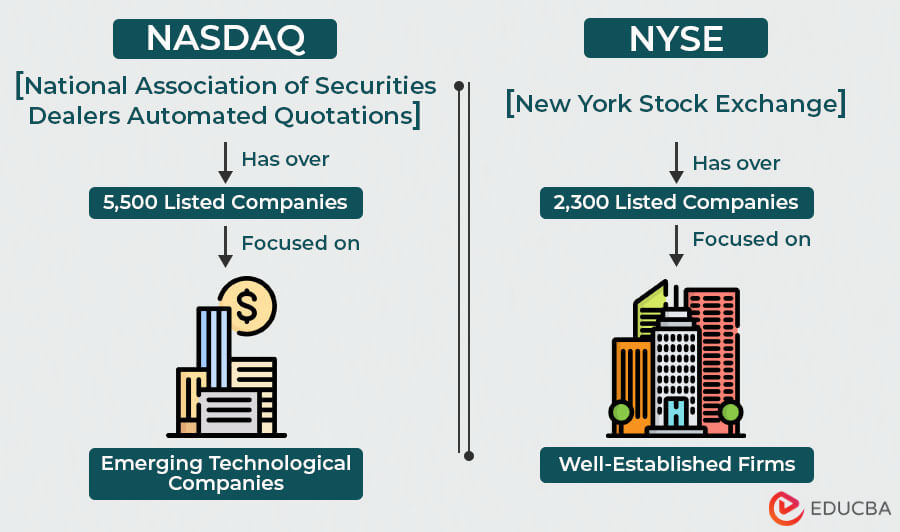
In the vast and intricate world of global finance, two names frequently surface as titans of stock trading: the New York Stock Exchange (NYSE) and the Nasdaq Stock Market. While both serve as crucial platforms where companies raise capital and investors buy and sell shares, they are far from identical. Understanding the fundamental differences between these two financial behemoths is not just an academic exercise; it’s essential for investors, business leaders, and anyone seeking to grasp the mechanics of modern capital markets. From their distinct historical origins and operational methodologies to the types of companies they typically list and the underlying market structures, the NYSE and Nasdaq represent two unique approaches to facilitating the exchange of wealth. This article will delve into these distinctions, offering a comprehensive look at what sets these two iconic exchanges apart.
A Tale of Two Exchanges: Origins and Evolution
The foundational differences between the NYSE and Nasdaq begin with their very inception and the philosophies that guided their creation. One represents a tradition rooted in physical presence and human interaction, while the other pioneered the digital frontier of trading.
The New York Stock Exchange (NYSE): A Legacy of Open Outcry
The NYSE, often referred to as “the Big Board,” boasts a rich history stretching back to the late 18th century. Its origins trace to the Buttonwood Agreement of 1792, an accord signed by 24 stockbrokers and merchants under a buttonwood tree on Wall Street. This agreement laid the groundwork for a centralized securities exchange, marking the birth of what would become the world’s most recognizable stock market. For centuries, the NYSE operated on an “open outcry” auction market model, characterized by brokers physically gathering on a trading floor, shouting bids and offers to execute trades.
This physical marketplace fostered a culture of face-to-face interaction, where human judgment and relationships played a significant role. Even today, despite the heavy integration of electronic trading, the NYSE maintains a symbolic and partially functional trading floor in its iconic building on Wall Street. The image of the NYSE, with its bell-ringing ceremonies and bustling floor, evokes a sense of tradition, stability, and established capital. Companies seeking to list on the NYSE have historically been seen as the industrial titans and “blue-chip” stalwarts of the economy, a testament to the exchange’s long-standing reputation for prestige and rigorous standards.
The Nasdaq Stock Market: A Digital Pioneer
In stark contrast to the NYSE’s venerable legacy, the Nasdaq Stock Market (National Association of Securities Dealers Automated Quotations) is a relative newcomer, having been established in 1971. Its founding marked a revolutionary departure from traditional trading, as Nasdaq was conceived from the outset as the world’s first electronic stock market. There was no physical trading floor, no open outcry; all transactions were executed via a sophisticated computer network. This innovation fundamentally changed how stocks were traded, prioritizing speed, efficiency, and broad accessibility over physical presence.
Nasdaq was designed to bring transparency and efficiency to the over-the-counter (OTC) market, which at the time was fragmented and opaque. By creating an automated quotation system, Nasdaq enabled market makers to post their bid and ask prices electronically, facilitating quicker and more transparent trades. This inherently digital nature made Nasdaq particularly attractive to nascent, technology-focused companies that valued innovation and looked towards the future rather than being tethered to past traditions. Its rapid rise mirrored the growth of the tech industry, solidifying its reputation as the exchange for cutting-edge, growth-oriented enterprises.
Market Structure and Trading Mechanisms
The core distinction between the NYSE and Nasdaq extends deeply into their operational mechanics—how trades are actually executed on a day-to-day basis. These differing market structures influence everything from liquidity to price discovery.
The NYSE’s Hybrid Auction Market
The NYSE operates primarily as an auction market, but with significant electronic enhancements, making it a “hybrid” model. In an auction market, buyers and sellers compete directly, with the highest bid meeting the lowest offer to determine a trade price. At the heart of the NYSE’s auction system is the role of the Designated Market Maker (DMM). Each stock listed on the NYSE is assigned a single DMM, who is responsible for maintaining a fair and orderly market in that specific security. The DMM’s duties include providing liquidity by buying or selling shares from their own inventory when there’s an imbalance, helping to ensure continuous trading and narrow bid-ask spreads.
While a significant portion of orders on the NYSE are now executed electronically through its NYSE Arca platform, the physical trading floor still plays a role, particularly for large, complex, or illiquid orders. Floor brokers can interact with DMMs to negotiate optimal prices, leveraging their expertise and insight. This combination of advanced electronic trading with human oversight aims to provide robust liquidity, price discovery, and stability, especially during volatile market conditions. The NYSE emphasizes a centralized order book where all buy and sell orders meet, ensuring a single, transparent market price at any given moment.
Nasdaq’s Electronic Dealer Market
Nasdaq, on the other hand, functions as a dealer market, also known as a negotiated market or an electronic market. Unlike the NYSE’s single DMM model, Nasdaq relies on multiple market makers who compete with each other to buy and sell stocks from their own inventories. These market makers continually post their bid (price at which they’re willing to buy) and ask (price at which they’re willing to sell) prices for the stocks they cover. When an investor wants to buy or sell a stock, their order is routed to one of these market makers, who then executes the trade.
The competition among numerous market makers is intended to ensure efficient price discovery and tight bid-ask spreads. Since Nasdaq is entirely electronic, orders are executed with incredible speed, often in fractions of a second. This makes it highly suitable for high-frequency trading and algorithmic strategies. The transparency in a dealer market comes from the availability of multiple quotes from different market makers, giving investors an overview of the best available prices. Nasdaq’s structure prioritizes rapid execution and a decentralized approach, aligning with its origins as a digital-first exchange.
Listing Requirements and Company Profiles
The types of companies that choose to list on the NYSE versus Nasdaq often reflect their industry, stage of growth, and strategic objectives, largely influenced by the exchanges’ respective listing requirements.
NYSE: Rigor and Established Corporations

The NYSE is renowned for its stringent listing standards, which typically include higher requirements for a company’s earnings, market capitalization, number of publicly held shares, and share price. These rigorous criteria are designed to ensure that only financially sound, stable, and well-established companies can list on the exchange. As a result, the NYSE has historically been the preferred venue for many of the world’s largest and most mature corporations, often referred to as “blue-chip” companies.
Companies listed on the NYSE frequently hail from traditional sectors such as industrials, financials, consumer staples, healthcare, and energy. Think of corporations like JPMorgan Chase, Coca-Cola, Johnson & Johnson, or ExxonMobil. Listing on the NYSE is often perceived as a mark of prestige and credibility, signaling to investors that a company has achieved a significant level of success and stability. This perceived gravitas can attract a broad base of institutional investors who prioritize consistent performance and a proven track record.
Nasdaq: Innovation and Growth Potential
Nasdaq’s listing requirements, while still robust, are generally considered more accessible for younger, high-growth companies that may not yet have the long history or consistent profitability of their NYSE counterparts. Nasdaq offers different listing tiers—Nasdaq Global Select Market, Nasdaq Global Market, and Nasdaq Capital Market—each with varying financial and qualitative standards. This tiered system allows for flexibility, accommodating companies at different stages of their life cycle, from emerging startups to established tech giants.
Nasdaq has become the natural home for companies in the technology, biotechnology, internet, and other innovation-driven sectors. Iconic tech companies like Apple, Microsoft, Amazon, Google (Alphabet), and Meta Platforms (Facebook) are all listed on Nasdaq. These companies are often characterized by their rapid growth potential, disruptive technologies, and significant investment in research and development, sometimes prioritizing market share and innovation over immediate profitability. Listing on Nasdaq aligns a company with a peer group known for forward-thinking and high-growth trajectories, appealing to investors who are focused on future potential and innovation.
Investor Experience and Market Dynamics
The differences in market structure and company profiles naturally lead to distinct investor experiences and market dynamics. Understanding these nuances can help investors tailor their strategies.
Trading Experience and Data Interpretation
For investors, the underlying market structure impacts how they interact with stock data. Nasdaq provides more granular data, including Level II quotes, which show the best bid and ask prices from all participating market makers, offering a deeper insight into market depth and potential price movements. This level of transparency in dealer quotes can be valuable for active traders and those employing sophisticated strategies. On the NYSE, while extensive data is available, the focus is often on the consolidated best bid and offer, reflecting its single-point auction model.
The electronic nature of Nasdaq generally translates to faster order execution, which is crucial for high-frequency traders. The NYSE’s hybrid model, while largely electronic, still retains the ability for human intervention, which can be advantageous during periods of extreme volatility, where floor brokers can help manage order flow and mitigate panic. Volatility characteristics can also differ, with Nasdaq, due to its concentration of growth stocks, sometimes exhibiting higher price swings compared to the more mature, stable companies on the NYSE.
Index Performance and Market Representation
Both exchanges are represented by major market indices, which serve as benchmarks for different segments of the economy. The Dow Jones Industrial Average (DJIA) and the S&P 500, while not exclusively NYSE indices, have historically been heavily weighted towards NYSE-listed companies, reflecting the established industrial and financial sectors. Movements in the DJIA and S&P 500 are often seen as indicators of the broader economy’s health, particularly its mature and well-capitalized segments.
Conversely, the Nasdaq Composite Index, which includes all stocks listed on Nasdaq, and the Nasdaq 100 Index, which comprises the 100 largest non-financial companies listed on Nasdaq, are dominated by technology and growth companies. These indices are often seen as barometers for the performance of the tech sector and innovation-driven segments of the economy. A strong performance by Nasdaq indices often indicates investor optimism about future growth and technological advancement. Understanding which index represents which exchange provides a clearer picture of the underlying economic drivers influencing an investor’s portfolio.
Choosing the Right Exchange: Implications for Companies and Investors
The decision of where to list is a critical strategic choice for companies, and understanding these choices helps investors make informed decisions.
Strategic Considerations for Companies
For companies, the choice between NYSE and Nasdaq involves weighing several factors. Prestige and brand alignment are significant. Listing on the NYSE can confer a sense of legacy and institutional trust, which might be vital for traditional industries or companies seeking a broad, conservative investor base. Nasdaq, conversely, offers an alignment with innovation and growth, which is crucial for tech startups and firms targeting growth-oriented investors. The cost of listing and ongoing compliance also plays a role, with both exchanges having distinct fee structures and regulatory requirements. Access to capital and the specific investor base each exchange tends to attract are also key considerations, influencing a company’s ability to raise funds and manage its shareholder base effectively.
Navigating the Landscape for Investors
For investors, understanding these differences informs diversification strategies and risk assessment. An investor seeking stable, dividend-paying income might naturally gravitate towards established companies predominantly found on the NYSE. Conversely, an investor with a higher risk tolerance and an appetite for capital appreciation through disruptive innovation might focus more on Nasdaq-listed companies. However, it’s crucial to remember that both exchanges host a diverse range of companies, and the lines are not always clear-cut. There are large, stable tech companies on Nasdaq and rapidly growing companies on NYSE. Ultimately, the choice of exchange provides a general indication of a company’s profile, but thorough due diligence on individual companies remains paramount, regardless of where they are listed.

Conclusion
The New York Stock Exchange and the Nasdaq Stock Market, while both serving the fundamental purpose of facilitating capital markets, stand as distinct pillars of global finance. The NYSE, with its deep historical roots, hybrid auction market, and a concentration of established, blue-chip companies, embodies tradition and stability. Nasdaq, born of the digital age, with its entirely electronic dealer market and a strong affinity for innovative, high-growth technology firms, represents efficiency and forward momentum.
These differences are not merely historical or structural; they shape the very ecosystem within which companies operate and investors make decisions. From the types of firms that meet their respective listing standards to the mechanisms by which trades are executed and the market indices that represent their performance, the NYSE and Nasdaq offer unique windows into different facets of the economy. For companies, the choice of exchange is a strategic alignment with their brand, industry, and investor appeal. For investors, understanding these distinctions enriches their perspective, allowing for more informed portfolio construction and a deeper appreciation of the dynamic interplay that drives the world’s most vital financial markets. Both exchanges are indispensable, each playing a crucial, complementary role in the global financial landscape.
aViewFromTheCave is a participant in the Amazon Services LLC Associates Program, an affiliate advertising program designed to provide a means for sites to earn advertising fees by advertising and linking to Amazon.com. Amazon, the Amazon logo, AmazonSupply, and the AmazonSupply logo are trademarks of Amazon.com, Inc. or its affiliates. As an Amazon Associate we earn affiliate commissions from qualifying purchases.