
In the modern landscape of globalized software development and cloud-based architecture, the concept of time is no longer a simple matter of looking at a clock on the wall. For developers, systems architects, and project managers, the distinction between time zones represents a critical variable in data integrity, server synchronization, and team productivity. Among the most frequent points of intersection in the North American tech corridor is the relationship between Mountain Time (MT) and Pacific Time (PT).
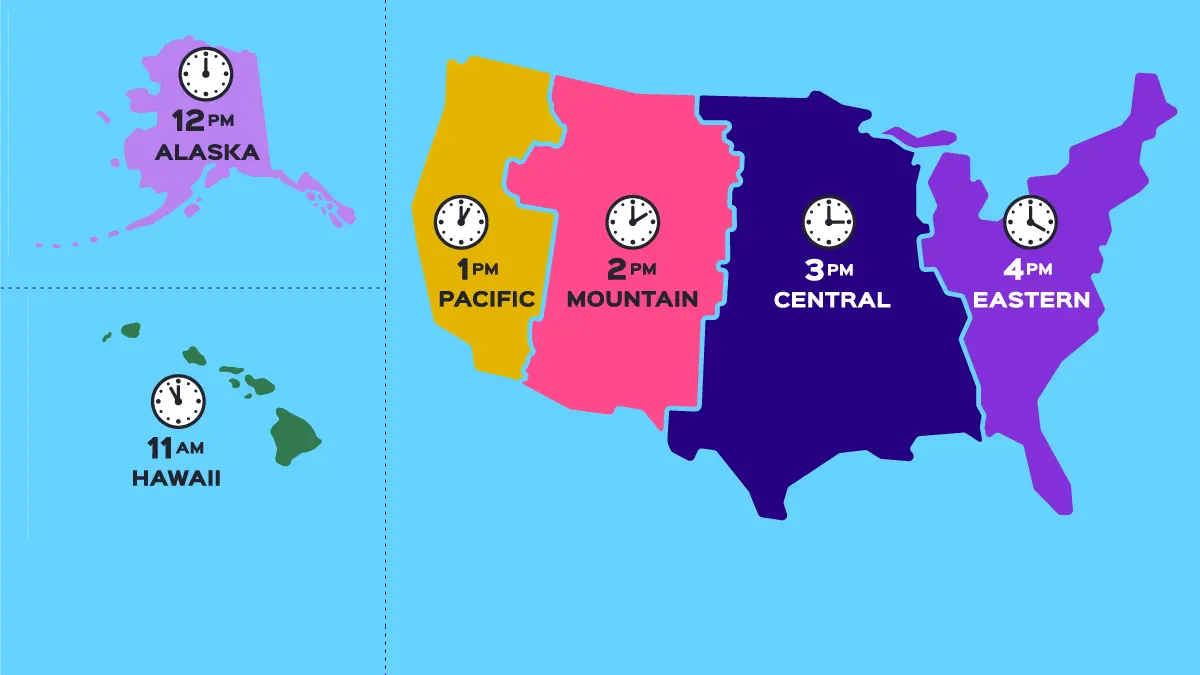
At its most basic level, the difference is one hour: Mountain Time is one hour ahead of Pacific Time. However, in the world of technology, that “one hour” is a layer of complexity that influences everything from API payloads to the deployment of CI/CD pipelines. Understanding this difference is essential for anyone building or managing digital products across the Western United States and Canada.

The Technical Mechanics of Time Zone Disparity
To programmatically handle the difference between Mountain and Pacific time, one must first look beneath the surface of colloquial names and examine the Coordinated Universal Time (UTC) offsets.
Offsets and Daylight Saving Time (MST vs. MDT and PST vs. PDT)
Standardization is the bedrock of tech. Pacific Standard Time (PST) is UTC-8, while Mountain Standard Time (MST) is UTC-7. During the summer months, both zones shift for Daylight Saving Time: Pacific Daylight Time (PDT) becomes UTC-7, and Mountain Daylight Time (MDT) becomes UTC-6.
From a software engineering perspective, this means that while the one-hour delta remains constant for the majority of users, the absolute relationship to UTC changes twice a year. If a system is hard-coded to a specific offset rather than a dynamic time zone identifier (like America/Denver or America/Los_Angeles), data corruption and scheduling errors are inevitable.
The Arizona Exception: A Logic Challenge for Developers
One of the most notorious “edge cases” in the Mountain Time zone is the state of Arizona. Most of Arizona does not observe Daylight Saving Time. For tech teams, this creates a fluctuating relationship. During the winter, Arizona is on the same time as Denver (MST). During the summer, because Arizona does not shift forward, it effectively aligns with California (PDT).
For developers building calendar apps or automated notification systems, Arizona requires specific logic handling. A failure to account for this can lead to “ghost” appointments or synchronization errors where a server in Phoenix and a client in San Francisco suddenly find themselves in the same time zone, despite being categorized differently in the system’s metadata.
Managing Distributed Systems and Cloud Architecture
In the era of cloud computing, the physical location of hardware often dictates the logical flow of time. Major providers like Amazon Web Services (AWS), Google Cloud Platform (GCP), and Microsoft Azure maintain massive data center footprints in both the Pacific and Mountain regions.
Server Logs and Chronological Synchronization
When managing a distributed system that spans the West Coast (Pacific) and the Intermountain West (Mountain), log aggregation becomes a primary concern. If an application server in Northern California (US-West-1) records an error at 10:00 PM PST, and a database in Utah (US-West-2 or local data centers) records a related query at 11:00 PM MST, the logs appear synchronous.
However, if those servers aren’t synchronized to UTC, a DevOps engineer trying to troubleshoot a race condition might see overlapping timestamps that make no chronological sense. The best practice in tech infrastructure is to always set hardware clocks to UTC and only convert to Mountain or Pacific time at the presentation layer (the user interface).
API Latency and Time-Stamped Data Integrity
Financial tech and real-time bidding platforms rely on microsecond accuracy. When data travels between a user in the Pacific Time zone and a processing hub in the Mountain Time zone, the “timestamp of record” must be immutable. Discrepancies between the client-side clock and the server-side clock can lead to “Time-of-Check to Time-of-Use” (TOCTOU) vulnerabilities. Ensuring that the one-hour difference is handled via standardized ISO 8601 strings—including the offset—is the only way to maintain data integrity across these geographic boundaries.
Maximizing Productivity in Remote Tech Teams
The one-hour difference between Mountain and Pacific time is often cited by HR tech experts as the “optimal delta” for remote work. Unlike the three-hour gap between New York and Los Angeles, the MT-PT relationship allows for near-total workday overlap.
The Golden Hour: Overlap for Agile Ceremonies
In Agile development environments, “Stand-ups” and “Sprints” require real-time collaboration. With Mountain Time being only one hour ahead, a team based in Denver can start their day at 9:00 AM, while their counterparts in Seattle or Silicon Valley start at 8:00 AM. This results in a shared working window of seven to eight hours.
This proximity minimizes the “wait time” for code reviews. A developer in Salt Lake City can submit a pull request at 4:30 PM and still expect a response from a colleague in San Francisco who is only at 3:30 PM in their workday. This tight loop is a significant competitive advantage for tech companies that choose to scale into Mountain Time hubs to access talent outside the saturated California market.
Asynchronous Workflows and Notification Management
Even with an hour difference, tech teams must master asynchronous communication. Slack and Microsoft Teams allow users to set their local time zones so that “Do Not Disturb” (DND) modes reflect their reality. A common friction point occurs when Pacific-based managers schedule 5:00 PM meetings, forgetting that for their Mountain-based engineers, the workday is effectively over at 6:00 PM. High-performing tech cultures utilize “time-zone aware” scheduling tools to ensure that the one-hour difference doesn’t lead to “creeping” work hours for those in the earlier time zone.
Software Engineering for Time-Sensitive Applications
When building software that serves users across both Mountain and Pacific regions, developers must adhere to rigorous standards to avoid the “Off-by-One” hour error, which is a common bug in scheduling and reporting modules.
Best Practices for Storing Time Data
The industry standard is to never store local time (MST/PST) in a database. Instead, developers use Unix Timestamps or UTC. For example, if a user in Boise (Mountain Time) schedules a software update for midnight, the database stores the UTC equivalent. When the system checks if it is time to run the update, it compares the current UTC time to the stored value.
Libraries such as Luxon, Day.js, or the native Intl.DateTimeFormat in JavaScript are essential tools for modern web development. They allow developers to ingest a UTC timestamp and render it correctly for a user in Vancouver (Pacific) or a user in Calgary (Mountain), automatically accounting for whether those regions are currently in Standard or Daylight time.
Testing Edge Cases: Daylight Saving Transitions
The most significant tech failures regarding time zones occur during the “switch” days in March and November. A system that doesn’t account for the transition might double-bill a customer or fail to trigger a cron job.
QA engineers must perform “Time Travel Testing.” This involves mocking the system clock to simulate the transition from 1:59 AM PST to 3:00 AM PDT and ensuring that Mountain Time systems (which transition an hour earlier) stay in sync. In modern CI/CD pipelines, automated tests should verify that time-sensitive logic holds up even when the offset between Mountain and Pacific time is being recalculated by the operating system.

Conclusion: The Strategic Importance of the One-Hour Delta
While the difference between Mountain and Pacific time is geographically narrow, its impact on the tech industry is profound. From the synchronization of cloud servers in different regions to the seamless collaboration of remote engineering teams, that one-hour gap is a factor that must be managed with precision.
For the tech professional, mastering the Mountain-Pacific divide isn’t just about knowing what time it is; it’s about building resilient systems that treat time as a fundamental data type. By utilizing UTC as the “source of truth,” respecting the unique edge cases like Arizona, and leveraging the high overlap for team collaboration, companies can turn this minor temporal difference into a logistical strength. In an industry where a millisecond can be the difference between a successful transaction and a system timeout, understanding the hour between the mountains and the coast is an essential skill.
aViewFromTheCave is a participant in the Amazon Services LLC Associates Program, an affiliate advertising program designed to provide a means for sites to earn advertising fees by advertising and linking to Amazon.com. Amazon, the Amazon logo, AmazonSupply, and the AmazonSupply logo are trademarks of Amazon.com, Inc. or its affiliates. As an Amazon Associate we earn affiliate commissions from qualifying purchases.