
The human brain, a marvel of biological engineering, is often described using two distinct visual components: grey matter and white matter. While their names suggest a simple color difference, the reality is far more complex and fascinating. Understanding the distinction between these two fundamental brain tissues is crucial for comprehending how our brains function, from basic reflexes to complex cognitive processes. This exploration will delve into the anatomical, functional, and even the technological parallels of grey and white matter, drawing insights from the worlds of technology, brand, and finance.
The Visual Distinction: More Than Just Color
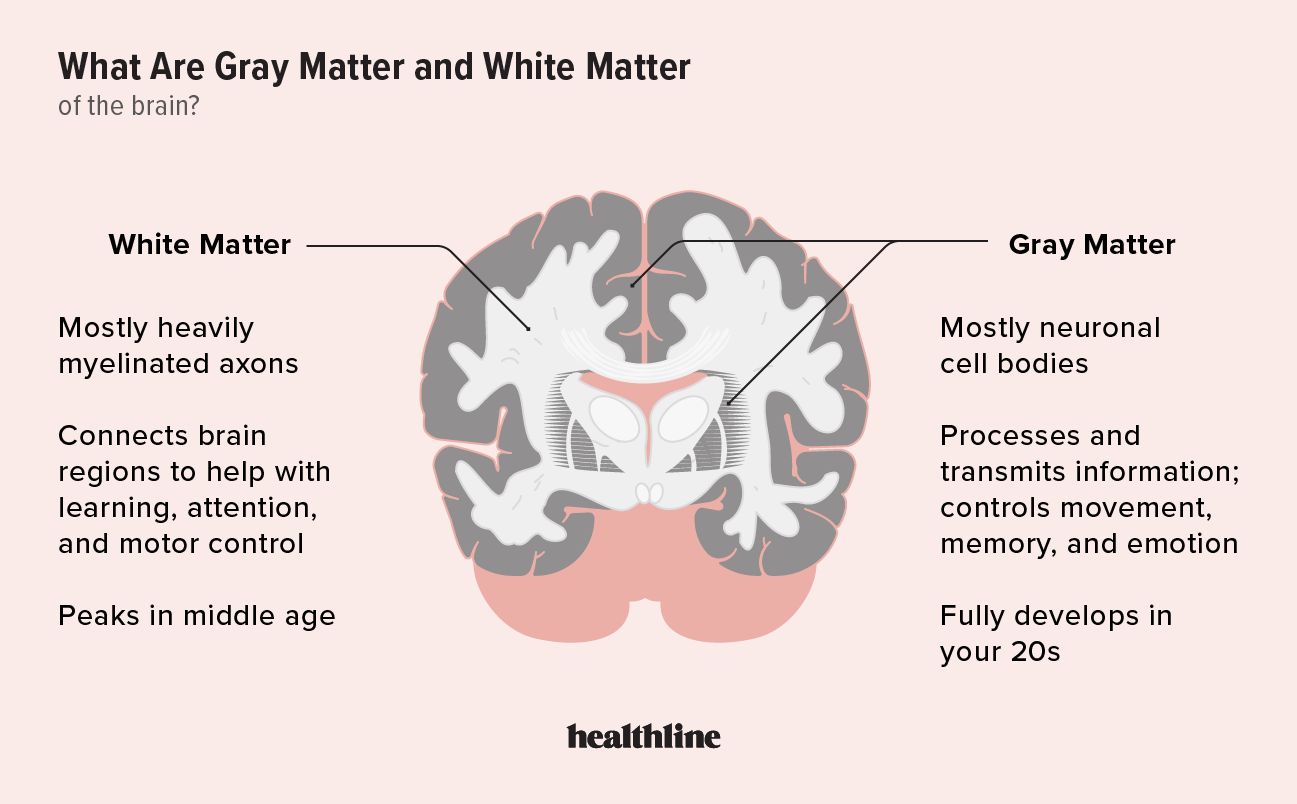
At first glance, the terms “grey matter” and “white matter” accurately describe their appearance in living or freshly dissected brains. Grey matter appears as a grayish-brown hue, while white matter presents a distinct whitish or creamy color. This visual difference is the most immediate clue to their underlying composition.
Grey Matter: The Brain’s Processing Powerhouse
Grey matter is primarily composed of neuronal cell bodies, also known as soma, dendrites, and unmyelinated axons, as well as glial cells like astrocytes and microglia. These are the key players in information processing.
- Neuronal Cell Bodies (Soma): Imagine these as the “brains” of individual neurons. This is where the nucleus resides, and where electrical signals are integrated. The sheer density of these cell bodies in grey matter is what gives it its characteristic color.
- Dendrites: These are branching extensions of neurons that receive signals from other neurons. They are crucial for forming the intricate communication networks within the brain.
- Unmyelinated Axons: While axons are the long projections of neurons that transmit signals, in grey matter, they are often unmyelinated. This means they lack the fatty insulating sheath that speeds up signal transmission.
Grey matter is predominantly found in the cerebral cortex, the outer layer of the cerebrum, which is responsible for higher-level cognitive functions such as memory, attention, thought, language, and consciousness. It also forms the deep brain nuclei, clusters of neurons involved in motor control, sensation, and emotion. Think of grey matter as the central processing unit (CPU) of a computer, constantly crunching data, making decisions, and initiating actions.
White Matter: The Brain’s High-Speed Network
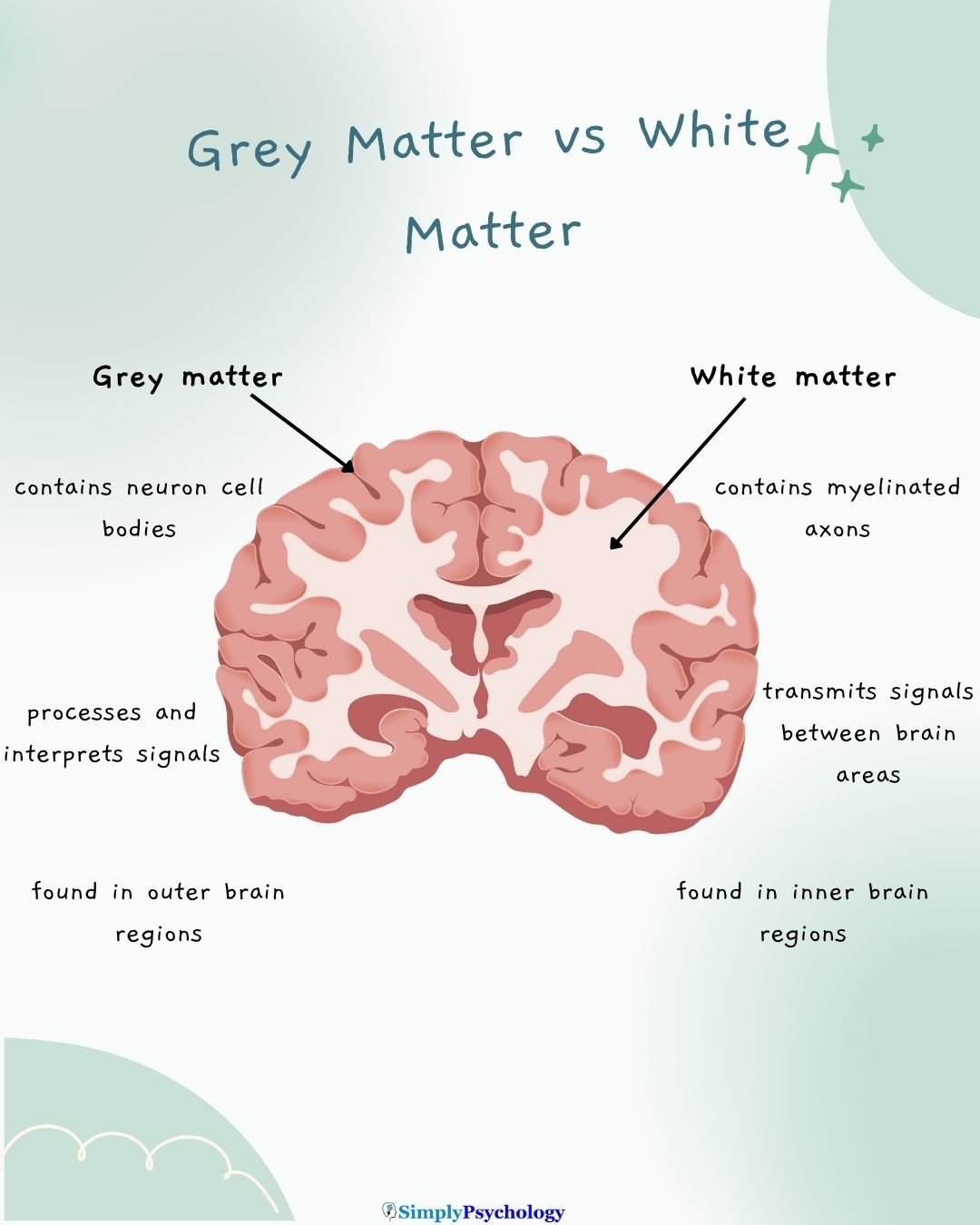
White matter, in contrast, derives its color from a high concentration of myelinated axons. Myelin is a fatty substance that acts as an insulator, much like the plastic coating on an electrical wire. This insulation significantly speeds up the transmission of electrical impulses along the axons.
- Myelinated Axons: These are the “wires” that connect different areas of grey matter. The myelin sheath allows for rapid and efficient communication between distant neuronal populations.
- Glial Cells (Oligodendrocytes): These specialized glial cells in the central nervous system are responsible for producing myelin.
White matter is responsible for connecting different grey matter regions, forming the intricate communication pathways that allow for coordinated brain function. It plays a vital role in relaying information between the cerebral cortex and other brain structures, as well as between the two hemispheres of the brain via the corpus callosum. If grey matter is the CPU, then white matter is the high-speed internet infrastructure, ensuring seamless and rapid data transfer across the entire network.
Functional Divide: Processing vs. Communication
The structural differences between grey and white matter directly translate into their distinct functional roles within the brain.
H2: The Role of Grey Matter in Cognitive Functions
Grey matter is the seat of our cognitive abilities. It’s where the “thinking” happens.
H3: Information Processing and Decision Making
The dense arrangement of neuronal cell bodies in grey matter allows for complex computations and the integration of vast amounts of sensory information. When you’re making a decision, learning a new skill, or recalling a memory, it’s primarily the grey matter that’s actively engaged. The cerebral cortex, the largest component of grey matter, is crucial for everything from understanding language to planning your day.
H3: Sensory Perception and Motor Control
While the cerebral cortex handles higher-level processing, grey matter in subcortical regions, such as the basal ganglia and thalamus, is essential for sensory perception and the initiation and refinement of motor movements. The thalamus acts as a relay station for sensory information, filtering and directing it to the appropriate cortical areas, while the basal ganglia are crucial for smooth, coordinated muscle movements.
H2: The Role of White Matter in Neural Connectivity
White matter’s primary function is to facilitate rapid and efficient communication between different brain regions. It’s the underlying infrastructure that enables complex thought and action.
H3: The Brain’s Information Superhighway
The myelinated axons in white matter form intricate tracts that connect various areas of grey matter. This connectivity allows for the rapid transmission of signals, enabling different parts of the brain to work together seamlessly. For example, when you see an object (sensory input processed in grey matter), white matter pathways quickly relay this information to areas responsible for motor control, allowing you to react appropriately.
H3: Learning and Memory Formation
The efficiency of white matter pathways is also crucial for learning and memory. As we learn new things, new neural connections are formed and strengthened, often involving changes in the myelination of axons. This process allows the brain to adapt and become more efficient in processing and retrieving information. A robust and well-connected white matter network is therefore vital for cognitive flexibility and the ability to acquire and retain knowledge.
Analogies from Technology, Brand, and Money
To further solidify our understanding, let’s draw parallels between grey and white matter and concepts from the domains of technology, brand, and money. These analogies can illuminate the distinct yet interdependent roles of these brain tissues.
H2: Technological Parallels: Processing Power vs. Network Infrastructure
The relationship between grey and white matter mirrors the fundamental architecture of modern technology.
H3: Grey Matter as the CPU and RAM
Grey matter, with its dense concentration of processing units (neuronal cell bodies), is analogous to a computer’s Central Processing Unit (CPU) and Random Access Memory (RAM). The CPU performs calculations and executes instructions, while RAM provides fast, temporary storage for active data. Similarly, grey matter is where information is actively processed, decisions are made, and computations occur. Just as a powerful CPU and ample RAM are essential for running complex software and handling multiple tasks, the richness of grey matter dictates our cognitive capacity.
H3: White Matter as the Network and Data Buses
White matter, acting as the brain’s communication network, can be compared to the network infrastructure and data buses within a computer system. The network (e.g., Ethernet, Wi-Fi) allows different devices to communicate, while data buses are the pathways that enable the CPU, RAM, and other components to exchange information. The myelinated axons of white matter are the high-speed data cables, ensuring that signals travel rapidly and efficiently between different processing centers. A well-designed network infrastructure is as critical for a computer’s performance as a robust white matter network is for brain function. Lagging network speeds or broken connections can cripple a computer, just as damage to white matter can lead to significant cognitive impairments.
H2: Brand and Marketing Implications: The Core Message vs. The Distribution Channels
The distinction between grey and white matter also offers insights into brand strategy and marketing.
H3: Grey Matter as the Brand’s Core Value Proposition and Identity
The core essence of a brand – its mission, values, unique selling proposition, and overall identity – can be likened to grey matter. This is the “brain” of the brand, where its fundamental message is conceived and refined. Just as grey matter is responsible for processing information and generating output, the brand’s core identity dictates its purpose and how it communicates its value to the world. A strong and clear brand identity, much like well-developed grey matter, is essential for effective cognitive processing and meaningful engagement.
H3: White Matter as Marketing and Communication Channels
The channels through which a brand communicates its message – advertising, social media, public relations, sales teams – are analogous to white matter. These are the pathways that carry the brand’s core message to its audience. The efficiency and reach of these channels determine how effectively the brand’s identity is disseminated and understood. A brand with a strong core message (grey matter) but poor distribution channels (white matter) will struggle to connect with its target audience, just as a brain with powerful processing capabilities but weak connectivity will be unable to execute complex tasks. Conversely, even a moderately strong core message can gain significant traction if it’s effectively delivered through robust and well-managed communication channels.
H2: Financial Analogies: Investment Strategy vs. Market Connectivity
Finally, let’s explore the parallels between grey and white matter in the realm of finance.
H3: Grey Matter as Investment Strategy and Decision Making
The formulation of an investment strategy, the analysis of market data, and the decision-making process of allocating capital can be seen as the function of grey matter. This is where financial intelligence, risk assessment, and forward-thinking planning take place. Just as grey matter is responsible for complex problem-solving, sound financial decision-making requires a similar level of cognitive processing and strategic thinking. The effectiveness of one’s investment strategy is directly tied to the quality of this cognitive “processing power.”
H3: White Matter as Financial Markets and Transaction Networks
The interconnectedness of financial markets, the speed of transactions, and the flow of capital are akin to white matter. This represents the infrastructure that enables the execution of investment strategies. Rapid and efficient communication between buyers and sellers, the liquidity of assets, and the speed at which information travels through financial networks all depend on robust “white matter” – the underlying systems and connections that facilitate financial activity. A slow or unreliable market network can hinder even the best investment strategies, leading to missed opportunities and increased risk, much like damaged white matter can impede cognitive function.

Conclusion: An Interconnected System
In conclusion, the difference between grey and white matter is not merely a matter of color but a fundamental distinction in their composition and function. Grey matter, with its neuronal cell bodies, is the brain’s processing unit, responsible for cognition, learning, and sensory perception. White matter, characterized by its myelinated axons, acts as the brain’s high-speed communication network, connecting different grey matter regions and enabling efficient information transfer.
Just as technology, brand strategy, and financial markets rely on both processing power and robust connectivity to function optimally, the human brain’s remarkable capabilities are a testament to the intricate and interdependent relationship between grey and white matter. Understanding this fundamental distinction provides a powerful lens through which to appreciate the complexity and elegance of the human mind, and how its various components work in concert to shape our thoughts, actions, and experiences.
aViewFromTheCave is a participant in the Amazon Services LLC Associates Program, an affiliate advertising program designed to provide a means for sites to earn advertising fees by advertising and linking to Amazon.com. Amazon, the Amazon logo, AmazonSupply, and the AmazonSupply logo are trademarks of Amazon.com, Inc. or its affiliates. As an Amazon Associate we earn affiliate commissions from qualifying purchases.