
In the rapidly evolving landscape of social technology, the distinction between platforms often blurs as features are homogenized across the industry. However, within the Meta ecosystem, Facebook and Instagram represent two fundamentally different approaches to digital interaction, software architecture, and user experience (UX) design. While they share a parent company and a unified advertising backend, their front-end philosophies, data handling, and algorithmic priorities remain distinct. Understanding the technical divergence between these two giants is essential for grasping the broader trajectory of modern software development and social networking.
The Core Philosophy: Social Utility vs. Visual Experience
At their inception, Facebook and Instagram were built on different technological foundations meant to solve different problems. This historical “tech debt” and initial vision continue to dictate how the platforms operate today.
Facebook’s Multi-Faceted Utility Framework
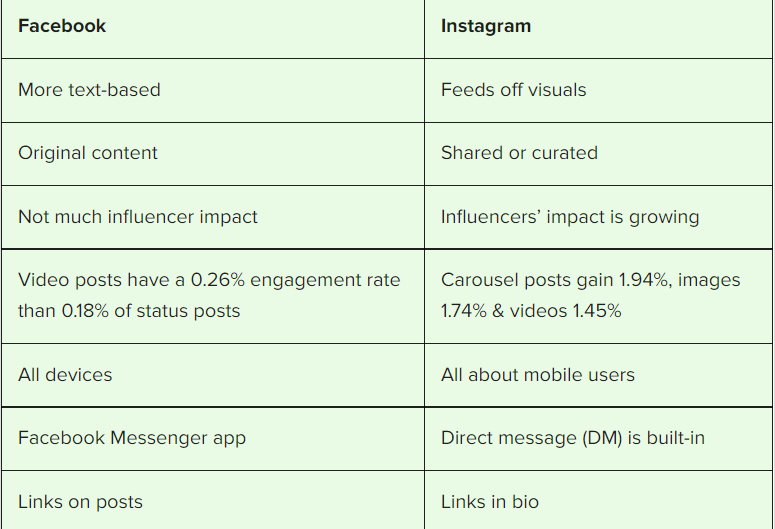
Facebook was designed as a “Social Utility.” Architecturally, it is built to handle complex relational data. Its framework supports a massive variety of content types: long-form text, nested comments, external hyperlinks, file sharing, community groups, and integrated applications like Marketplace and Games. This requires a robust, high-latency-tolerant infrastructure capable of managing deep hierarchical data structures. From a technical standpoint, Facebook functions more like an operating system for one’s social life, providing the tools for community management and identity verification.
Instagram’s Mobile-First Aesthetic Architecture
Instagram, conversely, was built as a “Mobile-First” visual experience. Its early architecture was optimized for the rapid upload and rendering of high-resolution imagery and, later, short-form video. Unlike Facebook’s sprawling interface, Instagram’s UX is streamlined to minimize “friction” between the user and the content. The technical focus here is on media processing—applying filters, optimizing compression for mobile bandwidth, and ensuring a seamless, infinite scroll. While Facebook is built around connections (the Social Graph), Instagram is built around interests (the Interest Graph).
Algorithm Evolution and Content Distribution Mechanisms
One of the most significant technical differences between Facebook and Instagram lies in their proprietary algorithms. While both have moved away from chronological feeds, the signals they prioritize to determine content ranking are vastly different.
The EdgeRank Legacy and the Modern News Feed
Facebook’s algorithm is a descendant of the original “EdgeRank.” Today, it utilizes complex machine learning models to prioritize “Meaningful Social Interaction” (MSI). The system analyzes thousands of signals—such as how many friends have commented on a post, the depth of a comment thread, and the likelihood of a user sharing a link—to determine what appears in the News Feed.
Technically, Facebook’s algorithm is more “insular,” focusing on the user’s immediate social circle and joined groups. It prioritizes content that sparks conversation among people who already know each other. This requires the backend to constantly process real-time relational data across a vast web of “friends” and “friends of friends.”
Signal-Based Ranking in the Instagram Feed and Reels
Instagram’s algorithm operates on a “Discovery-First” model, particularly with the introduction of Reels and the Explore page. While the main feed still considers “who you follow,” the heavy lifting is done by a system that predicts content affinity based on visual metadata and engagement patterns.
Instagram’s tech stack uses advanced computer vision to “read” images and videos, identifying objects, settings, and themes without relying solely on hashtags or captions. The ranking system is optimized for “watch time” and “re-watches” (especially in Reels), utilizing a feedback loop that adjusts the user’s feed in near real-time based on micro-interactions, such as how long a user pauses while scrolling over a specific aesthetic.
User Interface (UI) and User Experience (UX) Paradigms
The visual and interactive layers of Facebook and Instagram reflect their differing technical goals. One is designed for breadth of information, while the other is designed for depth of immersion.

Desktop Complexity vs. Mobile Streamlining
Facebook’s UI is notoriously dense. On a desktop browser, a user might see a navigation sidebar, a central feed, a right-hand column for birthdays and sponsored content, and a chat overlay. This “modular” UI allows for high information density but can lead to “feature creep,” where the interface feels cluttered. Developers must maintain compatibility across a wide range of legacy web browsers while managing a mobile app that houses a massive codebase (over 100 million lines of code).
Instagram’s UI adheres to a philosophy of “minimalist immersion.” The interface is dominated by the media itself, with UI elements (like likes and comments) often relegated to small icons or hidden behind gestures. Technically, Instagram’s UX relies heavily on haptic feedback and gesture-based navigation (swiping for Stories, double-tapping to like), which are native to mobile hardware. This creates a more intuitive, “lean-back” experience compared to Facebook’s “lean-forward,” interaction-heavy interface.
Interactive Elements and Engagement Friction
Engagement on Facebook is designed to be high-friction and high-intent. Writing a comment, sharing a post to a timeline with a custom caption, or reacting with a specific emoji requires more cognitive load. On the technical side, this produces “richer” data for Meta’s servers.
Instagram is designed for low-friction engagement. The “Like” is the primary currency, and the “Share to Story” feature is a seamless way to propagate content without leaving the app’s visual flow. This difference in engagement tech dictates the type of data harvested: Facebook gathers nuanced sentiment and opinion, while Instagram gathers high-volume behavioral data regarding visual preferences.
Privacy Frameworks and Data Synchronization
As parts of the Meta family, both platforms share a centralized data infrastructure, but they present different privacy controls and communication protocols to the end user.
Cross-Platform Integration and the “Blue Link”
Under the hood, Facebook and Instagram are increasingly becoming two skins for the same database. Meta’s “Accounts Center” is the technical bridge that allows for cross-platform posting and synchronized ad targeting. However, Facebook’s privacy settings are significantly more granular. Users can control visibility on a per-post basis, manage “Limited Profiles,” and segment their audience into specific lists. This requires a complex permissions-checking layer in the software architecture to ensure that data is only served to authorized users.
Encryption and Communication Protocols
The messaging backends of both platforms are also converging. Meta has been working on a unified, end-to-end encrypted (E2EE) infrastructure for Messenger and Instagram Direct. Historically, Facebook Messenger was a standalone protocol derived from chat technologies, while Instagram Direct was a simpler, integrated messaging feature. The technical challenge has been merging these into a single, secure protocol that allows a Facebook user to message an Instagram user without compromising the security of the E2EE “keys” stored on individual devices.
The Future of the Meta Tech Stack: AI and the Metaverse
As we look toward the next decade of social technology, the gap between Facebook and Instagram may narrow in terms of backend technology while widening in terms of application.
Generative AI Integration in Creative Tools
Meta is currently deploying generative AI across both platforms, but the applications differ. On Instagram, the focus is on “creative AI”—tools that allow users to expand the backgrounds of photos, generate stickers, or use AI avatars in Reels. This requires high-performance GPU processing on the server side to render high-fidelity visual assets in seconds.
On Facebook, AI is being utilized more for “contextual AI”—summarizing long comment threads in groups, identifying misinformation in text-based posts, and improving the accuracy of the “Suggested for You” algorithm to keep users within the app longer.

Scaling Social Infrastructure for the Next Generation
The ultimate technical goal for Meta is the transition to the “Metaverse.” In this vision, Facebook serves as the foundational “Identity Layer” (your digital ID and history), while Instagram serves as the “Creative Layer” (your digital expression and aesthetic).
The difference, therefore, is not just in how they look or feel today, but in their technical trajectory. Facebook is scaling to become the backbone of digital governance and community organization, while Instagram is evolving into a high-octane engine for visual media and creator-driven commerce. For the tech-savvy user or developer, understanding these nuances is key to navigating the complex, data-driven world that Meta has built. While they live in the same house, Facebook is the library and the town hall, while Instagram is the gallery and the theater—each powered by a distinct set of technologies tailored to their unique roles in our digital lives.
aViewFromTheCave is a participant in the Amazon Services LLC Associates Program, an affiliate advertising program designed to provide a means for sites to earn advertising fees by advertising and linking to Amazon.com. Amazon, the Amazon logo, AmazonSupply, and the AmazonSupply logo are trademarks of Amazon.com, Inc. or its affiliates. As an Amazon Associate we earn affiliate commissions from qualifying purchases.