
In the rapidly evolving landscape of technology, we often focus on the macro-level innovations: the sleek glass of a smartphone, the complex algorithms of artificial intelligence, or the sprawling architecture of cloud data centers. However, the functionality of almost every modern gadget and energy solution relies on a fundamental principle of chemistry and physics—the behavior of ions. To understand how our digital world thrives, we must first answer a foundational question: what is the difference between a cation and an anion, and why does it matter in the tech sector?

At their core, ions are atoms or molecules that have gained or lost one or more electrons, resulting in a net electrical charge. This charge is the “software” that directs the “hardware” of physical matter. In the tech industry, the movement and management of these charged particles enable everything from the storage of gigabytes of data to the propulsion of electric vehicles (EVs).
Understanding the Basics: Cations vs. Anions in a Digital World
To grasp the technological implications, we must first differentiate the two types of ions. The distinction is simple yet profound, dictating how electricity flows and how materials interact at the nanoscale.
The Cation: The Positive Driver
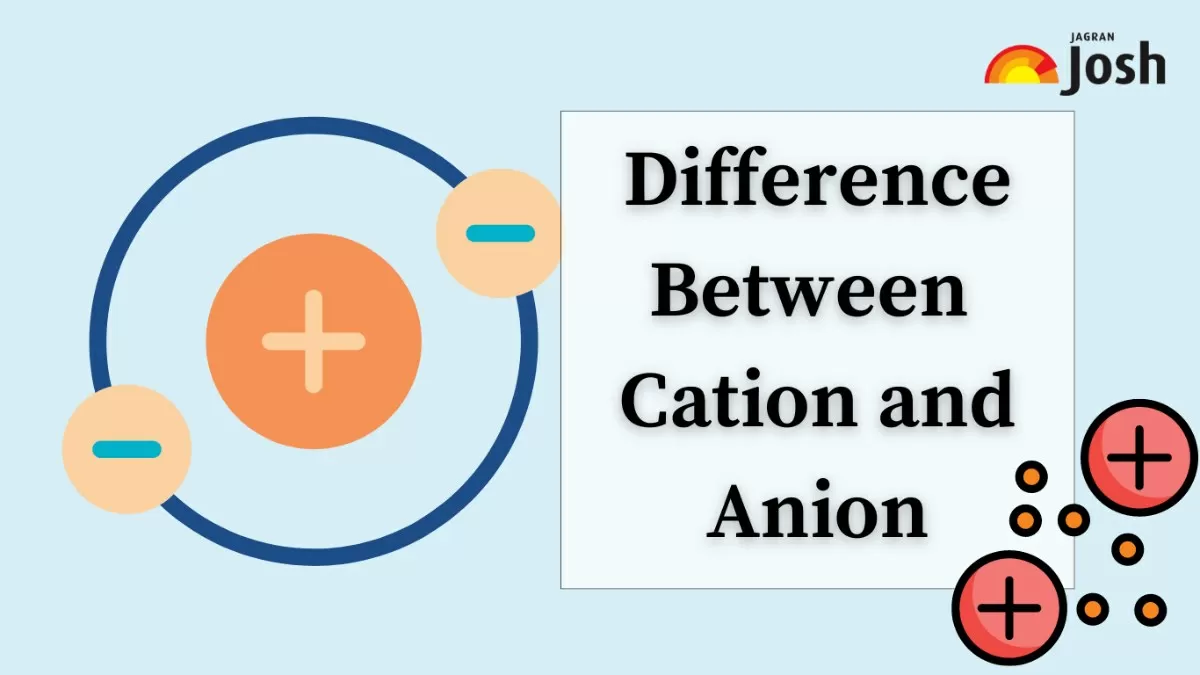
A cation is an ion with a positive charge. This occurs when an atom loses one or more electrons. Because electrons are negatively charged, their removal leaves the atom with more protons than electrons, resulting in a net positive state. In the context of technology, cations—specifically lithium, sodium, and potassium—are the workhorses of energy storage. They are often viewed as the “active” agents in a circuit, moving through electrolytes to facilitate the release of power.
The Anion: The Negative Counterpart
Conversely, an anion is an ion with a negative charge. This happens when an atom gains electrons, giving it a net negative charge. While cations often get the spotlight in battery discussions, anions are equally critical. They provide the necessary balance in chemical reactions and are vital in processes like semiconductor doping and water purification technologies. Anions like chloride, fluoride, and various complex molecular ions are the backbone of the chemical environments that allow tech hardware to function without degrading.
The Electrostatic Dance
The difference between cations and anions creates electrostatic attraction—the force that holds ionic compounds together. In technology, we manipulate this attraction to build sensors, create conductive pathways, and develop new materials. Without the fundamental polarity between these two types of ions, the transistors that power your CPU would not exist, as they rely on the controlled movement of charge carriers to represent binary data.
The Battery Revolution: Why Ions are the Currency of Portable Tech
Perhaps the most visible application of the cation-anion relationship is in the realm of energy storage. Every time you check your smartphone or drive an electric car, you are witnessing a high-speed exchange of ions.
Lithium-Ion Technology and the Movement of Charge
The “Lithium-Ion” battery, which dominates the consumer tech market, is named specifically after the lithium cation ($Li^+$). In a standard discharge cycle, lithium cations move from the negative electrode (anode) to the positive electrode (cathode) through an electrolyte. Simultaneously, electrons flow through the external circuit of your device, providing the power needed to run apps and processors.
When you plug your device into a charger, the process reverses. The energy from the grid forces the lithium cations back to the anode. The efficiency of this process—how many cations can move and how quickly they can do so—determines your phone’s battery life and charging speed. Engineers are constantly looking for ways to optimize the “intercalation” process, where cations nestle into the atomic structure of the electrodes, to prevent degradation and extend the lifespan of hardware.
Solid-State Batteries: The Next Frontier
The next major leap in technology is the shift from liquid electrolytes to solid-state electrolytes. In traditional batteries, the liquid medium allows cations to move freely, but it is also flammable and prone to leakage. Solid-state technology aims to create a stable, solid lattice that allows cations to navigate through the material even more efficiently. By understanding the specific size and charge density of various cations and anions, tech companies like Toyota and QuantumScape are designing batteries that are safer, charge in minutes, and hold significantly more energy.
Semiconductor Fabrication and the Role of Ionic Implantation

Beyond energy, the difference between cations and anions is essential to the manufacturing of integrated circuits—the “brains” of all modern computing.
Engineering Precision at the Nanoscale
Semiconductors, usually made of silicon, are not naturally great conductors of electricity. To make them functional for tech applications, they must be “doped.” Doping involves intentionally introducing impurities into the silicon crystal lattice to change its electrical properties. This is often achieved through ion implantation.
In this process, high-energy beams of ions are fired into the silicon. If engineers want to create an “n-type” (negative) semiconductor, they might use anions or atoms that will contribute extra electrons. To create a “p-type” (positive) semiconductor, they use cations or atoms that create “holes” (the absence of an electron). The junction where these two types meet is the P-N junction, the fundamental building block of the transistor.
How Cations and Anions Define Transistor Efficiency
As we push toward 3nm and 2nm process nodes, the precision of ion management becomes critical. If the ions are not distributed perfectly, the transistor may leak current, leading to heat issues and poor performance in AI accelerators and high-end GPUs. The tech industry’s ability to manipulate the specific properties of cations and anions at the atomic level is what allows Moore’s Law to continue, even as we reach the physical limits of silicon.
Sustainable Tech and the Future of Energy Storage
As the world pivots toward green technology, the chemistry of ions is being harnessed to solve the intermittency problems of renewable energy like solar and wind.
Redox Flow Batteries and Industrial Power
While lithium cations are great for small gadgets, large-scale grid storage often utilizes “Redox Flow Batteries.” These systems use large tanks of liquid electrolytes containing different ionic species. The “redox” (reduction-oxidation) reaction involves the transfer of electrons between cations and anions in a controlled flow. This tech is particularly promising because it allows for nearly infinite scaling; to add more capacity, you simply build a larger tank of ions. It is a software-defined approach to hardware storage, where the chemistry can be tuned for specific grid demands.
Desalination and Tech-Driven Water Purification
Ions also play a starring role in the intersection of tech and environmental science. Capacitive Deionization (CDI) is an emerging technology used to purify water. By applying an electric field, cations are pulled toward a negative electrode and anions are pulled toward a positive electrode, effectively “sorting” the salt out of the water. This tech-heavy approach to resource management is becoming vital for data centers, which require massive amounts of purified water for cooling systems.
The Future: Ionic Computing and Nano-Hardware
Looking ahead, the distinction between cations and anions may lead to an entirely new paradigm of computing known as “ionics.” While traditional electronics rely on the movement of electrons, ionic systems mimic the way the human brain functions.
Neuromorphic Computing
The human brain processes information by moving ions across synapses. Tech researchers are currently developing neuromorphic chips that use ionic movement to simulate this biological efficiency. By using cations to change the resistance of a “memristor,” these chips can “learn” and store memory in a way that is vastly more energy-efficient than current AI hardware. This could lead to a revolution in “edge AI,” where complex processing happens on-device rather than in the cloud.
Digital Security and Ionic Biometrics
Even digital security is finding a place for ion science. New biometric sensors are being developed that can detect the specific ionic composition of a user’s sweat or skin oils. Because the balance of cations (like sodium and potassium) and anions (like chloride) is unique to an individual’s physiology, this could provide a nearly unhackable layer of hardware-based authentication for the next generation of secure devices.
Conclusion: The Ionic Core of Innovation
The difference between a cation and an anion might seem like a trivial detail from a chemistry textbook, but in the realm of technology, it is the fundamental language of power and logic. From the lithium cations that keep our smartphones alive to the ionic doping that allows our processors to think, these charged particles are the invisible architects of the digital age.
As we look toward a future defined by AI, sustainable energy, and advanced hardware, our ability to understand and manipulate the dance between the positive and the negative will remain the most critical tool in the tech innovator’s kit. Whether it is building a better battery or a faster chip, the journey starts with the simple, powerful distinction between the cation and the anion.
aViewFromTheCave is a participant in the Amazon Services LLC Associates Program, an affiliate advertising program designed to provide a means for sites to earn advertising fees by advertising and linking to Amazon.com. Amazon, the Amazon logo, AmazonSupply, and the AmazonSupply logo are trademarks of Amazon.com, Inc. or its affiliates. As an Amazon Associate we earn affiliate commissions from qualifying purchases.