
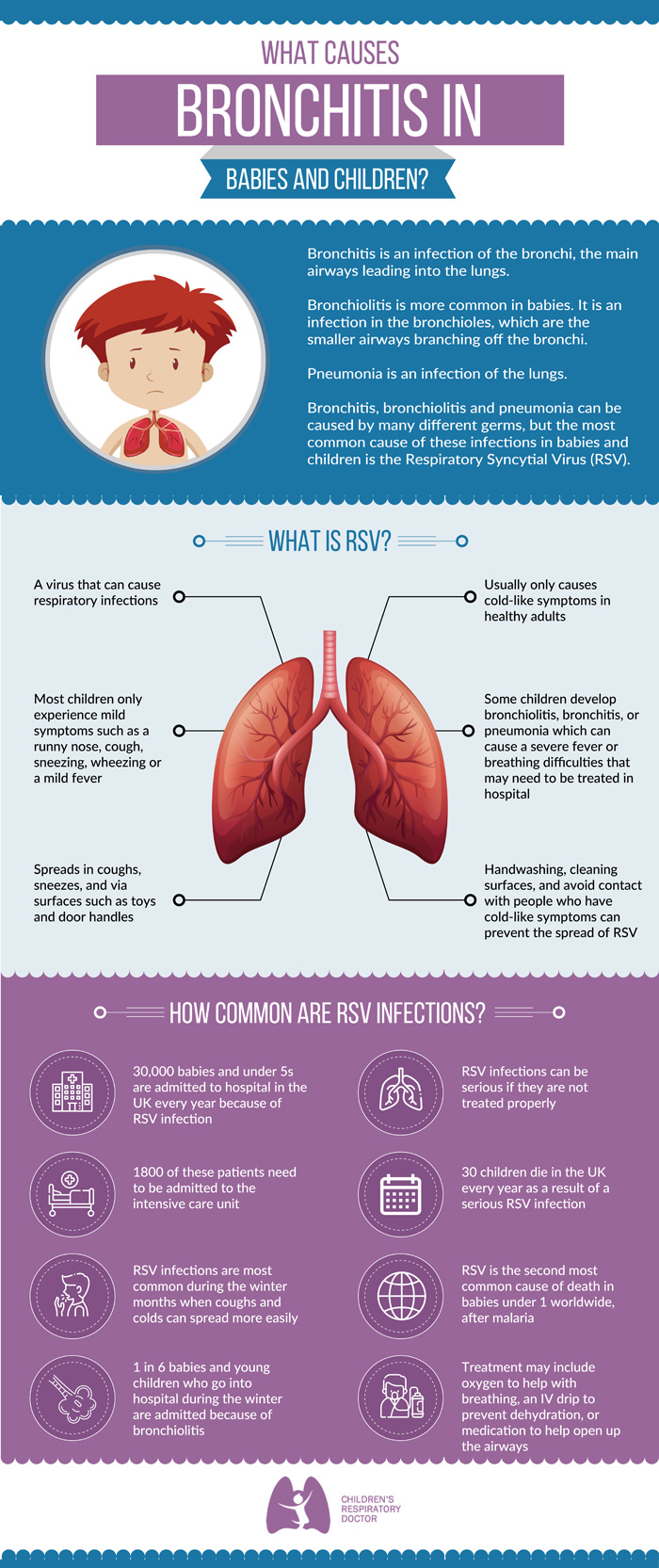
At first glance, the question “What is the Difference Between Bronchitis and Bronchiolitis?” might seem squarely rooted in medical diagnostics, demanding an explanation of respiratory conditions. Indeed, in the realm of health, distinguishing between these two, often confused, ailments is paramount for accurate diagnosis, effective treatment, and optimal patient outcomes. Bronchitis typically affects the larger airways, while bronchiolitis targets the smaller bronchioles, primarily in infants and young children, leading to distinct symptomatic presentations and management strategies. The consequences of misidentifying one for the other can be severe, ranging from inappropriate medication to delayed critical intervention.

However, the profound lesson embedded in this medical distinction extends far beyond clinical practice. It serves as a powerful metaphor for the critical importance of precision, nuanced understanding, and accurate terminology across all complex fields – not least of which is the rapidly evolving world of technology. Just as medical professionals must discern between similar-sounding conditions to ensure well-being, professionals in the tech sector are constantly challenged to differentiate between technologies, concepts, and tools that, on the surface, might appear similar but harbor vastly different functionalities, applications, and implications.
This article, while honoring the spirit of differentiating two distinct entities, will pivot from the literal medical inquiry to explore analogous distinctions within the dynamic landscape of technology. We will delve into why understanding these subtle yet crucial differences in tech is not merely an academic exercise but a foundational requirement for innovation, security, efficiency, and successful implementation. From software architecture to cybersecurity paradigms, and from cloud services to AI methodologies, a clear grasp of what sets seemingly similar concepts apart is the bedrock upon which progress is built and pitfalls are avoided. Let us, therefore, apply the diagnostic rigor of medicine to the ever-changing anatomy of the digital world, exploring why precision in tech, much like in medicine, is non-negotiable.
The Criticality of Nuance: Why Precision Matters in Technology
In the fast-paced world of technology, terms are coined and concepts evolve with dizzying speed. This rapid innovation often leads to an abundance of similar-sounding jargon, acronyms, and methodologies that, to the untrained eye, might appear interchangeable. Yet, beneath the surface, these distinctions can hold critical implications for project success, system security, and operational efficiency. Just as confusing bronchitis with bronchiolitis can lead to incorrect medical interventions, misunderstanding tech terminology can result in significant errors, wasted resources, and missed opportunities.
The Cost of Misunderstanding Technical Concepts
The financial and operational costs associated with misinterpreting technological concepts are substantial. In software development, selecting the wrong architectural pattern because of a poor understanding of its nuances can lead to scalability issues, maintenance nightmares, and costly refactoring down the line. For businesses investing in digital transformation, a shallow grasp of emerging technologies like AI or blockchain can result in significant capital expenditure on solutions that are ill-suited to their actual needs, delivering minimal return on investment.
Moreover, the human cost can be equally significant. Developers struggling with ambiguous documentation or ill-defined requirements born from conceptual confusion experience frustration and burnout. IT professionals grappling with poorly integrated systems due to a misunderstanding of compatibility protocols face increased workloads and stress. Ultimately, the cumulative effect of these misunderstandings can stifle innovation, erode team morale, and damage a company’s reputation. Precision in language and understanding is not just a preference; it is a fundamental requirement for navigating the complexities of the digital age successfully.
Dissecting Digital Analogies: Confused Concepts in Tech
To illustrate the importance of differentiation, let’s explore a few pairs and trios of commonly confused concepts within the technology sector. These examples demonstrate how seemingly slight differences in definition or application can lead to entirely distinct outcomes, much like the differing prognoses of respiratory ailments.
Software Development: APIs vs. SDKs vs. Libraries
At first glance, all three facilitate integrating functionality into software, but their roles and scope differ significantly:
-
API (Application Programming Interface): An API is a set of rules and protocols for building and interacting with software applications. It defines the methods and data formats that applications can use to communicate with each other. Think of it as a menu in a restaurant – it tells you what you can order (functions) and how to order it (syntax), but doesn’t give you the kitchen itself. An API abstracts the complexity of the underlying system, allowing developers to use its services without needing to understand its internal workings.
-
SDK (Software Development Kit): An SDK is a collection of tools, libraries, documentation, code samples, processes, and guides that developers need to create applications for a specific platform or system. It’s a comprehensive toolkit, far more extensive than just an API. If an API is the menu, the SDK is the entire kitchen, including ingredients, recipes, and specialized utensils, allowing you to build and customize dishes according to your exact specifications. An SDK often includes one or more APIs, along with everything else needed for development.
-
Library: A library is a collection of pre-written code (functions, classes, etc.) that can be reused in a program to perform specific tasks. Libraries are more focused than SDKs; they provide specific functionalities without necessarily providing all the tools for a complete application. They are often included within SDKs or accessed directly via APIs. A library might be just the “spice rack” in our kitchen analogy, providing specific flavors to your dish.
Confusing these can lead to selecting an overly complex SDK when only an API integration is needed, or conversely, attempting to build extensive features with just a library when a full SDK is warranted.
Cybersecurity: Antivirus vs. EDR vs. XDR
In the battle against cyber threats, understanding the capabilities of various security solutions is paramount:
-
Antivirus (AV): Traditional antivirus software primarily detects and removes known malware based on signature-based detection. It operates largely at the endpoint (individual device) and is effective against well-identified threats. It’s like a basic immune system that recognizes common cold viruses.
-
EDR (Endpoint Detection and Response): EDR solutions go beyond simple antivirus. They continuously monitor endpoint activity, collect and analyze data, detect suspicious behaviors (not just known signatures), and provide tools for incident response. EDR offers deeper visibility and active threat hunting capabilities, like a specialized medical team that can not only identify known diseases but also investigate unusual symptoms to diagnose novel conditions.
-
XDR (Extended Detection and Response): XDR represents the evolution of EDR, expanding its scope beyond just endpoints to integrate and correlate security data from a wider range of sources – including networks, cloud environments, email, and identity. XDR provides a unified view across an organization’s entire digital estate, enabling more comprehensive threat detection, investigation, and response. It’s like a global health organization that tracks outbreaks across multiple regions and communication channels to identify systemic patterns.
Mistaking an antivirus for an EDR system leaves an organization vulnerable to advanced, fileless, or zero-day attacks. Failing to understand XDR’s broader scope might lead to fragmented security solutions, leaving critical blind spots in the overall defense strategy.

Cloud Computing: IaaS vs. PaaS vs. SaaS
The “as-a-Service” paradigm underpins much of modern cloud computing, but the distinctions define control and responsibility:
-
IaaS (Infrastructure as a Service): Provides virtualized computing resources over the internet. Users get access to raw computing infrastructure – virtual machines, storage, networks – and manage the operating systems, applications, and middleware themselves. It’s like renting an empty apartment; you’re responsible for furnishing it and all its utilities. Examples: AWS EC2, Google Compute Engine.
-
PaaS (Platform as a Service): Offers a platform that allows customers to develop, run, and manage applications without the complexity of building and maintaining the infrastructure typically associated with developing and launching an app. It’s like renting a furnished apartment with kitchen appliances and basic services; you just need to bring your food and clothes. Examples: Heroku, Google App Engine.
-
SaaS (Software as a Service): Provides ready-to-use software applications over the internet on a subscription basis. Users simply access and use the software; the provider manages all underlying infrastructure, platforms, and application maintenance. It’s like staying in a hotel; everything is provided, and you just use the amenities. Examples: Gmail, Salesforce, Microsoft 365.
Choosing the wrong cloud service model can lead to unnecessary operational overhead (e.g., opting for IaaS when SaaS would suffice), or insufficient control (e.g., choosing SaaS when custom platform-level configurations are required via PaaS).
Navigating the Terminological Labyrinth
The sheer volume of new technologies and methodologies ensures that the terminological landscape will remain complex. Therefore, cultivating a culture of precise understanding is vital for individuals and organizations alike.
The Role of Education and Training
Continuous learning is paramount. Technical professionals must actively seek to deepen their understanding of new concepts, not just through superficial definitions but by grasping their underlying principles, use cases, and limitations. Comprehensive training programs, specialized certifications, and accessible documentation are crucial. For newcomers, mentoring and structured onboarding can bridge the knowledge gap, preventing early misunderstandings from becoming ingrained.
Leveraging Tools for Clarity
Beyond human education, technology itself can aid in clarifying distinctions. Robust knowledge bases, wikis, and internal documentation systems act as authoritative sources for definitions and explanations. AI-powered tools might one day help clarify ambiguous jargon or suggest appropriate terminology based on context. Furthermore, clear communication protocols within teams – encouraging questions, avoiding assumptions, and demanding precise language – can foster an environment where nuances are valued rather than overlooked.
The Impact of Distinction on Innovation and Adoption
The ability to accurately differentiate between technologies has a ripple effect that extends into innovation, strategic decision-making, and user adoption.
Driving Better Design and Development
When development teams clearly understand the distinctions between various components, frameworks, or architectural patterns, they are empowered to make more informed design choices. This leads to more robust, scalable, and secure applications. For instance, understanding the trade-offs between monolithic and microservices architectures, or between relational and NoSQL databases, allows architects to design systems that truly meet business requirements, rather than shoehorning solutions into ill-fitting molds.
Empowering Strategic Decisions and User Adoption
For business leaders, a clear grasp of technological differences enables more astute strategic planning and investment. Deciding whether to invest in a proprietary AI solution versus an open-source framework, or whether to migrate to a public cloud or maintain a hybrid approach, hinges on understanding the distinct benefits, risks, and costs associated with each. Furthermore, when the tech community, including marketers and educators, can clearly articulate the differences and unique value propositions of various products or services, it empowers end-users to make informed decisions, fostering greater adoption and satisfaction.
Conclusion: The Universal Lesson of Differentiation
The seemingly straightforward medical question, “What is the Difference Between Bronchitis and Bronchiolitis?”, thus serves as a powerful metaphor for a universal truth in any complex domain: precision in understanding, especially concerning subtly distinct but fundamentally different concepts, is absolutely critical. In the vast and intricate ecosystem of technology, where innovation never rests, this imperative for clarity is magnified.
From discerning the roles of APIs, SDKs, and libraries in software development to comprehending the layered defenses of antivirus, EDR, and XDR in cybersecurity, or navigating the varied services of IaaS, PaaS, and SaaS in the cloud – the ability to differentiate is not a luxury, but a necessity. It is the cornerstone of effective communication, robust system design, stringent security, and successful innovation. By embracing this diagnostic rigor, tech professionals can avoid costly missteps, drive meaningful progress, and ultimately shape a more efficient, secure, and understandable digital future. Just as in medicine, in technology, a clear distinction can make all the difference.
aViewFromTheCave is a participant in the Amazon Services LLC Associates Program, an affiliate advertising program designed to provide a means for sites to earn advertising fees by advertising and linking to Amazon.com. Amazon, the Amazon logo, AmazonSupply, and the AmazonSupply logo are trademarks of Amazon.com, Inc. or its affiliates. As an Amazon Associate we earn affiliate commissions from qualifying purchases.