
The world of spirits, particularly American whiskey, is rich with tradition, nuanced definitions, and stringent regulations that shape product identity and consumer perception. Among these, the terms “Bourbon” and “Bourbon whiskey” frequently surface, often causing a moment of confusion for enthusiasts and newcomers alike. From a brand and corporate identity perspective, understanding the precise relationship between these two terms is not merely a matter of semantics; it is fundamental to grasping the core identity of one of America’s most iconic spirits, its market positioning, and the strategic branding choices of distilleries.

The Core Identity: A Matter of Redundancy, Not Distinction
At the heart of the “Bourbon vs. Bourbon whiskey” query lies a simple truth: there is no difference. Every product legally classified and marketed as “Bourbon” is, by its very definition, a type of whiskey. The term “Bourbon whiskey” is, therefore, largely redundant, often used for emphasis, historical context, or simply for a more formal nomenclature on a label. However, the precise regulations that allow a product to bear the “Bourbon” name are critical to its brand integrity and market differentiation.
The Legal Definition of Bourbon: The Bedrock of Its Brand
The identity of Bourbon is rigorously protected under U.S. federal law, establishing a clear set of standards that any product must meet to be labeled as such. These regulations are the immutable pillars upon which the entire Bourbon brand is built, ensuring consistency, quality, and consumer trust. Specifically, to be called Bourbon, a spirit must:
- Be made in the United States. While most Bourbon hails from Kentucky, it can be produced anywhere in the U.S.
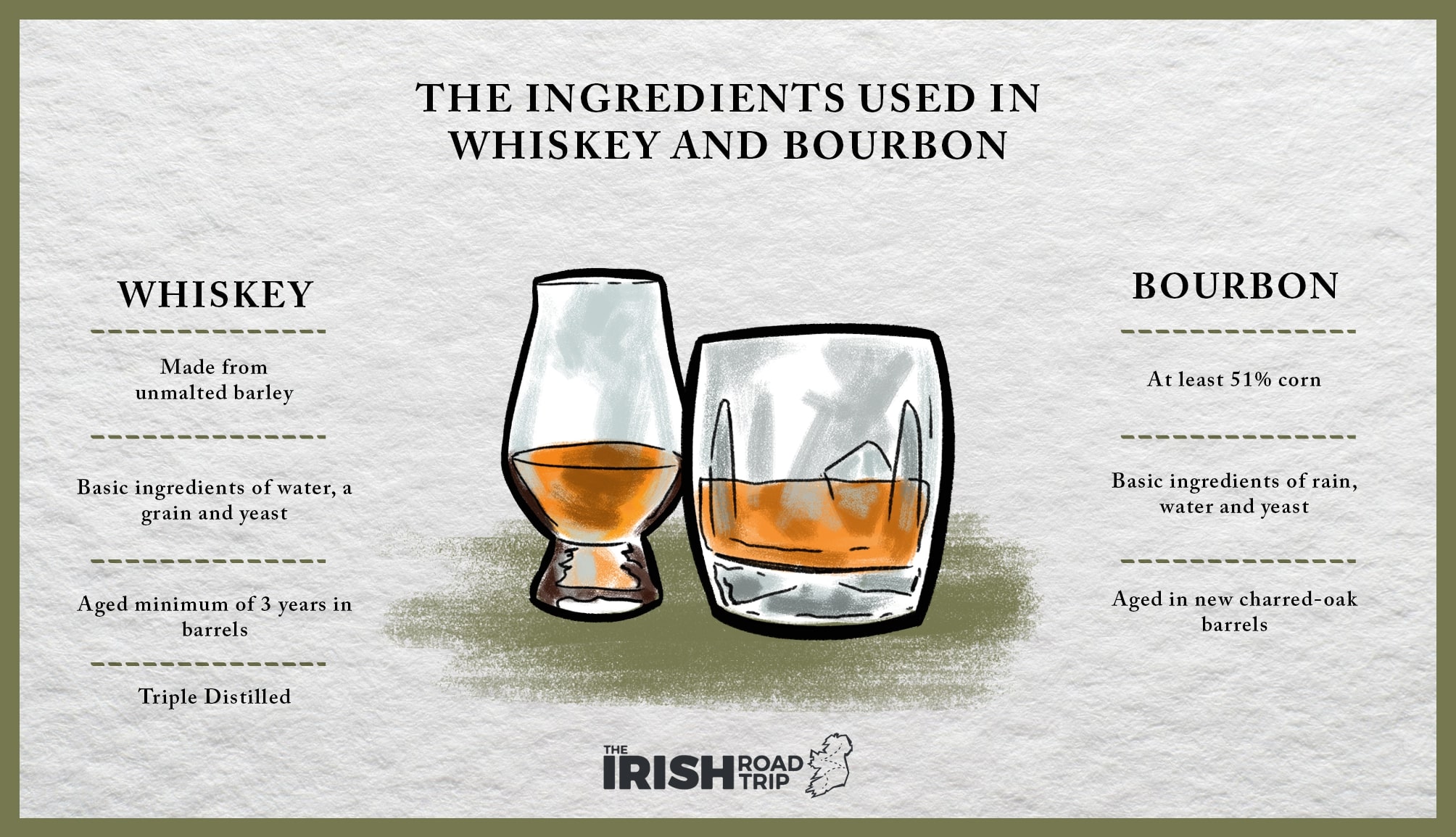
- Be made from a mash bill containing at least 51% corn. This primary grain contributes significantly to Bourbon’s characteristic sweetness and flavor profile, which is a key part of its brand promise.
- Be distilled to no more than 160 proof (80% alcohol by volume). This upper limit ensures that some of the flavors derived from the grain mash are retained, rather than being stripped away by over-distillation.
- Be aged in new, charred oak barrels. This is perhaps one of the most distinctive and impactful requirements, contributing the majority of Bourbon’s color, caramel, vanilla, and spice notes. The “new” barrel requirement distinguishes it sharply from Scotch whisky, which often reuses barrels.
- Be barreled at no more than 125 proof (62.5% alcohol by volume). This maximum entry proof allows the whiskey to interact more effectively with the wood during aging, extracting desirable compounds.
- Be bottled at no less than 80 proof (40% alcohol by volume). This minimum proof ensures a certain level of alcoholic strength and flavor concentration in the final product.
These stringent rules define Bourbon as a distinct category of whiskey, forming the fundamental brand characteristics that consumers worldwide recognize and expect.
Understanding “Whiskey”: The Broader Category
Whiskey, as a broader spirit category, encompasses a vast array of distilled alcoholic beverages made from fermented grain mash. Its global family includes Scotch, Irish whiskey, Canadian whisky, Japanese whisky, rye whiskey, Tennessee whiskey, and many more. Each sub-category, like Bourbon, possesses its own set of production rules and historical traditions that give it a unique brand identity. Bourbon is simply a specific, highly regulated type of whiskey, much like Champagne is a specific type of sparkling wine.
The Redundancy Explained
Given the legal requirements, any spirit that meets the definition of Bourbon automatically falls under the umbrella of whiskey. Therefore, adding “whiskey” after “Bourbon” (e.g., “Bourbon whiskey”) is grammatically correct but legally and functionally redundant. It’s akin to saying “Canine dog” instead of just “dog.” Distilleries might use “Bourbon whiskey” on labels for various reasons, including a desire for traditional nomenclature, to emphasize the product’s place within the broader whiskey family for new consumers, or simply as a stylistic choice. However, the term “Bourbon” alone carries all the necessary legal and brand implications.
Brand Protection and Geographical Indication
The precise legal definition of Bourbon is far more than a technicality; it is a powerful tool for brand protection, establishing Bourbon as a distinct geographical indication and safeguarding its reputation on a global scale. This protective framework is crucial for the industry’s sustained growth and the preservation of its corporate identity.
“America’s Native Spirit”: A Mark of Origin and Quality
In 1964, the U.S. Congress formally recognized Bourbon as “America’s Native Spirit.” This designation is pivotal for its brand identity, elevating it beyond merely a product to a symbol of American heritage and craftsmanship. This status provides a layer of legal and cultural protection, akin to how Scotch whisky must be produced in Scotland or Cognac in the Cognac region of France. It prevents other countries or regions from creating similar products and labeling them as Bourbon, thus preserving the authenticity and market value of the genuine article.
Preventing Misappropriation: Safeguarding Brand Integrity
The strict definition serves as an impenetrable barrier against misappropriation. Without these regulations, any distillery worldwide could produce a spirit with corn, age it in any barrel, and call it “Bourbon.” This would dilute the brand, confuse consumers, and erode the trust built over centuries. By legally mandating production methods and origin, the U.S. government ensures that consumers buying a bottle of Bourbon are guaranteed a product that adheres to a specific, high-quality standard rooted in American tradition. This protection is vital for the financial stability and brand equity of American distilleries.
Global Market Recognition: Building a Distinctive Identity
The robust legal framework allows Bourbon to be marketed internationally with a clear, unambiguous brand identity. When a bottle of American Bourbon is sold in Tokyo, London, or Sydney, its designation signifies not just a type of alcohol, but a product with a defined history, specific production standards, and a guaranteed origin. This clarity is a tremendous asset in competitive global spirits markets, allowing Bourbon brands to stand out and communicate their unique value proposition effectively. It builds a global brand for American whiskey as a whole, with Bourbon at its forefront.
Consumer Perception and Brand Messaging
The consistent adherence to Bourbon’s legal definition profoundly influences consumer perception and shapes how distilleries craft their brand messaging. It creates a foundation of trust and reliability that is essential for brand loyalty and market success.
Building Trust Through Consistency: The Brand Promise
Consumers develop an expectation when they choose a category-specific product like Bourbon. They anticipate a certain flavor profile, production quality, and authenticity. The uniform definition of Bourbon guarantees this consistency. Whether a consumer picks up a bottle of a well-established brand or a new craft Bourbon, the baseline understanding of what “Bourbon” means provides a sense of security and familiarity. This reliability is a cornerstone of brand building; it tells the consumer, “You know what you’re getting when you buy Bourbon,” fostering trust and encouraging repeat purchases.
Marketing Language and Tradition: Crafting Brand Narratives
While “Bourbon” is sufficient, some brands deliberately choose to use “Bourbon whiskey” on their labels. This choice can be strategic, intended to:
- Emphasize Tradition: For heritage brands, “Bourbon whiskey” might be a nod to historical labeling practices, reinforcing a sense of timelessness and established legacy.
- Educate New Consumers: For those unfamiliar with the category, explicitly stating “whiskey” can immediately place the product within a recognizable family of spirits, making it less intimidating.
- Differentiate from Non-Whiskey Products: In a broad alcohol market, clearly stating “whiskey” helps to immediately distinguish the product from other spirits categories, refining its niche.
These subtle linguistic choices are part of a broader brand strategy to communicate values, heritage, and product positioning.
Educating the Market: Reinforcing Brand Value
Distilleries and industry bodies invest heavily in educating consumers about what makes Bourbon unique. This education is not just about facts; it’s about reinforcing the brand’s perceived value. Highlighting the 51% corn mash bill, the new charred oak barrels, and the “America’s Native Spirit” designation explains why Bourbon tastes the way it does and why it holds a special place in the spirits world. This proactive education strengthens the Bourbon brand by fostering appreciation and understanding among its audience, turning casual drinkers into informed enthusiasts.
The Nuances of Labeling and Brand Strategy
Even within the strict confines of “Bourbon,” distilleries employ sophisticated labeling and brand strategies to differentiate their products, build unique brand identities, and capture specific market segments.
Beyond the Basic Definition: Crafting a Unique Brand Profile
While the foundational definition of Bourbon is uniform, brands distinguish themselves through elements not explicitly mandated by law:
- Mash Bill Variations: While at least 51% corn is required, the remaining 49% (rye, barley, wheat) allows for significant flavor variations. A “high-rye” Bourbon brand will have a spicier profile, appealing to a different palate than a “wheated” Bourbon, known for its softer, sweeter character. These choices are central to a brand’s unique flavor identity.
- Aging Duration and Environment: While there’s no minimum age (unless labeled “straight,” which requires two years), longer aging periods or aging in specific warehouse locations (e.g., higher floors for more temperature fluctuation) contribute to distinct flavor profiles that brands leverage in their marketing.
- Proof Points: Different barrel entry proofs (up to 125) and bottling proofs (at least 80) significantly impact flavor intensity and mouthfeel, allowing brands to cater to different consumer preferences for strength and smoothness.
- Filtration Methods: While not always highlighted, specific filtration techniques can subtly alter the final product, adding another layer of brand differentiation.
Each of these choices creates a unique brand profile within the broader Bourbon category.
Strategic Naming Conventions: Elevating Brand Prestige
Beyond simply “Bourbon,” brands often use additional descriptors that add layers of prestige and signify further adherence to even stricter standards:
- “Straight Bourbon Whiskey”: This term indicates the Bourbon has been aged for a minimum of two years, contains no added coloring or flavoring, and if aged less than four years, carries an age statement. This immediately communicates a higher standard of production and aging, enhancing brand perception.
- “Kentucky Straight Bourbon Whiskey”: This signifies not only the “straight” definition but also that the entire distillation and aging process occurred within the state of Kentucky, reinforcing its geographical heritage and brand authenticity.
- “Small Batch,” “Single Barrel,” “Barrel Proof”: These terms are not legally defined as rigorously as “straight” but convey specific production methods that imply exclusivity, craftsmanship, and a premium experience, which are powerful branding tools.
These naming conventions are integral to segmenting the market and positioning a brand as either an everyday staple or a high-end, limited-edition offering.

The Art of Storytelling: Weaving Narratives into the Brand
Finally, distilleries excel at weaving compelling stories around their Bourbon brands. This storytelling is critical for creating an emotional connection with consumers. Whether it’s tales of pioneer distillers, specific farm-to-bottle processes, unique family traditions, or innovative production techniques, these narratives imbue the brand with personality, heritage, and a sense of place. This narrative element, combined with the foundational legal definition, transforms a simple alcoholic beverage into a cherished brand experience, cementing Bourbon’s unique position in the global spirits landscape.
aViewFromTheCave is a participant in the Amazon Services LLC Associates Program, an affiliate advertising program designed to provide a means for sites to earn advertising fees by advertising and linking to Amazon.com. Amazon, the Amazon logo, AmazonSupply, and the AmazonSupply logo are trademarks of Amazon.com, Inc. or its affiliates. As an Amazon Associate we earn affiliate commissions from qualifying purchases.