
In the modern automotive landscape, brand architecture is often as critical as the engineering that powers the vehicles themselves. When Mazda introduced the CX-50 alongside the long-standing, globally successful CX-5, it created a unique case study in market segmentation and brand positioning. To the casual observer, these two vehicles appear to compete for the same customer: both are compact crossovers, both offer similar powertrains, and both sit within a similar price bracket. However, from a brand strategy perspective, the differences between the CX-5 and the CX-50 represent a calculated effort to diversify Mazda’s corporate identity and capture distinct psychographic segments of the market.

Understanding the difference between these two models requires looking beyond the spec sheets. It involves analyzing how Mazda is transitioning from a mainstream manufacturer to a “near-premium” brand, utilizing specific design languages and lifestyle marketing to appeal to different facets of the modern consumer.
Market Segmentation: The Strategy of Overlap
The most common question regarding these two models is why a brand would offer two vehicles in the same size category. In traditional brand management, this is often viewed as a risk for “cannibalization”—where one product eats the sales of another. However, Mazda’s strategy with the CX-5 and CX-50 is a masterclass in targeted market segmentation.
The Established Icon vs. the Rugged Newcomer
The CX-5 is Mazda’s global bestseller. It is the cornerstone of their brand identity, representing refined, urban sophistication. Its branding is built on the “Kodo: Soul of Motion” design philosophy, which emphasizes fluid lines and a sense of motion even at a standstill. The CX-5 is positioned for the “urban professional”—a consumer who values reliability, premium interior finishes, and a polished aesthetic that fits seamlessly into city life and suburban commuting.
In contrast, the CX-50 was developed specifically for the North American market to capture a different demographic: the outdoor enthusiast. While the CX-5 is about elegance, the CX-50 is about “rugged capability.” By launching the CX-50, Mazda is not trying to replace the CX-5 buyer; they are trying to attract the consumer who might have previously looked at a Subaru Outback or a Toyota RAV4 Adventure. The brand strategy here is to expand the “tent” of the Mazda brand to include those who view their vehicle as a tool for exploration rather than just a sophisticated mode of transport.
Identifying the Core Demographic
The psychographic profiling for these two vehicles is distinct. The CX-5 brand appeals to the “Rational Aesthetician.” This buyer wants a vehicle that looks more expensive than it is and offers a driving experience that is engaging but smooth. They prioritize interior tactile quality and a quiet cabin.
The CX-50 brand appeals to the “Active Explorer.” This demographic prioritizes utility and a “go-anywhere” persona. Even if the vehicle spends 90% of its time on paved roads, the branding—emphasizing roof racks, lower-profile cladding, and a wider stance—satisfies the consumer’s desire for a vehicle that aligns with an adventurous identity. By maintaining both models, Mazda effectively brackets the compact SUV segment, ensuring they have an answer for both the style-conscious urbanite and the weekend trailblazer.
Engineering the Brand Identity: Form vs. Function
Brand identity is not just about logos and commercials; it is baked into the physical design and engineering of the product. The differences in how the CX-5 and CX-50 are built reflect their divergent brand promises.
Urban Sophistication in the CX-5
The CX-5’s engineering is optimized for the “pavement-first” experience. Its dimensions are taller and narrower, making it ideal for navigating tight city streets and parking garages. The suspension is tuned for a balance of comfort and agility, reinforcing Mazda’s “Jinba Ittai” (horse and rider as one) philosophy in a way that feels nimble.
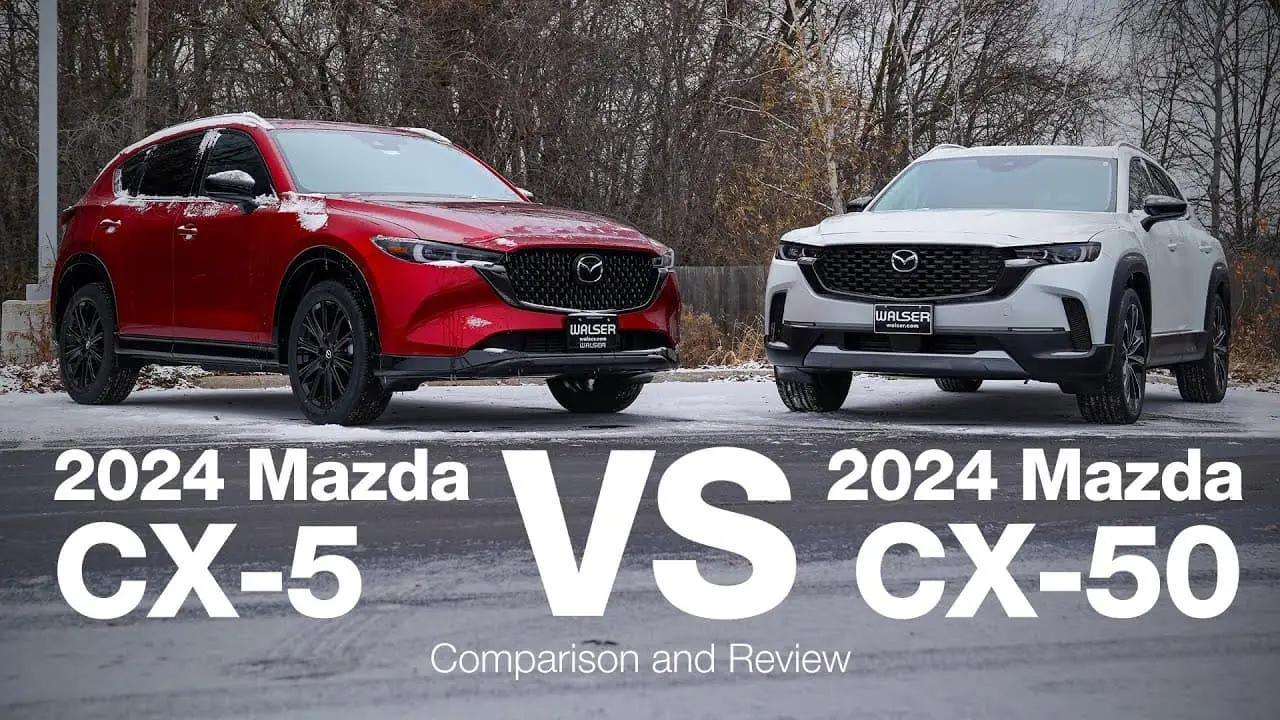
From a design standpoint, the CX-5 features painted body panels and minimal plastic cladding. This communicates a sense of luxury and “on-road” focus. The interior layout is traditional and driver-centric, focusing on ergonomics that make daily commuting feel like a premium experience. For the brand, the CX-5 serves as the bridge between mainstream affordability and the luxury feel of a European SUV.
The Wide-Stance Philosophy of the CX-50
The CX-50’s brand identity is visually reinforced by its proportions. It is longer, wider, and lower than the CX-5. This “wide-stance” philosophy is a deliberate move to project stability and toughness. The use of high-strength plastic cladding around the wheel wells and bumpers isn’t just for protection; it’s a visual cue that signals “durability.”
Engineering-wise, the CX-50 introduces features that support its rugged branding. It has a higher towing capacity (up to 3,500 lbs on certain trims compared to the CX-5’s 2,000 lbs) and a dedicated “Off-Road” mode within its Mi-Drive system. Even the interior design reflects this shift; the air vents are vertical and blocky, and the materials are chosen for their ability to withstand the dirt and grime of an active lifestyle. While the CX-5 uses soft-touch materials to suggest elegance, the CX-50 uses them to suggest “sturdy premium.”
Product Line Extension and the Move Toward Premium
The existence of both the CX-5 and CX-50 is a vital component of Mazda’s overarching corporate strategy to move upmarket. For decades, Mazda occupied a middle ground between the “big three” Japanese manufacturers (Toyota, Honda, Nissan) and the luxury marques. Now, they are firmly positioning themselves as a “boutique” premium brand.
Mazda’s “Large Product Group” Transition
The CX-50 is a transitional product in Mazda’s lineup. It utilizes a newer platform (shared with the CX-30 and Mazda3) that allows for more modern manufacturing techniques and a different interior layout. This platform allows Mazda to experiment with more aggressive styling and better packaging for North American tastes.
By keeping the CX-5—which is built on an older, albeit highly refined platform—Mazda can maintain its high-volume sales while using the CX-50 to test the limits of its brand equity in the lifestyle space. This allows the company to transition its customer base toward more expensive, specialized vehicles without alienating the loyalists who have made the CX-5 a staple of the segment.
Pricing Strategy and Value Perception
The branding difference is also reflected in the pricing tiers. The CX-50 generally carries a higher starting price and occupies a slightly more “premium” slot in the marketing hierarchy. This isn’t just because of newer tech; it’s about the value of the “lifestyle” being sold.
In brand strategy, “lifestyle” products often command a premium because they resonate with the consumer’s self-image. The CX-5 is marketed as a smart, sophisticated choice (Value-based branding), while the CX-50 is marketed as an aspirational choice (Identity-based branding). This distinction allows Mazda to capture more “margin” on the CX-50 while maintaining “volume” on the CX-5.
Regional Branding: Why the CX-50 is a North American Play
One of the most significant strategic differences between these two vehicles is their geographical intent. The CX-5 is a global product, designed to appeal to drivers in Tokyo, London, and Los Angeles alike. Its dimensions and styling are “universal.”
Manufacturing and Supply Chain Narratives
The CX-50, however, is a product of the Mazda Toyota Manufacturing (MTMUS) plant in Huntsville, Alabama. This is a critical point in Mazda’s brand narrative for the North American market. By building the CX-50 in the United States, Mazda is signaling a commitment to the American consumer.
This localization allows Mazda to react more quickly to regional trends. The American market has a specific obsession with “overlanding” and rugged aesthetics that isn’t as prevalent in Japan or Europe. By creating a region-specific model, Mazda can lean into these cultural nuances without compromising the global identity of the CX-5. This “glocal” approach—global brand, local product—is a sophisticated way to manage a brand’s footprint in a competitive landscape.
Brand Equity in the Adventure Lifestyle Segment
For years, the “adventure” brand space was dominated by a few key players. By introducing the CX-50, Mazda is attempting to transfer its reputation for excellent driving dynamics into a space where it previously had no presence. The brand message is clear: “You don’t have to sacrifice a great driving experience just because you want a rugged vehicle.” This unique selling proposition (USP) differentiates the CX-50 not just from the CX-5, but from every other competitor in the rugged-crossover niche.

Choosing a Brand Direction for the Consumer
Ultimately, the difference between a Mazda CX-5 and a CX-50 is a matter of brand alignment. For the consumer, the choice is less about horsepower or cargo inches—which are remarkably similar—and more about which “version” of the Mazda brand they want to inhabit.
The CX-5 remains the quintessential Mazda: elegant, agile, and timeless. It represents the brand’s mastery of the traditional crossover. The CX-50 represents the brand’s future: bold, specialized, and rugged. It shows a company willing to take risks to capture new demographics and solidify its place as a premium manufacturer.
By offering both, Mazda has ensured that whether a customer is looking for a sophisticated tool for the daily commute or a rugged partner for a mountain excursion, there is a Mazda branded specifically for them. This dual-model strategy demonstrates a deep understanding of modern consumer behavior, where the “what” of a product is often less important than the “who” the product says the consumer is. In the battle between the CX-5 and the CX-50, the winner is the Mazda brand itself, which now successfully occupies two distinct spaces in the consumer’s mind.
aViewFromTheCave is a participant in the Amazon Services LLC Associates Program, an affiliate advertising program designed to provide a means for sites to earn advertising fees by advertising and linking to Amazon.com. Amazon, the Amazon logo, AmazonSupply, and the AmazonSupply logo are trademarks of Amazon.com, Inc. or its affiliates. As an Amazon Associate we earn affiliate commissions from qualifying purchases.