
In the pursuit of education and career advancement, individuals are often confronted with a pivotal decision: should I pursue a degree or a diploma? While both are formal qualifications designed to equip learners with knowledge and skills, their distinctions extend far beyond mere nomenclature. From a financial perspective, understanding these differences is paramount, as each path represents a distinct investment with varying costs, returns on investment (ROI), and implications for future earning potential and career mobility. This article will delve into the financial nuances of degrees versus diplomas, offering an insightful guide for making an informed decision that aligns with your personal finance goals and long-term wealth-building strategy.
The Core Distinctions: An Investment Perspective
Viewing education as an investment is crucial. Like any financial investment, understanding its structure, potential returns, and inherent risks is key. A degree and a diploma, while both yielding educational credentials, differ significantly in their investment profile.
Degree: The Long-Term Capital Investment
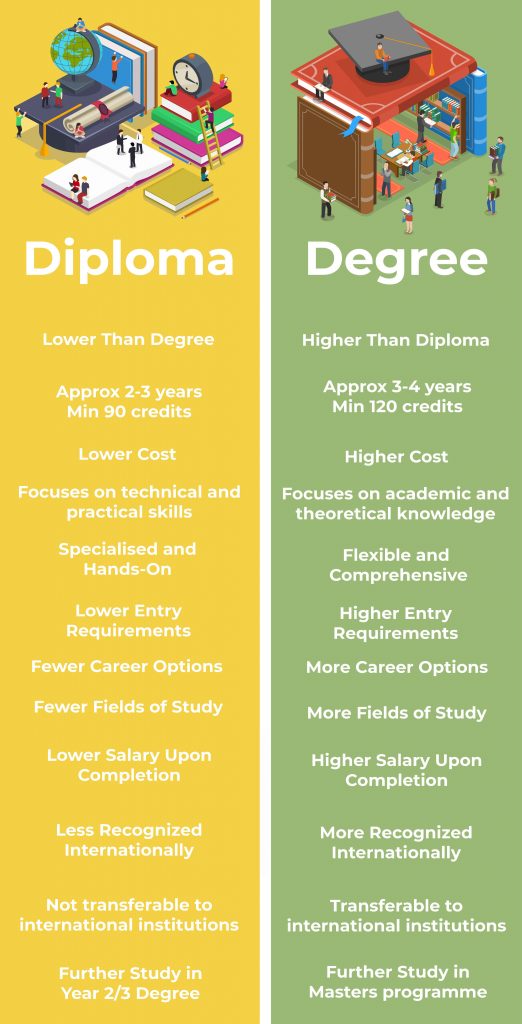
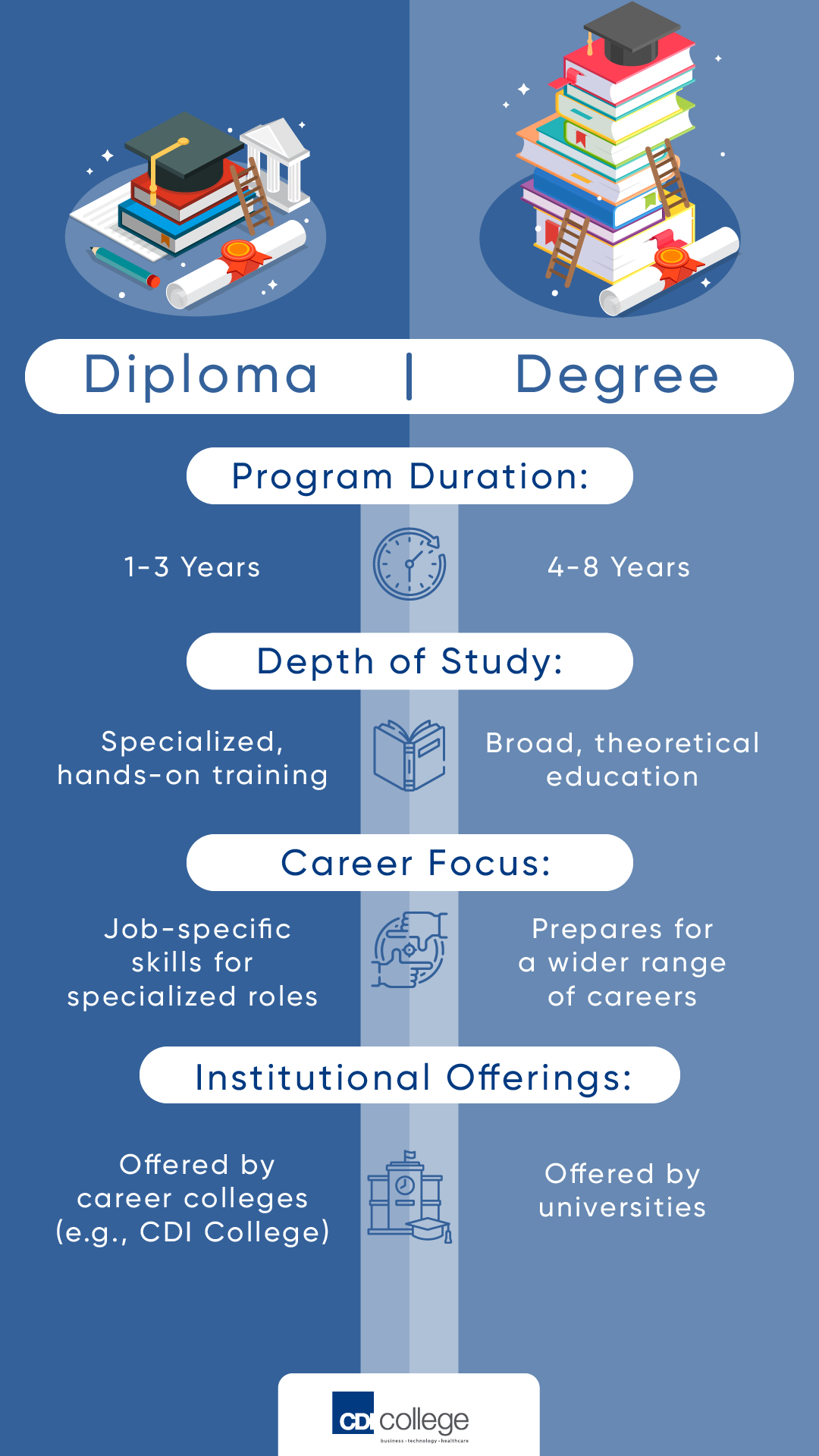
A degree, typically conferred by a university (e.g., Bachelor’s, Master’s, Doctorate), represents a substantial long-term capital investment. These programs usually span three to four years or more, focusing on comprehensive theoretical knowledge, critical thinking, research skills, and a broad understanding of a discipline. The curriculum often includes general education requirements alongside specialized coursework, aiming to cultivate a well-rounded intellectual foundation.
From a financial standpoint, a degree is often seen as a strategic investment for higher-level professional roles, management positions, or careers requiring extensive specialized knowledge and regulatory licensing (e.g., medicine, law, engineering). While the upfront cost – in terms of tuition, living expenses, and foregone income – is significantly higher, the anticipated long-term financial returns often justify this investment. Degree holders, on average, tend to command higher starting salaries and experience greater lifetime earnings compared to those with diplomas, enjoying broader career paths and often more robust financial security. It’s an investment in intellectual capital with the expectation of a higher dividend over a longer horizon.
Diploma: The Targeted Skill Acquisition
A diploma, often awarded by colleges, vocational schools, or polytechnics, represents a more targeted and often shorter-term investment. These programs typically last from several months to two years and are highly focused on practical, hands-on skills relevant to specific industries or occupations (e.g., welding, paralegal studies, graphic design, specific IT certifications). The emphasis is on immediate employability and meeting the specific demands of the job market.
Financially, a diploma offers a quicker path to employment and a potentially faster return on investment. The upfront costs are generally lower, and the shorter duration means less time out of the workforce, thus reducing opportunity costs. For individuals seeking rapid entry into a particular trade or profession, or those looking to quickly upgrade specific skills to boost their income, a diploma can be an exceptionally efficient financial decision. It’s an investment in human capital designed for quick deployment and immediate income generation, often with a clear, measurable ROI in the form of a new job or higher pay for a specific skill set.
Financial Implications: Cost, ROI, and Opportunity
The choice between a degree and a diploma is profoundly impacted by their respective financial implications across several dimensions, from initial outlay to long-term income potential.
Upfront Costs and Funding Strategies
The most immediate financial distinction lies in the upfront costs. University degrees typically carry significantly higher tuition fees, often ranging from tens of thousands to well over a hundred thousand dollars for a four-year program. These costs are compounded by living expenses, textbooks, and other educational materials. Funding such an investment often necessitates a combination of personal savings, scholarships, grants, and, frequently, substantial student loans. Managing student debt is a critical aspect of personal finance for degree holders, influencing future purchasing power, investment capacity, and major life decisions.
Diplomas, conversely, generally involve much lower tuition fees and shorter program durations, which reduces overall living expenses during study. This makes them more accessible for individuals with limited savings or those hesitant to incur significant debt. Funding options may include government grants, employer sponsorships, or more manageable personal loans. The lower financial barrier to entry makes diplomas an attractive option for those prioritizing financial prudence and minimizing debt burden.
Return on Investment (ROI) and Earning Potential
Analyzing the return on investment (ROI) is crucial for both paths. Historically, a bachelor’s degree has been associated with a “degree premium”—significantly higher lifetime earnings compared to individuals with only a high school diploma or a diploma. This premium often results from access to higher-paying professions, greater career mobility, and increased resilience during economic downturns. However, the ROI of a degree can vary widely based on the field of study, the institution’s reputation, and individual career choices.
For diplomas, the ROI is often realized more quickly. Graduates can enter the workforce sooner and begin earning income, recouping their educational investment in a shorter timeframe. While the median lifetime earnings for diploma holders might be lower than for degree holders, certain specialized vocational diplomas can lead to highly lucrative careers in skilled trades or niche technical fields where demand outstrips supply. In these instances, the ROI for a diploma can be exceptionally high, particularly when considering the lower initial investment. The key is identifying high-demand, skill-specific sectors.
Opportunity Costs of Education
Opportunity cost, a fundamental concept in economics, refers to the value of the next best alternative that must be foregone when making a choice. In education, this primarily involves the income that could have been earned had one entered the workforce instead of pursuing further schooling.
For a degree, the opportunity cost is considerable. Spending three to four or more years in university means forfeiting several years of potential full-time income. This can amount to tens of thousands of dollars in lost wages, which must be factored into the overall financial assessment of the degree. While this cost is often offset by higher future earnings, it’s a significant financial consideration during the investment phase.
Diplomas, with their shorter duration, incur a much lower opportunity cost. Learners are typically out of the full-time workforce for a shorter period, allowing them to start earning and contributing to their personal finances sooner. This expedited entry into the job market can be a compelling financial advantage, particularly for individuals with immediate financial obligations or those eager to build their savings and investment portfolios early in their careers.
Career Trajectories and Financial Growth
The type of qualification chosen also dictates potential career trajectories and avenues for financial growth, influencing long-term wealth accumulation and lifestyle.
Navigating Professional Advancement with a Degree
A degree often serves as a foundational credential for upward mobility into management, leadership, or highly specialized professional roles. The critical thinking, analytical, and broader theoretical skills acquired are highly valued in corporate environments, enabling graduates to adapt to diverse challenges and pursue advanced career pathways. Many professions require at least a bachelor’s degree as a minimum entry requirement, and further degrees (Master’s, PhD) can unlock even higher salary ceilings and executive positions. For entrepreneurs, the comprehensive understanding gained through a degree can provide a robust framework for business strategy, financial management, and market analysis, potentially leading to more sustainable and scalable ventures. The financial growth trajectory for degree holders often involves steady increases in salary, benefits, and retirement contributions over a long career span.
Diploma’s Role in Rapid Market Entry and Skill-Based Income
Diplomas are excellent for rapid market entry and building income through specialized skills. Graduates are often in demand for specific, hands-on roles that require immediate competence. Industries like healthcare support, trades, digital marketing, and IT support frequently hire diploma holders, recognizing their practical training. Financial growth for diploma holders can be swift initially, especially if they enter a high-demand field. However, to sustain this growth, continuous upskilling and certification are often necessary to keep pace with evolving industry standards and technology. Self-employment and contracting are also viable options for many diploma-qualified professionals, allowing them to control their income and potentially achieve higher hourly rates by specializing further. The focus here is often on acquiring highly marketable skills that translate directly into income.
The Hybrid Approach: Maximizing Financial Flexibility
For many, the most financially astute path may be a hybrid approach. Starting with a diploma can provide immediate job entry, income, and industry experience, while incurring less debt. After gaining practical experience and potentially saving money, individuals can then pursue a degree, often with a clearer career vision and possibly employer sponsorship or tuition reimbursement. Many institutions offer pathways for diploma holders to transfer credits towards a degree, making this a financially flexible and strategically sound option. This approach allows individuals to “earn while they learn” and mitigate the opportunity costs of a full-time degree, maximizing both immediate income and long-term career potential.
Strategic Decision-Making for Your Financial Future
Choosing between a degree and a diploma is ultimately a personal finance decision that should be made strategically, aligning with individual goals, risk tolerance, and market realities.
Aligning Education with Financial Goals
Before committing to either path, critically assess your personal financial goals. Do you prioritize immediate income and minimal debt, or are you prepared for a longer-term investment for potentially higher future earnings? Consider your desired lifestyle, long-term wealth-building aspirations (e.g., homeownership, early retirement, investment portfolio), and your comfort level with student debt. Some careers inherently require a degree, while others value practical skills more highly. Understanding your personal aptitude and passion is also vital; a career you enjoy is often one where you’ll excel and thus earn more.
Researching Market Trends and Industry Demands
A thorough investigation of current and future market trends is indispensable. Research which industries are growing, what skills are in demand, and the typical salary expectations for both degree and diploma holders in your chosen fields. Government labor statistics, industry reports, and professional networking can provide invaluable insights. Certain diploma programs might lead to careers with higher starting salaries and better job security than some degree programs, especially in niche technical fields. Conversely, some advanced leadership roles are almost exclusively accessible with a degree. Understanding the “market value” of specific qualifications and skills is key to making a financially sound educational investment.
Weighing Risk and Reward in Educational Investments
Like any investment, education carries risks. The risk of accumulating significant debt with a degree that doesn’t yield expected financial returns is real. The risk for a diploma might be that the specialized skill set becomes obsolete quickly, requiring continuous investment in new training. Evaluate these risks against the potential rewards. Consider the economic cycle, technological advancements, and your personal adaptability. A flexible financial plan, including emergency savings and strategies for debt management, is crucial regardless of the path chosen.
Conclusion
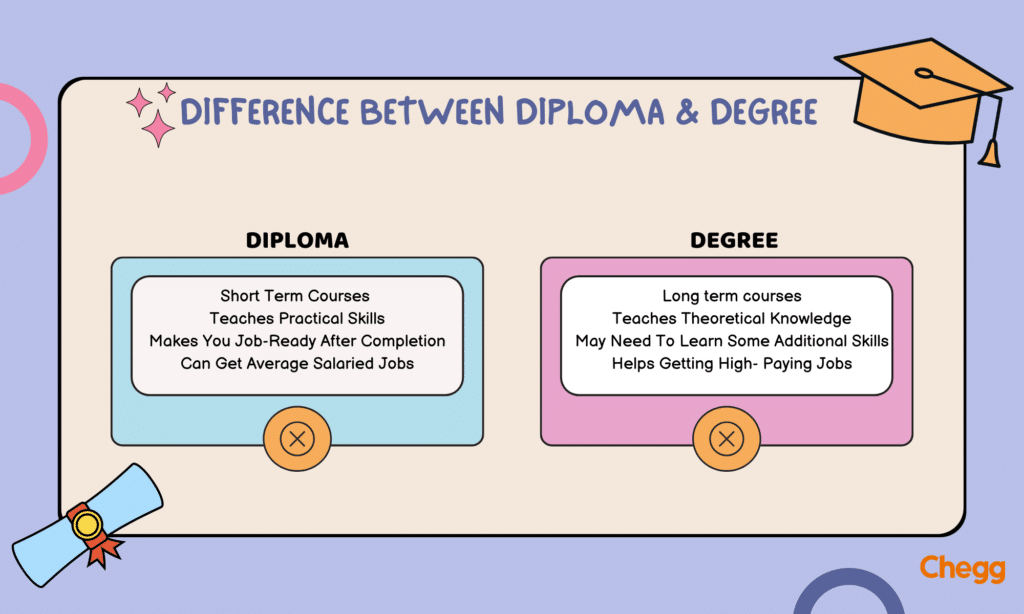
The distinction between a degree and a diploma is far more than an academic classification; it’s a critical financial decision with profound implications for your personal finance, career trajectory, and long-term wealth. A degree typically represents a larger, longer-term capital investment with the potential for higher lifetime earnings and broader career paths, albeit with higher upfront costs and opportunity costs. A diploma offers a targeted, quicker path to employment and immediate income generation, with lower initial investment and reduced debt burden.
Neither path is inherently superior; rather, the “best” choice is the one that strategically aligns with your individual financial goals, career aspirations, and market demand. By carefully considering the costs, potential ROI, opportunity costs, and future growth trajectories associated with each, you can make an informed educational investment that propels you towards a secure and prosperous financial future.
aViewFromTheCave is a participant in the Amazon Services LLC Associates Program, an affiliate advertising program designed to provide a means for sites to earn advertising fees by advertising and linking to Amazon.com. Amazon, the Amazon logo, AmazonSupply, and the AmazonSupply logo are trademarks of Amazon.com, Inc. or its affiliates. As an Amazon Associate we earn affiliate commissions from qualifying purchases.