
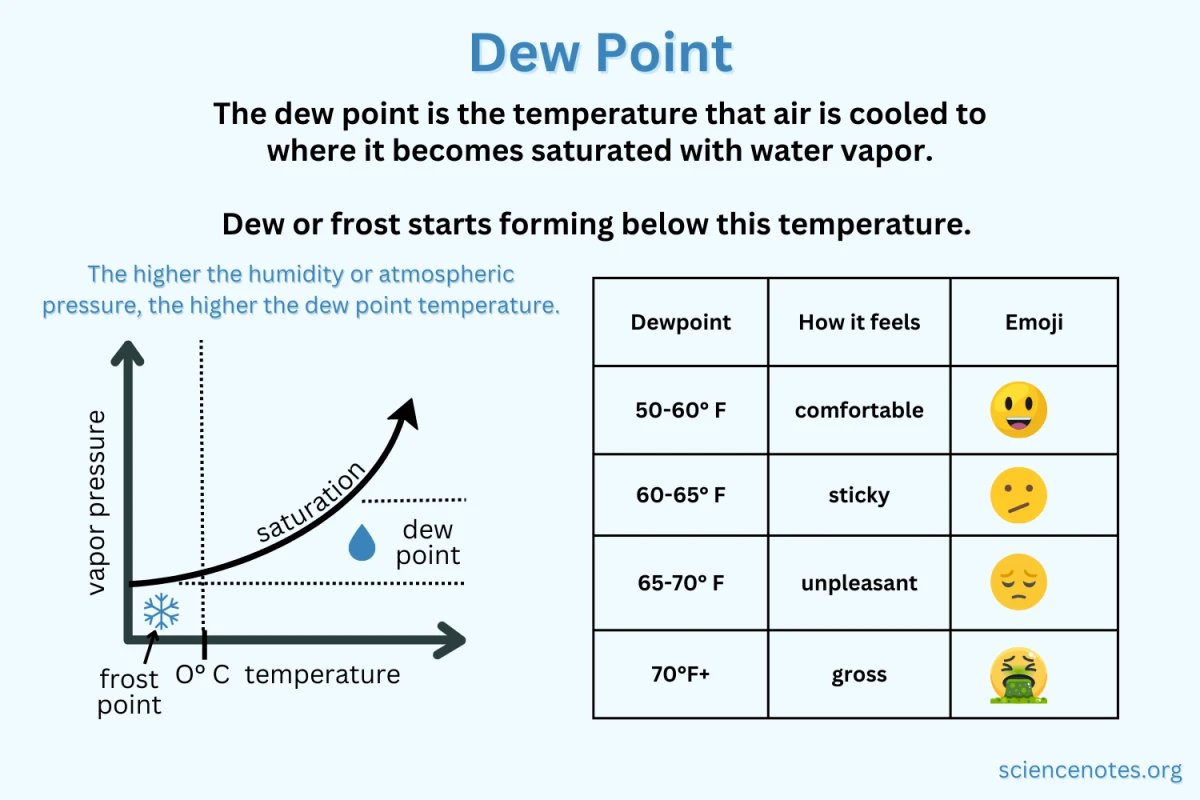
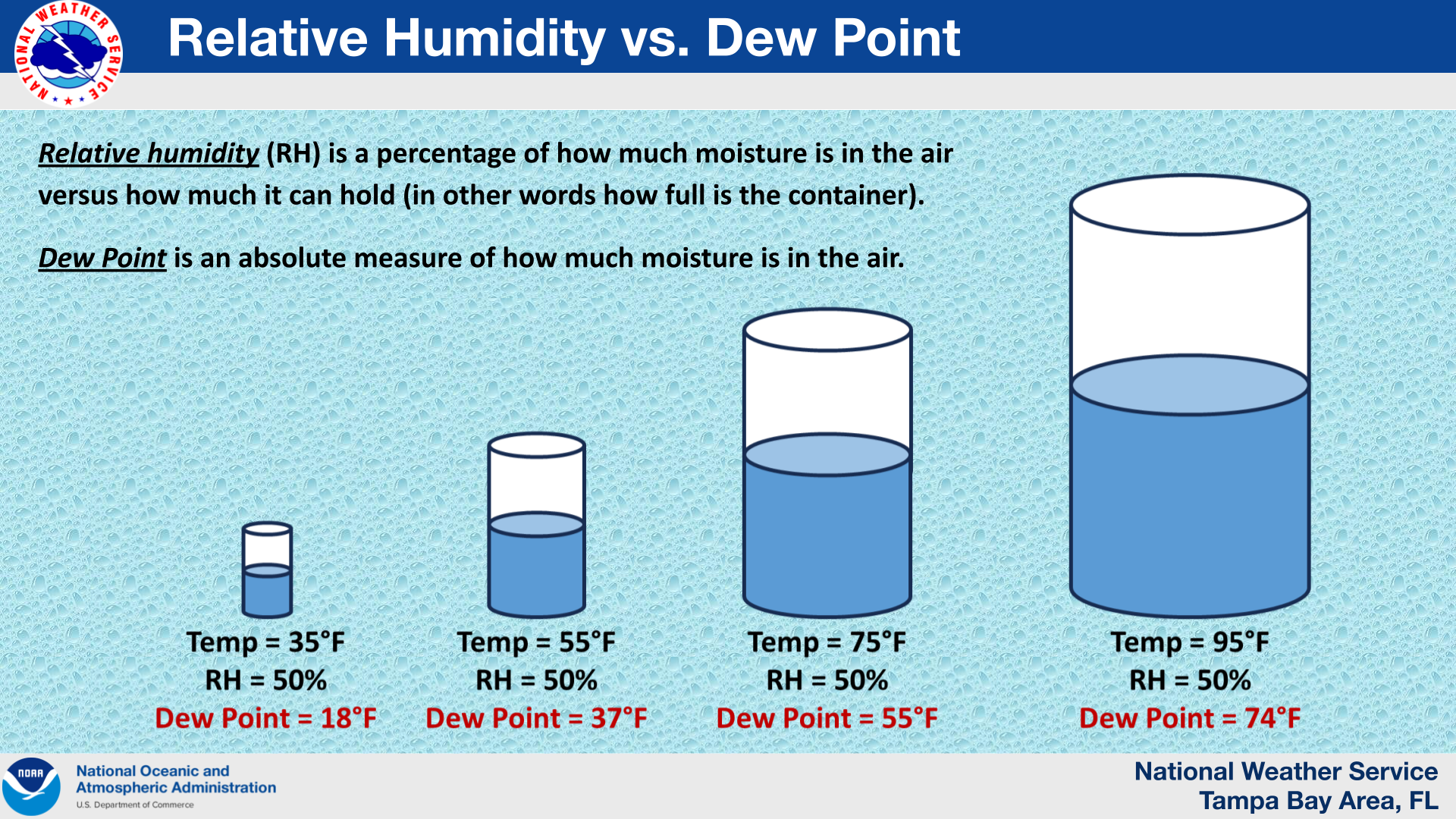
In the realm of modern meteorology and environmental technology, the dew point serves as one of the most critical metrics for assessing atmospheric moisture. While the general public often relies on relative humidity to gauge comfort, tech-driven industries—ranging from precision agriculture to aviation and data center management—prioritize the dew point for its absolute accuracy. Understanding the dew point from a technological perspective involves exploring the hardware used to measure it, the algorithms used to calculate it, and the vast digital infrastructure that disseminates this data to billions of devices worldwide.
The Engineering of Atmospheric Measurement: High-Precision Sensors
To answer “what is the dew point,” one must first look at the hardware used to capture the transition of water vapor into liquid. Unlike traditional thermometers, dew point measurement requires sophisticated sensor arrays capable of detecting subtle changes in thermal conductivity and electrical resistance.
From Hygrometers to Smart IoT Nodes
The evolution of measurement technology has transitioned from mechanical hair hygrometers to solid-state electronic sensors. Modern Internet of Things (IoT) weather stations utilize capacitive humidity sensors. These sensors consist of a substrate, a thin layer of polymer or metal oxide between two electrodes. As the moisture in the air changes, the dielectric constant of the polymer changes, allowing the onboard microprocessor to calculate the humidity and, subsequently, the dew point. These IoT nodes are now miniaturized to the point of being integrated into smartphones and wearable tech, providing hyper-local environmental data.
The Precision of Chilled Mirror Technology
In laboratory settings and high-stakes industrial environments, “Chilled Mirror” hygrometers represent the gold standard of tech. This device uses a thermoelectric cooler to lower the temperature of a polished metallic mirror until condensation begins to form. An optoelectronic system—consisting of an LED and a photodetector—monitors the mirror’s surface. The exact temperature at which the light reflection changes due to dew formation is the dew point. This level of precision is vital for calibrating the sensors used in weather satellites and commercial aircraft.
Data Processing and the Algorithms Behind Weather Software
The dew point is rarely a “raw” data point. In most consumer-facing applications and professional software suites, it is a calculated value derived from temperature and relative humidity. This calculation relies on complex mathematical models integrated into weather APIs and forecasting software.
Implementing the Magnus-Tetens Approximation
For software developers building weather applications, calculating the dew point requires the implementation of the Magnus-Tetens formula. This algorithm provides a high degree of accuracy for temperatures ranging from -45°C to 60°C. By coding these coefficients into weather apps, developers can provide real-time updates that help users understand the “sensible weather”—the actual feeling of the air. Modern weather stacks, often built on Python or C++, utilize libraries like MetPy to automate these calculations, ensuring that raw data from weather balloons is converted into actionable insights within milliseconds.
Machine Learning in Microclimate Modeling
Advanced meteorological platforms are now moving beyond static formulas toward machine learning (ML) models. By feeding historical dew point data, satellite imagery, and barometric pressure readings into neural networks, tech companies like IBM (The Weather Company) and Google (GraphCast) can predict dew point shifts with unprecedented granularity. These ML models can identify “dew point fronts”—sharp boundaries where dry air meets moist air—which are often the precursors to severe thunderstorms and tornadic activity.
The Digital Infrastructure of Modern Meteorological Networks
Once the dew point is measured and calculated, it must be transmitted through a global digital infrastructure. This “weather stack” ensures that a pilot in an engine room and a farmer in a field have access to the same high-fidelity data.
API Integration for Smart Homes and Industry
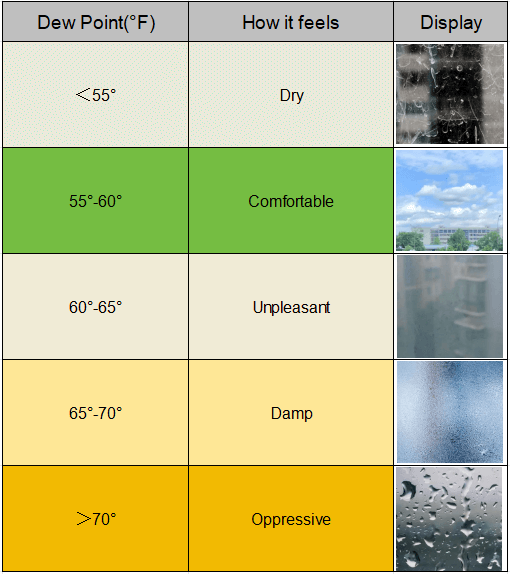
The “tech” of the dew point is perhaps most visible in the proliferation of Weather APIs. Services like OpenWeatherMap, AccuWeather, and Tomorrow.io provide RESTful APIs that allow third-party software to pull dew point data. In the smart home ecosystem, a Nest or Ecobee thermostat uses this data to adjust HVAC cycles. If the outdoor dew point is high, the system’s software may prioritize dehumidification over simple cooling, demonstrating how dew point data is integrated into automated decision-making logic.
Cloud-Based Weather Analysis Platforms
Large-scale environmental monitoring requires massive cloud compute resources. Organizations like the National Oceanic and Atmospheric Administration (NOAA) utilize supercomputers to run Global Forecast System (GFS) models. These models ingest petabytes of data, including dew point readings from thousands of ASOS (Automated Surface Observing Systems) stations. The cloud infrastructure allows for the “downscaling” of this data, enabling local municipalities to use high-resolution software to predict fog formation on highways or frost on bridges—both of which are functions of the dew point temperature.
Advanced Applications: How Dew Point Data Drives Specialized Tech Industries
While a high dew point might mean a “muggy” day for a pedestrian, for various tech sectors, it represents a critical variable in operational safety and efficiency.
Aviation Technology and Instrument Landing Systems (ILS)
In aviation tech, the dew point is a matter of life and death. When the air temperature and dew point are within a few degrees of each other, the probability of fog formation increases exponentially. Automated Weather Observing Systems (AWOS) at airports constantly stream dew point data to pilots via digital datalinks. Furthermore, carburetor heat systems in small aircraft and anti-icing tech in commercial jets rely on dew point monitoring to prevent “carb ice”—a phenomenon where moisture freezes inside the engine intake even in temperatures well above freezing.
Precision Agriculture and Autonomous Irrigation
The Agritech sector has turned dew point monitoring into a science of efficiency. Modern “Smart Farms” utilize mesh networks of soil and air sensors. By monitoring the dew point, autonomous irrigation software can determine the “Transpiration Rate” of crops. If the dew point is high, evaporation is low, and the system can reduce water usage, saving thousands of gallons. Additionally, dew point data is used to predict the onset of fungal diseases, allowing automated sprayers to apply fungicides only when the environmental “tech” signals a high-risk window.
Data Center Management and Thermal Engineering
Perhaps the most “tech-heavy” application of dew point data is inside the data centers that power the internet. Server racks generate immense heat and are sensitive to both static electricity (from low humidity) and condensation (from high dew point). Modern Data Center Infrastructure Management (DCIM) software uses the “Dew Point Control” strategy rather than relative humidity. By keeping the facility’s temperature above the dew point, engineers prevent liquid water from forming on sensitive circuit boards, while simultaneously optimizing the cooling towers to reduce energy consumption.
The Future of Dew Point Tracking: Quantum Computing and Edge AI
As we look toward the future of weather technology, the way we interact with dew point data is set to undergo a radical transformation. The integration of Edge AI and quantum computing will refine our understanding of this atmospheric constant.
Edge AI and Real-Time Environmental Sensing
Edge computing involves processing data at the source—on the sensor itself—rather than sending it to a central cloud server. Future dew point sensors will likely feature integrated AI chips that can perform “anomaly detection.” For instance, a sensor on a self-driving car could detect a rapid convergence of temperature and dew point, signaling the software to prepare for a sudden loss of visibility due to fog, all without needing a cellular connection to the cloud.
Quantum Modeling for Global Climate Tech
The ultimate frontier for dew point prediction lies in quantum computing. Traditional silicon-based computers struggle with the fluid dynamics and chaotic variables of the atmosphere. Quantum algorithms, however, are uniquely suited for simulating the molecular interactions of water vapor. This will allow for “perfect” dew point forecasting weeks in advance, providing the global tech economy with the foresight needed to manage water resources, energy grids, and logistics chains in an increasingly volatile climate.
In conclusion, the dew point is far more than a simple weather statistic; it is a vital input for the global technological ecosystem. From the microscopic polymers in an IoT sensor to the massive server farms processing global climate models, the “tech” of the dew point is what allows our modern world to remain efficient, safe, and connected. As sensors become more precise and algorithms more intelligent, our ability to measure and respond to this invisible atmospheric threshold will only continue to improve.
aViewFromTheCave is a participant in the Amazon Services LLC Associates Program, an affiliate advertising program designed to provide a means for sites to earn advertising fees by advertising and linking to Amazon.com. Amazon, the Amazon logo, AmazonSupply, and the AmazonSupply logo are trademarks of Amazon.com, Inc. or its affiliates. As an Amazon Associate we earn affiliate commissions from qualifying purchases.