
When navigating the global financial landscape, the Danish Krone (DKK) stands out as a symbol of remarkable stability and unique monetary sovereignty within the European Union. While many of its neighbors transitioned to the Euro at the turn of the millennium, Denmark maintained its own currency, creating a fascinating case study for investors, economists, and travelers alike. Understanding the Danish Krone is not merely about knowing what banknotes to use; it involves grasping the sophisticated financial mechanisms that keep the Danish economy one of the most resilient in the world.

The History and Evolution of the Danish Krone
The story of the Danish Krone is one of long-standing tradition and strategic adaptation. The word “krone” literally translates to “crown,” a nomenclature it shares with its Scandinavian neighbors in Norway and Sweden. However, the Danish iteration has its own distinct financial trajectory that reflects the country’s independent approach to economic policy.
Origins and the Transition to the Modern Krone
The Krone was officially introduced in Denmark in 1875, replacing the previous currency, the rigsdaler. This transition was part of the Scandinavian Monetary Union, an agreement between Denmark and Sweden (joined later by Norway) to fix their currencies against gold at a common value. While the union dissolved during World War I as the gold standard was abandoned, Denmark chose to retain the name “Krone” for its national currency. In the decades that followed, the Krone underwent various transformations, eventually detaching from gold and moving toward the modern fiat system that governs global finance today.
Why Denmark Opted Out of the Euro
One of the most significant moments in modern Danish financial history occurred in the lead-up to the creation of the Eurozone. Under the Maastricht Treaty of 1992, Denmark negotiated several “opt-outs,” one of which specifically concerned the third stage of the Economic and Monetary Union (EMU)—the adoption of the Euro. Despite being a member of the European Union, a 2000 referendum saw the Danish public vote against joining the single currency. This decision was rooted in a desire to maintain national sovereignty over monetary policy and a cautious approach to the fiscal integration of Europe. Today, the Krone remains a point of national pride and a tool of economic precision.
Monetary Policy and the Fixed Exchange Rate Regime
For those in the world of personal finance and investing, the most critical aspect of the Danish Krone is its relationship with the Euro. Unlike most “independent” currencies that float freely according to market demand, the Krone operates under a fixed exchange rate regime.
The Role of Danmarks Nationalbank
Danmarks Nationalbank, the central bank of Denmark, has a primary mandate that differs slightly from the US Federal Reserve or the Bank of England. While most central banks focus on inflation targeting or employment rates, the Danish central bank’s singular objective is to maintain the stability of the Krone against the Euro. This is achieved through interest rate adjustments and interventions in the foreign exchange market. By buying and selling Krones for Euros, the bank ensures that the exchange rate remains within a very narrow band, providing a level of predictability that is highly valued by businesses and international investors.
ERM II: Linking the Krone to the Euro
Denmark participates in the European Exchange Rate Mechanism II (ERM II). Under this agreement, the Krone is pegged to the Euro at a central rate of 7.46038 DKK per 1 EUR. While the standard ERM II rules allow for a fluctuation band of +/- 15%, Denmark has voluntarily committed to a much tighter band of +/- 2.25%. In practice, the central bank keeps the fluctuation even narrower than that. This “peg” means that for anyone doing business in Denmark or investing in Danish assets, the currency risk is significantly minimized compared to other volatile currencies, effectively making the Krone a “proxy” for the Euro but with Danish sovereign backing.
Practical Personal Finance: Managing Money in Denmark
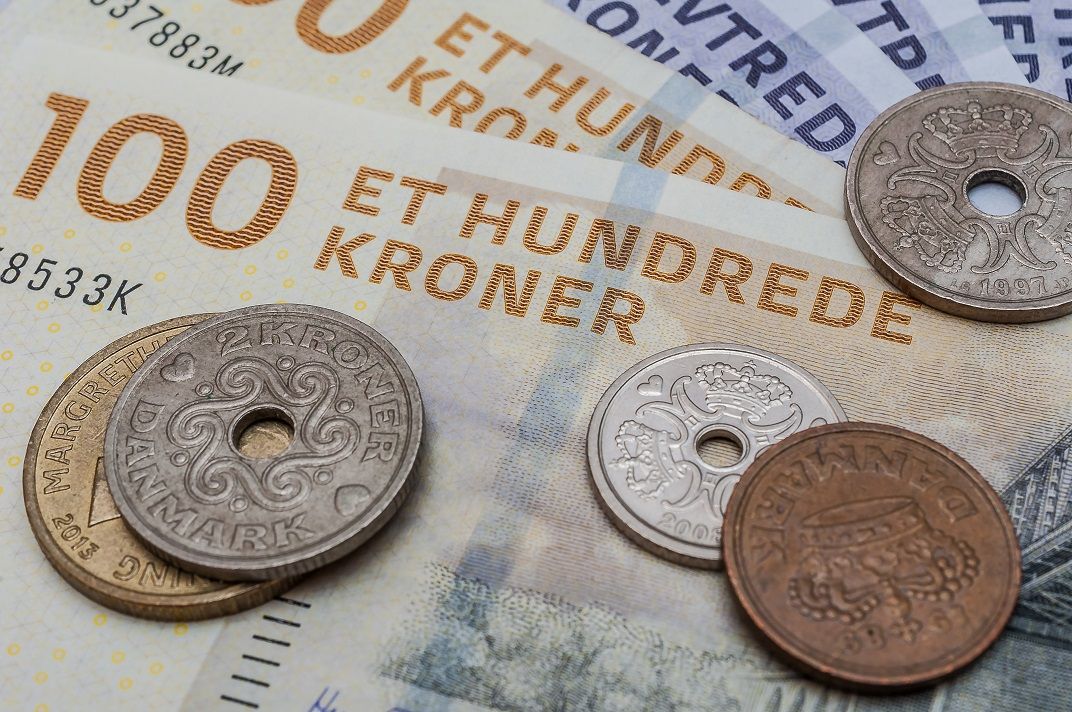
From a personal finance perspective, interacting with the Danish Krone requires an understanding of how Denmark operates as a highly modernized, digital-first economy. Whether you are an expat, a frequent business traveler, or an investor looking at Danish markets, the practicalities of money management are essential.
Currency Exchange and Digital Payments
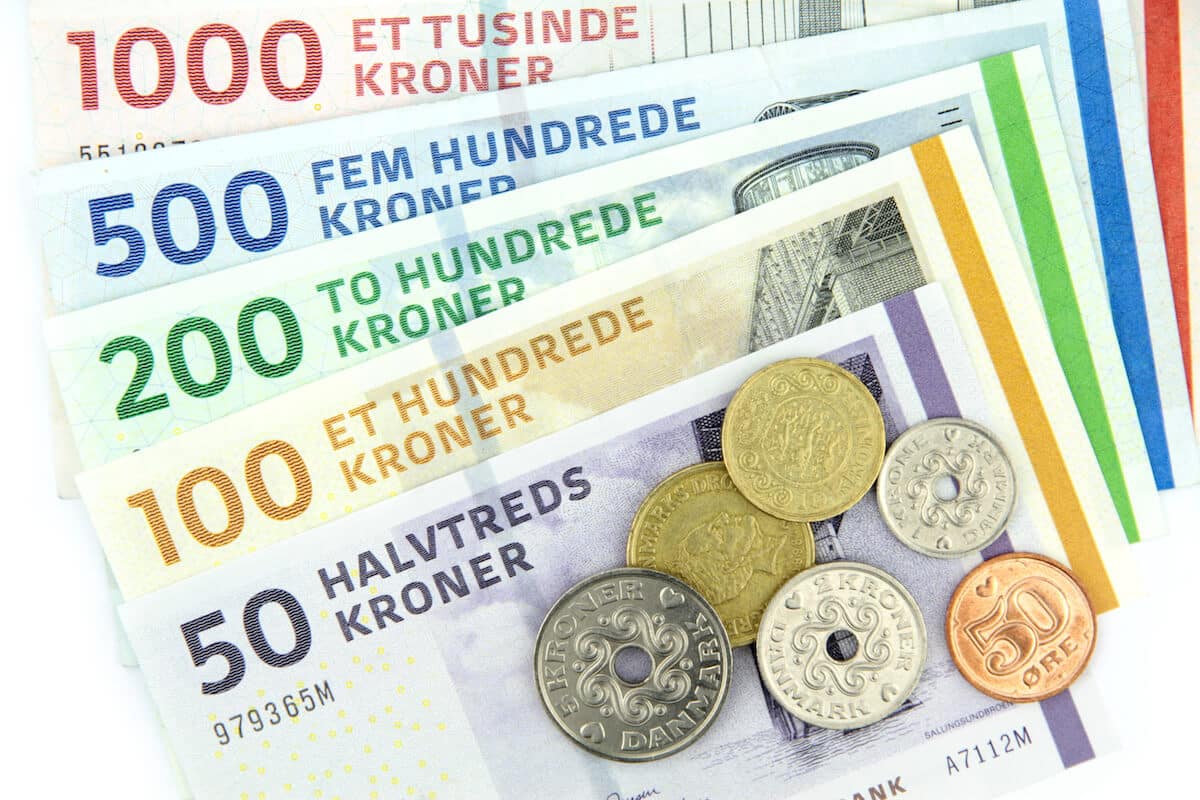
Denmark is frequently cited as one of the most “cashless” societies in the world. While you will still see physical banknotes—available in denominations of 50, 100, 200, 500, and 1,000 kroner—they are increasingly rare in daily transactions. Most Danes utilize “MobilePay,” a ubiquitous smartphone app linked to their bank accounts, for everything from splitting a dinner bill to buying groceries at a local market. For those entering the Danish market, the focus should not be on finding the best currency exchange booth, but rather on ensuring you have a credit or debit card with low foreign transaction fees.
Understanding Denominations and Security Features
For the moments when cash is necessary, the Danish Krone is renowned for its beautiful design and high-security features. The current series of banknotes, introduced between 2009 and 2011, features Danish bridges and prehistoric finds, symbolizing the link between the country’s past and its modern infrastructure. From a financial security standpoint, these notes include sophisticated holograms, watermarks, and hidden threads to prevent counterfeiting. For investors and businesses, the integrity of the physical currency reflects the overall transparency and low corruption levels of the Danish financial system, which consistently ranks as one of the cleanest in the world according to Transparency International.
Investing and Business Finance in Denmark
The Danish Krone’s stability makes it an attractive environment for corporate investment and wealth management. Because the currency is pegged to the Euro, it offers a “safe haven” status during times of European geopolitical uncertainty.
The Krone as a Safe Haven Currency
In times of economic crisis within the Eurozone, investors often flock to the Danish Krone. This is because Denmark maintains a Triple-A credit rating and a robust fiscal surplus. During the Eurozone debt crisis, for instance, demand for the Krone was so high that Danmarks Nationalbank had to implement negative interest rates to prevent the currency from strengthening too much against the peg. For a personal finance portfolio, holding assets denominated in DKK—such as Danish government bonds or stocks in world-leading companies like Novo Nordisk or Maersk—provides a layer of security and diversification that is hard to find elsewhere.
Financial Implications for International Businesses
For corporations operating in Denmark, the fixed exchange rate simplifies financial planning. It eliminates the need for complex and expensive currency hedging strategies that are usually required when doing business in non-Euro countries. Business finance managers can forecast revenues and costs with high accuracy, knowing that the DKK/EUR rate will remain stable. Furthermore, Denmark’s membership in the Single Market, combined with its independent currency, allows it to maintain a competitive labor market and a flexible fiscal policy while still enjoying the benefits of European trade integration.
The Future of the Danish Krone in a Digital Economy
As we move further into the 21st century, the nature of money is changing. Denmark is at the forefront of this evolution, raising questions about the future of physical currency and the role of the Krone in a decentralized financial world.
The Rise of Cashless Societies
The trend toward a cashless society is more than just a convenience; it is a fundamental shift in how money circulates within the economy. For the Danish government, a digital-first economy reduces the costs associated with printing, transporting, and securing physical money. It also makes the shadow economy more difficult to maintain, ensuring higher tax compliance. However, from a personal finance and privacy perspective, the total digitalization of the Krone remains a topic of debate, as some citizens advocate for the continued existence of cash as a backup system and a means of anonymous transaction.
Central Bank Digital Currency (CBDC) Prospects
While Denmark has not yet launched a “Digital Krone,” Danmarks Nationalbank has been closely monitoring the development of Central Bank Digital Currencies (CBDCs). Unlike volatile cryptocurrencies like Bitcoin, a Danish CBDC would be a digital version of the Krone, backed by the central bank and pegged to the Euro. This would potentially streamline cross-border payments and further modernize the financial infrastructure. For now, the central bank maintains that the existing digital payment systems are so efficient that a CBDC is not an immediate necessity, but the groundwork is being laid for a future where the “Krone” might exist entirely in the digital ether.
In conclusion, the Danish Krone is far more than just a medium of exchange; it is a cornerstone of Denmark’s economic identity. Its unique position—pegged to the Euro yet independently managed—offers a rare combination of stability, sovereignty, and security. Whether you are managing personal finances, looking for a safe haven for investments, or running an international business, the Danish Krone provides a solid foundation in an often-turbulent global economy. By understanding its history, its monetary mechanics, and its digital future, one gains a deeper appreciation for why Denmark remains a financial heavyweight on the world stage.
aViewFromTheCave is a participant in the Amazon Services LLC Associates Program, an affiliate advertising program designed to provide a means for sites to earn advertising fees by advertising and linking to Amazon.com. Amazon, the Amazon logo, AmazonSupply, and the AmazonSupply logo are trademarks of Amazon.com, Inc. or its affiliates. As an Amazon Associate we earn affiliate commissions from qualifying purchases.