
In the landscape of modern healthcare and high-stakes clinical environments, the safety of both practitioners and patients hinges upon standardized protocols. At the core of these safety frameworks lies the concept of “Universal Precautions.” While the term is frequently used in clinical settings, its definition and practical application have evolved significantly, moving from a niche hospital policy to a foundational pillar of global health security and workplace hygiene. Understanding these precautions is not merely a matter of regulatory compliance; it is an essential component of professional identity and operational excellence.
The Philosophical Foundation of Universal Precautions
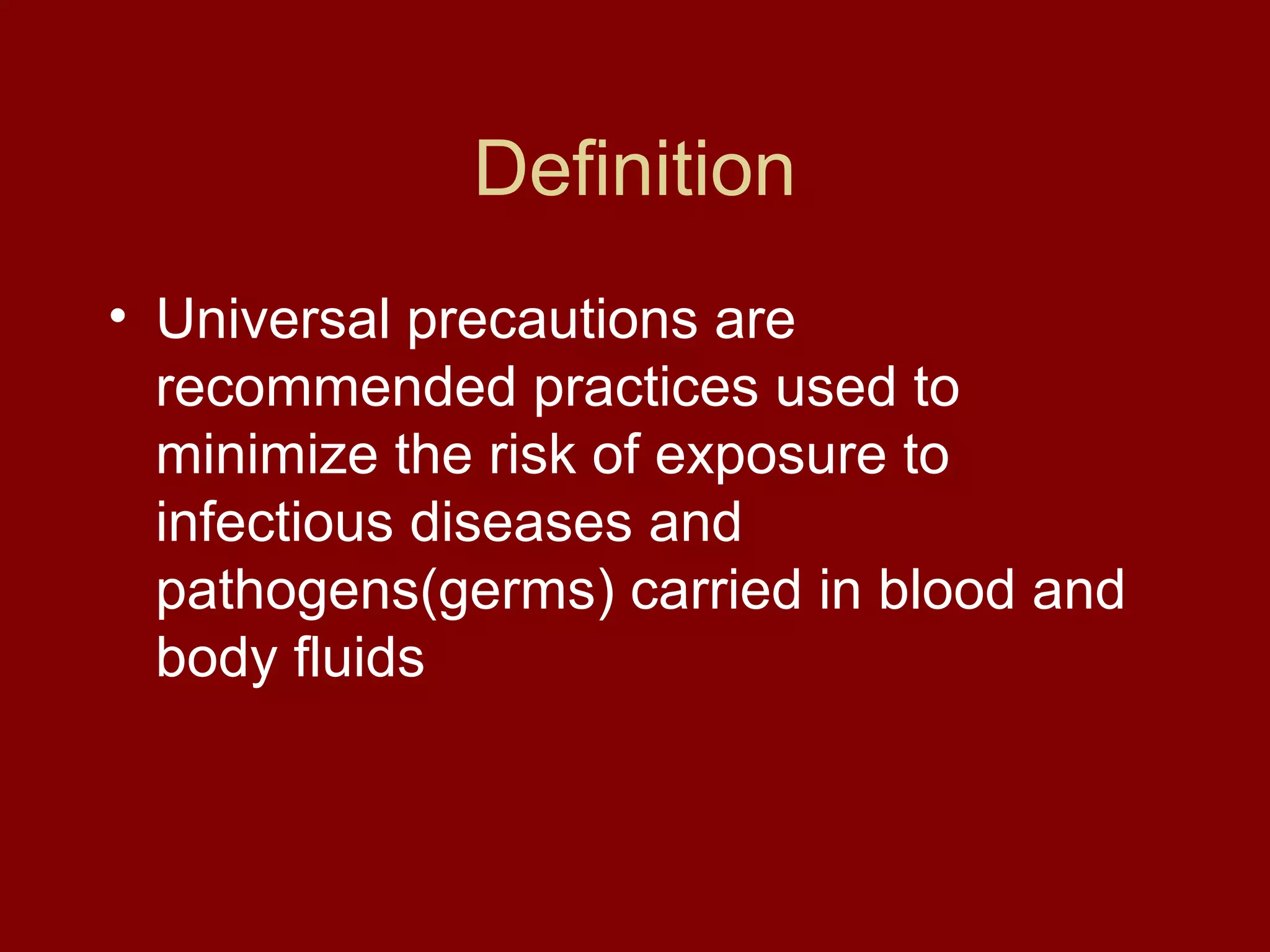
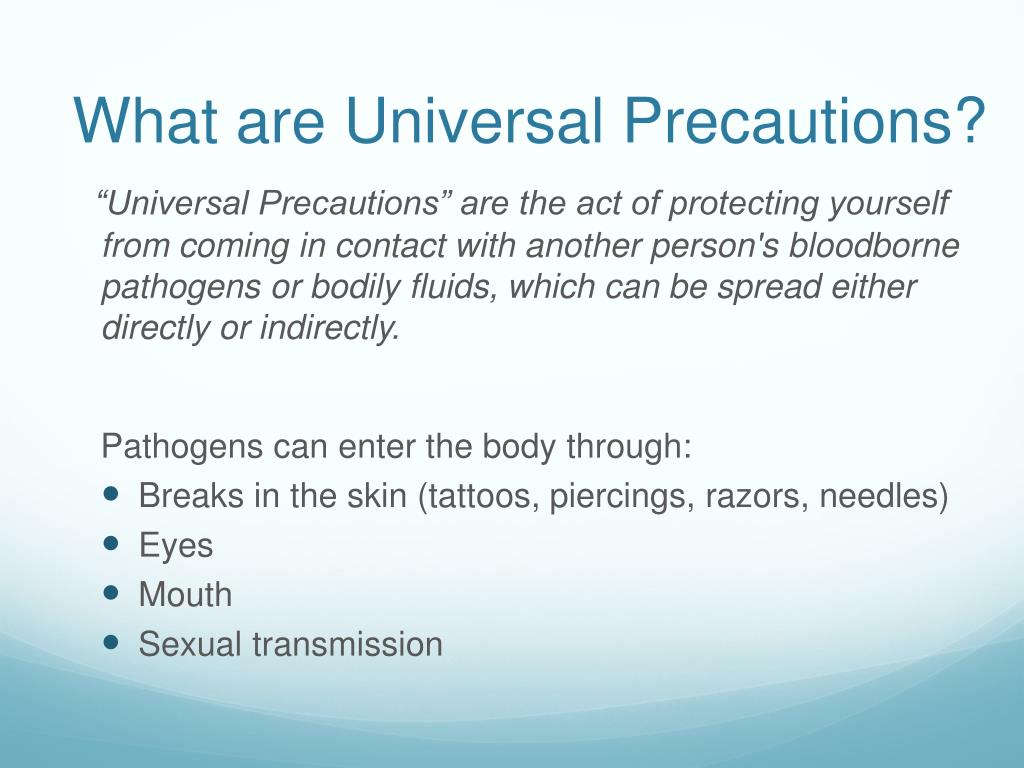
Universal Precautions represent a specific approach to infection control designed to prevent the transmission of bloodborne pathogens. The fundamental philosophy is simple but transformative: treat all human blood and certain human body fluids as if they are known to be infectious for HIV, HBV, HCV, and other bloodborne pathogens.

Shifting from Risk-Based to Universal Standards
Historically, medical staff practiced “selective” precautions. If a patient appeared healthy or was not presenting symptoms of a known contagious disease, healthcare workers often bypassed protective gear. This approach proved catastrophic during the emergence of chronic, asymptomatic viral infections. By adopting a universal standard, the industry removed the “guesswork” from safety. It eliminated the necessity of waiting for laboratory results or clinical diagnosis before taking protective measures, thereby creating a reliable safety net for every patient interaction.
The Role of Regulatory Oversight
The transition from elective safety habits to universal mandates was largely driven by bodies such as the Occupational Safety and Health Administration (OSHA) and the Centers for Disease Control and Prevention (CDC). These organizations codified Universal Precautions into legal requirements, mandating that employers provide the necessary protective equipment and training. This regulatory backing transformed safety from a personal choice into a professional obligation, ensuring that the standard of care remains consistent across all medical and dental environments, regardless of the perceived risk profile of the patient.
Core Components of Implementation
The practical application of Universal Precautions involves a multi-layered strategy that integrates personal protective equipment (PPE), rigorous hygiene practices, and environmental engineering.
Personal Protective Equipment (PPE)
PPE serves as the primary barrier between the healthcare worker and potential contaminants. This includes the use of gloves, gowns, masks, protective eyewear, and face shields. However, the definition of Universal Precautions emphasizes that the equipment is only as effective as the discipline behind its use. For instance, gloves must be changed between every patient contact and after contact with contaminated materials. The equipment is not designed to replace hand hygiene, but rather to function as a secondary defense layer that mitigates the risk of exposure during invasive or high-risk procedures.
Hand Hygiene: The Critical Link
Hand hygiene is frequently cited as the most critical component of infection control. Despite the sophistication of modern medical devices, the human hand remains the primary vector for pathogen transmission. Under the Universal Precautions framework, handwashing is not reserved for after a shift; it is an immediate, reflexive action performed before and after patient contact, after removing gloves, and immediately following any accidental exposure to bodily fluids. The transition to alcohol-based hand sanitizers as a complement to soap and water has significantly increased compliance rates, though the “universal” standard mandates that physical debris must always be removed via traditional washing when hands are visibly soiled.
Environmental Controls and Sharp Safety
Beyond the individual, Universal Precautions extend to the physical environment. This includes the strict management of “sharps”—needles, scalpels, and other instruments capable of piercing the skin. Implementing “sharp safety” protocols involves the use of puncture-resistant disposal containers located as close to the point of use as possible. Furthermore, needle-recaping is strictly prohibited under these guidelines, as it is a leading cause of accidental percutaneous injuries. These environmental controls are designed to assume that an accident will occur, building in failure-proof mechanisms that protect the worker even in the event of a lapse in focus.
Expanding the Scope: From Clinical to Operational
While the clinical definition of Universal Precautions is clear, modern organizations are beginning to view these protocols as a broader operational strategy. By integrating safety into the daily workflow rather than treating it as an “add-on” task, organizations can improve operational efficiency and decrease long-term liability costs.
Integration into Corporate Culture
A truly robust application of Universal Precautions requires a cultural shift within an organization. It is not enough for an administrator to mandate safety; the workforce must believe in the efficacy of these protocols. This requires ongoing education, simulation training, and a feedback loop where staff feel comfortable reporting near-misses. When safety is viewed as a pillar of professional excellence, compliance increases, and the likelihood of occupational exposure drops significantly. Organizations that prioritize these standards often report higher employee morale, as workers feel their health and safety are treated as an asset rather than an operational expense.
Financial Implications of Compliance
Failure to adhere to Universal Precautions carries profound financial consequences. Beyond the immediate cost of treating occupational exposures, organizations face potential fines, increased insurance premiums, and litigation risks. Conversely, robust infection control programs serve as a form of risk management. By investing in high-quality PPE, consistent training programs, and ergonomically sound safety equipment, organizations protect their most valuable resource—their personnel. The ROI of compliance is found in the stability of the workforce and the prevention of catastrophic health-related disruptions to service delivery.
Addressing Challenges and Future Evolution
Despite the existence of clear guidelines, the implementation of Universal Precautions faces persistent challenges. Human error, complacency, and the rapid evolution of infectious threats require that these precautions are never viewed as a static set of rules.
Combatting Compliance Fatigue
One of the greatest enemies of universal safety is “compliance fatigue.” When staff are overworked or overwhelmed, they may take shortcuts. The definition of Universal Precautions must therefore be adapted to fit seamlessly into the workflow. If a safety protocol creates excessive friction, it is more likely to be ignored. Therefore, the future of Universal Precautions lies in automation and improved design—creating environments where the “safe” way to perform a task is also the “easiest” way to perform that task.
The Impact of Emerging Pathogens
The definition of Universal Precautions is constantly being tested by emerging diseases. While bloodborne pathogens were the original focus, the logic of Universal Precautions has been expanded to address airborne and droplet-based risks. The COVID-19 pandemic, for instance, forced a rapid evolution of what the industry considers “universal.” Moving forward, we can expect the definition to become even more comprehensive, encompassing a wider range of transmission vectors and necessitating more sophisticated monitoring systems.
A Commitment to Continuous Learning
Universal Precautions are not a “set and forget” policy. They demand continuous education and a mindset of vigilance. As scientific understanding of disease transmission improves, so too must our safety protocols. Professionals who thrive in this environment are those who view Universal Precautions not as a bureaucratic burden, but as a dynamic, essential, and evolving science. By anchoring clinical practice in these core definitions, the healthcare community ensures that the pursuit of healing never compromises the safety of the healer. The standard is set, the expectations are clear, and the responsibility remains constant: every patient, every fluid, every time.
aViewFromTheCave is a participant in the Amazon Services LLC Associates Program, an affiliate advertising program designed to provide a means for sites to earn advertising fees by advertising and linking to Amazon.com. Amazon, the Amazon logo, AmazonSupply, and the AmazonSupply logo are trademarks of Amazon.com, Inc. or its affiliates. As an Amazon Associate we earn affiliate commissions from qualifying purchases.