
Surface tension is a fundamental physical property of liquids that quantifies the cohesive forces between liquid molecules at the interface of a liquid and another medium, typically air or another fluid. This phenomenon results in the liquid surface behaving like a stretched elastic membrane, leading to distinct behaviors such as the formation of spherical droplets, the ability of light objects to float, and capillary action. From the intricate world of microfluidics to the precision of advanced manufacturing, understanding and manipulating surface tension is paramount to numerous technological advancements.
The Microscopic Forces Shaping Liquid Surfaces
At its core, surface tension arises from the imbalance of intermolecular forces experienced by molecules at the surface of a liquid compared to those within its bulk. Inside the liquid, each molecule is uniformly attracted in all directions by its neighbors. However, molecules at the surface lack neighbors above them (if the interface is with air or a gas) and are thus pulled inward, towards the bulk of the liquid, by stronger attractive forces from the molecules below and to their sides. This inward pull creates an effective net force that minimizes the surface area of the liquid, striving for the most energetically favorable configuration.

Cohesion and Adhesion
Two primary types of intermolecular forces dictate the behavior of liquid surfaces:
- Cohesive Forces: These are the attractive forces between molecules of the same substance. In water, for instance, hydrogen bonding creates strong cohesive forces. High cohesive forces lead to high surface tension, as molecules resist being pulled apart at the surface.
- Adhesive Forces: These are the attractive forces between molecules of different substances, such as liquid molecules and the molecules of a solid surface or another liquid. The balance between cohesive and adhesive forces determines phenomena like wetting (whether a liquid spreads out or beads up on a surface) and capillary action. For example, if adhesive forces between water and glass are stronger than water’s cohesive forces, water will climb up a narrow glass tube, a critical principle in microfluidic channels.
This interplay between cohesion and adhesion is not merely an academic curiosity; it is a design consideration for everything from anti-fog coatings on smart glasses to the precise dispensing of biological samples in diagnostic devices. Engineers leverage these forces to control liquid behavior on patterned surfaces, developing technologies that require intricate fluid management at microscopic scales.
Minimizing Surface Area
The net inward pull on surface molecules results in an inherent tendency for liquids to minimize their surface area. This is why free-falling liquid droplets adopt a spherical shape – a sphere has the smallest surface area for a given volume. This principle is not only visible in raindrops but is harnessed in processes like ink-jet printing, where precise spherical droplets are formed and deposited, and in the manufacturing of spherical micro-particles for drug delivery or display technologies. Any external force or interaction that disrupts this equilibrium and attempts to increase the liquid’s surface area will be met with resistance, which is quantifiable as surface tension.
Quantifying Surface Tension: Units and Measurement
Surface tension ($gamma$ or $sigma$) is quantitatively defined as the force acting per unit length along a line in the surface, or equivalently, as the energy required to increase the surface area by a unit amount. The standard SI unit for surface tension is Newtons per meter (N/m), though dynes per centimeter (dyn/cm) is also commonly used (1 dyn/cm = 0.001 N/m). In terms of energy, it can be expressed in Joules per square meter (J/m²).
Several techniques are employed to measure surface tension, each suited for different applications and levels of precision:
- Du Noüy Ring Method: A platinum ring is slowly pulled from the liquid surface, and the force required to detach it is measured. This is a classic and widely used method for general purpose measurements.
- Wilhelmy Plate Method: A thin plate, often platinum, is dipped into the liquid and the force exerted on the plate as it interacts with the liquid surface is measured. This method is particularly useful for monitoring dynamic changes in surface tension, such as those caused by surfactants.
- Pendant Drop Method: A droplet is formed at the end of a capillary tube, and its shape (profile) is analyzed optically. The balance between gravity pulling the drop down and surface tension holding it up allows for calculation of surface tension. This is valuable for small sample volumes and high-temperature measurements.
- Capillary Rise Method: Measuring the height to which a liquid rises in a narrow capillary tube provides a straightforward way to determine surface tension, particularly for liquids that wet the tube material.
Accurate measurement of surface tension is critical for quality control in manufacturing processes involving liquids, from the formulation of paints and coatings to the production of semiconductor wafers, where even slight variations can impact performance and reliability.
Interfacial Energy vs. Surface Tension
While often used interchangeably in casual discussion, “surface tension” specifically refers to the interface between a liquid and a gas (usually air), while “interfacial tension” is the more general term for the tension at the interface between any two immiscible phases (e.g., two liquids, or a liquid and a solid). In the context of technological materials, understanding interfacial tension is vital for designing composites, adhesives, and emulsions, where the interaction between different material phases dictates overall performance.
Why Surface Tension Matters in Technology
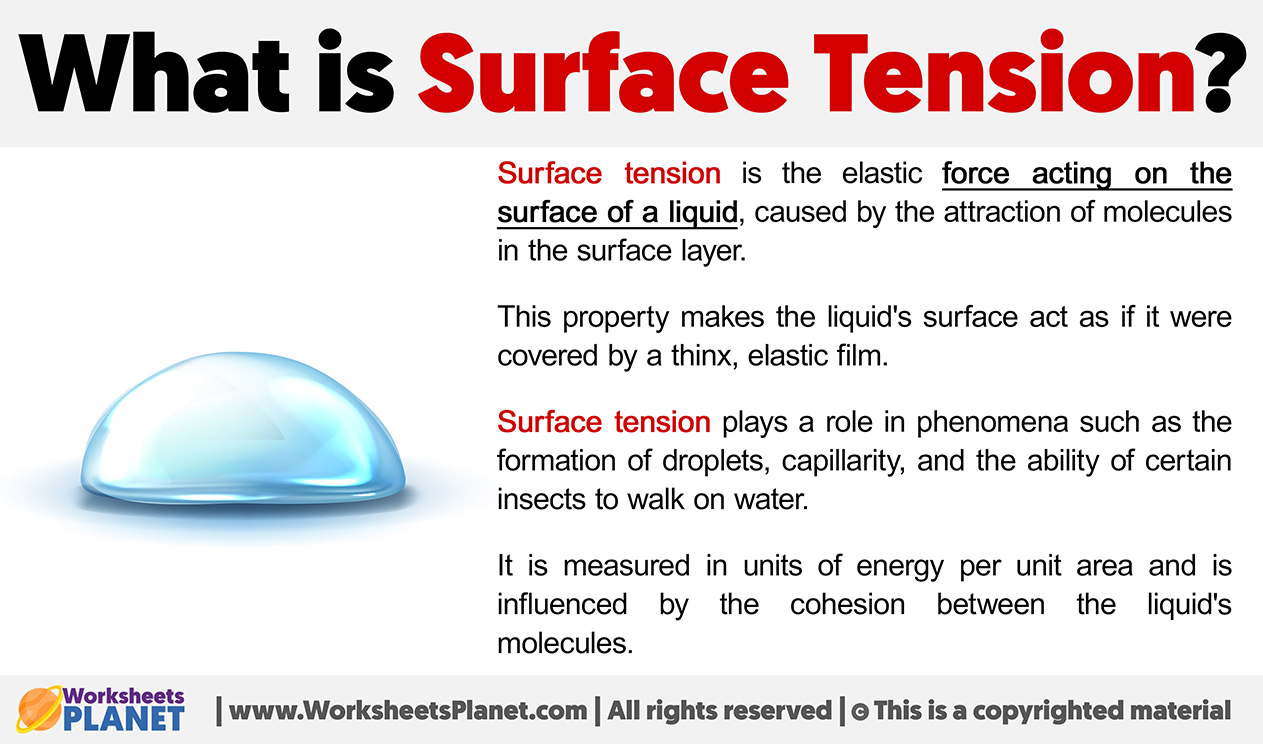
The seemingly simple concept of surface tension underpins a vast array of modern technologies, driving innovation in fields ranging from biomedicine to advanced electronics. Its manipulation allows engineers to control fluid flow, create precise patterns, and develop novel materials.
Microfluidics and Lab-on-a-Chip Devices
In microfluidics, the science of manipulating fluids at the micro-scale, surface tension becomes the dominant force over gravity and inertia. This dominance is crucial for designing “lab-on-a-chip” devices used in medical diagnostics, drug discovery, and chemical analysis. By engineering the surface properties of microchannels (e.g., making them hydrophobic or hydrophilic in specific regions), researchers can guide and control the movement of tiny volumes of liquids, separate components, and perform reactions with unprecedented precision and efficiency. This enables rapid, portable, and cost-effective diagnostic tools that require only minute sample volumes.
Advanced Manufacturing and Coating Technologies
Surface tension plays a critical role in various manufacturing processes. In coating applications, such as applying protective films to smartphone screens or automotive parts, surface tension dictates how evenly a liquid spreads and adheres to a substrate. Optimized surface tension ensures defect-free, uniform coatings that enhance durability, aesthetics, and functionality. Similarly, in soldering and welding, the surface tension of molten metals influences their ability to wet and flow across surfaces, directly impacting the strength and integrity of the bond. Technologies like 3D printing, especially those using liquid resins or molten materials, rely heavily on understanding and controlling surface tension for accurate layer deposition and robust object formation.
Displays, Printing, and Nanomaterials
The formation of stable, uniform liquid crystal layers in LCDs and OLED displays is influenced by surface tension. In inkjet printing, surface tension governs the formation of perfectly spherical ink droplets, their trajectory, and their adhesion to the paper, ensuring high-resolution images. In the realm of nanomaterials, surface tension forces become increasingly significant due to the high surface-area-to-volume ratio. Processes like self-assembly of nanoparticles or the fabrication of nanowires often leverage carefully controlled surface tension to guide the organization of matter at the atomic and molecular scales, leading to new sensors, catalysts, and electronic components.
Digital Security and Sensor Development
While not immediately obvious, surface tension principles can even touch upon digital security and advanced sensor development. For instance, microfluidic devices can be engineered for forensic analysis, detecting minuscule traces of substances. In material science for security, understanding the wetting properties of specific liquids on various surfaces can be crucial for anti-tamper devices or specialized coatings that resist certain contaminants. Advanced sensors, particularly those that detect airborne particles or specific chemical agents, often employ surfaces with precisely engineered wettability to capture or repel target molecules, where surface tension dictates the interaction.
Manipulating Surface Tension for Innovation
The ability to intentionally modify surface tension opens up avenues for groundbreaking technological solutions.
Surfactants and Their Tech Applications
Surfactants (surface-active agents) are compounds that, when added to a liquid, significantly reduce its surface tension. They do this by adsorbing at the liquid-air or liquid-liquid interface, disrupting the cohesive forces between liquid molecules. This property makes them indispensable in countless technological applications:
- Detergents and Cleaning Agents: Surfactants allow water to better penetrate and lift dirt and grease, which are typically hydrophobic.
- Emulsifiers: In food, cosmetics, and pharmaceuticals, surfactants stabilize mixtures of immiscible liquids (like oil and water), creating stable emulsions.
- Paints and Coatings: They improve pigment dispersion, prevent sagging, and ensure smooth, even application.
- Biotechnology: Surfactants are used to lyse cells, purify proteins, and improve the efficiency of various biological assays.

Electro-wetting and Dynamic Control
A more advanced technique involves electro-wetting, where an electric field is used to dynamically alter the surface tension and wetting properties of a liquid on a solid surface. By applying a voltage, the contact angle of a liquid droplet can be precisely controlled, allowing for unparalleled manipulation of fluids. This technology is at the heart of “liquid lenses” used in variable-focus cameras and optical systems, reconfigurable displays (like electronic paper), and advanced microfluidic devices where fluid movement needs to be precisely controlled on demand without mechanical pumps. The ability to switch surface properties digitally offers immense potential for smart surfaces and adaptive technologies.
In conclusion, surface tension is far more than a simple scientific definition; it is a critical engineering parameter that governs the behavior of liquids across scales. Its intricate role in fundamental physics translates directly into the operational principles and design considerations for a vast and growing array of cutting-edge technologies, continually pushing the boundaries of what is possible in the digital age.
aViewFromTheCave is a participant in the Amazon Services LLC Associates Program, an affiliate advertising program designed to provide a means for sites to earn advertising fees by advertising and linking to Amazon.com. Amazon, the Amazon logo, AmazonSupply, and the AmazonSupply logo are trademarks of Amazon.com, Inc. or its affiliates. As an Amazon Associate we earn affiliate commissions from qualifying purchases.