
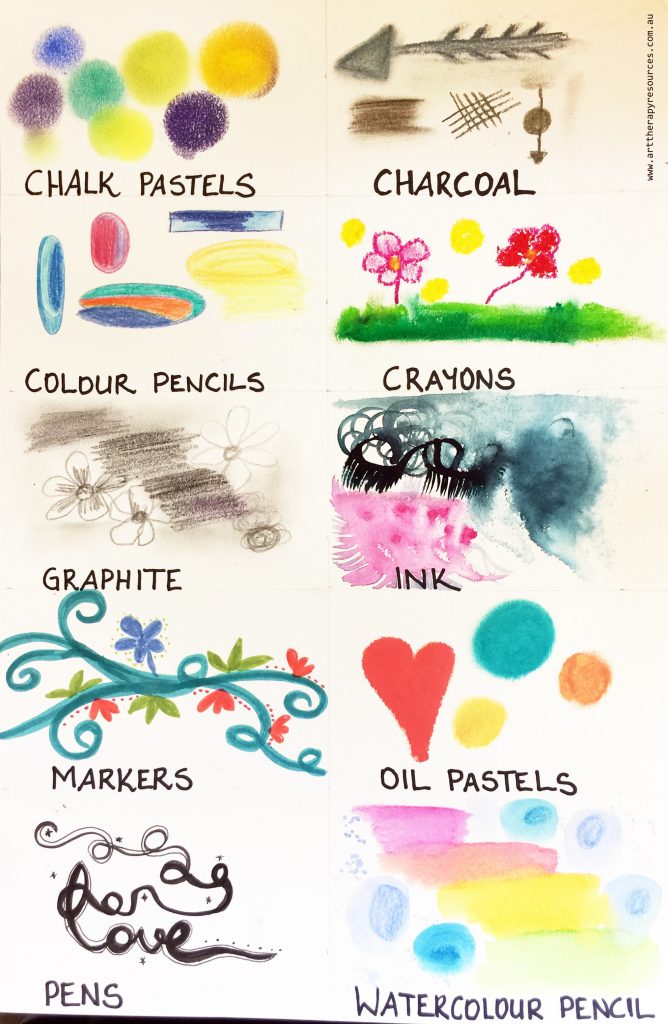
In the classical sense, the “medium” in art refers to the materials or substances used by an artist to create a work. For centuries, this definition was confined to the physical world: oil on canvas, marble for sculpture, or charcoal on paper. However, as we navigate the third decade of the 21st century, the definition of medium has undergone a profound technological transformation. In the contemporary tech landscape, a medium is no longer just a physical substance; it is an ecosystem of software, hardware, data, and algorithms.
Understanding the definition of medium in art today requires a shift in perspective. It involves moving away from the tactile and toward the digital, where the “brush” is a stylus or a line of code, and the “canvas” is a high-resolution display or a virtual reality environment. This evolution has not only expanded the tools available to creators but has fundamentally altered the relationship between the artist, the viewer, and the work itself.
From Pigment to Pixels: The Evolution of the Artistic Medium
The transition from physical to digital mediums began with the advent of the personal computer, but it has reached its zenith through the democratization of high-performance hardware and sophisticated software. In this context, the medium is the technological interface that facilitates creative expression.
The Transition to Digital Workstations
The first major shift in the definition of medium occurred when software began to emulate physical tools. Programs like Adobe Photoshop and Corel Painter redefined the medium by providing a digital workspace that mimicked the behavior of traditional paints and brushes. However, the tech definition of medium goes beyond mere emulation. Today, a “medium” includes the specific raster-based or vector-based engines that allow for infinite scalability and non-destructive editing—features impossible in the physical world. For a modern digital illustrator, the medium is the combination of software layers, blending modes, and pressure-sensitive input.
Hardware as the Modern Brush
We cannot discuss the digital medium without addressing the hardware that facilitates it. The evolution of the stylus and the graphics tablet (such as those by Wacom or the Apple Pencil) has bridged the gap between human haptics and digital processing. In this niche, the hardware itself becomes a critical component of the medium. The level of pressure sensitivity, tilt recognition, and latency are the “texture” of the digital medium. When an artist chooses a specific tablet or a high-refresh-rate monitor, they are choosing the physical parameters of their medium, much like a traditional painter selects a specific grade of linen or the stiffness of a hog-hair brush.
Emerging Tech Mediums: AI, VR, and Generative Systems
As technology advances, new mediums are emerging that have no historical equivalent. These are not merely digital versions of old tools; they are entirely new categories of artistic expression rooted in computer science.
Artificial Intelligence as a Collaborative Medium
Perhaps the most controversial and exciting shift in the definition of medium is the rise of Artificial Intelligence (AI) and Machine Learning (ML). In tools like Midjourney, DALL-E, and Stable Diffusion, the medium is the “latent space” of a neural network. The artist’s role has shifted from manual execution to “prompt engineering” and iterative curation.
In this tech-centric view, the medium is a collaborative data model trained on billions of visual parameters. The artist interacts with this medium not by moving a brush, but by navigating a mathematical space. The definition of medium here expands to include the algorithm itself—the specific architecture of the diffusion model or the Generative Adversarial Network (GAN) that dictates how the art is synthesized.
Immersive Realities: VR and AR as 3D Canvases
Virtual Reality (VR) and Augmented Reality (AR) have redefined the medium as an experiential space rather than a flat plane. Using tools like Google Tilt Brush or Gravity Sketch, artists can “paint” with light and geometry in a three-dimensional environment. Here, the medium is spatial data.
In AR, the medium becomes the intersection of the digital and the physical. An artist might use software to anchor a digital sculpture to a specific geographic coordinate using GPS and computer vision. In this instance, the medium is the “mixed reality” ecosystem—a blend of 3D assets, environmental lighting data, and the hardware (like HoloLens or smartphones) used to perceive it.
Software Ecosystems and “Code” as a Medium
For a growing segment of the tech-art community, the medium is not a tool used to create an image, but the logic used to generate it. This is the realm of creative coding and procedural generation.
The Rise of Creative Coding
Creative coding involves using programming languages like Processing, P5.js, or C++ (via OpenFrameworks) to create visual art. In this niche, the code is the medium. The artist writes a set of instructions—a recipe of sorts—and the computer executes it to produce a visual output. This medium is unique because it allows for “generative art,” where the work can change in real-time based on external data inputs, such as weather patterns, stock market fluctuations, or user interaction. The definition of medium here is procedural; it is the logic, the variables, and the loops that constitute the artwork’s DNA.
Subscription Models and Tool Accessibility
The tech industry has also changed the medium through its delivery systems. Most modern artistic mediums are now hosted on the cloud. The shift to Software-as-a-Service (SaaS) models (like Adobe Creative Cloud or Canva) means that the “medium” is a living, breathing entity that receives monthly updates. New features, AI-powered “neural filters,” and cloud-based collaboration tools are integrated into the medium regularly. This means the definition of the medium is fluid; the capabilities of a digital artist’s “brush” can literally change overnight through a software patch.
The Impact of Blockchain and Digital Scarcity on Artistic Mediums
The definition of medium in art has traditionally included the “final form” of the work—a physical painting or a bronze cast. In the tech world, the blockchain has introduced a new layer to the medium: the smart contract.
NFTs and the Tokenization of Format
With the rise of Non-Fungible Tokens (NFTs), the medium now encompasses the method of verification and ownership. When an artist creates a piece of “crypto art,” the medium is not just the digital file (the JPG or MP4), but the tokenized metadata on the blockchain (Ethereum, Solana, etc.). This technology allows for the medium to include “programmable royalties” and “provenance.” The blockchain acts as a digital substrate that gives the digital medium qualities it previously lacked: scarcity and permanence.
Preservation in the Digital Age
One of the technical challenges of the digital medium is “bit rot” and software obsolescence. Unlike a 500-year-old oil painting, a digital file requires a specific technical environment to “live.” Therefore, the definition of the medium in tech-art also includes the “emulation layer.” For digital art to survive, the medium must be maintained through hardware emulation and data migration. This technical necessity makes the medium a continuous process of maintenance rather than a static object.

The Future: Convergent Mediums and the Hyper-Digital Aesthetic
As we look toward the future, the definition of medium in art will continue to blur. We are entering an era of “convergent mediums,” where haptic feedback, neuro-interfaces, and bio-tech will play a role.
The “medium” is increasingly becoming a multi-sensory interface. We are seeing the rise of “Neuro-Art,” where Brain-Computer Interfaces (BCI) allow artists to create visual outputs directly from neural activity. In this scenario, the medium is the human nervous system interfaced with a computer. Additionally, the development of “Bio-Art” uses CRISPR and synthetic biology as a medium, where the tech used to edit genes becomes the artist’s toolkit.
In conclusion, the definition of medium in art, when viewed through the lens of technology, has evolved from “material” to “system.” It is a sophisticated blend of hardware capabilities, software logic, and data structures. For the modern creator, mastering a medium no longer just means learning how to handle a physical substance; it means understanding the architecture of the digital world. As technology continues to advance at an exponential rate, the definition of medium will remain a moving target, constantly expanding the boundaries of what is possible at the intersection of human creativity and technical innovation.
aViewFromTheCave is a participant in the Amazon Services LLC Associates Program, an affiliate advertising program designed to provide a means for sites to earn advertising fees by advertising and linking to Amazon.com. Amazon, the Amazon logo, AmazonSupply, and the AmazonSupply logo are trademarks of Amazon.com, Inc. or its affiliates. As an Amazon Associate we earn affiliate commissions from qualifying purchases.