
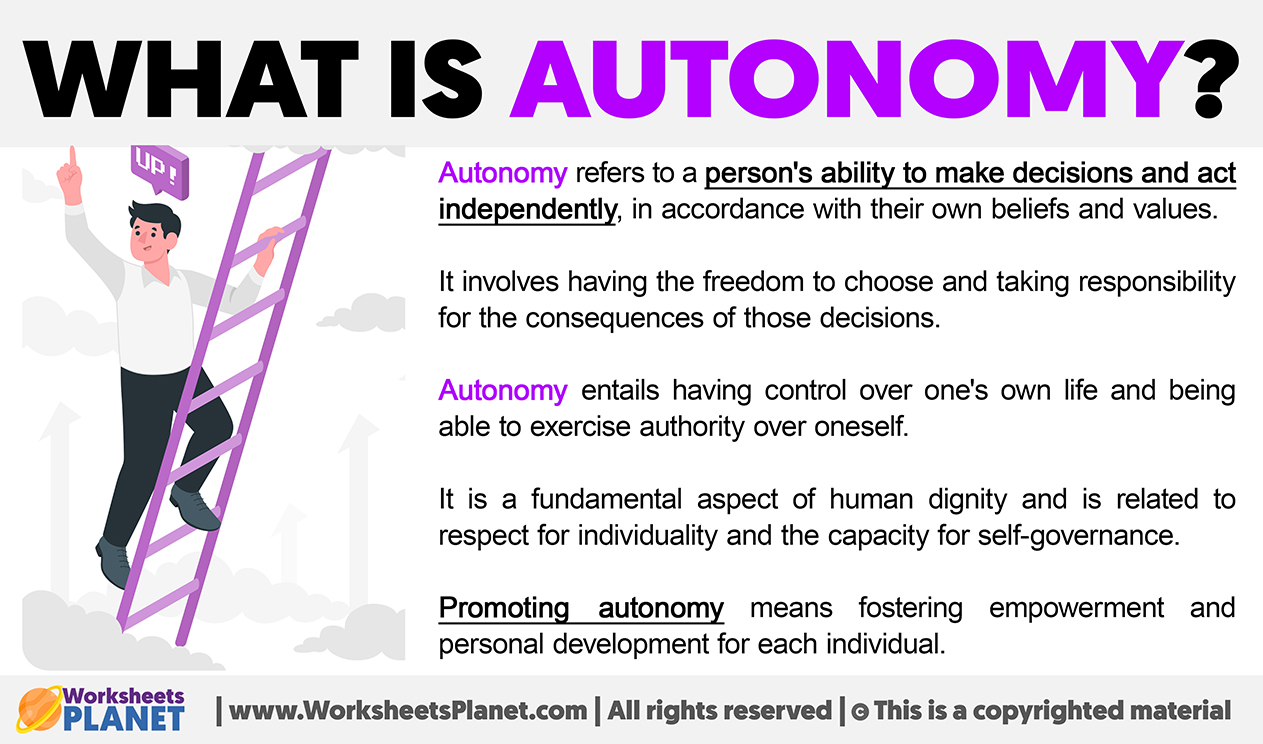
In the rapidly evolving landscape of modern innovation, the term “autonomous” has transitioned from a philosophical concept of self-governance to a cornerstone of technical development. At its most fundamental level, the definition of autonomous in a technological context refers to the ability of a system—be it hardware, software, or a combination of both—to perform tasks and make decisions without human intervention. Unlike traditional automated systems that follow a rigid set of pre-programmed instructions, autonomous systems possess the capacity to sense their environment, process complex data in real-time, and adapt their behavior to achieve a specific objective.
The shift from automation to autonomy represents one of the most significant leaps in the history of computing. While automation focuses on efficiency and the replacement of repetitive manual labor through “if-this-then-that” logic, autonomy introduces a layer of cognitive-like processing. An autonomous system does not just execute a task; it understands the context of the task and navigates the variables that arise during its execution. As we delve deeper into AI tools, robotics, and digital security, understanding the nuances of autonomy becomes essential for navigating the future of the tech industry.
The Technical Distinction: Automation vs. Autonomy
To define autonomous technology accurately, one must first distinguish it from automation. These terms are often used interchangeably in casual conversation, yet they represent different levels of technological sophistication.
The Rule-Based Nature of Automation
Automation is the use of technology to perform a process or procedure with minimal human assistance. However, the “intelligence” of an automated system is static. For example, a factory robot arm programmed to weld a car door at a specific coordinate is automated. It performs the same task with high precision and speed, but if the car door is placed two inches to the left, the robot will continue to weld the empty air. It lacks the “vision” and the “logic” to adjust its path. Automation is essentially a scripted performance.
The Adaptive Nature of Autonomy
Autonomy, by contrast, is characterized by adaptability and self-direction. An autonomous system utilizes a feedback loop consisting of sensing, perceiving, planning, and acting. If we take the same factory example, an autonomous robot would use computer vision to identify the location of the car door. If the door is misaligned, the robot’s onboard AI calculates the discrepancy and adjusts its movements in real-time to complete the weld correctly.
The core definition of autonomous technology therefore centers on the “decision-making” capability. Autonomous systems use machine learning (ML) and heuristic algorithms to navigate “edge cases”—scenarios that were not explicitly programmed into the software but can be resolved through the system’s internal logic and environmental awareness.
The Architecture of Autonomous Systems
The realization of autonomy is not the result of a single piece of software but rather an ecosystem of integrated technologies. To function independently, an autonomous system requires three primary technological pillars: sensing, processing, and actuation.
Sensor Fusion and Environmental Perception
For a machine to be autonomous, it must first “see” and “hear” its surroundings. This is achieved through sensor fusion, the process of combining data from multiple sensors to create a comprehensive and accurate model of the environment. In the world of autonomous vehicles and drones, this involves a suite of hardware:
- LiDAR (Light Detection and Ranging): Uses laser pulses to create high-resolution 3D maps.
- Computer Vision: Uses high-speed cameras and neural networks to identify objects, signs, and hazards.
- Radar and Ultrasonics: Provides distance measurement and object detection, particularly in poor weather conditions where visual cameras might fail.
The Cognitive Engine: AI and Machine Learning
Once data is collected, the system must interpret it. This is where Artificial Intelligence (AI) serves as the “brain.” Modern autonomous systems rely heavily on deep learning and neural networks to categorize data. For instance, an autonomous drone must distinguish between a swaying tree branch and a moving bird. This processing happens at the “edge”—meaning the computation occurs on the device itself rather than in a distant cloud server—to ensure the low latency required for real-time decision-making.
Actuation and Path Planning
The final stage of the autonomous loop is action. Based on the perceived environment and the goal, the system’s path-planning algorithms determine the safest and most efficient route or action. This is then translated into physical movement (actuation) or digital execution. In autonomous software agents, this might mean navigating through a web browser to complete a purchase or updating a digital security protocol in response to a detected threat.
The Spectrum of Autonomy: Understanding the Levels

Autonomy is not a binary state; it exists on a spectrum. The most widely recognized framework for this spectrum is the one developed by the Society of Automotive Engineers (SAE) for self-driving vehicles, but these principles apply across the broader tech landscape, including robotics and AI software.
Level 0 to Level 2: Human-Centric Systems
Levels 0 through 2 represent systems that provide assistance but require a human to remain in control. At Level 1 (Driver Assistance), the system might control one aspect, such as cruise control. At Level 2 (Partial Automation), the system can control both steering and acceleration, but the human must remain engaged and monitor the environment at all times. In the world of software, this is akin to a “copilot” tool that suggests code but requires a developer to review and commit every line.
Level 3: Conditional Autonomy
Level 3 is the “tipping point.” At this stage, the system is capable of monitoring the environment and performing all aspects of the task under specific conditions. However, the human must be ready to take over immediately when the system requests intervention. This level is often considered the most difficult to manage from a safety perspective, as human attention tends to drift when the machine is performing well.
Level 4 and 5: High and Full Autonomy
Level 4 (High Autonomy) refers to systems that can operate entirely without human intervention within a defined geographic area or specific use case (a “geofence”). Level 5 (Full Autonomy) is the ultimate goal: a system that can operate anywhere, under any conditions, with the same or better proficiency than a human. In Level 5 autonomy, the “user” is purely a passenger or an observer, and the system possesses complete operational control.
Autonomous Trends in Software and Cybersecurity
While hardware like cars and drones often dominate the conversation, the definition of autonomous is equally vital in the digital realm. Software autonomy is revolutionizing how we interact with apps and how we protect digital infrastructure.
Autonomous Agents and Task Execution
We are currently seeing the rise of “Autonomous Agents”—software programs driven by Large Language Models (LLMs) that can break down complex goals into smaller tasks and execute them without constant prompting. Unlike a standard chatbot that answers a question, an autonomous agent can be told to “research a topic, write a report, and email it to the team.” The agent iterates on its own work, searches the internet, and utilizes various digital tools independently to achieve the final result.
Autonomous Cybersecurity and Self-Healing Systems
In the field of digital security, autonomy is becoming a necessity rather than a luxury. The speed and scale of modern cyberattacks are too great for human teams to manage manually. Autonomous security systems use AI to monitor network traffic for anomalies in real-time. When a threat is detected, these systems can autonomously isolate infected nodes, rotate encryption keys, or deploy patches—all before a human administrator is even notified. These “self-healing” networks represent the pinnacle of autonomous digital defense.
The Challenges and Ethical Implications of Autonomy
As systems become more independent, they introduce a new set of technical and ethical challenges. The definition of autonomous brings with it the question of accountability: if a system makes a decision without human input, who is responsible for the outcome?
The “Black Box” Problem
One of the primary technical hurdles is the “black box” nature of advanced neural networks. As autonomous systems learn and evolve, their decision-making processes can become so complex that even their creators cannot fully explain why a specific action was taken. This lack of transparency is a significant barrier in high-stakes environments like healthcare, legal tech, or autonomous transport. Tech trends are now shifting toward “Explainable AI” (XAI), which aims to make autonomous logic more transparent and auditable.
Security and Adversarial Attacks
Autonomy also introduces new vulnerabilities. Autonomous systems rely on sensors and data inputs, which can be “tricked” or spoofed by malicious actors. In the tech world, this is known as an adversarial attack. For example, applying a specific pattern of stickers to a stop sign can confuse an autonomous vehicle’s computer vision, causing it to see a speed limit sign instead. Securing the “perception” of autonomous systems is a critical frontier in modern software engineering.

The Future Trajectory of Autonomous Technology
The definition of autonomous will continue to expand as we move toward a more “agentic” world. We are transitioning from a time when we used tools to a time when our tools act on our behalf. From autonomous logistics networks that manage global supply chains with minimal oversight to personal AI assistants that manage our digital lives, the move toward full independence is accelerating.
The true power of autonomous technology lies in its ability to handle complexity at a scale that exceeds human capacity. By delegating routine and high-speed decision-making to autonomous systems, we unlock new levels of efficiency and safety. However, the path forward requires a balanced approach—one that embraces the technological leaps of AI and robotics while maintaining rigorous standards for security, transparency, and human oversight. As we define what it means for a machine to be autonomous, we are simultaneously redefining the role of humans as the high-level architects and supervisors of an increasingly independent digital and physical world.
aViewFromTheCave is a participant in the Amazon Services LLC Associates Program, an affiliate advertising program designed to provide a means for sites to earn advertising fees by advertising and linking to Amazon.com. Amazon, the Amazon logo, AmazonSupply, and the AmazonSupply logo are trademarks of Amazon.com, Inc. or its affiliates. As an Amazon Associate we earn affiliate commissions from qualifying purchases.