
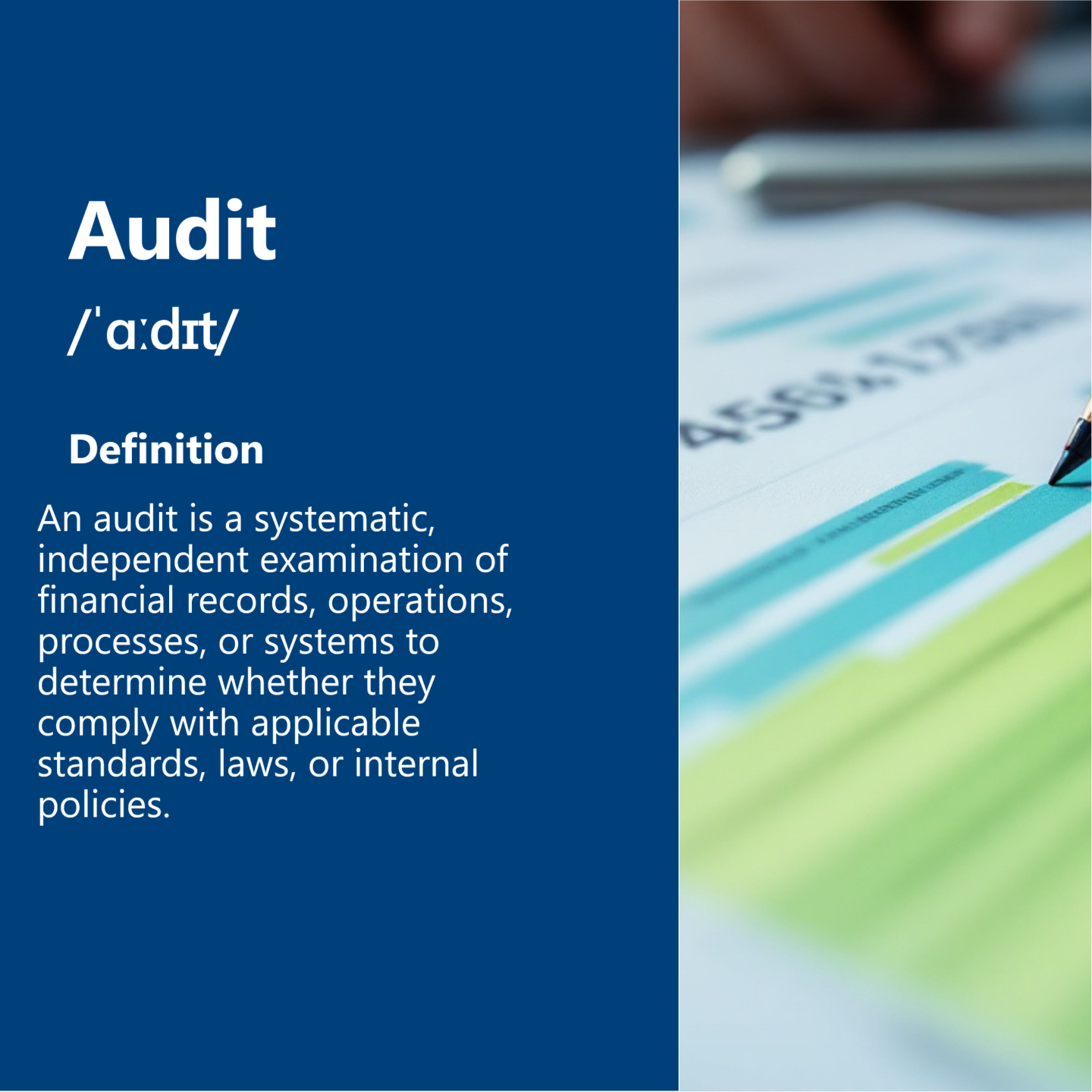
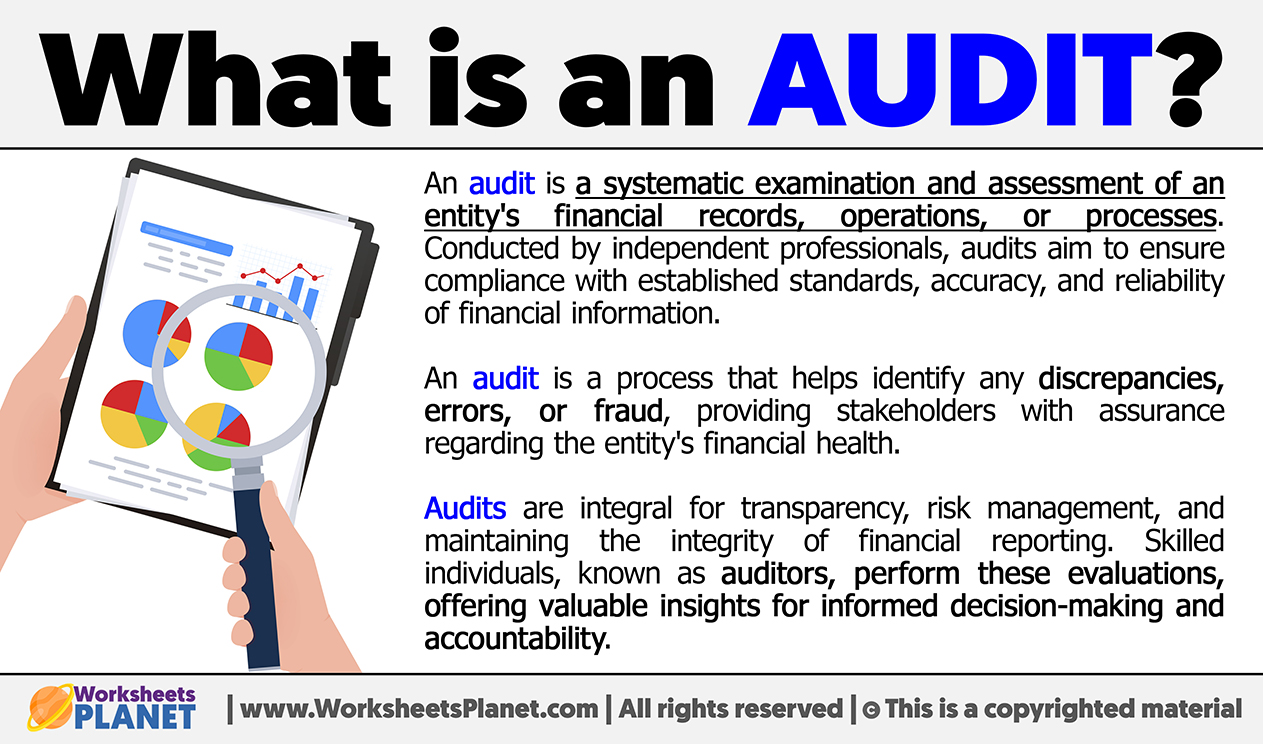
In the world of business finance, few terms carry as much weight—or spark as much apprehension—as “the audit.” To many small business owners or individual investors, an audit sounds like a punitive measure or an investigation into wrongdoing. However, in the professional financial sphere, the definition of an audit is far more constructive. At its core, an audit is an objective, systematic examination and evaluation of the financial statements and records of an organization. Its primary purpose is to ensure that financial representations are fair, accurate, and in accordance with established accounting standards.
Understanding the definition of an audit requires looking past the surface-level fear of the process and recognizing it as a pillar of financial integrity. Whether conducted by internal teams or external third parties, audits provide a “seal of approval” that allows the global economy to function. Without the assurance that financial data is reliable, the relationship between companies, investors, and creditors would collapse under a cloud of distrust.
The Core Principles of a Financial Audit
To define an audit accurately within the niche of business finance, one must look at the principles of transparency and accountability. An audit is not merely a “check-up”; it is a formal process governed by strict protocols. In the United States, most financial audits are conducted according to Generally Accepted Auditing Standards (GAAS), while financial statements are evaluated against Generally Accepted Accounting Principles (GAAP).
Materiality and Professional Skepticism
Two concepts are fundamental to the definition of a financial audit: materiality and professional skepticism. Materiality refers to the significance of an amount, transaction, or discrepancy. Auditors do not look for every penny; instead, they focus on errors or omissions that are large enough to influence the economic decisions of a user of the financial statements.
Professional skepticism is the mindset required of an auditor. It involves a questioning mind and a critical assessment of audit evidence. An auditor does not assume that management is dishonest, but they also do not assume unquestioned honesty. This balance ensures that the audit remains an objective tool for verifying financial health rather than a rubber stamp for corporate claims.
The Objective of an Audit Opinion
The ultimate goal of a financial audit is the issuance of an “opinion.” This is a formal statement by the auditor regarding the fairness of the financial statements. There are generally four types of opinions:
- Unqualified Opinion: Often called a “clean” report, this indicates that the financial records are a fair representation of the company’s position.
- Qualified Opinion: This suggests that while the overall financial statements are fair, there is a specific area where the auditor could not gather enough evidence or where a specific departure from accounting standards occurred.
- Adverse Opinion: A red flag indicating that the financial statements are misleading or do not conform to GAAP.
- Disclaimer of Opinion: This occurs when the auditor cannot complete the report due to a lack of records or cooperation from the company.
Categorizing Audits: Internal, External, and Specialized Reviews
While the general definition remains consistent, audits are categorized based on who performs them and what their specific focus is. In business finance, distinguishing between these categories is essential for strategic planning and compliance.
External Audits
External audits are performed by independent accounting firms. For publicly traded companies, these are mandatory and are designed to protect the interests of shareholders and the public. Because the auditors are not employees of the company, their findings are considered the most credible. They provide an unbiased perspective on whether the company’s financial reporting is accurate, which is vital for maintaining stock market stability.
Internal Audits
Internal audits are conducted by employees within the organization. While they may lack the perceived independence of an external audit, they are incredibly valuable for management. The definition of an internal audit focuses on improving operational efficiency, risk management, and internal controls. Internal auditors look for ways to streamline financial processes, prevent waste, and ensure that the company is following its own internal policies before the external auditors arrive.
IRS and Compliance Audits
In the realm of personal and business finance, the “tax audit” is the most well-known. These are conducted by government agencies like the Internal Revenue Service (IRS) to ensure that tax returns are filed accurately and that the correct amount of tax has been paid. Beyond taxes, compliance audits ensure that businesses are adhering to specific laws and regulations related to their industry, such as environmental standards or financial services regulations.
Forensic Audits
A forensic audit is a specialized examination used to uncover criminal activity such as fraud, embezzlement, or money laundering. Unlike a standard financial audit, which looks for accidental errors or systemic weaknesses, a forensic audit is specifically designed to gather evidence that can be used in a court of law.
The Lifecycle of a Professional Audit
An audit is not a single event but a structured lifecycle. Understanding this process helps business owners and finance professionals prepare effectively and reduce the friction often associated with financial reviews.
Planning and Risk Assessment
The first phase involves the auditor gaining a deep understanding of the business and the industry in which it operates. During this stage, the auditor identifies “high-risk” areas—segments of the financial statements where errors are most likely to occur. For example, a company with high inventory turnover might have more risk associated with its valuation of goods than a service-based firm.
Internal Control Evaluation
Before testing individual transactions, auditors evaluate the company’s internal controls. These are the processes and procedures a business has in place to ensure the integrity of financial information. If a company has strong internal controls (such as requiring two signatures on every check), the auditor may decide they can rely more on the company’s data and perform less “substantive testing.”
Substantive Testing and Evidence Gathering
This is the “heavy lifting” phase of the audit. Auditors will pull samples of invoices, bank statements, payroll records, and contracts. They verify that the numbers recorded in the ledger match the physical or digital evidence. They may also reach out to third parties—such as banks or major customers—to confirm that the balances reported by the company are accurate.
Final Review and Reporting
After all evidence has been gathered, the audit team reviews their findings to ensure all objectives were met. They discuss any discrepancies with the company’s management. If the errors are corrected, the auditor can move forward with a clean opinion. The final step is the issuance of the audit report, which is then shared with stakeholders, board members, or regulatory bodies.
The Strategic Value of Financial Auditing
Defining an audit only by its compliance requirements misses the strategic value it brings to a business. In modern finance, an audit is a powerful tool for growth and risk mitigation.
Fraud Detection and Asset Protection
While a standard audit is not specifically designed to find every instance of fraud, it is one of the most effective deterrents. The knowledge that a third party will be reviewing the books discourages employees and executives from engaging in unethical behavior. By identifying weaknesses in internal controls, audits help businesses close the gaps where fraud could occur.
Attracting Capital and Investment
For businesses looking to scale, an audit is often a prerequisite. Banks are far more likely to approve large business loans if they can review audited financial statements. Similarly, venture capitalists and private equity firms require audited records to perform due diligence before investing. An audit proves to the “money people” that your business is a legitimate, well-managed entity with a clear financial history.
Operational Insights and Efficiency
A thorough audit often reveals “bottlenecks” in a company’s financial operations. For instance, an auditor might notice that the accounts receivable department is consistently late in collecting payments, leading to cash flow issues. These insights go beyond simple “pass/fail” compliance; they provide management with a roadmap for improving profitability and operational health.
Navigating the Future of Auditing in Business Finance
As the financial world evolves, so does the definition of an audit. We are moving away from a model where an audit is a “once-a-year” look back at historical data. The rise of real-time financial tools and advanced accounting software is enabling a shift toward “continuous auditing.”
In this new paradigm, financial data is monitored constantly. Trends can be spotted instantly, and discrepancies can be flagged the moment they occur. For the business owner, this means that the year-end audit becomes a much smoother, less disruptive process. Instead of scrambling to find receipts from twelve months ago, the data is already organized, verified, and ready for review.
Furthermore, the scope of auditing is expanding into non-financial areas. We are seeing the rise of ESG (Environmental, Social, and Governance) audits. Investors today don’t just want to know how much money a company made; they want audited proof that the company is operating sustainably and ethically. This broader definition of an audit reflects a world where financial success is increasingly tied to corporate responsibility.
Ultimately, an audit is a fundamental necessity for any healthy financial ecosystem. By providing a clear, objective definition of a company’s financial status, audits build the trust necessary for markets to thrive. Whether you are an individual investor looking at a corporation’s annual report or a business owner preparing for your first internal review, viewing the audit as a tool for transparency rather than a burden is the key to mastering the world of business finance.
aViewFromTheCave is a participant in the Amazon Services LLC Associates Program, an affiliate advertising program designed to provide a means for sites to earn advertising fees by advertising and linking to Amazon.com. Amazon, the Amazon logo, AmazonSupply, and the AmazonSupply logo are trademarks of Amazon.com, Inc. or its affiliates. As an Amazon Associate we earn affiliate commissions from qualifying purchases.