
In the realm of pure mathematics, the fraction 4/3 is a simple ratio of two integers. However, when we translate this fraction into the digital world of software engineering, artificial intelligence, and hardware architecture, it becomes a fascinating case study in computational precision. To answer the question “what is the decimal for 4/3” from a technological perspective, we must go beyond the repeating decimal of 1.333… and explore how modern systems represent, store, and manipulate such values.
The Mathematical Foundation: Why 4/3 is a Computational Challenge
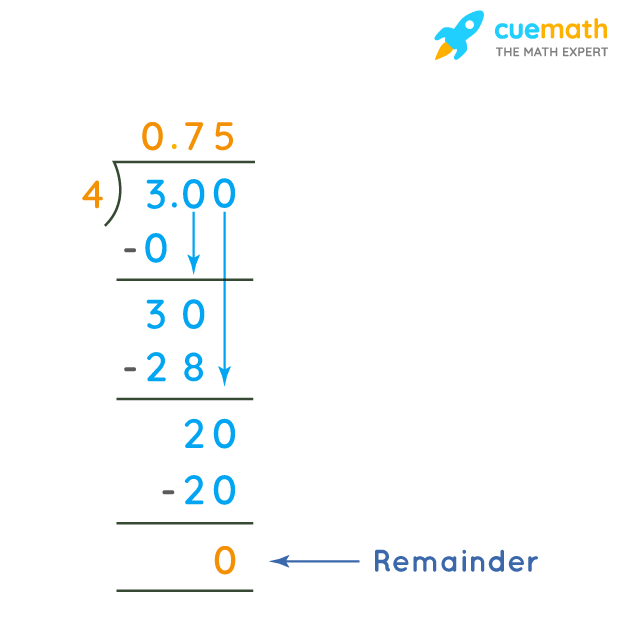
At its most basic level, the decimal representation of 4/3 is 1.3333… with the digit 3 repeating infinitely. In mathematics, this is classified as a rational number with a non-terminating, repeating decimal expansion. While a human can simply write a bar over the 3 to denote infinity, a computer—which operates within the finite constraints of memory and hardware—cannot.
The Concept of Non-Terminating Decimals
In base-10 (decimal) notation, a fraction results in a terminating decimal only if the prime factors of the denominator (when the fraction is in its simplest form) are 2 and 5. Since the denominator of 4/3 is 3, it will never terminate in a decimal system. This creates an immediate hurdle for digital systems that must approximate these values to fit into fixed-width data structures.
Rational Numbers vs. Machine Representation
In software development, we often distinguish between “exact” and “approximate” types. A rational number like 4/3 is exact in its fractional form. However, the moment a developer converts it to a decimal to perform a calculation or display it in a user interface (UI), they enter the world of approximation. This transition is where technology trends in high-performance computing and data science become critical, as the precision of this approximation can affect everything from graphics rendering to financial modeling.
How Computers Calculate: The Challenge of Binary Precision
While humans use base-10, computers use base-2 (binary). This adds a layer of complexity to representing 4/3. In the same way that 1/3 cannot be represented perfectly in decimal, many numbers that seem simple in decimal cannot be represented perfectly in binary.
The IEEE 754 Standard
The industry standard for representing decimal numbers in software is IEEE 754, which governs floating-point arithmetic. Whether you are using a smartphone app or a sophisticated AI tool, the “decimal for 4/3” is likely being stored as a floating-point number. In this format, the number is broken into three parts: a sign bit, an exponent, and a mantissa (or significat).
Because a computer has a limited number of bits (usually 32 for “single precision” or 64 for “double precision”), it must eventually truncate or round the repeating 3s of 4/3. In a 64-bit double, 4/3 is represented with roughly 15 to 17 significant decimal digits. The “last” digit is rounded based on the specific rounding mode configured in the CPU, leading to a value like 1.3333333333333333.
Floating-Point Arithmetic and the “Rounding Error”
In the tech world, the tiny discrepancy between 4/3 and its digital representation is known as a rounding error or “machine epsilon.” While a difference of $10^{-16}$ might seem negligible, it accumulates. In complex simulations—such as those used in weather forecasting or structural engineering software—performing millions of operations on an approximated value like the decimal of 4/3 can lead to “drift,” where the final result deviates significantly from the theoretical truth.
Software Engineering Perspectives: Handling Fractional Data
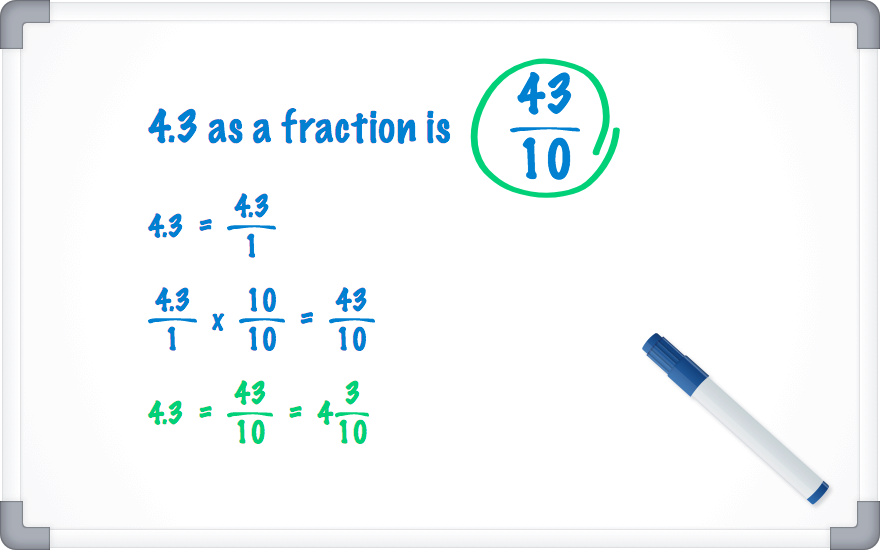
For software developers, choosing how to represent 4/3 depends entirely on the application’s niche. A graphics engine, a database for an e-commerce platform, and a scientific calculator app will all handle the decimal for 4/3 differently.
Data Types: Float vs. Double vs. Decimal
Most programming languages, such as Python, Java, and C++, offer different data types for decimals.
- Float and Double: These are hardware-accelerated and extremely fast but suffer from the binary representation issues mentioned above.
- Decimal/BigDecimal: Many modern languages provide a “Decimal” type that stores numbers in a way that mimics base-10 arithmetic. This is far more accurate for human-centric calculations but requires more memory and processing power. When a fintech app calculates 4/3 of a dollar, it uses these specialized libraries to ensure that not a single fraction of a cent is lost to a binary rounding error.
Practical Implications in Coding
When writing code, comparing two decimal values is a common pitfall. A seasoned developer knows never to write if (x == 1.333333). Instead, they use a “tolerance” or “epsilon” check: if (abs(x - 1.333333) < 0.000001). This acknowledges that the “decimal for 4/3” is an elusive target in software, and we must program with a degree of uncertainty in mind. This technical nuance is a cornerstone of digital security and software reliability; bugs stemming from improper fraction handling have historically caused catastrophic failures in aerospace and banking software.
Artificial Intelligence and Mathematical Accuracy
As AI tools like Large Language Models (LLMs) and neural networks become ubiquitous, the way they handle numbers like 4/3 has become a hot topic in technology reviews and research.
How LLMs Process Numerical Fractions
Interestingly, many AI models do not “calculate” 4/3 in the traditional sense. Instead, they predict the most likely sequence of tokens associated with the query. If you ask an AI “what is the decimal for 4/3,” it retrieves the information from its training data. However, when these models are used for complex reasoning or as “AI agents” to execute code, they rely on underlying Python environments. This creates a bridge between linguistic prediction and hard-coded mathematical precision.
Neural Networks and Precision Requirements
In the training of AI models, “half-precision” (FP16) or “brain floating point” (BFloat16) is often used to save memory and speed up computation. In these formats, the decimal for 4/3 is represented with even fewer digits than a standard 64-bit number. This highlights a fascinating trend in tech: the trade-off between absolute mathematical precision and the speed required for “intelligence.” For an AI to recognize a cat in a photo, it doesn’t need 4/3 to be accurate to 15 decimal places. However, for an AI controlling a self-driving car, the precision of fractional calculations in its spatial mapping software is a matter of life and safety.
The Future of Computational Mathematics
The quest for the perfect representation of numbers like 4/3 continues to drive innovation in gadgets and software architecture. As we push the boundaries of what computers can do, we are finding new ways to bridge the gap between human mathematics and machine binary.
Symbolic Computation and Software Trends
There is a growing trend toward “symbolic computation” in high-end software tools like Mathematica, Maple, and even certain libraries in Python (like SymPy). In symbolic computation, the computer does not convert 4/3 to a decimal at all. Instead, it treats “4/3” as a mathematical object. It keeps the fraction as a fraction throughout the entire calculation, only converting it to a decimal at the very last moment for display. This eliminates rounding errors entirely and represents the “gold standard” for precision in modern software.
Quantum Computing and High-Precision Calculations
Looking further ahead, quantum computing offers a different paradigm. While quantum computers are not inherently “better” at simple division, their ability to handle complex probabilistic states may eventually lead to new algorithms for numerical analysis. For now, the tech world remains focused on refining the efficiency of traditional floating-point units (FPUs) in our CPUs and GPUs to handle repeating decimals like 1.333… with ever-increasing speed and lower power consumption.
In conclusion, the decimal for 4/3 is 1.333… in theory, but in the world of technology, it is a variable target. It is a balancing act between the infinite nature of mathematics and the finite nature of silicon. Whether you are a developer choosing the right data type, a tech enthusiast reviewing the latest AI tool, or a user of a digital financial app, understanding how we manage these “unending” numbers is essential to understanding the digital infrastructure of the modern world.
aViewFromTheCave is a participant in the Amazon Services LLC Associates Program, an affiliate advertising program designed to provide a means for sites to earn advertising fees by advertising and linking to Amazon.com. Amazon, the Amazon logo, AmazonSupply, and the AmazonSupply logo are trademarks of Amazon.com, Inc. or its affiliates. As an Amazon Associate we earn affiliate commissions from qualifying purchases.