
For the uninitiated, the question “What is the date of the Chinese New Year?” might seem like a simple inquiry into a cultural celebration. However, for global fund managers, supply chain directors, and retail strategists, the answer represents the most significant pivot point in the annual fiscal calendar. Unlike the fixed Gregorian New Year on January 1st, the Lunar New Year (also known as the Spring Festival) is a moving target that dictates the flow of trillions of dollars in global trade, consumer spending, and market liquidity.

Understanding the timing of this event is not merely a matter of cultural curiosity; it is a fundamental requirement for financial forecasting and operational resilience. The date determines when the world’s second-largest economy—and its primary manufacturing hub—effectively pauses, creating a ripple effect that touches everything from commodity prices in London to consumer electronics availability in New York.
The Mechanics of the Date: Why It Dictates the Global Fiscal Tempo
The Chinese New Year is based on the lunisolar calendar, falling on the second new moon after the winter solstice. This places the date anywhere between January 21 and February 20. Because the date shifts by roughly 10 to 11 days each year (unless an intercalary month is added to the lunar calendar), businesses cannot rely on a static Q1 strategy.
The Upcoming Financial Window: 2025–2030
To plan effectively, one must look at the specific dates for the coming years, as the proximity of the date to the Western New Year significantly alters the “crunch period” for corporate finance:
- 2025: January 29 (Year of the Snake)
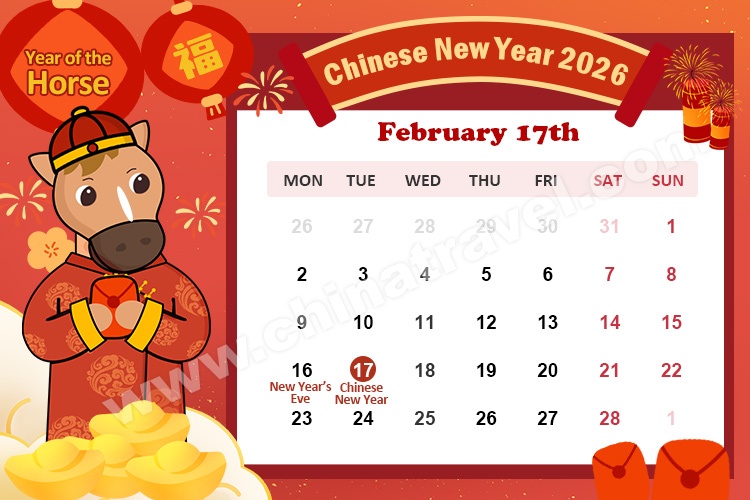
- 2026: February 17 (Year of the Horse)
- 2027: February 6 (Year of the Goat)
- 2028: January 26 (Year of the Monkey)
When the date falls early in January, as it will in 2028, the “pre-holiday rush” overlaps with the Western holiday season, creating a massive logjam in logistics and a spike in shipping costs. Conversely, a late February date allows for a more staggered approach to inventory management.
The “Golden Week” and Market Liquidity
The “date” of the Chinese New Year actually marks the beginning of a 15-day celebration, though the official public holiday—the Golden Week—is seven days long. During this period, the Shanghai Stock Exchange (SSE) and the Shenzhen Stock Exchange (SZSE) close. This leads to a massive withdrawal of liquidity from the global markets as domestic investors liquidate positions to cover travel expenses and the traditional gifting of “Hongbao” (red envelopes). For the global investor, the weeks leading up to this date often see a “liquidity squeeze,” as the People’s Bank of China (PBOC) frequently injects massive amounts of short-term cash into the banking system to prevent interest rates from spiking.
The Investing Perspective: Capitalizing on the “Lunar New Year Effect”
In the world of quantitative finance, the “Lunar New Year Effect” is a well-documented phenomenon. Much like the “January Effect” in Western markets, the period surrounding the Chinese New Year often sees predictable patterns in equity performance, driven by sentiment, consumer behavior, and institutional rebalancing.
Market Liquidity and the Pre-Holiday Rally
Statistically, the two weeks preceding the Chinese New Year often witness a bullish trend in mainland Chinese and Hong Kong equities. This is partly due to “window dressing” by fund managers and a general uptick in consumer optimism. However, the period immediately following the date can be volatile. As the “Date” approaches, trading volumes typically thin out, meaning that any unexpected geopolitical or economic news can cause outsized price movements due to the lack of liquidity.
Investors looking for alpha often focus on the “Consumer Discretionary” sector. In the 30 days leading up to the holiday, companies involved in luxury goods, high-end spirits (such as Kweichow Moutai), and travel services (Trip.com) often see significant price appreciation. The “Date” serves as the hard deadline for this seasonal trade.
Commodities and the Industrial Pause
The date of the Chinese New Year is perhaps most critical for commodity traders. China is the world’s largest consumer of iron ore, copper, and crude oil. When the date arrives, industrial activity grinds to a halt. Smelters reduce output, and construction sites close. This leads to a predictable “inventory build” in the weeks leading up to the holiday, followed by a period of stagnant demand. Traders who fail to account for the shifting date risk being caught on the wrong side of a price correction as the “World’s Factory” goes dark for two weeks.
Business Finance and Operational Resilience: Navigating the Great Shutdown
For business owners and corporate finance officers, the date of the Chinese New Year represents the “Great Shutdown.” This is not a holiday in the Western sense, where skeletal crews remain; it is a total cessation of production and logistics in many regions.
Working Capital Management and the Cash Flow Crunch
The weeks leading up to the Chinese New Year are characterized by an intense demand for cash. In Chinese business culture, it is customary—and often contractually required—to settle all outstanding debts and pay employee bonuses before the New Year’s Day.
For Western companies sourcing from China, this means that suppliers will often demand early payment of invoices to meet their own liquidity needs. Finance departments must plan for a significant cash outflow in the month preceding the holiday date. Failure to manage this working capital can lead to strained supplier relationships or, worse, a disruption in the supply chain if the supplier cannot afford to restart operations post-holiday.
The Lead-Time Trap: Hedging Against the Date
The most significant mistake a business can make is treating the Chinese New Year as a one-week event. In reality, the disruption lasts for four to six weeks. Factories begin winding down two weeks before the date as migrant workers travel home (the Chunyun period, the largest human migration on earth). After the holiday, it takes another two to three weeks for factories to reach full capacity as labor shortages are common when workers seek higher-paying jobs elsewhere before returning.
To mitigate this, sophisticated businesses use the date to back-calculate their procurement schedules. If the New Year falls on January 29, orders must be placed by early November to ensure they clear customs before the ports become congested in mid-January.
The FinTech Evolution: Red Envelopes and the Digital Wealth Shift
In the last decade, the date of the Chinese New Year has become a primary driver of FinTech innovation and personal finance shifts. The traditional practice of giving physical red envelopes (Hongbao) filled with cash has transitioned into a digital phenomenon, spearheaded by platforms like WeChat Pay and Alipay.
The Trillion-Dollar Hongbao Economy
On the day of the Lunar New Year, billions of digital red envelopes are sent across China. This creates a massive, instantaneous movement of wealth. For FinTech companies, the date is the ultimate stress test for their infrastructure. For the user, it represents a micro-windfall.
In recent years, there has been a significant shift in how this “holiday money” is used. Rather than simply sitting in digital wallets, these funds are increasingly being funneled into “Yu’e Bao” and other money market funds integrated into payment apps. The date of the Chinese New Year, therefore, marks one of the largest annual inflows of retail capital into the Chinese shadow banking and mutual fund sectors.
Leveraging Holiday Windfalls for Portfolio Growth
From a personal finance perspective, the date is a catalyst for the “New Year, New Portfolio” mindset. Just as Westerners make financial resolutions in January, the Lunar New Year serves as a secondary point for rebalancing personal portfolios. This is particularly true for the younger, tech-savvy generation who utilize the holiday break to assess their crypto holdings, gold investments, and equity positions. For financial advisors in the Asia-Pacific region, the weeks following the date are the busiest for new account openings and wealth management consultations.
The Date as a Financial North Star
In conclusion, the question “What is the date of the Chinese New Year?” is far from a simple calendar check. It is the identification of a massive economic inflection point. For the global investor, the date marks a period of predictable market anomalies and a time for tactical sector rotation. For the business leader, it is a deadline that dictates the health of the supply chain and the stability of working capital.
As we move into an era of increased global economic integration, the lunar calendar will continue to exert a powerful influence on the Gregorian fiscal year. Whether you are managing a multi-million dollar hedge fund or a small e-commerce business, your financial success in the first quarter of any year depends entirely on your ability to plan around the shifting, powerful, and economically transformative date of the Chinese New Year. By aligning your financial strategies with this lunar rhythm, you move from being a reactive participant to a proactive architect of your own fiscal destiny.
aViewFromTheCave is a participant in the Amazon Services LLC Associates Program, an affiliate advertising program designed to provide a means for sites to earn advertising fees by advertising and linking to Amazon.com. Amazon, the Amazon logo, AmazonSupply, and the AmazonSupply logo are trademarks of Amazon.com, Inc. or its affiliates. As an Amazon Associate we earn affiliate commissions from qualifying purchases.