
The prime rate is a foundational interest rate that significantly influences a vast array of financial products and decisions across the United States. For consumers, it dictates the cost of borrowing for everything from credit card balances to home equity lines of credit. For businesses, it affects the cost of capital for expansion, inventory, and operations. Understanding the prime rate, its components, and its implications is crucial for navigating the financial world effectively, whether you’re managing household debt, planning investments, or steering a company.
Unlike some other benchmark rates, the prime rate is not set by a single government entity or through a public auction. Instead, it is largely a conventional rate announced by commercial banks, primarily influenced by the Federal Reserve’s monetary policy. This article delves into the mechanics of the prime rate, exploring how it’s determined, its profound impact on various sectors, and strategies for both individuals and businesses to adapt to its fluctuations. While stating an exact, constantly updated “current” prime rate here would be quickly obsolete, we will explain how to ascertain it and what drives its movements, empowering you with the knowledge to stay informed.
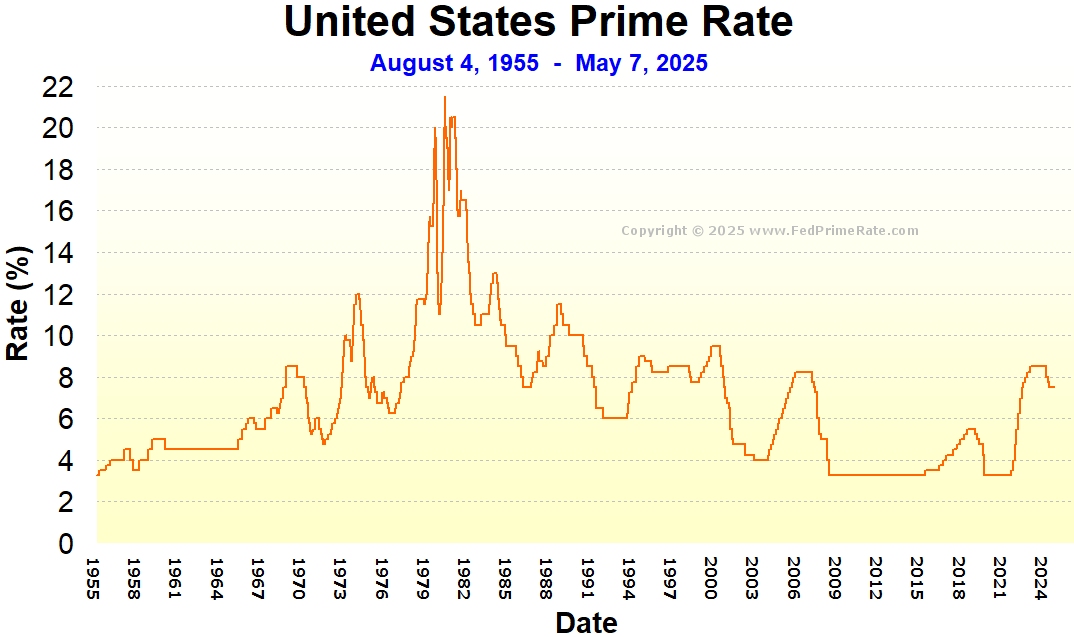
Understanding the Prime Rate: Definition and Determination
At its core, the prime rate is the interest rate that commercial banks charge their most creditworthy corporate customers. It represents the lowest rate available to borrowers with impeccable credit histories and strong financial standing. However, its influence extends far beyond these top-tier corporate clients, serving as a benchmark for a myriad of other lending products.
What is the Prime Rate?
Historically, the prime rate emerged as a way for banks to signal their lending costs and competitive positioning. While originally conceived for large corporate loans, it has evolved into a widely accepted reference point for many variable-rate loans. When you see an interest rate advertised as “Prime + 2%” or “Prime – 0.5%”, it means your rate will fluctuate directly with changes in the prime rate. This linkage makes it a critical piece of information for anyone with variable-rate debt or considering new borrowing.
It’s important to distinguish the prime rate from other key rates like the federal funds rate. While intrinsically linked, they are not the same. The prime rate is a commercial lending rate, whereas the federal funds rate is an overnight interbank lending rate controlled by the Federal Reserve.
How is the Prime Rate Determined? The Federal Reserve’s Influence
The most significant factor influencing the prime rate is the federal funds rate. The federal funds rate is the target rate set by the Federal Open Market Committee (FOMC) of the Federal Reserve. It’s the interest rate at which commercial banks lend their excess reserves to other banks overnight. While banks don’t directly lend to consumers or businesses at this rate, it forms the bedrock of the entire interest rate structure.
When the Federal Reserve raises or lowers the target federal funds rate, commercial banks typically follow suit by adjusting their prime rate in the same direction and by the same magnitude. The conventional wisdom is that the prime rate is typically 3 percentage points higher than the upper bound of the federal funds rate target range. This 3% spread isn’t legally mandated but has been a long-standing convention among major US banks. For example, if the Fed targets a federal funds rate range of 5.00%-5.25%, the prime rate would likely be 8.25%.
This close relationship ensures that the Federal Reserve’s monetary policy decisions – designed to control inflation, stimulate economic growth, or stabilize financial markets – are transmitted throughout the banking system and, consequently, to the broader economy.
The Federal Reserve’s Role and Monetary Policy
The Federal Reserve, as the central bank of the United States, holds immense power over the nation’s financial health. Its primary tool for influencing interest rates, and thus the prime rate, is its ability to manipulate the federal funds rate.
The Federal Funds Rate Explained
The federal funds rate is a crucial indicator of the availability of money in the banking system. When the Fed wants to stimulate the economy, it lowers the federal funds rate target, making it cheaper for banks to borrow from each other. This, in turn, encourages banks to lend more readily and at lower rates to consumers and businesses, ideally boosting economic activity. Conversely, to cool down an overheated economy or combat inflation, the Fed raises the federal funds rate, making borrowing more expensive, which slows down lending and economic expansion.
The FOMC meets eight times a year (and sometimes more in emergency situations) to assess economic conditions and decide on the target range for the federal funds rate. Their decisions are based on a careful analysis of economic data, including inflation, employment figures, GDP growth, and global economic trends.
The FOMC’s Influence on Lending Costs
Each time the FOMC announces a change to the federal funds rate target, major commercial banks are quick to react. Within hours, or at most a day, they announce corresponding changes to their prime rate. This rapid adjustment ensures a direct and immediate impact on various lending products.
For example, if the Fed hikes rates by 0.25%, you can expect your bank to increase its prime rate by 0.25% as well. This ripple effect is critical for understanding why prime rate movements are so closely watched by financial markets and everyday citizens alike. It’s the clearest signal of the Fed’s stance on monetary policy and its immediate consequence for borrowing costs.
Impact of the Prime Rate: For Consumers and Businesses

The prime rate is far from an abstract economic indicator; its changes have tangible, often immediate, effects on the financial well-being of individuals and the operational costs of businesses.
Prime Rate’s Impact on Consumers
For the average consumer, the prime rate directly influences the cost of a significant portion of their debt.
-
Credit Cards: Most variable-rate credit cards base their Annual Percentage Rate (APR) on the prime rate. As the prime rate rises, so does the interest you pay on your outstanding credit card balances, making debt more expensive. Conversely, a falling prime rate can provide some relief.
-
Home Equity Lines of Credit (HELOCs) and Adjustable-Rate Mortgages (ARMs): These popular borrowing tools often have interest rates tied directly to the prime rate. If you have a HELOC or an ARM, a rise in the prime rate means higher monthly payments, increasing the cost of your home financing. While fixed-rate mortgages are not directly tied to the prime rate, their rates are influenced by broader market interest rates, which are themselves affected by the Fed’s actions.
-
Personal Loans and Auto Loans: While many personal and auto loans are fixed-rate, some may be variable. For those that are variable, the prime rate will directly affect your monthly payments. Even for fixed-rate loans, the initial rate you receive is heavily influenced by the prevailing prime rate and broader interest rate environment at the time of origination.
-
Savings Accounts and CDs: While the prime rate primarily affects borrowing costs, it also indirectly impacts savings. When interest rates rise generally, banks tend to offer slightly better rates on savings accounts, money market accounts, and Certificates of Deposit (CDs), though often with a significant lag and at a much lower correlation than borrowing rates.
Prime Rate’s Impact on Businesses
Businesses, from small startups to multinational corporations, also feel the direct effects of prime rate changes.
-
Lines of Credit: Many businesses rely on revolving lines of credit to manage cash flow, purchase inventory, or cover short-term operational expenses. These lines are almost always variable-rate and tied to the prime rate. A higher prime rate means higher interest costs on drawn funds, directly impacting profitability.
-
Commercial Loans: While large corporate loans might be tied to benchmarks like SOFR (Secured Overnight Financing Rate), many smaller and medium-sized business loans, particularly those from regional banks, are tied to the prime rate. Increases make expansion, equipment purchases, or real estate investments more expensive.
-
Working Capital Costs: For businesses that hold significant inventory or have extended payment terms with customers, the cost of financing their working capital increases with a higher prime rate, potentially squeezing profit margins.
-
Investment Decisions: Rising interest rates make it more expensive for businesses to borrow for capital expenditures or strategic investments. This can lead to a slowdown in investment, impacting job creation and economic growth.
-
Access to Credit: In periods of rapidly rising prime rates, banks may become more conservative in their lending practices, making it harder for some businesses, especially those with less robust credit, to secure financing.
Navigating Interest Rate Changes: Strategies and Considerations
Given the pervasive impact of the prime rate, understanding how to respond to its movements is key to sound financial management for both individuals and businesses.
Strategies for Consumers
-
Monitor Variable-Rate Debt: If you have credit cards, HELOCs, or ARMs, be vigilant about prime rate changes. Understand how your specific loan terms link to the prime rate.
-
Prioritize High-Interest Debt: When rates are rising, focus on paying down variable-rate debt with the highest interest rates first. This can include credit card balances, which often carry the highest APRs.
-
Consider Refinancing: If you have a variable-rate loan and rates are expected to rise further, or if current rates are still relatively low, consider refinancing into a fixed-rate loan. This locks in your interest rate and provides predictable monthly payments, insulating you from future increases.
-
Build an Emergency Fund: A robust emergency fund can help you absorb higher interest payments without resorting to further debt, especially during periods of economic uncertainty.
-
Review Your Budget: Adjust your budget to account for potentially higher interest expenses. Cutting discretionary spending can free up funds to tackle debt.
Strategies for Businesses
-
Hedge Against Rate Increases: For businesses with substantial variable-rate debt, consider financial instruments like interest rate swaps or caps to hedge against future rate hikes. These can provide certainty about borrowing costs for a defined period.
-
Optimize Cash Flow: Improve cash flow management to reduce reliance on short-term, variable-rate lines of credit. Efficient invoicing, inventory management, and expense control can free up capital.
-
Explore Fixed-Rate Financing: When planning long-term investments or capital expenditures, evaluate fixed-rate loan options. While they might initially be slightly higher than variable rates during low-rate periods, they offer stability and predictability for budgeting.
-
Strengthen Financial Ratios: Maintain strong creditworthiness. A healthy balance sheet and robust cash flow can enable you to secure better lending terms even in a rising rate environment.
-
Scenario Planning: Conduct scenario analyses to understand how different interest rate environments would impact your business’s profitability and cash flow. This helps in proactive decision-making.
Forecasting the Future: What to Expect from Prime Rate Fluctuations
Predicting the exact future trajectory of the prime rate is challenging, as it hinges directly on the Federal Reserve’s decisions, which are themselves reactions to complex economic conditions. However, understanding the factors the Fed considers can provide insight into potential movements.
Key Economic Indicators to Watch
The Federal Reserve primarily focuses on its dual mandate: maximizing employment and maintaining stable prices (i.e., controlling inflation). Therefore, key indicators to monitor include:
-
Inflation Data: Consumer Price Index (CPI), Producer Price Index (PPI), and the Personal Consumption Expenditures (PCE) price index (the Fed’s preferred measure). Persistent inflation above the Fed’s 2% target is a strong signal for continued rate hikes.
-
Employment Data: Non-farm payrolls, unemployment rate, wage growth. A strong labor market with low unemployment and rising wages can contribute to inflationary pressures, prompting the Fed to tighten monetary policy.
-
GDP Growth: Gross Domestic Product (GDP) indicates overall economic health. Robust growth might allow the Fed more room to raise rates without fear of tipping the economy into recession.
-
Global Economic Conditions: International events, geopolitical stability, and global growth trends can also influence the Fed’s decisions, especially regarding the strength of the dollar and its impact on trade and inflation.

The Fed’s Stance and Communication
The Federal Reserve is committed to transparency. Its FOMC meeting minutes, speeches by Fed officials, and the “dot plot” (a graphical representation of each FOMC member’s projection for the federal funds rate) offer valuable clues about the future direction of monetary policy. Investors and economists meticulously analyze these communications for hints about upcoming rate decisions.
Ultimately, the prime rate is a dynamic figure, a direct reflection of the broader economic environment and the Federal Reserve’s efforts to manage it. Staying informed about economic news, understanding the Fed’s mandate, and adopting prudent financial strategies are the best ways to navigate its changes effectively. While you can always find the exact current prime rate with a quick search on major bank websites or financial news outlets, the deeper understanding of its causes and effects provided here is far more valuable for long-term financial planning.
aViewFromTheCave is a participant in the Amazon Services LLC Associates Program, an affiliate advertising program designed to provide a means for sites to earn advertising fees by advertising and linking to Amazon.com. Amazon, the Amazon logo, AmazonSupply, and the AmazonSupply logo are trademarks of Amazon.com, Inc. or its affiliates. As an Amazon Associate we earn affiliate commissions from qualifying purchases.