
For any prospective homebuyer or homeowner looking to refinance, the term “prime mortgage rate” is more than just a financial metric; it is the gatekeeper of affordability. While headlines frequently fluctuate between optimism and caution, understanding what determines the current prime mortgage rate requires a deep dive into the mechanics of the Federal Reserve, the bond market, and the broader economic landscape. As of the current market cycle, we find ourselves in a transformative period where the era of “easy money” has collided with aggressive inflationary pressures, resulting in a rate environment that demands strategic precision from borrowers.
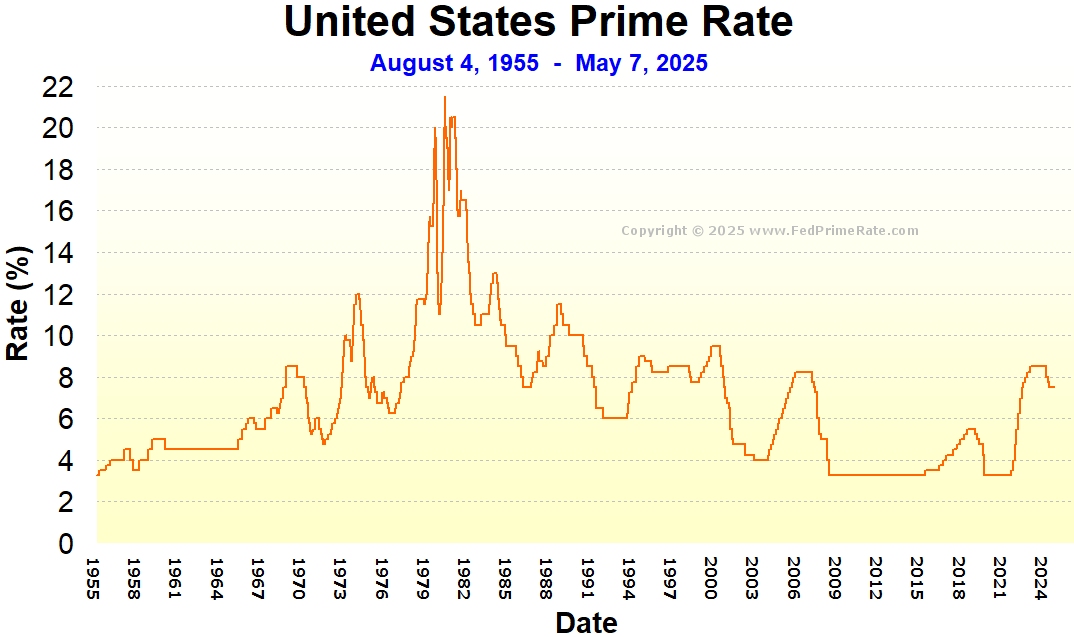
The prime mortgage rate essentially refers to the interest rate offered to borrowers with the highest creditworthiness. It serves as the baseline for the industry, influencing everything from 30-year fixed-rate mortgages to adjustable-rate products. To navigate this complex terrain, one must look beyond the daily percentage changes and analyze the structural forces that move the needle.
The Anatomy of the Prime Mortgage Rate and Its Economic Foundation
To understand where mortgage rates stand today, one must first distinguish between the Federal Funds Rate and the mortgage rates offered by commercial lenders. While they are inextricably linked, they are not the same. The Federal Funds Rate is the interest rate at which commercial banks borrow and lend their excess reserves to each other overnight. When the Federal Reserve raises this rate to combat inflation, the cost of doing business for banks increases, which ripple through the economy to affect consumer loans, including mortgages.
The Relationship Between the Federal Funds Rate and Prime Pricing
Most consumers are familiar with the “Prime Rate,” which is typically set at 3 percentage points above the Federal Funds Rate. This rate serves as the index for many consumer credit products, such as credit cards and home equity lines of credit (HELOCs). However, traditional 30-year fixed mortgage rates track more closely with the yield on the 10-year Treasury note.
When investors feel the economy is cooling or inflation is being successfully tamed, they flock to the safety of government bonds, driving yields down and taking mortgage rates with them. Conversely, when the economy shows signs of overheating, bond yields rise, and mortgage lenders must increase their rates to maintain profitability and account for the “spread”—the difference between their cost of funds and the interest they charge borrowers.
Prime vs. Subprime: The Premium of Creditworthiness
The “prime” designation is reserved for borrowers who represent the lowest risk to lenders. Typically, this requires a credit score of 740 or higher, a stable debt-to-income (DTI) ratio below 36%, and a significant down payment. Those who do not meet these criteria are shifted into “non-prime” or “subprime” categories, where they are assessed higher interest rates to compensate the lender for the increased risk of default. In today’s market, the gap between a prime rate and a subprime rate can amount to hundreds of dollars in additional monthly payments, emphasizing the importance of financial health before entering the application process.
The Macroeconomic Drivers of Today’s Rate Environment
The current mortgage landscape is defined by the Federal Reserve’s ongoing battle with inflation. After a decade of historically low rates, the post-pandemic surge in consumer spending, supply chain disruptions, and labor shortages forced a rapid tightening of monetary policy. This shift has created a volatile environment where “good news” for the economy (such as strong jobs reports) can paradoxically be “bad news” for mortgage rates, as it suggests the Fed may need to keep rates higher for longer.
The Influence of the 10-Year Treasury Yield
As mentioned previously, mortgage lenders look to the 10-year Treasury yield as a benchmark for pricing. Because a 30-year mortgage is often refinanced or paid off within 10 years, the 10-year yield is the most accurate reflection of the long-term risk and inflation expectations of investors. When the “spread” between the 10-year yield and the 30-year mortgage rate widens—often due to market uncertainty or volatility—mortgage rates can remain high even if the Fed stops hiking rates. Currently, this spread has been wider than the historical average of 1.7 to 2.0 percentage points, reflecting a market that is still pricing in significant future uncertainty.
Inflationary Pressures and the Federal Reserve’s Mandate
The Federal Reserve operates under a dual mandate: maximum employment and stable prices. When inflation exceeds the target 2% threshold, the Fed utilizes interest rate hikes as a blunt instrument to cool demand. For the mortgage market, this means that every Consumer Price Index (CPI) report becomes a major catalyst for rate movement. If inflation remains “sticky,” the prime mortgage rate is unlikely to see a significant downward trend. Borrowers must therefore monitor the Fed’s rhetoric closely, as “hawkish” signals usually precede a spike in borrowing costs.

Assessing the Impact on Homeownership and Purchasing Power
The shift from 3% mortgage rates to the 6%–8% range seen in recent cycles has fundamentally altered the math of homeownership. This change has created a “locked-in” effect, where current homeowners are reluctant to sell because they do not want to trade their low-interest debt for a new, significantly more expensive mortgage. This has led to a stagnation in housing inventory, which keeps home prices elevated despite the higher cost of borrowing.
The Cost of Borrowing: 3% vs. 7%
The mathematical impact of a higher prime mortgage rate is staggering when viewed over the life of a loan. On a $400,000 mortgage, the difference between a 3% interest rate and a 7% interest rate is roughly $900 per month in principal and interest alone. Over 30 years, that equates to over $320,000 in additional interest paid. For many middle-income families, this shift has effectively reduced their purchasing power by nearly 30%, forcing them to look at smaller homes or move to more affordable geographic regions.
The Evolution of the “Lock-in Effect”
The current rate environment has created a unique market anomaly. Usually, high interest rates lead to lower home prices because demand drops. However, because so many homeowners are sitting on sub-4% rates, the supply of existing homes has plummeted. This scarcity has kept prices resilient, creating a “double whammy” for first-time buyers who face both high prices and high rates. Understanding the current prime rate is essential for these buyers to determine if they can realistically enter the market or if they should focus on building more equity while waiting for a potential cooling period.
Strategic Financial Planning in a Fluctuating Rate Market
In a high-rate environment, the strategy for securing a mortgage changes. It is no longer about simply finding the lowest headline number; it is about managing the structure of the loan and timing the market effectively. Borrowers must be proactive in optimizing their financial profiles to ensure they qualify for the absolute “prime” tier.
When to Lock in Your Rate
Rate locking is a critical step in the mortgage process. Once a borrower finds a rate they find acceptable, they can pay a fee (or agree to specific terms) to “lock” that rate for 30, 45, or 60 days. In a volatile market, where rates can move a quarter-point in a single week based on a government report, locking in early can save thousands. Conversely, some lenders offer “float-down” provisions, which allow the borrower to capture a lower rate if the market drops before closing.
Considering Alternative Loan Products
When the standard 30-year fixed rate feels prohibitive, prime borrowers often look toward alternative products:
-
Adjustable-Rate Mortgages (ARMs): These often offer a lower initial “teaser” rate for 5, 7, or 10 years. For a borrower who plans to sell or refinance before the adjustment period, an ARM can provide significant short-term savings.
-
Temporary Buydowns: Some sellers or builders offer “2-1 buydowns,” where the interest rate is 2% lower in the first year and 1% lower in the second year, eventually reaching the full rate in year three. This can help a buyer ease into a higher-rate environment.
-
Points (Prepaid Interest): Borrowers can “buy down” the rate permanently by paying discount points at closing. This is generally a wise move if the borrower intends to stay in the home for more than seven years, allowing them to reach the “break-even” point of the upfront cost.
Long-Term Projections and Navigating Future Volatility
Predicting the exact path of the prime mortgage rate is impossible, as it depends on global events, geopolitical stability, and domestic economic data. However, historical context provides some perspective. While 7% or 8% feels high compared to the 2020-2021 lows, it is actually quite close to the long-term historical average of mortgage rates in the United States since the 1970s.
The Path Toward Normalization
Most economists agree that while we may never return to the 2.5% rates seen during the height of the pandemic—which were the result of extraordinary intervention by the Federal Reserve—a “new normal” may settle in the 5.0% to 6.0% range once inflation is firmly under control. For those currently holding high-rate mortgages, the prospect of a future refinance remains a viable exit strategy, provided they maintain their credit scores and home equity.

Final Thoughts for the Informed Borrower
The current prime mortgage rate is a reflection of a rebalancing economy. For the individual investor or homebuyer, the key is not to panic at the headlines but to focus on the variables within their control. Improving a credit score by 20 points, saving for a slightly larger down payment, or choosing a 15-year fixed-rate mortgage can often have a larger impact on the final interest paid than a minor fluctuation in the national average.
By staying informed on the relationship between inflation, the 10-year Treasury, and lender spreads, borrowers can move from a position of uncertainty to one of strategic advantage. Whether you are looking to buy now or are waiting for a shift in the wind, understanding the “why” behind the prime rate is the first step in making a sound financial decision for your future.
aViewFromTheCave is a participant in the Amazon Services LLC Associates Program, an affiliate advertising program designed to provide a means for sites to earn advertising fees by advertising and linking to Amazon.com. Amazon, the Amazon logo, AmazonSupply, and the AmazonSupply logo are trademarks of Amazon.com, Inc. or its affiliates. As an Amazon Associate we earn affiliate commissions from qualifying purchases.