
The prime lending rate is arguably the most influential figure in the world of consumer and business finance. While it rarely makes the front-page headlines of mainstream news as often as the stock market’s daily fluctuations, its impact is felt in almost every financial transaction, from the interest on your credit card to the feasibility of a small business expansion. Understanding what the current prime lending rate is, how it is determined, and how it trickles down into your wallet is essential for anyone looking to navigate the complexities of modern personal and business finance.
The Fundamentals of the Prime Lending Rate: The Benchmark of Modern Finance
At its core, the prime lending rate (often simply called “the prime rate”) is the interest rate that commercial banks charge their most creditworthy corporate customers. These are typically large corporations with impeccable credit histories and stable financial outlooks. However, the prime rate is far more than just a VIP discount for big business; it serves as the foundational benchmark for a vast array of lending products across the entire financial spectrum.
What Exactly is the Prime Rate?
While individual banks technically have the right to set their own prime rates, most follow the lead of the “Wall Street Journal (WSJ) Prime Rate.” This is a consensus rate determined by a survey of the largest 30 banks in the United States. When at least 23 of these 30 banks change their base lending rate, the WSJ updates its published prime rate. This creates a standardized environment where borrowers and lenders can operate with a clear understanding of the baseline cost of capital.
How the Fed Funds Rate Dictates the Prime Rate
There is a direct, mechanical relationship between the prime rate and the Federal Funds Rate. The Federal Funds Rate is the interest rate at which depository institutions (banks) lend reserve balances to other depository institutions overnight. This rate is set by the Federal Open Market Committee (FOMC), the policy-making body of the Federal Reserve.
In the United States, the prime rate is traditionally set exactly 3 percentage points (or 300 basis points) above the top end of the Federal Funds Target Range. For example, if the Fed sets the target range at 5.25% to 5.50%, the prime rate will almost instantly adjust to 8.50%. This spread allows banks to cover their operating costs and earn a profit margin over the rate they pay to borrow money themselves.
The “Prime Plus” Formula
Most consumer loans are not offered at the prime rate itself. Instead, they are calculated using a “Prime Plus” formula. This means the interest rate you are offered is the prime rate plus a certain margin based on your creditworthiness. For instance, if the prime rate is 8.5% and your bank offers you a loan at “Prime plus 2%,” your actual interest rate will be 10.5%. When the prime rate shifts, your interest rate shifts in lockstep, making it the most critical variable in the cost of debt.
Why the Prime Rate Matters for Your Personal Finances
For the average individual, the prime rate is the invisible hand that dictates the cost of living and the speed of wealth accumulation. When the prime rate is high, borrowing becomes expensive, slowing down consumer spending. When it is low, debt is cheaper, often fueling economic growth but also potentially leading to inflation.
Credit Cards and Variable APRs
Perhaps the most immediate impact of a change in the prime rate is felt by credit card holders. The vast majority of credit cards have variable Annual Percentage Rates (APRs). These APRs are directly tied to the prime rate. When the Fed raises rates, credit card companies usually raise their APRs within one to two billing cycles.
For a consumer carrying a significant balance, even a 0.25% increase in the prime rate can result in hundreds of dollars in additional interest charges over a year. Understanding the current prime rate allows consumers to anticipate these increases and prioritize paying down high-interest debt before rates climb further.
Home Equity Lines of Credit (HELOCs)
Unlike most primary mortgages, which are fixed-rate, Home Equity Lines of Credit (HELOCs) are almost always variable and tied to the prime rate. Homeowners use HELOCs for everything from home renovations to debt consolidation. Because these lines of credit are sensitive to the prime rate, a rising rate environment can significantly increase the monthly minimum payment. For those relying on a HELOC for long-term projects, a shift in the prime rate can fundamentally alter the total cost of the project and the homeowner’s monthly cash flow.

Personal Loans and Private Student Debt
While many federal student loans have fixed rates set by Congress, private student loans and many personal loans are variable. For graduates managing large amounts of private debt, the prime rate is the primary factor determining how much of their monthly payment goes toward the principal versus the interest. In a high-rate environment, the “effective cost” of an education or a personal consolidation loan rises, requiring more aggressive repayment strategies to avoid being caught in a cycle of interest accumulation.
The Impact of Prime Rate Fluctuations on Business Growth
The prime rate is just as critical for the entrepreneur as it is for the consumer. Businesses rely on credit to manage cash flow, purchase inventory, and invest in capital improvements. When the prime rate fluctuates, it directly affects the “cost of capital,” which is a major factor in determining whether a business decides to expand or stay lean.
Small Business Administration (SBA) Loans
Many Small Business Administration (SBA) loans, particularly the popular 7(a) loan program, have interest rates that are pegged to the prime rate. For a small business owner, an increase in the prime rate means higher monthly loan payments. This can squeeze profit margins and reduce the amount of capital available for hiring new employees or marketing efforts. Because small businesses often operate on thinner margins than large corporations, they are disproportionately affected by the volatility of the prime lending rate.
Lines of Credit and Operating Capital
Most businesses maintain a line of credit to smooth out seasonal fluctuations in revenue or to bridge the gap between accounts receivable and accounts payable. These lines of credit are almost universally tied to the prime rate. When rates rise, the cost of “doing business” increases. Companies may find themselves more hesitant to take on new projects or may be forced to raise prices for their customers to maintain their margins, contributing to broader inflationary pressures in the economy.
Capital Expenditure and Scaling Risks
When a company considers purchasing a new fleet of vehicles, upgrading its manufacturing equipment, or opening a new location, it calculates the Return on Investment (ROI). If the prime rate is high, the interest paid on the financing for these assets might outweigh the projected profit from the expansion. Consequently, a high prime rate acts as a “speed brake” on the economy, discouraging businesses from taking risks and slowing down the overall pace of commercial development.
Navigating the Current Economic Landscape
The current economic environment has seen significant volatility in the prime lending rate as the Federal Reserve has battled inflation. For both individuals and businesses, navigating this landscape requires a proactive approach to financial management and a keen eye on future indicators.
Historical Context: Where We Stand Today
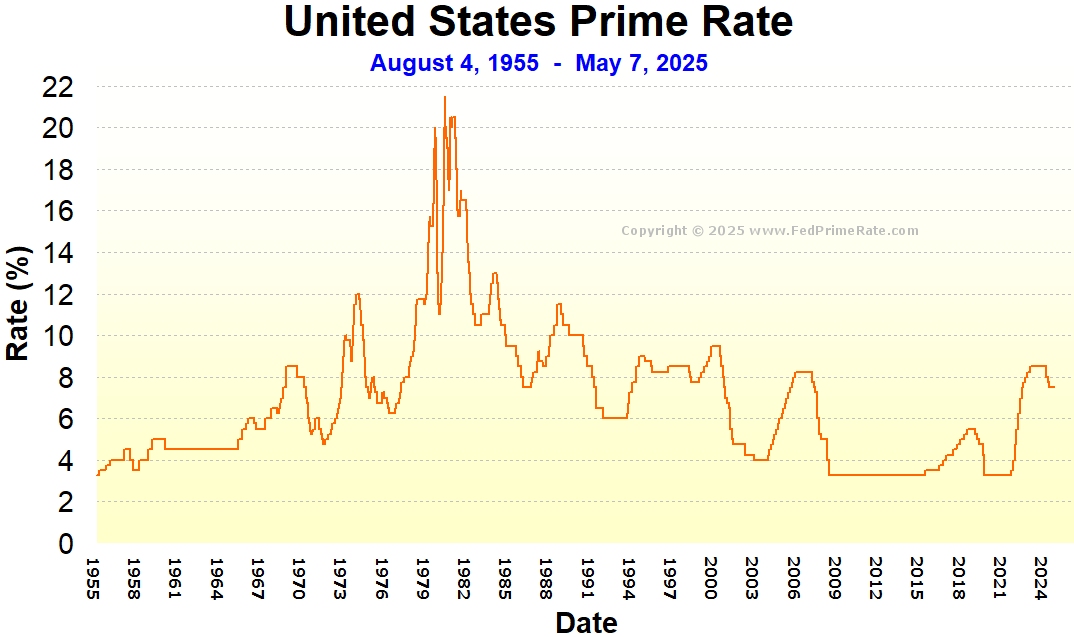
To understand the current prime rate, one must look back at the unprecedented shifts of the last few years. Following the 2008 financial crisis and again during the 2020 pandemic, the prime rate reached historic lows, often hovering around 3.25%. However, the aggressive rate hikes initiated in 2022 to combat inflation pushed the prime rate to levels not seen in over fifteen years. This rapid ascent has forced a re-evaluation of debt management strategies across all sectors of the economy.
Strategies for Borrowing in a High-Rate Environment
When the prime rate is high, the priority shifts from leveraging debt to preserving cash and reducing liabilities. For individuals, this might mean:
- Refinancing: Locking in a fixed rate on variable debt if further hikes are expected.
- Debt Snowball/Avalanche: Focusing aggressively on paying off variable-rate credit cards.
- High-Yield Savings: Taking advantage of the fact that high lending rates often correspond with higher yields on savings accounts and CDs.
For businesses, the strategy might involve:
- Lean Operations: Delaying major capital expenditures until the rate environment stabilizes.
- Equity over Debt: Looking toward investors or internal cash reserves rather than bank loans for expansion.

What to Watch: Indicators of Future Rate Changes
The prime rate does not move in a vacuum. To stay ahead of the next shift, one must watch the Federal Reserve’s signals. Key indicators include:
- Consumer Price Index (CPI): If inflation remains high, the Fed is likely to keep the prime rate elevated or raise it further.
- Employment Data: A cooling labor market might signal the Fed to lower rates to stimulate growth.
- FOMC Minutes: The detailed records of the Federal Reserve’s meetings provide clues about the “hawkish” or “dovish” leanings of policy makers.
By staying informed about the current prime lending rate and the economic factors that drive it, you can make more strategic decisions about your debt, your investments, and your overall financial future. Whether you are a homeowner, a student, or a CEO, the prime rate is a fundamental metric that demands your attention.
aViewFromTheCave is a participant in the Amazon Services LLC Associates Program, an affiliate advertising program designed to provide a means for sites to earn advertising fees by advertising and linking to Amazon.com. Amazon, the Amazon logo, AmazonSupply, and the AmazonSupply logo are trademarks of Amazon.com, Inc. or its affiliates. As an Amazon Associate we earn affiliate commissions from qualifying purchases.