
In the traditional sense, “creepy” often evokes images of shadows, folklore, or the supernatural. However, as we move deeper into the 21st century, the definition of what is truly unsettling has migrated from the forest to the server farm. When we ask what the creepiest thing in the world is today, the answer is rarely a ghost; it is the increasingly blurred line between human consciousness and machine intelligence.
The most profound sense of unease—the kind that lingers long after the screen goes dark—comes from technology that knows us better than we know ourselves, replicates our likeness without our consent, and predicts our future actions with mathematical certainty. From the Uncanny Valley to the pervasive reach of surveillance capitalism, the modern landscape of technology has birthed a new genre of existential dread.
The Uncanny Valley and the Rise of Sentient-Adjacent AI
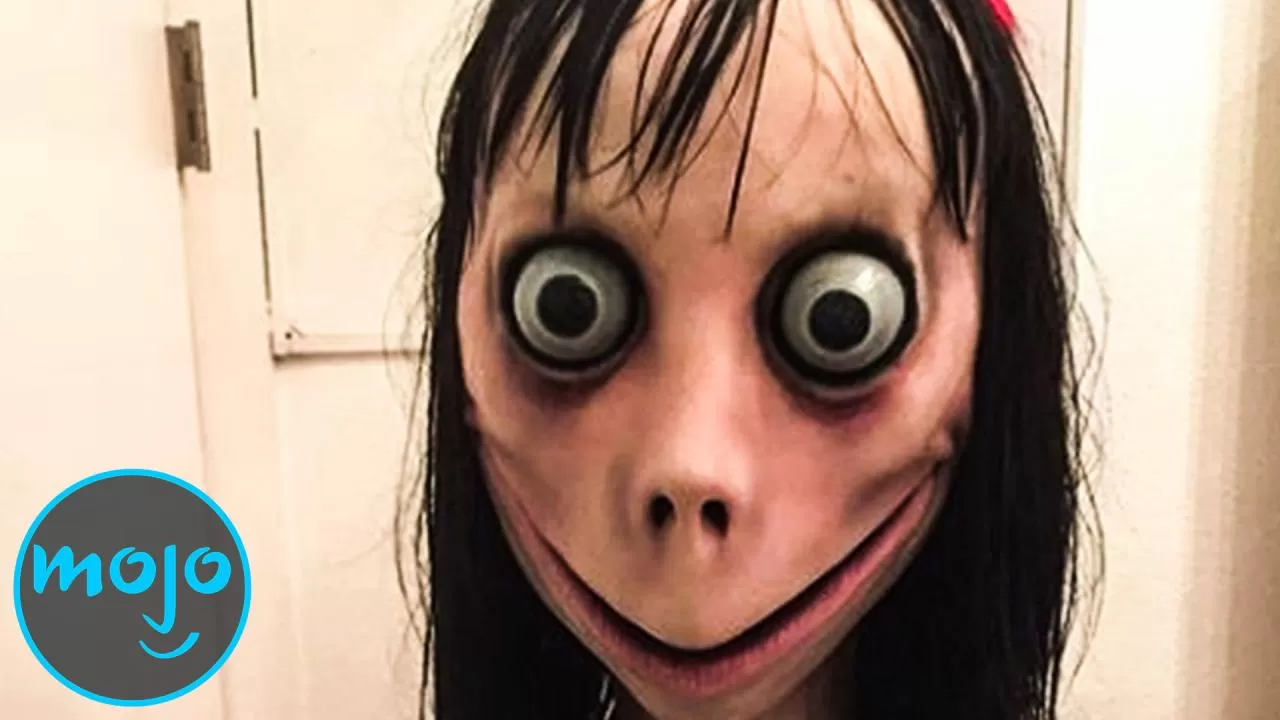
The term “Uncanny Valley” was coined by roboticist Masahiro Mori in 1970 to describe the dip in human affinity for robots that look almost, but not quite, human. This psychological phenomenon is perhaps the foundational “creepy” element of modern tech. As artificial intelligence advances, we are no longer just dealing with stiff robotic limbs; we are interacting with Large Language Models (LLMs) and hyper-realistic avatars that mimic human empathy and cognition.
Digital Replicants and the Erosion of Identity
We have entered an era where digital avatars can be rendered with such fidelity that they are indistinguishable from real people in video formats. These “digital replicants” are being used in everything from customer service to influencer marketing. The creepiness lies in the lack of an “original.” When an AI can replicate the micro-expressions, vocal inflections, and conversational quirks of a human being, the concept of a unique personal identity begins to erode. We are forced to wonder: if the imitation is perfect, does the distinction between the human and the code even matter?
LLMs and the Illusion of Consciousness
Modern AI tools like GPT-4 or Claude do not “think” in the biological sense, yet they are masters of probabilistic mimicry. The sensation of talking to something that seems to have a soul—but is actually just a complex series of weight adjustments and mathematical tokens—is inherently unsettling. This is often referred to as the “stochastic parrot” problem. The creepiness stems from our biological hardwiring to seek connection; we are evolutionarily primed to believe we are speaking to a sentient being, even when we know we are looking at a mirror of human data.
The Panopticon: Surveillance Capitalism and Predictive Privacy
If the Uncanny Valley represents the creepiness of the individual machine, then surveillance capitalism represents the creepiness of the system. The most invasive technology is the kind we cannot see, yet which records every heartbeat, location, and preference.
The Silent Observation of IoT Devices
Our homes are now populated with “smart” devices: speakers, doorbells, refrigerators, and even lightbulbs. While these offer convenience, they represent a massive, decentralized surveillance network. These devices are constantly “listening” for wake words, but the metadata they collect—when you wake up, how often you cook, who enters your home—creates a high-resolution map of your private life. The creepiest aspect is the normalization of this intrusion. We have invited the “all-seeing eye” into our bedrooms, often paying a premium for the privilege.
Predictive Algorithms and the End of Free Will
Perhaps the most disturbing development in the tech world is the shift from descriptive analytics (what happened) to predictive analytics (what will happen). Companies now use vast datasets to predict consumer behavior, often before the consumer has made a conscious decision. Whether it is an algorithm suggesting a purchase that perfectly matches an unstated desire or a social media feed manipulating emotional states to increase engagement, the sensation of being “steered” by an invisible hand is profoundly creepy. It suggests that our “free will” may simply be a series of predictable responses to curated stimuli.
Deepfakes and the Death of Objective Truth

For centuries, “seeing was believing.” In the digital age, that maxim has been utterly dismantled. Deepfakes—synthetic media in which a person in an existing image or video is replaced with someone else’s likeness—represent a tectonic shift in our relationship with reality.
Generative Adversarial Networks (GANs) and Visual Deception
Deepfakes are powered by Generative Adversarial Networks (GANs), where two AI systems work against each other: one to create the fake, and one to detect it. Over millions of iterations, the “creator” becomes so skilled that it can bypass even expert scrutiny. This technology has been weaponized for misinformation, non-consensual imagery, and corporate fraud. The creepiness here is existential; it creates a “reality apathy” where the public can no longer trust their own senses. When any video can be faked, the truth becomes a matter of whichever narrative has the most computing power behind it.
Voice Cloning and Social Engineering
Equally unsettling is the rise of AI voice cloning. With only a few seconds of audio—scraped from a social media post or a public speech—an AI can perfectly replicate a person’s voice, including their specific cadence and emotional tone. This has led to a new wave of “creepy” scams where individuals receive calls from what sounds like a distressed family member asking for money. The violation of the “voice”—one of our most intimate human identifiers—is a violation of the self.
Post-Mortem Digital Presence: The “Ghost Bots”
One of the frontier areas of tech-driven unease is “Grief Tech.” This involves using a deceased person’s digital footprint—emails, texts, social media posts—to create a chatbot or avatar that “lives on” after their death.
Grief Tech and the Ethics of Resurrecting the Dead
While some find comfort in these tools, many find them deeply macabre. The idea of “resurrecting” a loved one as a software script creates a digital haunting. These “Ghost Bots” simulate a personality without the underlying humanity, leading to a perpetual state of mourning. The creepiness arises from the commercialization of death; companies are essentially offering a subscription to a simulation of a deceased relative, creating a feedback loop where the living can never truly let go.
Eternal Digital Assets
Beyond chatbots, we are seeing the rise of digital legacies where an individual’s social media profiles are managed by AI after they pass. These accounts continue to post, interact, and “engage” as if the person were still alive. This creates a digital world increasingly populated by the “undead,” where the living interact with the automated echoes of those who are gone. As more people pass away, the internet is slowly becoming a digital graveyard that refuses to stay silent.
The Future of Neural Interfacing and Mind-Reading Tech
The final frontier of what is considered “creepy” in tech is the breach of the ultimate private sanctuary: the human mind. Brain-Computer Interfaces (BCIs), such as those being developed by Neuralink and other startups, aim to connect our neurons directly to the cloud.
The Breakdown of the Final Privacy Barrier
While BCIs hold incredible promise for medical recovery and accessibility, the implications for privacy are staggering. Currently, we can choose what we type, say, or record. Once a device is reading neural signals, the distinction between a thought and an action disappears. The idea of a corporation or a government having access to the “raw data” of human thought is arguably the creepiest prospect in the history of technology. It represents the total colonization of the human experience by the digital machine.

The Singularity and the Loss of Human Essence
As we integrate more deeply with AI, the question of where the “human” ends and the “tech” begins becomes impossible to answer. Some futurists look forward to this merger, but for many, it represents the ultimate horror: the loss of the biological self. The “creepiest thing in the world” is not a specific gadget or a specific piece of software; it is the realization that we are rapidly building a world where the human soul is just another data point to be optimized, harvested, and replicated.
In conclusion, the modern sense of “creepy” is no longer about the unknown—it is about being too well known by systems that do not have a heartbeat. It is the cold, calculated efficiency of an algorithm that understands our fears, simulates our voices, and predicts our futures, all while remaining a silent, unfeeling observer in our pockets and in our homes. In the tech world, the monster isn’t under the bed; it’s the bed itself, measuring your REM cycles and selling the data to the highest bidder.
aViewFromTheCave is a participant in the Amazon Services LLC Associates Program, an affiliate advertising program designed to provide a means for sites to earn advertising fees by advertising and linking to Amazon.com. Amazon, the Amazon logo, AmazonSupply, and the AmazonSupply logo are trademarks of Amazon.com, Inc. or its affiliates. As an Amazon Associate we earn affiliate commissions from qualifying purchases.