
The seemingly simple question, “what is the cost of Tesla stock?”, opens a gateway into the complex, dynamic world of financial markets and investment valuation. On the surface, the “cost” of Tesla (TSLA) stock is merely its current trading price per share at any given moment. However, for a discerning investor, this superficial number represents just one facet of a much broader financial landscape. Understanding the true “cost” involves delving into market mechanics, the fundamental and speculative drivers behind Tesla’s valuation, the practicalities of trading, and the inherent risks and opportunities associated with owning a piece of one of the world’s most talked-about companies.
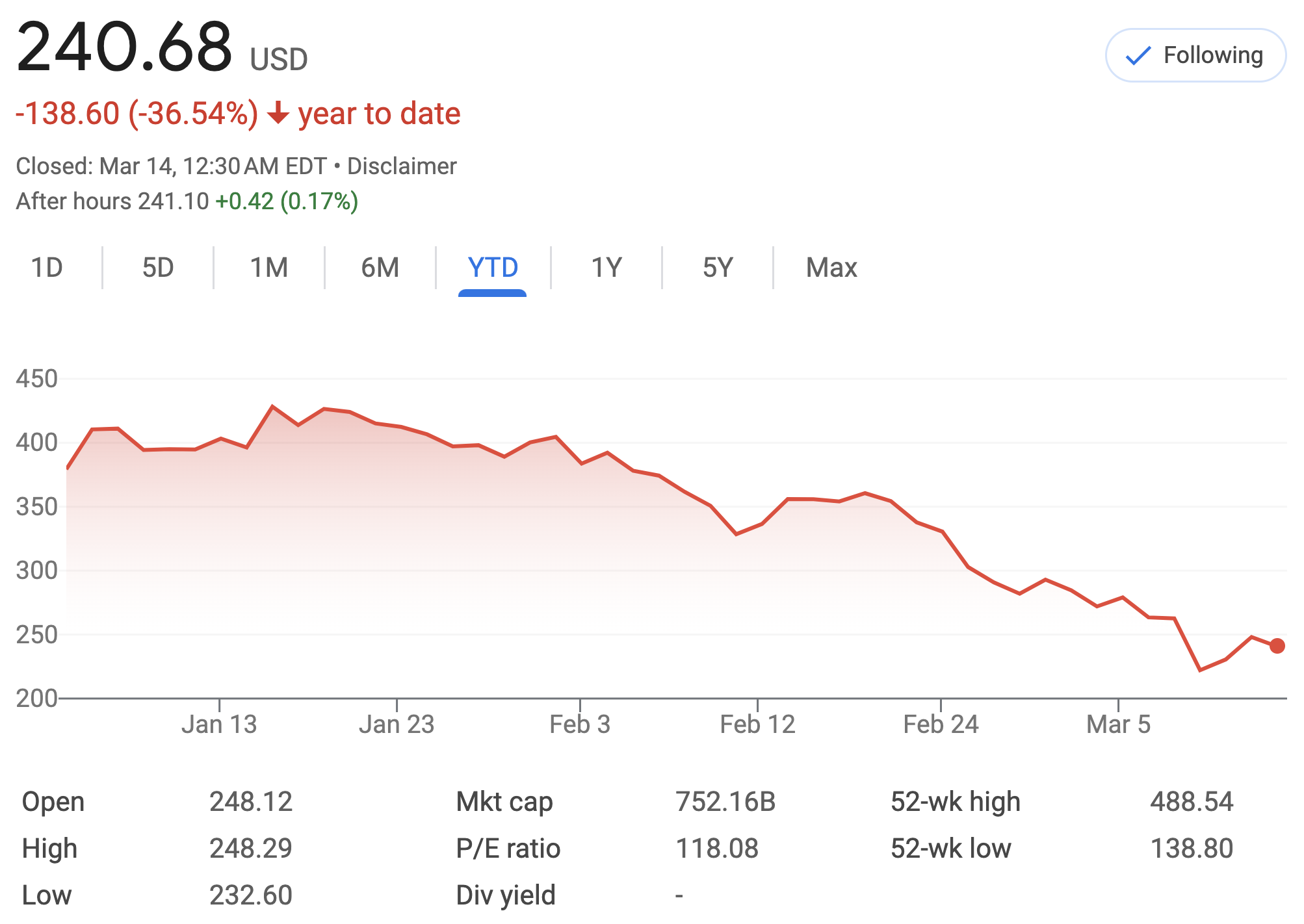
Tesla, Inc. (TSLA) is more than just an automotive manufacturer; it’s a pioneering force in electric vehicles, battery technology, solar energy, and artificial intelligence. This multifaceted identity contributes to its unique position in the stock market, often leading to valuations that challenge conventional metrics and spark passionate debate among analysts and investors alike. To truly grasp the cost of TSLA, one must look beyond the immediate price tag and consider the intricate web of factors that dictate its worth in the eyes of the market. This article will dissect these components, providing a comprehensive understanding of what it means to invest in Tesla stock from a financial perspective.
Beyond the Ticker Price: Understanding “Cost” in Investing
The concept of “cost” in investing extends far beyond the nominal price displayed on a stock exchange. While the per-share price is the entry point, a holistic understanding requires considering additional practical, financial, and strategic elements.
The Current Market Price: A Snapshot in Time
The most immediate answer to “what is the cost of Tesla stock?” is its real-time trading price on a stock exchange, such as the NASDAQ. This price fluctuates continuously throughout the trading day, reflecting the instantaneous balance of supply and demand. If more investors are willing to buy than sell at a given price, the price typically rises; conversely, if selling pressure outweighs buying interest, the price falls. This price is easily accessible through financial news websites, brokerage platforms, or stock market apps. However, it’s crucial to remember that this figure is merely a snapshot, subject to change in milliseconds, and doesn’t inherently convey the underlying value or future potential of the company. It is the cost of entry at that precise moment.
Transaction Costs and Their Impact
When an investor decides to purchase Tesla stock, the cost isn’t limited to the share price itself. Transaction costs, while often small, can add up, especially for frequent traders or those dealing with smaller sums. These typically include:
- Commissions: While many online brokers now offer commission-free trading for stocks and ETFs, some may still charge a small fee per trade or per share, particularly for certain account types or international exchanges.
- Spreads: The bid-ask spread is the difference between the highest price a buyer is willing to pay (bid) and the lowest price a seller is willing to accept (ask). While not a direct fee, executing a market order often means buying at the ask price and selling at the bid price, effectively costing slightly more or yielding slightly less than the mid-point.
- Regulatory Fees: Minor fees imposed by regulatory bodies like the SEC (Securities and Exchange Commission) are typically passed on to investors, though these are usually negligible for individual trades.
- Taxes: Capital gains taxes on profits realized from selling stock are a significant “cost” to consider, albeit one that only applies when an investment is successful and realized. The tax rate depends on the holding period (short-term vs. long-term) and the investor’s income bracket.
These costs, though seemingly minor individually, can impact the overall return on investment, particularly for short-term traders or those with small capital bases where percentages matter more.
Opportunity Cost: The Hidden Element
Perhaps the most overlooked “cost” in investing is opportunity cost. When an investor chooses to allocate capital to Tesla stock, they are simultaneously foregoing the potential returns from alternative investments. This could be investing in a different company, a bond, real estate, a mutual fund, or simply holding cash in a high-yield savings account. If Tesla underperforms these alternatives, the investor incurs an opportunity cost – the value of the foregone potential gain. Assessing opportunity cost requires a clear understanding of an investor’s goals, risk tolerance, and alternative investment options, making it a crucial, albeit intangible, component of the overall investment “cost.”
Decoding Tesla’s Stock Price (TSLA)
Tesla’s stock price, often characterized by its significant volatility, is a product of myriad forces, both internal to the company and external to the market. Understanding these drivers is essential for any investor considering TSLA.
The Dynamics of Supply and Demand
At its most fundamental level, the price of TSLA, like any tradable asset, is determined by the interplay of supply and demand. When there are more buyers than sellers, demand outstrips supply, pushing the price up. Conversely, when more investors wish to sell than buy, supply exceeds demand, driving the price down. This dynamic is influenced by a continuous flow of news, analyst reports, economic data, and investor sentiment. High demand for TSLA often stems from strong company performance, positive future outlooks, or even speculative buying, while increased supply might come from profit-taking, negative news, or broader market downturns.
Tesla’s Business Fundamentals and Innovation
Beneath the speculative waves, Tesla’s core business fundamentals provide the bedrock for its valuation. These include:
- Revenue Growth: Tesla’s ability to significantly increase sales of its vehicles, energy storage solutions, and other products.
- Profitability: Measured by metrics like net income, earnings per share (EPS), and operating margins. Sustained profitability signals a healthy and efficient business.
- Production and Deliveries: The number of vehicles produced and delivered serves as a crucial metric for operational efficiency and market penetration.
- Technological Leadership: Tesla’s continuous innovation in battery technology, autonomous driving (Full Self-Driving), manufacturing processes, and AI keeps it at the forefront of the industry.
- Market Share: Its dominance in the EV market and expansion into new geographical regions.
- Energy Business: The growth and profitability of its solar and energy storage divisions.
Strong performance in these areas tends to build investor confidence and support higher valuations, reflecting a robust and growing enterprise.
Market Sentiment and Investor Perception
Tesla is arguably one of the most sentiment-driven stocks in the market. Investor perception, sometimes fueled by speculative enthusiasm or fear, can significantly impact its stock price, often decoupling it from traditional fundamental valuations in the short term. Positive sentiment can lead to rapid price appreciation as investors flock to what they perceive as a groundbreaking, category-defining company. Negative sentiment, conversely, can trigger sharp declines, amplified by short-sellers and bearish news. This makes TSLA a stock where understanding the prevailing market mood and narrative is almost as important as understanding its balance sheet.
The “Elon Musk Factor” and Volatility
No discussion of Tesla’s stock is complete without acknowledging the profound impact of its CEO, Elon Musk. His visionary leadership, ambitious goals, and often unconventional public statements frequently move the stock price. Musk’s announcements, whether about new products, production milestones, or even his personal opinions on social media, can create significant swings in investor confidence and market sentiment. This “Musk premium” or “Musk discount” contributes to TSLA’s inherent volatility, making it both appealing to high-risk, high-reward investors and a source of apprehension for those seeking stability. His influence means that investing in Tesla also involves an implicit investment in Musk’s leadership and public persona.
Key Valuation Metrics for TSLA
To determine if the “cost” of Tesla stock is justified, investors employ various valuation metrics that provide different lenses through which to assess the company’s financial health and future potential.

Market Capitalization: Tesla’s Overall Value
Market capitalization (market cap) is one of the simplest yet most significant valuation metrics. It’s calculated by multiplying the current share price by the total number of outstanding shares. This figure represents the total market value of the company and is often used to categorize companies (e.g., large-cap, mid-cap). Tesla’s market cap has frequently placed it among the largest companies globally, signifying the market’s belief in its substantial future earnings and industry dominance. A high market cap, especially relative to earnings, can indicate that the market has high expectations for the company’s future growth.
Price-to-Earnings (P/E) Ratio: Growth vs. Value
The Price-to-Earnings (P/E) ratio is a widely used metric that compares a company’s current share price to its earnings per share (EPS). A high P/E ratio, which Tesla has historically exhibited, suggests that investors are willing to pay a premium for each dollar of earnings, typically because they anticipate strong future growth. Conversely, a low P/E might indicate a “value” stock or a company with slower growth prospects. For Tesla, its P/E ratio often reflects its status as a growth stock, with investors valuing its disruptive potential more than its current profitability levels compared to more mature industries. Understanding its P/E in context – comparing it to industry averages or historical norms for growth stocks – is crucial.
Other Ratios: PEG, P/S, and DCF
Beyond P/E, other metrics offer additional insights:
- Price-to-Earnings Growth (PEG) Ratio: This ratio refines the P/E by factoring in the company’s expected earnings growth rate. A PEG ratio of 1 or less is often considered attractive, suggesting a reasonable price for the expected growth. Tesla’s PEG can fluctuate wildly due to its rapid growth and volatile earnings.
- Price-to-Sales (P/S) Ratio: This compares the share price to revenue per share. It’s particularly useful for companies that are rapidly growing but not yet consistently profitable, as it focuses on sales generation rather than earnings.
- Discounted Cash Flow (DCF) Analysis: This more complex valuation method estimates a company’s intrinsic value based on its projected future cash flows, discounted back to their present value. DCF analysis attempts to provide a more fundamental, less market-sentiment-driven valuation, though it relies heavily on assumptions about future performance.
Each metric provides a piece of the puzzle, and a comprehensive understanding of TSLA’s “cost” involves considering a blend of these financial tools.
Factors Driving Tesla Stock Fluctuations
Tesla’s stock is renowned for its volatility, with its price often moving dramatically in response to a range of internal and external factors. Understanding these drivers is key to comprehending the dynamic nature of its “cost.”
Production and Delivery Numbers
Quarterly production and delivery reports are among the most eagerly awaited announcements for Tesla investors. These numbers directly reflect the company’s operational execution and its ability to scale manufacturing. Missing or exceeding production targets can lead to significant swings in the stock price, as these figures are seen as direct indicators of demand and the company’s capacity to meet it. Any perceived slowdown or acceleration in these numbers can quickly reshape investor expectations regarding future revenue and profitability.
Regulatory Changes and Competition
The automotive and energy sectors are heavily regulated, and changes in government policies, subsidies for EVs, environmental regulations, or safety standards can have a profound impact on Tesla’s business model and, consequently, its stock price. Furthermore, the burgeoning competition in the EV space from traditional automakers and other startups poses a constant challenge. New EV models, pricing strategies, or technological advancements from rivals can influence Tesla’s market share and investor sentiment, putting pressure on its valuation.
Macroeconomic Conditions and Interest Rates
Broader macroeconomic conditions play a significant role in determining the overall market’s appetite for growth stocks like Tesla. Factors such as interest rates, inflation, GDP growth, and consumer spending power can influence investor confidence and capital availability. Higher interest rates, for instance, can make future earnings less attractive when discounted, potentially leading to a re-evaluation of high-growth, high-P/E stocks. Economic recessions or downturns can also reduce consumer demand for discretionary purchases like new vehicles, impacting Tesla’s sales.
Technological Advancements and Disruptions
As a technology-driven company, Tesla’s stock is highly sensitive to its pace of innovation. Breakthroughs in battery technology, advancements in autonomous driving capabilities, the successful deployment of new AI models, or the introduction of revolutionary manufacturing processes (like gigafactories) can propel the stock higher. Conversely, delays in development, technological setbacks, or intense competition in these areas can dampen investor enthusiasm and negatively affect the “cost” perception. The potential for disruption, both by and to Tesla, is a constant factor in its valuation.
Investing in TSLA: Considerations for the Prudent Investor
Given the multifaceted nature of Tesla’s “cost” and its inherent volatility, prudent investors must approach TSLA with a well-thought-out strategy.
Assessing Risk vs. Reward
Investing in Tesla carries a significant risk profile, commensurate with its potential for high rewards. Its growth trajectory is exciting, but also subject to market speculation, intense competition, regulatory hurdles, and execution risks. Investors must honestly assess their own risk tolerance before allocating capital to TSLA. High growth stocks are often more susceptible to market downturns than stable, dividend-paying companies. A clear understanding of potential downside scenarios, alongside optimistic upside potential, is crucial.
Diversification and Portfolio Strategy
Even for investors bullish on Tesla, diversification remains a cornerstone of sound investment strategy. Concentrating too much capital in a single, volatile stock like TSLA can expose a portfolio to undue risk. Spreading investments across different asset classes, industries, and geographies helps mitigate the impact of any single investment’s underperformance. For many, TSLA might represent a growth component within a broader, more balanced portfolio, rather than the entirety of their holdings.

Long-Term Vision vs. Short-Term Speculation
The “cost” of Tesla stock can be perceived very differently depending on an investor’s time horizon. Short-term traders might focus on daily price movements, technical analysis, and quick profits, embracing the stock’s volatility. Long-term investors, however, typically focus on Tesla’s fundamental business trajectory, its innovation pipeline, and its potential to dominate future markets over several years or even decades. They view short-term price fluctuations as noise and are less concerned with the precise “cost” on any given day, instead focusing on the company’s intrinsic value growth over time. Determining one’s investment horizon is a critical first step in defining how one interprets and acts upon the “cost” of TSLA.
In conclusion, “what is the cost of Tesla stock?” is a question that delves deep into the world of finance and investing. It’s not just about a numerical price; it’s about understanding market dynamics, valuing innovation, assessing business fundamentals, navigating speculative sentiment, and ultimately aligning an investment with one’s personal financial goals and risk appetite. For those willing to do their homework, Tesla stock offers a compelling, albeit complex, opportunity within the modern investment landscape.
aViewFromTheCave is a participant in the Amazon Services LLC Associates Program, an affiliate advertising program designed to provide a means for sites to earn advertising fees by advertising and linking to Amazon.com. Amazon, the Amazon logo, AmazonSupply, and the AmazonSupply logo are trademarks of Amazon.com, Inc. or its affiliates. As an Amazon Associate we earn affiliate commissions from qualifying purchases.