
When we discuss “cost” in the context of cosmetic procedures like laser hair removal, the conversation often begins and ends with the price tag of a single session. However, from a personal finance and investment perspective, the cost of laser hair removal is a complex equation involving upfront capital, long-term savings, opportunity costs, and the economic principle of “Total Cost of Ownership” (TCO).
In this guide, we will treat laser hair removal not as a luxury expense, but as a strategic financial decision. By analyzing the market variables, comparative spending habits, and financing structures, we can determine the true ROI (Return on Investment) of moving away from traditional grooming methods.
1. Breaking Down the Initial Investment
The headline price of laser hair removal is rarely a fixed number. It is a variable cost dictated by biological, geographical, and technological factors. To budget effectively, one must understand the three primary drivers of the initial quote.
Variables Affecting Upfront Pricing
The size of the treatment area is the most significant factor in determining the price. In the industry, areas are usually categorized into “Small,” “Medium,” and “Large.”
- Small Areas: (Upper lip, chin, underarms) typically range from $75 to $150 per session.
- Medium Areas: (Bikini line, face, neck) often fall between $200 and $400.
- Large Areas: (Full legs, back, chest) can command prices from $500 to $800 per session.
Because laser hair removal requires a series of treatments—usually 6 to 10 sessions spaced several weeks apart—the total commitment for a large area can represent a significant four-figure capital outlay.
Regional Market Fluctuations
Just as real estate prices vary by ZIP code, so does the cost of laser treatments. In high-cost-of-living (HCOL) areas like New York City, London, or San Francisco, overhead costs for clinics are higher, which is passed on to the consumer. Conversely, in saturated markets where many clinics compete for the same clientele, you may find “price wars” and more aggressive promotional offers. However, from a financial risk perspective, choosing the lowest bidder can sometimes result in poor outcomes, leading to the “Buy Cheap, Buy Twice” trap.
The Hidden Costs of Treatment Packages
Most reputable clinics offer package pricing, which provides a volume discount. Paying for six sessions upfront might cost $1,200, whereas paying per session might total $1,800. While the package requires more liquidity upfront, the 33% discount represents a superior “yield” on your cash compared to leaving it in a standard savings account. One must also account for “maintenance sessions,” which are typically required once or twice a year after the initial series is complete.
2. Comparative Analysis: Laser vs. Traditional Grooming Methods
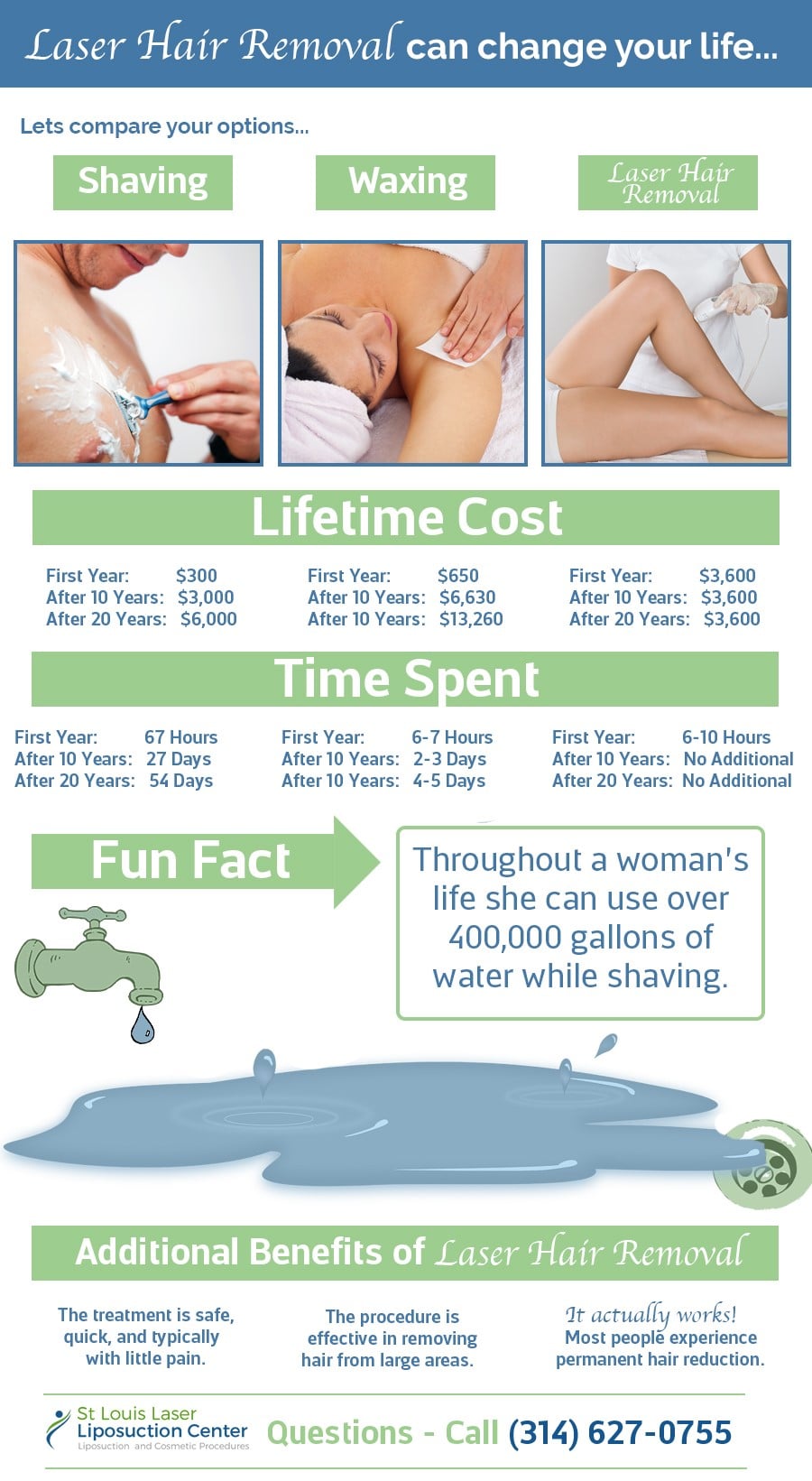
To justify the high entry cost of laser hair removal, one must perform a comparative analysis against the “sunk costs” of shaving and waxing. This is where the long-term financial benefits become apparent.
The Sunk Costs of Shaving and Waxing
Shaving is often perceived as the “budget” option, but it is a recurring expense that never ends. A high-quality razor, replacement blades, and shaving cream can easily cost an individual $15 to $25 per month. Over 20 years, this totals $3,600 to $6,000—inflation not included.
Waxing is even more financially draining. A monthly leg and bikini wax can cost between $70 and $120. Over 20 years, an individual could spend upwards of $24,000 on waxing services. Unlike laser hair removal, which targets the follicle to provide semi-permanent results, waxing is a temporary service that provides no long-term equity in the form of reduced future spending.
Calculating the Break-Even Point
The “Break-Even Point” is the moment when the cumulative cost of your laser treatment becomes less than the cumulative cost of your previous grooming method.
- Laser vs. Shaving: If a laser package costs $2,000 and you previously spent $20/month on shaving, the break-even point is approximately 8 years.
- Laser vs. Waxing: If a laser package costs $2,000 and you previously spent $100/month on waxing, the break-even point is reached in just 20 months.

After the break-even point, every month of hairlessness is essentially “profit” added back to your discretionary income.
Time as a Financial Asset
In personal finance, time is money. If the average person spends 10 minutes shaving three times a week, that equals 26 hours per year. Over a 30-year period, that is 780 hours, or roughly 32 full days spent on hair removal. For a high-earning professional, the “opportunity cost” of those hours—time that could be spent on billable work, side hustles, or even restorative rest—is substantial. Laser hair removal buys back this time.
3. Strategic Budgeting and Financing for Cosmetic Procedures
Given that laser hair removal is a significant investment, how should one navigate the cash flow requirements? Treating it as a capital expenditure rather than a monthly bill allows for more sophisticated financial planning.
Medical Credit Cards and Installment Plans
Many clinics partner with specialized financial services like CareCredit or offer “Buy Now, Pay Later” (BNPL) options via providers like Affirm or Klarna. These can be useful for spreading the cost over 6 to 12 months. However, the savvy investor must be wary of interest rates. If the interest rate on the financing exceeds the discount gained from buying a package, the financial benefit is eroded. Always look for 0% APR introductory offers.
HSA and FSA Eligibility Nuances
Generally, the IRS considers laser hair removal a “cosmetic” procedure, meaning it is not usually eligible for reimbursement through a Health Savings Account (HSA) or Flexible Spending Account (FSA). However, there are exceptions. If the hair removal is medically necessary—for example, to treat severe hidradenitis suppurativa or polycystic ovary syndrome (PCOS) related hirsutism—a Letter of Medical Necessity (LMN) from a doctor may allow you to use pre-tax dollars. Using an HSA/FSA can effectively provide a 20–30% discount depending on your tax bracket.
Maximizing ROI Through Membership Programs
Some national chains have moved toward a membership model, similar to a gym. For a monthly fee, members can treat multiple areas. From a budgeting perspective, this provides “fixed-cost” predictability. However, one must ensure they are utilizing the service enough to justify the annual cost. If the goal is a one-time clearance, a membership may be less cost-effective than a targeted package.
4. The Business Side: Why the Technology Dictates the Price
Understanding why the service costs what it does can help consumers avoid “lemon” investments. The price reflects the underlying business economics of the medical aesthetics industry.
Capital Expenditures for Modern Clinics
A medical-grade laser (such as a Candela GentleMax Pro or a Lumenis Lightsheer) can cost a clinic anywhere from $80,000 to $150,000. These machines also require expensive annual maintenance contracts and consumable parts (like cryogen canisters or disposable tips). When you pay for a session, you are partially subsidizing the clinic’s “CapEx” (Capital Expenditure) and their ongoing technological upgrades.
Overhead, Insurance, and Skilled Labor Costs
Unlike a standard beauty salon, a laser clinic often requires a medical director (an MD or NP) to oversee operations, increasing the insurance premiums for professional liability. Furthermore, the “yield” of the treatment depends on the skill of the technician. A highly trained technician can achieve results in 6 sessions that an amateur might take 12 sessions to reach. In this context, paying a higher price for an experienced provider is a form of “risk mitigation” that protects your investment from being wasted on ineffective treatments.
The Economic Value of “Permanence”
In economic terms, laser hair removal is the transition from a “consumable good” (razors/wax) to a “durable asset” (permanent hair reduction). While the term “permanent” is legally regulated—the FDA allows the term “permanent hair reduction” rather than “removal”—the long-term reduction in follicle activity represents a permanent decrease in your personal maintenance liability.
Conclusion: Is Laser Hair Removal a Sound Financial Move?
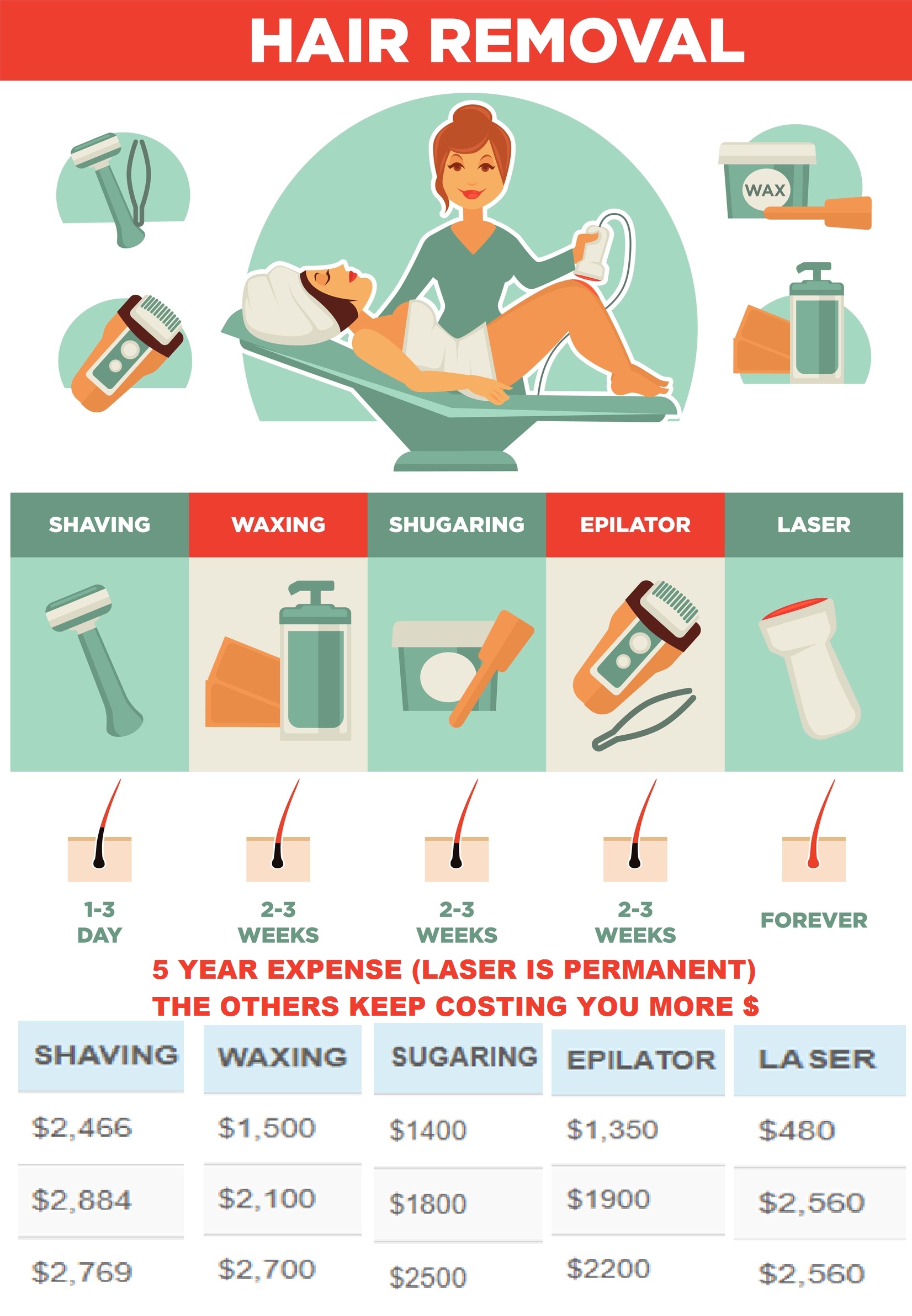
From a purely monetary standpoint, laser hair removal is a classic “Front-End Load” investment. It requires a high initial payment to eliminate a perpetual recurring cost. For individuals currently spending significantly on waxing or professional grooming, the ROI is high, with break-even points often occurring in less than two years.
For those who rely on low-cost shaving, the decision is less about immediate cash savings and more about the “valuation of time” and “quality of life.” When viewed through the lens of a 20-year financial plan, the efficiency and cost-certainty of laser hair removal make it one of the few cosmetic procedures that can actually pay for itself over time. As with any investment, the key is to perform due diligence, understand the financing terms, and choose a provider that offers the best balance of price and efficacy.
aViewFromTheCave is a participant in the Amazon Services LLC Associates Program, an affiliate advertising program designed to provide a means for sites to earn advertising fees by advertising and linking to Amazon.com. Amazon, the Amazon logo, AmazonSupply, and the AmazonSupply logo are trademarks of Amazon.com, Inc. or its affiliates. As an Amazon Associate we earn affiliate commissions from qualifying purchases.