
In the rapidly evolving landscape of technology, particularly within the domains of Artificial Intelligence (AI) and Natural Language Processing (NLP), the bridge between human linguistics and machine understanding has become a primary frontier. One of the most nuanced challenges in this field is the “consonant cluster.” While a linguist might define it simply as a group of consonants with no intervening vowel, for a software engineer or an AI researcher, a consonant cluster represents a complex data point that tests the limits of speech recognition, synthesis, and audio processing algorithms.
As we move toward a world dominated by Voice User Interfaces (VUI) and sophisticated digital assistants, understanding the technical mechanics of consonant clusters is no longer a niche academic pursuit. It is a fundamental requirement for building software that can accurately interpret and replicate human speech across diverse languages and dialects.
The Linguistic Blueprint of Modern Speech Technology
At its core, technology relies on the decomposition of human speech into manageable units. To understand how a machine processes a consonant cluster, we must first look at how these clusters function within the architecture of language and, subsequently, how that architecture is mirrored in code.
Defining the Consonant Cluster in a Digital Context
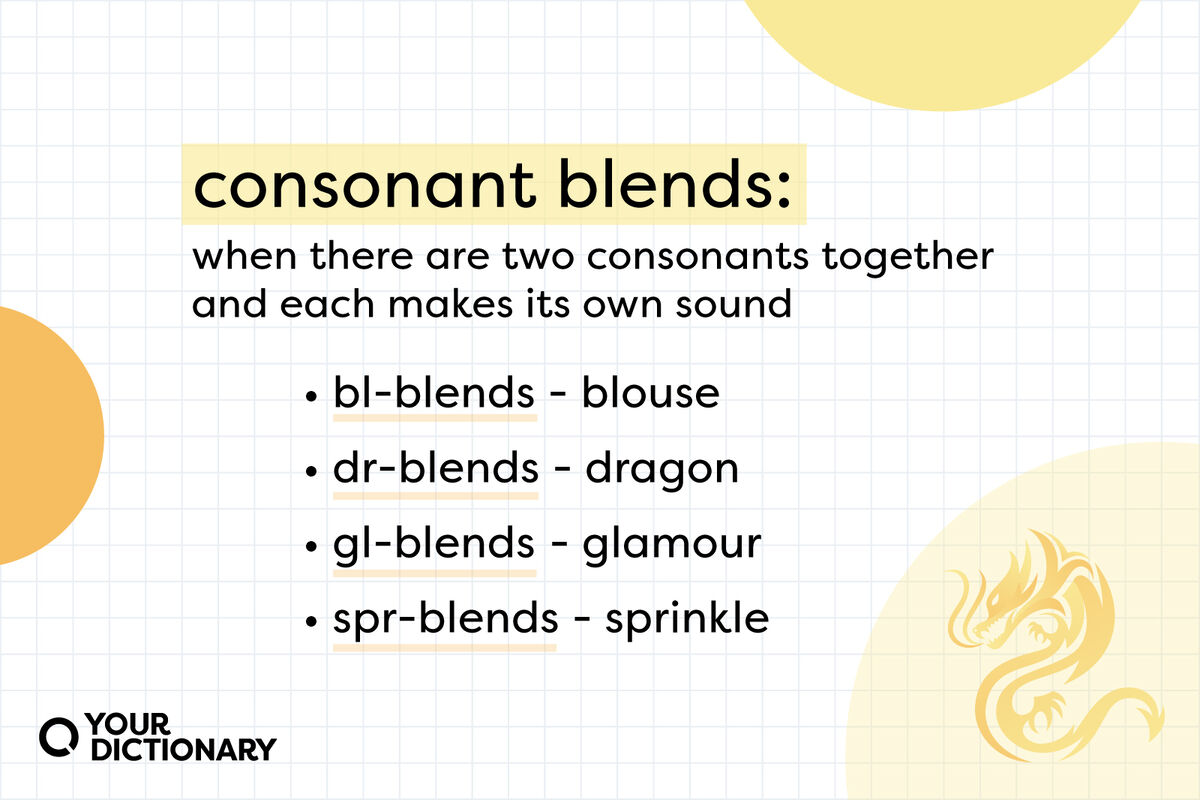
In English, words like “split,” “strong,” and “glimpsed” contain sequences of consonants that appear back-to-back. To a human ear, these sounds blend seamlessly. However, to a digital signal processor (DSP), these clusters represent high-frequency energy bursts and complex spectral shifts. When a developer builds an NLP model, they must account for the “phonotactics” of a language—the rules that govern which consonant clusters are permissible. For instance, while “str” is a common cluster in English, other combinations are phonetically impossible or rare, a fact that developers use to create predictive text and error-correction algorithms.
Why Consonant Density Matters for AI Recognition
The “density” of a consonant cluster significantly impacts the word error rate (WER) in speech-to-text engines. Vowels are generally voiced and carry high energy at lower frequencies, making them easy for sensors to detect. Consonants, particularly fricatives (like “s” or “f”) and stops (like “p” or “t”), are often quieter and shorter. When multiple consonants are clustered together, the machine must discern the subtle transition between these low-energy sounds. Failure to accurately map these clusters leads to “slurred” data interpretation, where the AI might confuse “trust” with “truss” or “thrust,” compromising the integrity of the user’s command.
Overcoming the “Cluster” Challenge in Speech-to-Text (STT) Engines
The development of modern Speech-to-Text (STT) technology has transitioned from simple pattern matching to deep learning architectures. Within these systems, the consonant cluster remains one of the most significant “noise” hurdles to clear.
The Complexity of Phoneme Alignment
In the tech stack of a voice-activated app, the input audio is broken down into phonemes—the smallest units of sound. Consonant clusters are particularly difficult because they require precise “phoneme alignment.” In a word like “twelfths,” the cluster of “l-f-th-s” creates a continuous stream of overlapping frequencies. Advanced STT engines use Hidden Markov Models (HMM) or, more recently, Connectionist Temporal Classification (CTC) to predict the sequence of these sounds. The challenge is ensuring the software doesn’t “skip” a consonant in the cluster, which would lead to a breakdown in the semantic understanding of the sentence.
Contextual Clues and Deep Learning Optimization
To solve the cluster problem, tech giants like Google and OpenAI have shifted toward Transformer-based models. These models don’t just look at the individual sounds; they look at the context. If the AI detects a cluster that sounds like “skr,” it scans the surrounding words to determine if the user said “screen” or “scream.” By using large language models (LLMs) to provide a “probabilistic overlay,” the software can compensate for the physical difficulty of recording clear consonant clusters in noisy environments, such as a user speaking to a smart speaker while a television is playing in the background.

Improving User Experience through Phonetic-Aware Design
The technical implementation of phonetic rules directly impacts User Experience (UX). As digital tools become more globalized, software developers must ensure that their applications are “phonetic-aware” to accommodate the varying consonant cluster structures found in different global languages.
Optimizing Voice UI for Diverse Accents
Not all languages handle consonant clusters the same way. For example, Japanese typically follows a Consonant-Vowel (CV) structure, making clusters rare, while Germanic languages are cluster-heavy. When a tech company rolls out a voice-controlled gadget globally, the software’s acoustic model must be trained on diverse datasets that include non-native speakers. A speaker whose first language does not use certain consonant clusters may “break” the cluster with an epenthetic vowel (e.g., pronouncing “blue” as “b-loo”). A high-quality AI tool must be programmed to recognize these variations as valid inputs rather than errors.
The Future of Phonetic SEO and Search Algorithms
In the realm of digital marketing and search technology, consonant clusters play a role in how we optimize for voice search. “Phonetic SEO” is an emerging field where tech professionals analyze how people pronounce difficult consonant clusters when talking to Siri or Alexa. Because users often simplify clusters when speaking quickly, search algorithms are being updated to include “phonetic aliases.” If a user asks for “Best Strength Training,” the cluster “str” and “ngth” must be perfectly captured. Tech-forward brands are now optimizing their metadata to include phonetic variations, ensuring their software remains discoverable regardless of the user’s articulatory precision.
Tools and Frameworks for Developing Phonetic-Ready Applications
For developers looking to build apps that handle human language with precision, several specialized tools and frameworks focus on the granular level of phonetics and consonant clustering.
Leveraging Open-Source Speech Libraries
Frameworks like Kaldi or Mozilla’s DeepSpeech provide the foundational architecture for dealing with complex phonetic structures. These tools allow developers to customize the “lexicon” of their application. By manually defining the phonetic breakdown of cluster-heavy technical jargon—common in medical or legal software—developers can significantly reduce the error rate of their tools. These libraries offer pre-trained models that have already ingested millions of hours of speech, providing a baseline for recognizing even the most aspirated or glottalized consonant clusters.
Implementing Neural Vocoders for Natural Sounding Text-to-Speech (TTS)
On the flip side of recognition is synthesis. Text-to-Speech (TTS) technology has moved beyond robotic monologues to natural, human-like cadence. The “uncanny valley” of voice AI often occurs when a machine fails to transition naturally between consonants in a cluster. To fix this, tech professionals use Neural Vocoders (like WaveNet or Tacotron). These AI systems generate raw audio waveforms one sample at a time. By focusing on the “co-articulation” of consonant clusters—how the tongue and lips move from one consonant to the next—these vocoders produce speech that sounds fluid rather than fragmented.

The Road Ahead: AI, Linguistics, and the Globalized Web
As we look toward the future of technology, the intersection of linguistics and software engineering will only deepen. The consonant cluster, once a simple term in a grammar textbook, has become a benchmark for the sophistication of our digital tools.
The next generation of AI will likely move beyond just recognizing clusters to understanding the emotional and social weight they carry. Sociolinguistics-aware AI could potentially detect a user’s geographic origin or emotional state based on how they emphasize or reduce specific consonant clusters. This level of “Digital Phonetic Intelligence” would allow for even more personalized and secure user experiences, such as voice-biometric security systems that can identify a user not just by their voice print, but by the unique way their vocal tract handles complex consonant sequences.
In conclusion, the “consonant cluster” is a vital concept for anyone working at the intersection of technology and language. By mastering the way software interprets, processes, and generates these linguistic structures, we can create more inclusive, efficient, and human-centric AI tools. Whether it is through the refinement of STT algorithms or the development of more natural TTS voices, the goal remains the same: to make the interaction between human and machine as seamless as a single, well-articulated word.
aViewFromTheCave is a participant in the Amazon Services LLC Associates Program, an affiliate advertising program designed to provide a means for sites to earn advertising fees by advertising and linking to Amazon.com. Amazon, the Amazon logo, AmazonSupply, and the AmazonSupply logo are trademarks of Amazon.com, Inc. or its affiliates. As an Amazon Associate we earn affiliate commissions from qualifying purchases.