
In the fast-evolving landscape of global commerce and technology, few corporate entities command as much attention and strategic intrigue as Alphabet Inc. Often referred to simply as “Alphabet,” this organization is far more than just a name; it represents a pioneering evolution in corporate structure and brand strategy. At its heart, Alphabet is the parent company that houses a diverse portfolio of ventures, most famously Google, but also a myriad of “Other Bets” pushing the boundaries of artificial intelligence, life sciences, autonomous driving, and more. Understanding “the company Alphabet” is not merely about identifying its subsidiaries; it’s about dissecting a masterclass in brand architecture, corporate identity, and the strategic decisions that redefine what a modern technology conglomerate can be. This article delves into Alphabet’s genesis, its unique corporate identity, and the profound implications of its branding strategy, offering invaluable insights for brand strategists and corporate leaders alike.

The Strategic Genesis of Alphabet: Beyond Google’s Moniker
The announcement of Alphabet Inc. in 2015 sent ripples across the business world, marking a pivotal moment for what was previously known solely as Google. This wasn’t just a simple rebranding; it was a profound strategic restructuring designed to address the complexities of a rapidly diversifying enterprise.
Why Google Rebranded: A Vision for Diversification
Before Alphabet, Google was becoming a vast, multi-faceted entity, often struggling with perceptions that it was solely a search and advertising company. While immensely successful, this narrow perception created internal and external challenges. Internally, it risked stifling innovation in areas far removed from its core business – projects like self-driving cars (Waymo), life sciences (Verily, Calico), and smart home technology (Nest) felt somewhat incongruous under the Google brand. Externally, investors and the public found it increasingly difficult to differentiate the performance of Google’s core profitable ventures from the speculative, long-term “moonshot” projects.
The rebranding to Alphabet was a visionary move by founders Larry Page and Sergey Brin to clearly delineate these disparate ventures. It allowed each distinct business unit to develop its own brand identity, operational focus, and even investor appeal, without being overshadowed or constrained by the immense Google brand. This strategic move was crucial for fostering an entrepreneurial spirit within each subsidiary, providing them with the autonomy to pursue their distinct missions.
The Holding Company Model: A New Corporate Identity
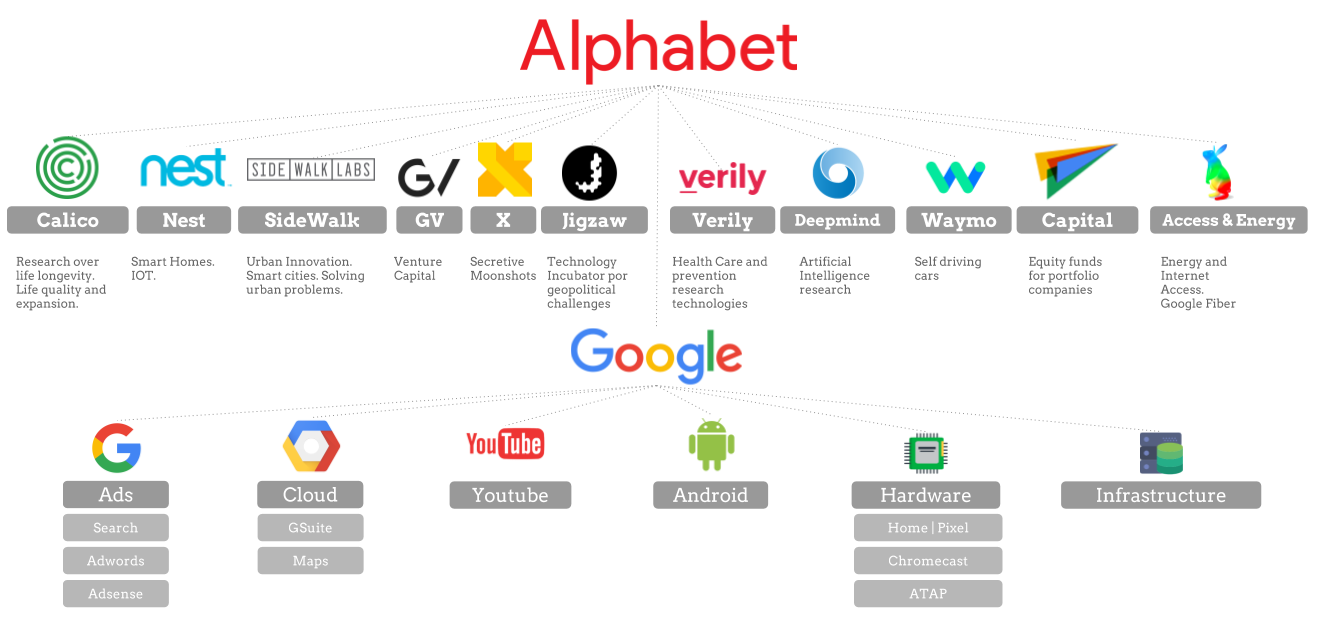
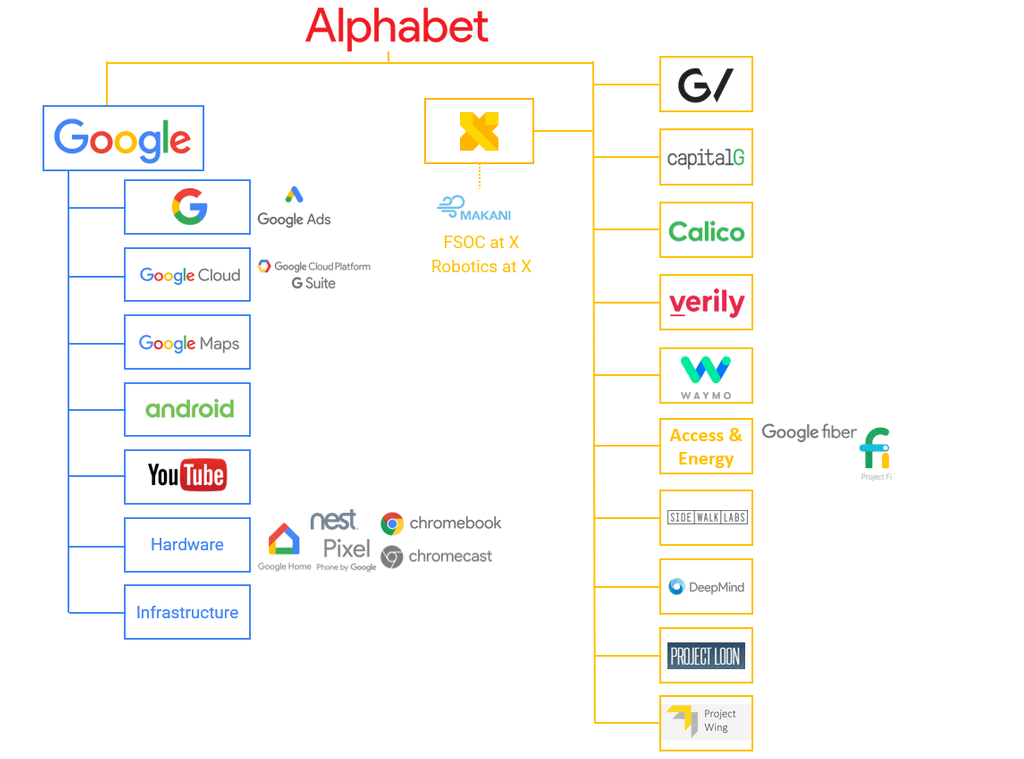
The essence of Alphabet’s formation lies in its adoption of a holding company structure. Under this model, Alphabet Inc. became the overarching parent entity, with Google becoming its largest, but still one of many, subsidiaries. This re-architecture created a clear corporate identity for the parent company, which was designed to oversee and provide capital allocation for its various “Other Bets.”
This structure offered several key advantages:
- Transparency and Accountability: It allowed for greater financial transparency, as the performance of Google’s core business could be reported separately from the often loss-making but strategically important “Other Bets.” This provided investors with a clearer picture of where capital was being deployed and how different segments were performing.
- Managerial Focus: It enabled focused leadership within each subsidiary. Sundar Pichai could concentrate on leading Google and its core products (Search, Ads, Android, Chrome, YouTube), while other CEOs could dedicate their efforts entirely to their respective ventures, such as Waymo or Verily.
- Risk Management: By compartmentalizing the more experimental and high-risk projects under separate entities, the brand equity and operational stability of the core Google business were insulated from potential failures of these “moonshots.”
Alphabet’s corporate identity, therefore, became less about a single product or service and more about an ecosystem of innovation, managed strategically under a unified banner.
Crafting a Distinctive Master Brand
The name “Alphabet” itself was chosen with strategic intent. Larry Page explained that it represented a collection of letters that form language, and the core of how Google indexes information. More broadly, an alphabet is a system of symbols used to communicate; for the company, it symbolized a collection of businesses that work together. Importantly, it was a name that could stand apart from “Google” and signify a broader mission.
Alphabet was positioned as the master brand, not directly interacting with consumers, but instead overseeing a diverse family of subsidiary brands. This allowed the Google brand to maintain its immensely strong identity and focus on its consumer-facing products, while Alphabet served as the architect, supporting and nurturing new brands without diluting Google’s legacy. This careful distinction in brand architecture ensured that while the corporate structure evolved, the consumer experience and loyalty to Google remained intact.
Navigating the Alphabet Soup: Corporate Identity and Brand Architecture
Alphabet Inc. is a textbook example of complex brand architecture, moving beyond a monolithic brand strategy to a more diversified, house-of-brands approach. This intricate structure defines its corporate identity and how its numerous ventures interact under a unified strategic vision.
The Role of a Parent Brand: Identity vs. Equity
In Alphabet’s model, the parent brand, “Alphabet Inc.,” primarily holds a corporate identity rather than a consumer-facing brand equity. Unlike Google, which has immense brand equity with billions of users worldwide, Alphabet itself doesn’t market products directly to consumers. Its identity is aimed at investors, regulators, potential talent, and the broader business community. This identity is built on attributes like innovation, long-term vision, strategic oversight, and financial stability.
The goal is not for Alphabet to acquire the same emotional connection as Google but to foster trust and confidence in its ability to manage a vast portfolio of groundbreaking technologies. This separation ensures that the tremendous brand equity built by Google over decades remains focused on its core offerings, while Alphabet provides a strategic umbrella without diluting or confusing the consumer.
Branding “Other Bets”: Fostering Innovation Under One Roof
One of the most compelling aspects of Alphabet’s structure is how it facilitates the branding and growth of its “Other Bets.” These are the ventures outside of Google’s core internet services, ranging from healthcare to urban innovation. Companies like Waymo (self-driving technology), Verily and Calico (life sciences), X (the moonshot factory), and Sidewalk Labs (urban innovation, now part of Google) are distinct brands, each with its own mission, culture, and, often, leadership.
This structure allows these nascent brands to cultivate unique identities tailored to their specific industries and target audiences. A healthcare brand like Verily, for instance, needs a brand voice and visual identity that conveys trust, scientific rigor, and patient care—qualities that might not align perfectly with the playful, tech-centric Google brand. By allowing them to operate as independent entities under the Alphabet umbrella, these “Other Bets” can develop authentic brands that resonate with their specific markets, without being constrained by the brand perceptions of their more famous sibling.
From Monolithic to Modular: A Blueprint for Large Corporations
Alphabet’s transition from a largely monolithic Google brand to a modular “house of brands” structure under Alphabet Inc. offers a powerful blueprint for other large corporations facing similar challenges of diversification and innovation. This model demonstrates how a mature, successful company can:
- Maintain Focus: By creating separate entities, core businesses can remain focused on their primary objectives without being distracted by experimental ventures.
- Encourage Experimentation: The “Other Bets” model explicitly encourages high-risk, high-reward projects, providing them with dedicated resources and space to fail fast or succeed spectacularly, without jeopardizing the main business.
- Optimize Resource Allocation: Capital can be strategically allocated based on the specific needs and potential returns of each independent venture, leading to more efficient investment.
- Attract Diverse Talent: Different ventures can attract talent best suited for their specific industry and culture, as opposed to trying to fit everyone into a single corporate mold.
This modular approach to corporate identity and brand architecture is a sophisticated response to the complexities of managing a diverse innovation portfolio in the 21st century.
Marketing Implications and Stakeholder Perceptions
The establishment of Alphabet fundamentally altered its marketing strategy, shifting focus from direct consumer marketing (for the parent company) to strategic communication aimed at key stakeholders. This restructuring had significant implications for how the company managed its brand equity and communicated its multifaceted identity.
Communicating the New Identity: Investor Relations and Public Perception
When Alphabet was announced, a primary marketing challenge was to clearly communicate this complex new corporate identity to investors, the media, and the public. The message was carefully crafted to highlight transparency, strategic focus, and a long-term vision for innovation. For investors, the clear separation of financials between Google’s profitable core and the capital-intensive “Other Bets” was a key selling point, promising better insight into the company’s various revenue streams and expenditures.
Public perception required reassurance that Google, the beloved search giant, was not disappearing but rather evolving within a larger, more structured framework. The communication strategy emphasized continuity for Google users while introducing the broader scope of Alphabet’s ambitions. This required precise messaging to manage expectations and ensure that the positive brand associations with Google were maintained, not diluted by the new parent brand. Alphabet itself wasn’t marketed to consumers, but its existence became a significant part of the corporate narrative, shaping perceptions of the overall organization’s direction and stability.
Impact on Brand Equity: Google’s Enduring Legacy
Despite the creation of Alphabet as the parent company, Google’s brand equity remains overwhelmingly strong and largely unaffected in the consumer’s mind. This is a testament to the success of Alphabet’s brand architecture strategy. Google continues to be the primary consumer-facing brand for products like Search, Gmail, Android, Chrome, and YouTube. Its marketing efforts, brand campaigns, and user experience continue to build on decades of trust and innovation.
The strategic genius lies in allowing Google to retain its distinct identity and marketing focus, preventing the corporate restructuring from diluting its powerful brand recognition. Consumers interact daily with Google products, often unaware or unconcerned with the underlying Alphabet structure. This clear delineation ensures that the established value and emotional connection consumers have with Google are preserved, while Alphabet quietly provides the strategic scaffolding for the entire enterprise.
Marketing the Unseen: The Challenge of a Holding Company Brand
One of the unique marketing challenges for Alphabet Inc. is that it is, largely, an “unseen” brand from a consumer perspective. Unlike its subsidiaries, Alphabet doesn’t have products to advertise or services to sell directly to the public. Its marketing efforts are therefore highly specialized, targeting specific audiences.
- Investor Relations: Marketing Alphabet to investors involves communicating financial performance, strategic vision, governance, and long-term growth opportunities across its diverse portfolio. This requires detailed annual reports, investor calls, and strategic PR.
- Talent Acquisition: Attracting top talent for its cutting-edge “Other Bets” often involves marketing Alphabet as a leader in innovation, a place where ambitious projects can thrive, and a home for diverse, forward-thinking endeavors.
- Industry Influence: Alphabet’s brand is also cultivated through thought leadership, public policy engagement, and its role in shaping industry standards and future technologies. Its perceived influence and ethical stance become part of its brand narrative.
Effectively, Alphabet’s marketing is less about traditional advertising and more about reputation management, strategic communication, and showcasing its role as a steward of innovation and progress. Its brand strength is built on perception, trust, and the perceived success of its underlying ventures, rather than direct consumer engagement.
Alphabet as a Brand Strategy Case Study
The formation and ongoing evolution of Alphabet Inc. stand as one of the most significant and insightful brand strategy case studies of the 21st century. It provides invaluable lessons for organizations grappling with growth, diversification, and the imperative to innovate.
Lessons in Corporate Restructuring and Brand Management
Alphabet offers several critical lessons in effective corporate restructuring and sophisticated brand management:
- Clarity Through Structure: The clarity that a holding company model brings to a diversified portfolio is paramount. It simplifies internal management, external communication, and financial reporting, allowing each business unit to thrive independently.
- Protecting Core Brand Equity: Strategic separation allowed Google to protect and grow its core brand equity, unburdened by the risks or differing brand requirements of unrelated ventures. This demonstrates the power of a house-of-brands approach where appropriate.
- Fostering Internal Entrepreneurship: By giving “Other Bets” their own identity, leadership, and funding structure, Alphabet effectively created a mechanism to foster entrepreneurial spirit within a large corporation, encouraging bold experimentation.
- Communicating Vision: The success of the restructuring depended heavily on clear, consistent communication of the strategic vision to all stakeholders, especially investors and the public.
Alphabet’s journey illustrates that corporate identity is not static; it must evolve with the business. It’s a testament to proactively managing complexity through thoughtful brand architecture.
The Future of Brand Evolution in Tech Giants
The Alphabet model has undeniably set a precedent and influenced how other tech giants might approach their own brand evolution and diversification strategies. Companies like Meta (formerly Facebook) have mirrored this approach, rebranding their parent company to signify a broader strategic direction beyond their original core product.
As technology companies continue to expand into new, often disparate, sectors—from healthcare to finance to aerospace—the need for flexible, intelligent brand architectures will only grow. The “company Alphabet” showcases a viable path for managing vast portfolios, maintaining agility, fostering innovation, and communicating a coherent, yet diversified, corporate identity to a complex web of stakeholders. It highlights that the future of branding for global tech giants lies not in monolithic structures, but in strategically crafted ecosystems of brands.
Conclusion
“What is the company Alphabet?” is a question that, when fully explored, reveals a profound narrative of corporate strategy and brand innovation. Alphabet Inc. is more than just a parent company; it is a meticulously constructed holding company designed to manage diversification, foster innovation, and provide unprecedented transparency. By creating a distinct corporate identity that allows its diverse “Other Bets” to flourish while safeguarding the immense brand equity of Google, Alphabet has redefined what a modern tech conglomerate can be. Its strategic genesis, intricate brand architecture, and nuanced marketing approach serve as an exemplary case study in how to navigate the complexities of a rapidly evolving global business landscape, providing invaluable insights into the future of corporate identity and brand management.
aViewFromTheCave is a participant in the Amazon Services LLC Associates Program, an affiliate advertising program designed to provide a means for sites to earn advertising fees by advertising and linking to Amazon.com. Amazon, the Amazon logo, AmazonSupply, and the AmazonSupply logo are trademarks of Amazon.com, Inc. or its affiliates. As an Amazon Associate we earn affiliate commissions from qualifying purchases.