
The COMEX, an acronym for Commodity Exchange Inc., stands as a pivotal global marketplace primarily dedicated to the trading of metals futures. As an integral part of the CME Group, the world’s largest financial derivatives exchange, COMEX plays a crucial role in the price discovery, liquidity provision, and risk management for precious and base metals across the globe. For investors, businesses, and economists alike, understanding COMEX is fundamental to comprehending the dynamics of commodities markets, inflation hedges, and industrial supply chains. It serves not only as a trading venue but as a key barometer for global economic sentiment and material demand.
The Foundation and Evolution of COMEX
COMEX’s journey from an independent entity to a cornerstone of the world’s largest derivatives exchange group is a testament to its enduring significance in commodity markets. Its evolution reflects the consolidation and globalization of financial trading over the last century.
Origins and Merger
The Commodity Exchange Inc. was founded in 1933 in New York, a period marked by significant economic upheaval and the need for organized markets. It emerged from the consolidation of four smaller commodity exchanges: the National Metal Exchange, the Rubber Exchange of New York, the National Raw Silk Exchange, and the New York Hide Exchange. This initial merger created a more robust and centralized platform, enhancing efficiency and transparency for traders. From its inception, COMEX quickly established itself as the premier exchange for trading physical commodities, with an early focus on gold, silver, copper, and aluminum futures. These metals, crucial for industrial production and serving as stores of value, cemented COMEX’s position in global commerce.
A significant milestone occurred in 1994 when COMEX merged with the New York Mercantile Exchange (NYMEX). This strategic consolidation created the largest physical commodity futures exchange in the world at the time, broadening the scope of offerings to include a wider array of energy and metals products. The combined entity benefited from increased market depth, improved infrastructure, and a stronger global presence, further solidifying its status as a central hub for commodity derivatives.
Its Place within CME Group
The most transformative event in COMEX’s history came in 2008 with the acquisition of NYMEX Holdings, Inc. (the parent company of NYMEX and COMEX) by CME Group. This acquisition integrated COMEX into an even larger and more diverse financial ecosystem. CME Group, already comprising the Chicago Mercantile Exchange (CME), the Chicago Board of Trade (CBOT), and the Kansas City Board of Trade (KCBT), became an undisputed behemoth in the derivatives world.
Within the CME Group architecture, COMEX maintains its distinct identity and specialization. It operates as the primary metals market, leveraging CME Group’s extensive electronic trading platforms (like CME Globex) and robust clearing house (CME Clearing). This integration means that while COMEX focuses on metals, it benefits from the vast technological, regulatory, and financial resources of a global leader. Traders on COMEX now have access to unparalleled liquidity, advanced trading tools, and the security of a central counterparty for all trades, which significantly reduces systemic risk. The synergy within CME Group allows COMEX to serve as the global benchmark for metals pricing, influencing markets far beyond its physical trading floor.
Core Functions and Traded Commodities
COMEX’s prominence in the financial world stems from its critical functions in price discovery and liquidity provision, particularly for a select group of highly demanded metals. These functions ensure efficient market operations and offer vital services to various participants.
Price Discovery and Liquidity
One of COMEX’s foremost functions is price discovery. Through continuous trading by a vast array of participants—including producers, consumers, investors, and speculators—the exchange facilitates the efficient determination of fair market prices for metals. Every bid and offer, every executed trade, contributes to the real-time formation of prices that reflect the collective supply and demand dynamics, as well as geopolitical and economic sentiment. This transparent mechanism makes COMEX prices widely accepted as global benchmarks for physical and derivative transactions worldwide.
Furthermore, COMEX provides exceptional liquidity. With high trading volumes and a large number of active participants, buyers and sellers can consistently find counterparties for their trades without significantly impacting prices. This deep liquidity is crucial for allowing market participants to enter and exit positions efficiently, minimizing transaction costs and facilitating effective risk management. The depth of the COMEX market also ensures that prices accurately reflect underlying market conditions, making it a reliable indicator for future supply and demand trends.
Key Commodities
While COMEX trades a range of metals, certain commodities stand out due to their trading volume, economic significance, and impact on global financial markets.
-
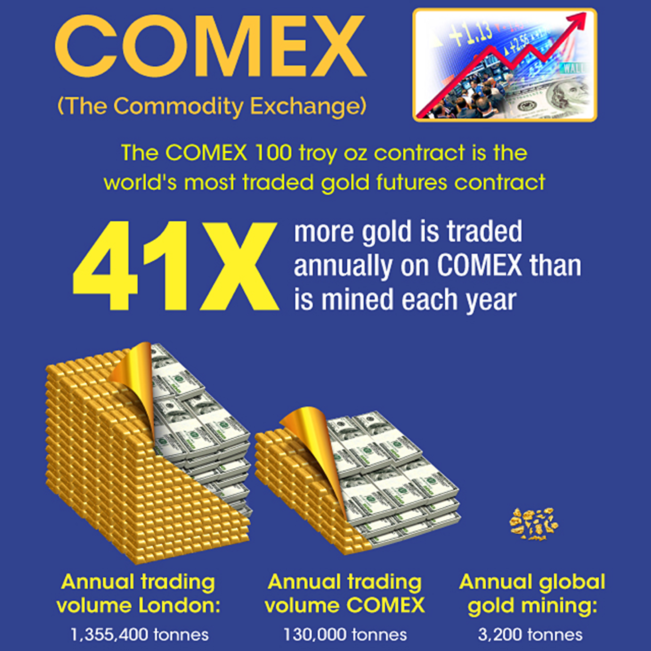
Gold: Without a doubt, gold futures contracts on COMEX are among the most actively traded and closely watched. Gold holds a unique position as a safe-haven asset, a hedge against inflation, and a traditional store of value. Its price movements are often influenced by macroeconomic data, geopolitical tensions, interest rate expectations, and the strength of the U.S. dollar. COMEX gold futures contracts are standardized, typically for 100 troy ounces, and are deliverable, meaning physical gold can be exchanged at maturity. This ensures that the futures price remains tethered to the underlying physical market.
-
Silver: Often referred to as “poor man’s gold,” silver also trades extensively on COMEX. Silver’s unique dual role as both a precious metal and an industrial metal (used in electronics, solar panels, and medical applications) makes its price dynamics particularly complex. It tends to be more volatile than gold, reflecting its sensitivity to both investor sentiment and industrial demand cycles. COMEX silver futures contracts are typically for 5,000 troy ounces.
-
Copper: Known as “Dr. Copper” because of its perceived ability to predict the health of the global economy, copper is another vital commodity traded on COMEX. Its widespread use in construction, manufacturing, and electrical wiring means that robust industrial activity often correlates with higher copper prices. Conversely, a decline in copper prices can signal an impending economic slowdown. COMEX copper futures are typically for 25,000 pounds.
Other metals such as palladium, platinum, and aluminum also have futures contracts listed on COMEX, though their trading volumes might be lower compared to the “big three.” The standardization of contract sizes, quality specifications, and delivery procedures across these metals is fundamental to the orderly functioning and reliability of the COMEX market.
Understanding COMEX Futures Contracts
At the heart of COMEX’s operations are futures contracts, sophisticated financial instruments that enable participants to manage risk and speculate on future price movements. Grasping the mechanics of these contracts is crucial for anyone engaging with the COMEX market.
What is a Futures Contract?
A futures contract is a legally binding agreement to buy or sell a specific quantity of a commodity (or financial instrument) at a predetermined price on a specified future date. Unlike options, which grant the holder the right but not the obligation, a futures contract imposes an obligation on both the buyer and the seller. The buyer (long position) is obligated to purchase the underlying asset, and the seller (short position) is obligated to deliver it.
However, in practice, physical delivery of the commodity rarely occurs. The vast majority of futures contracts are closed out before their expiration date by taking an offsetting position. For example, a buyer of a gold futures contract can sell an identical gold futures contract before expiration, thereby exiting the obligation. This allows market participants to trade on price expectations without necessarily intending to take or make delivery of the physical asset.

Key Elements of a COMEX Contract
Every COMEX futures contract is standardized, ensuring transparency and ease of trading. This standardization covers several key elements:
- Underlying Asset: The specific commodity being traded, such as gold, silver, or copper.
- Contract Size: The exact quantity of the underlying asset specified in one contract. For example, a standard COMEX gold futures contract covers 100 troy ounces, while silver is 5,000 troy ounces, and copper is 25,000 pounds.
- Expiration Date: The specific date in the future when the contract matures and the obligation to deliver or receive the underlying asset becomes active. Contracts are typically listed for several months into the future.
- Delivery Specifications: Details regarding the quality, purity, and acceptable delivery locations for the physical commodity, should actual delivery occur. For precious metals, these specifications are extremely stringent (e.g., “Good Delivery” bars).
- Margin Requirements: To enter a futures contract, traders must deposit a “initial margin” with their broker. This is not a down payment but a performance bond to cover potential losses. A “maintenance margin” level is also set, and if the account equity falls below this level, a “margin call” is issued, requiring additional funds to be deposited. Margin is a crucial aspect of futures trading, as it allows for significant leverage.
- Role of Clearing House: The CME Clearing House acts as the central counterparty for every trade on COMEX. When a trade is executed, CME Clearing steps in as the buyer to every seller and the seller to every buyer. This guarantees the performance of both sides of the contract, mitigating counterparty risk and ensuring market integrity. It also facilitates the settlement process, including the daily marking-to-market of positions, where profits and losses are credited or debited to accounts daily.
Strategic Applications: Hedging and Speculation
The functionalities of COMEX futures contracts extend beyond simple buying and selling, offering powerful tools for risk management and profit generation across various market participants.
Hedging for Producers and Consumers
Hedging is the practice of using financial instruments to offset the risk of adverse price movements in an asset. COMEX futures provide an invaluable mechanism for entities whose core business involves the production, consumption, or processing of metals.
- Producers (e.g., mining companies): A gold mining company, for instance, faces the risk that the price of gold might fall before they can extract and sell their future production. To mitigate this risk, they can sell gold futures contracts today. By selling futures, they lock in a price for their future output. If the spot price of gold indeed falls, the loss on their physical production is offset by a profit on their short futures position, effectively “hedging” their revenue.
- Consumers (e.g., jewelry manufacturers, industrial users): Conversely, a jewelry manufacturer that needs to purchase silver in six months faces the risk that silver prices might rise, increasing their input costs. To hedge against this, they can buy silver futures contracts today. By taking a long futures position, they lock in a purchase price. If silver prices rise, the increased cost of their physical silver purchase is offset by a profit on their long futures position, protecting their profit margins.
This application demonstrates how COMEX provides a vital risk management tool, allowing businesses to stabilize their revenues and costs, making their financial planning more predictable.
Speculation for Profit
Beyond hedging, a significant portion of COMEX trading activity comes from speculators. These individuals or institutions aim to profit from anticipating future price movements of commodities. Unlike hedgers, speculators typically have no interest in the physical commodity itself; their goal is to capitalize on price volatility.
- Long Positions: A speculator who believes the price of gold will rise will buy gold futures contracts. If the price does increase, they can sell their contracts at a higher price before expiration, realizing a profit.
- Short Positions: Conversely, a speculator who anticipates a decline in copper prices will sell copper futures contracts (go short). If the price falls, they can buy back their contracts at a lower price, generating a profit.
Speculation often involves significant leverage, as only a small margin deposit is required to control a large contract value. While this can amplify potential gains, it also magnifies potential losses, making speculation a high-risk, high-reward endeavor. Speculators play a crucial role in providing market liquidity and contributing to efficient price discovery, as their willingness to take on risk helps facilitate transactions for hedgers.
Arbitrage
Arbitrageurs seek to profit from temporary price discrepancies of the same asset across different markets or contract months. For instance, an arbitrageur might notice a slight price difference between a COMEX gold futures contract and the price of a gold ETF that tracks the futures price, or between two different expiration months for the same commodity on COMEX. They would simultaneously buy the undervalued asset and sell the overvalued one, locking in a risk-free profit. These activities help ensure that prices remain consistent and efficient across related markets.
COMEX’s Impact on the Financial Landscape
The presence and operation of COMEX have profound and far-reaching implications, influencing global financial markets, individual investment strategies, and broader economic indicators.
Global Price Benchmark
COMEX prices are not merely confined to its trading screens; they serve as critical global benchmarks for a wide array of metals. When news outlets report the price of gold or silver, they are almost invariably referencing the COMEX futures price. These prices influence over-the-counter (OTC) markets, physical metal transactions between industrial buyers and sellers, and even the pricing of various financial products like metal-backed exchange-traded funds (ETFs) and mutual funds. This ubiquitous referencing means that the price discovery process on COMEX directly impacts countless commercial and investment decisions worldwide, providing a transparent and liquid reference point for market participants everywhere.
Accessibility for Investors
While futures trading on COMEX is primarily engaged in by institutional investors, large commercial entities, and professional traders, the market’s influence extends to individual investors. Retail investors can gain indirect exposure to COMEX-traded commodities through several avenues:
- Exchange-Traded Funds (ETFs) and Mutual Funds: Many ETFs and mutual funds track the performance of COMEX-listed commodities like gold and silver, either by holding physical bullion, investing in futures contracts, or holding shares of mining companies. These instruments offer a more accessible and diversified way for individual investors to participate in the metals market without directly trading complex futures contracts.
- Futures Brokers: Some retail brokers offer direct access to futures trading, allowing individual investors to speculate on price movements. However, due to the leveraged nature and complexity of futures, this avenue is generally recommended for experienced investors who understand the associated risks.
- Options on Futures: Investors can also trade options on COMEX futures contracts, which provide the right but not the obligation to buy or sell a futures contract at a specific price. This offers a different risk/reward profile and can be used for both hedging and speculative purposes.
The existence of a regulated and transparent exchange like COMEX provides the underlying infrastructure that makes these indirect investment vehicles reliable and credible.
Economic Barometer
The price movements of commodities traded on COMEX, particularly copper and gold, are often viewed as significant economic indicators.
- Copper (Dr. Copper): As a raw material essential for construction, electronics, and manufacturing, copper’s price is highly sensitive to changes in global industrial demand. A sustained rise in copper prices can signal robust economic growth and increasing industrial activity, while a decline may suggest an economic slowdown or recessionary pressures. Thus, “Dr. Copper” is often seen as a leading indicator of global economic health.
- Gold (Safe Haven & Inflation Hedge): Gold’s price behavior on COMEX is closely watched for insights into investor sentiment regarding risk, inflation, and currency stability. When economic uncertainty is high or inflation fears loom, investors often flock to gold as a safe-haven asset, driving up its price. Conversely, during periods of strong economic growth and higher interest rates, gold’s appeal as a non-yielding asset may diminish. Its price movements provide a real-time reflection of market participants’ outlook on the future stability of the financial system.
In conclusion, the COMEX is far more than just a trading floor; it is a vital organ in the global financial body. By providing a transparent, liquid, and regulated marketplace for metals futures, it facilitates essential functions from price discovery and risk management to investment opportunities and economic forecasting, influencing markets and economies around the world.
aViewFromTheCave is a participant in the Amazon Services LLC Associates Program, an affiliate advertising program designed to provide a means for sites to earn advertising fees by advertising and linking to Amazon.com. Amazon, the Amazon logo, AmazonSupply, and the AmazonSupply logo are trademarks of Amazon.com, Inc. or its affiliates. As an Amazon Associate we earn affiliate commissions from qualifying purchases.