
The Technological Quest for Proximity: Identifying Our Stellar Neighbor
The seemingly simple question of “what is the closest star to us” belies a profound story of technological advancement and human ingenuity. While the answer might appear obvious to many, precisely identifying and characterizing celestial bodies, especially their distances, has been a monumental challenge that has driven countless innovations in observational astronomy and data science. From the rudimentary lenses of Galileo to the sophisticated orbital observatories of today, each leap in technology has refined our cosmic map, offering increasingly precise measurements of our stellar neighborhood.
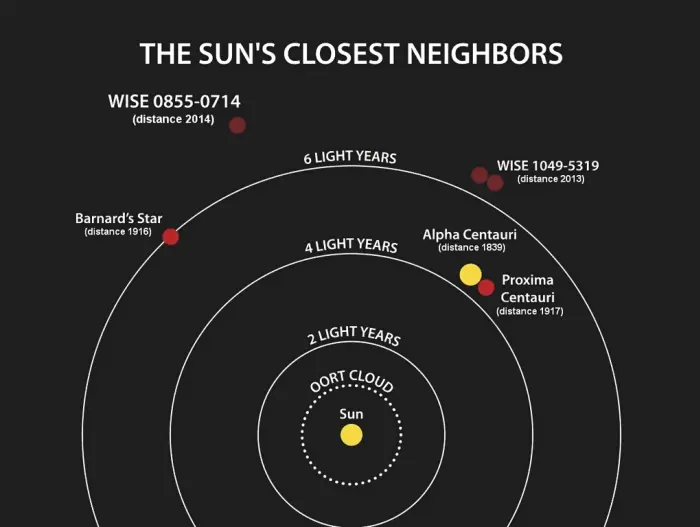
Early astronomers relied on parallax, the apparent shift in an object’s position due due to the observer’s motion, to gauge distances. This technique, though conceptually straightforward, demanded instruments of exceptional precision. The development of advanced telescopes with superior optics and stable mounts was paramount. However, the true revolution came with the advent of digital sensors and advanced imaging technologies. Charge-Coupled Devices (CCDs) replaced photographic plates, offering significantly higher sensitivity and linearity, allowing astronomers to capture fainter stars and measure their positions with unprecedented accuracy.
Modern astrometry, the branch of astronomy concerned with the precise measurement of the positions and movements of stars, planets, and other celestial bodies, is entirely a product of advanced technology. Space-based missions like the European Space Agency’s Hipparcos satellite, launched in 1989, provided the first truly global and accurate catalog of stellar positions, revolutionizing our understanding of stellar distances. Its successor, the Gaia mission, represents the pinnacle of astrometric technology. Equipped with two telescopes and a colossal digital camera array comprising 106 CCDs, Gaia continuously scans the sky, measuring the positions, distances, and proper motions of billions of stars with microarcsecond precision. This vast influx of data, amounting to petabytes, necessitates equally advanced computational infrastructure, algorithms, and machine learning techniques to process, calibrate, and analyze, making Gaia as much a triumph of data science as it is of optics and engineering.
Furthermore, spectroscopy, the study of how light interacts with matter, has played a crucial role. Spectrographs, complex instruments that split starlight into its constituent colors, allow scientists to determine a star’s radial velocity (its motion towards or away from us) via the Doppler effect, its chemical composition, and even its temperature. Integrating these diverse technological capabilities—precision optics, sensitive detectors, robust data processing, and advanced analytical software—has enabled humanity to build an accurate, three-dimensional model of our galaxy, unequivocally pinpointing our closest stellar companions.
The Sun: Our Closest Star and a Technological Proving Ground
Unsurprisingly, the closest star to us is the Sun. Its profound influence on Earth and our solar system makes it the subject of intense scientific and technological scrutiny. Studying the Sun is not merely an academic exercise; it is critical for understanding space weather, protecting our technological infrastructure, and advancing our quest for sustainable energy solutions.
The technologies developed to observe and analyze the Sun are some of the most sophisticated in astrophysics. Ground-based solar observatories, such as the Daniel K. Inouye Solar Telescope (DKIST) in Hawaii, employ massive adaptive optics systems to correct for atmospheric distortion, achieving unprecedented resolution of the Sun’s surface. These telescopes are equipped with highly specialized instruments like coronagraphs, which block out the Sun’s bright disk to reveal its faint corona, and magnetographs, which map its complex magnetic fields.
However, many of the most crucial insights come from space-based solar missions, which offer an unimpeded view free from atmospheric interference. NASA’s Solar and Heliospheric Observatory (SOHO), launched in 1995, provided continuous, high-resolution imagery and data on the Sun’s interior, its outer atmosphere, and the solar wind for decades. More recently, missions like the Parker Solar Probe and the European Space Agency’s Solar Orbiter have pushed the boundaries of solar exploration, venturing closer to the Sun than any spacecraft before. These probes are engineered with extreme heat-resistant materials and thermal protection systems capable of withstanding temperatures exceeding 1,000°C, while their sophisticated instruments collect data on the solar wind, magnetic fields, and energetic particles directly from the Sun’s environment.
The sheer volume and complexity of data generated by these solar observatories pose significant challenges and opportunities for data science. Scientists utilize advanced algorithms, machine learning, and artificial intelligence to process petabytes of imagery and telemetry, identify patterns, and develop predictive models for solar flares and coronal mass ejections (CMEs). This technological ecosystem, from sensor design to predictive analytics, is indispensable for understanding the Sun’s dynamic behavior and its far-reaching effects.
Harnessing Stellar Power: Technological Innovation Inspired by Our Sun

The Sun is the ultimate power source, and humanity’s efforts to harness its energy have driven some of the most transformative technological innovations. Our quest for sustainable energy is fundamentally rooted in replicating or directly capturing the processes that occur within our closest star.
Photovoltaic (PV) technology, commonly known as solar panels, is a prime example. Decades of research and engineering have led to dramatic improvements in the efficiency, durability, and cost-effectiveness of solar cells. Advances in semiconductor physics, materials science (e.g., perovskites, multi-junction cells), and manufacturing processes have transformed solar power from a niche technology into a major component of the global energy mix. Research continues into flexible solar cells, transparent solar cells, and quantum dot solar cells, aiming for even greater energy conversion efficiencies and broader applications, from building-integrated photovoltaics to powering remote sensors and spacecraft.
Beyond direct capture, the dream of replicating the Sun’s energy generation process on Earth through nuclear fusion remains one of humanity’s most ambitious technological endeavors. Projects like the International Thermonuclear Experimental Reactor (ITER) aim to build the world’s largest tokamak, an experimental machine designed to harness the energy of fusion. This involves mastering extreme plasma physics, developing superconducting magnets capable of generating immense magnetic fields, engineering materials that can withstand scorching temperatures, and creating control systems of unparalleled complexity. Success in fusion power would provide an almost limitless, clean energy source, a testament to our ability to mimic stellar processes through advanced engineering and computational modeling.
The Sun’s energy also plays a critical role in space exploration. Solar panels are the primary power source for most Earth-orbiting satellites and interplanetary probes venturing into the inner solar system. For missions requiring higher power or operating far from the Sun, where solar intensity is too low, technologies like Radioisotope Thermoelectric Generators (RTGs) provide long-duration power by converting heat from radioactive decay into electricity. Furthermore, conceptual technologies like solar sails, which use the momentum of photons from the Sun to propel spacecraft, are being explored for future interstellar travel, demonstrating how our closest star continues to inspire new forms of propulsion and energy generation.
Digital Security and the Solar Impact: Protecting Our Tech Infrastructure
The Sun’s dynamic activity, particularly solar flares and coronal mass ejections (CMEs), poses a significant threat to our increasingly interconnected and technology-dependent society. Understanding and predicting space weather events—and developing robust mitigation strategies—is a critical area of technological focus for digital security and infrastructure resilience.
Advanced solar observation technologies are the first line of defense. Satellites like SOHO, STEREO (Solar TErrestrial RElations Observatory), and the NOAA/NASA GOES series provide real-time data on solar activity. These instruments monitor changes in the Sun’s magnetic fields, detect flares in X-ray and UV wavelengths, and track CMEs as they propagate through space. Sophisticated software and algorithms process this data, creating detailed models that predict the arrival time and potential impact of solar storms on Earth.
When a powerful CME or solar flare impacts Earth’s magnetosphere, it can induce geomagnetic currents that surge through long conductors, such as power grids. This can overload transformers, leading to widespread blackouts, as famously occurred during the 1989 Quebec blackout. Protecting these critical infrastructures involves deploying smart grid technologies, developing real-time monitoring systems that can detect geomagnetic disturbances, and implementing operational protocols for grid operators to reduce voltage or temporarily disconnect vulnerable sections.
Furthermore, space weather can disrupt satellite operations. Satellites, which power everything from GPS and communication networks to weather forecasting and military intelligence, are vulnerable to radiation damage from energetic particles released during solar events. This can lead to temporary malfunctions, degradation of electronics, or even permanent failure. Engineers design satellites with radiation-hardened components, employ shielding techniques, and develop intelligent on-board systems that can detect high radiation levels and initiate protective measures or safe modes. The accuracy of GPS signals, crucial for modern navigation and timing across industries, can also be severely degraded by solar-induced ionospheric disturbances, necessitating complex correction algorithms in receivers and robust backup systems.
The integration of AI and machine learning is rapidly enhancing our capabilities in space weather forecasting. These systems can analyze historical solar data, identify subtle precursors to major events, and generate more accurate and timely warnings. This advanced warning system allows critical infrastructure operators—from power utilities to airlines and satellite service providers—to take proactive measures, minimizing the potential for widespread disruption and ensuring the continued resilience of our technological backbone against the powerful influence of our closest star.
Beyond Our Sun: Proxima Centauri and Future Exploration Tech
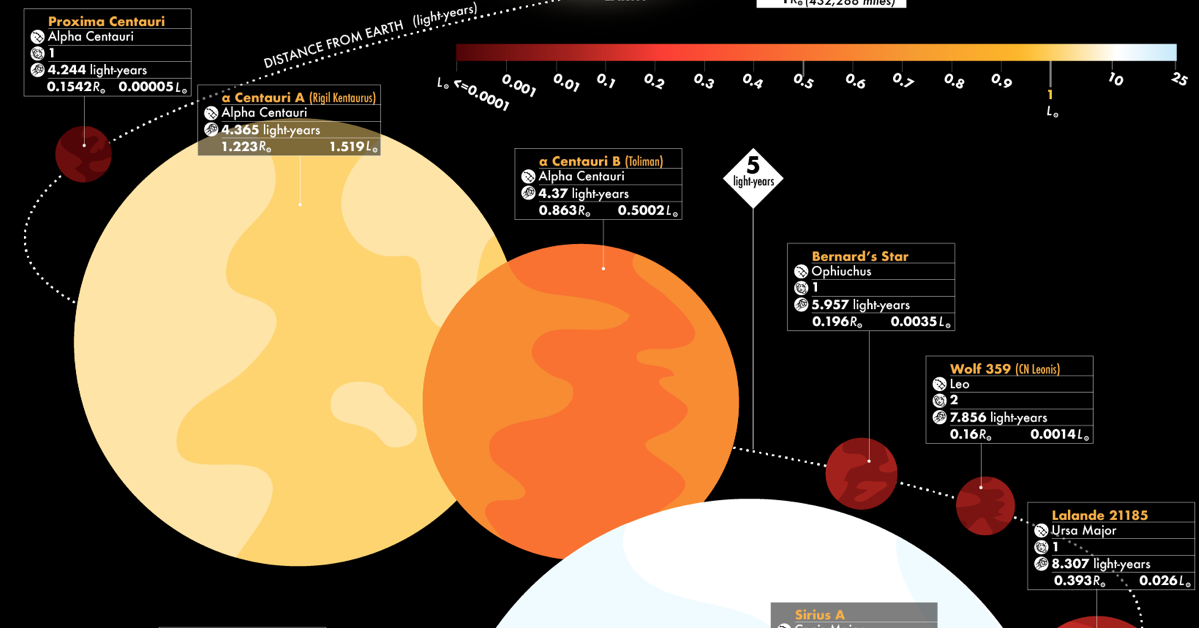
While our Sun is unequivocally our closest star, the fascination with celestial proximity extends beyond our solar system. The next closest star is Proxima Centauri, part of the Alpha Centauri triple-star system, located approximately 4.2 light-years away. Reaching this next stellar neighbor represents a monumental technological challenge that drives the development of speculative and nascent propulsion systems. Projects like Breakthrough Starshot envision sending an array of gram-scale “nanocraft” equipped with advanced cameras and sensors to Proxima Centauri, propelled by powerful ground-based lasers accelerating them to a significant fraction of the speed of light. This concept pushes the boundaries of laser technology, materials science for ultra-lightweight spacecraft, and autonomous navigation systems.
The study of exoplanets around nearby stars also relies heavily on cutting-edge technology. Missions such as NASA’s Transiting Exoplanet Survey Satellite (TESS) and the European Space Agency’s CHEOPS (CHaracterising ExOPlanet Satellite) use ultra-sensitive photometers to detect the minute dimming of starlight as exoplanets transit across their host stars. The James Webb Space Telescope (JWST), with its massive segmented mirror and highly sensitive infrared instruments, is designed to analyze the atmospheres of these exoplanets, potentially detecting biosignatures or other indicators of habitability. Future observatories, both ground-based (like the European Extremely Large Telescope) and space-based (like proposed Habitable Exoplanet Imaging Missions), will employ advanced adaptive optics and coronagraphs to directly image exoplanets, offering unprecedented detail on worlds orbiting our distant stellar cousins. These endeavors underscore humanity’s enduring drive to explore beyond our immediate stellar environment, propelled by ever-evolving technological prowess.
aViewFromTheCave is a participant in the Amazon Services LLC Associates Program, an affiliate advertising program designed to provide a means for sites to earn advertising fees by advertising and linking to Amazon.com. Amazon, the Amazon logo, AmazonSupply, and the AmazonSupply logo are trademarks of Amazon.com, Inc. or its affiliates. As an Amazon Associate we earn affiliate commissions from qualifying purchases.