
The question of linguistic kinship is a fascinating one, inviting us to trace the intricate threads that connect languages across time and geography. When we ask, “What is the closest language to English?”, we’re not just seeking a simple answer but delving into the very foundations of our communication, its evolution, and how technology illuminates these relationships. While sentiment might point towards languages with shared cultural touchstones or immediate geographical proximity, a more rigorous examination reveals a complex web of shared ancestry, grammatical structures, and a surprisingly dominant influence from a particular linguistic group. This exploration will focus on the technological lens through which we can now analyze linguistic relationships, particularly in the realm of natural language processing (NLP) and computational linguistics.
The Germanic Roots: Unearthing Shared Ancestry
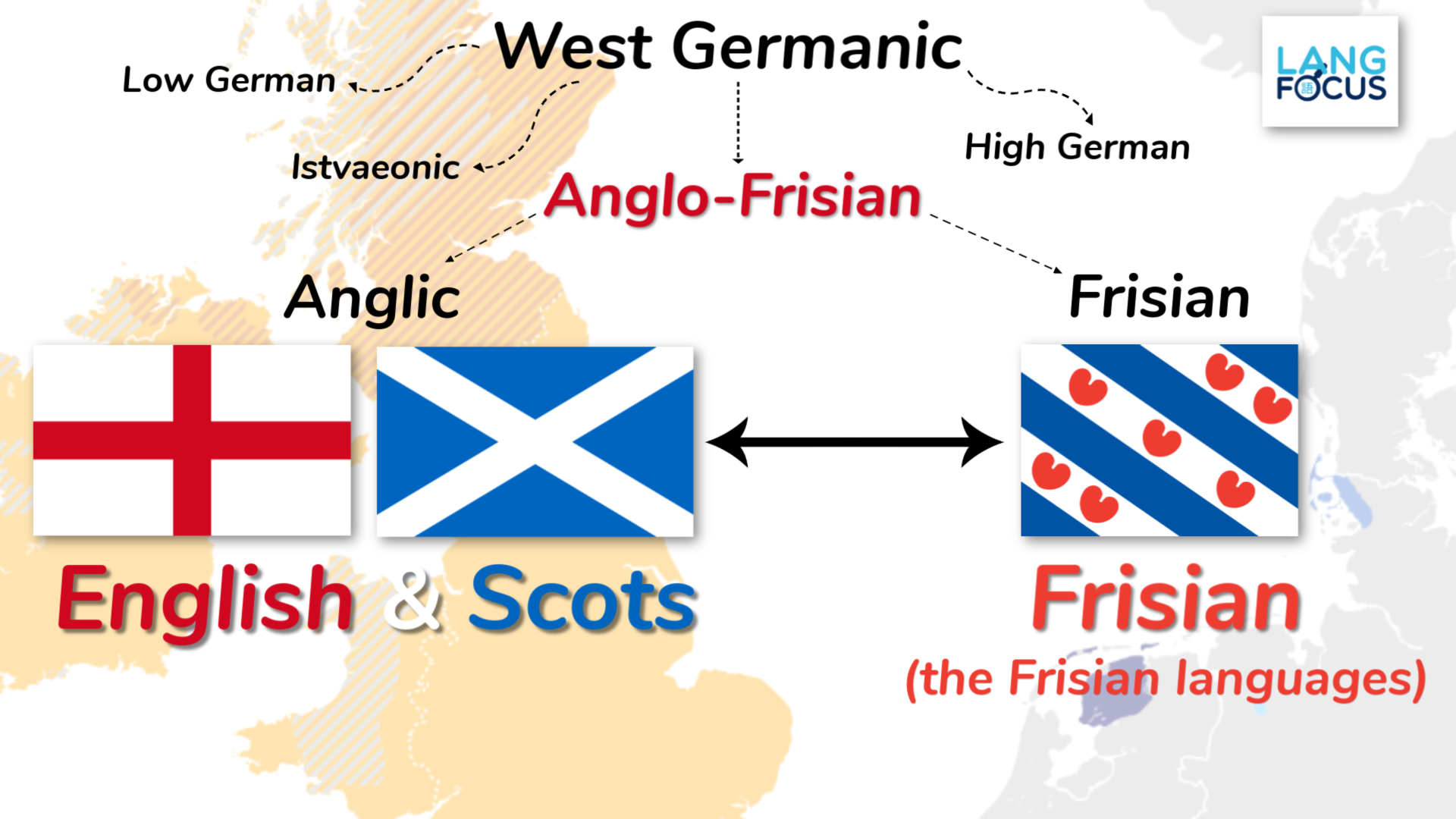
English, as we know it today, is a Germanic language, a fact that underpins its deepest connections to other tongues. Its story begins with the migrations of Germanic tribes – the Angles, Saxons, and Jutes – to Britain in the 5th century AD. These migrations brought with them proto-Germanic dialects that would coalesce into Old English. This foundational heritage is the primary reason why other West Germanic languages exhibit the most significant similarities to English.
The West Germanic Family Tree
The West Germanic branch of the Indo-European language family is where English truly finds its closest relatives. This group includes languages spoken primarily in Northern Europe. Understanding this family tree is crucial for appreciating the shared lexicon and grammatical structures.
Frisian: The Unsung Sibling
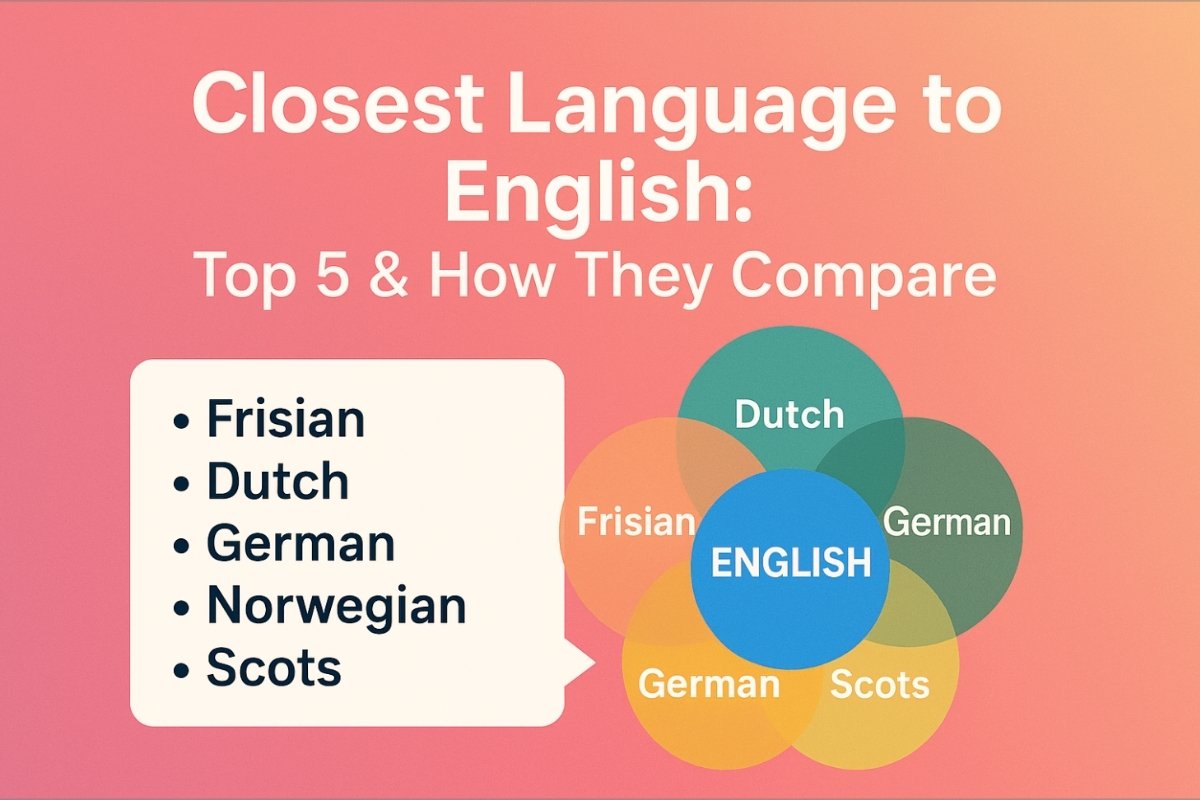
Often cited as the closest living relative to English, Frisian is a group of languages spoken by the Frisians in the northeastern Netherlands and on the North Sea coast of Germany. There are three main varieties: West Frisian, Saterland Frisian, and North Frisian. Due to their geographical proximity to the original Anglo-Saxon homelands and their relatively isolated development, Frisian languages retain a remarkable number of similarities to Old English. Words like “ox” (buk in Frisian, ox in English), “breast” (bryst in Frisian, breast in English), and even grammatical structures like the use of auxiliaries can be strikingly familiar. Computational linguistic analyses, which compare vast datasets of words and grammatical patterns, consistently place Frisian at the very top of the similarity scale. This is not merely anecdotal; it’s a measurable linguistic distance.
Dutch and Afrikaans: Closely Related Cousins
Moving outward from Frisian, we encounter Dutch and its descendant, Afrikaans, spoken primarily in the Netherlands and South Africa, respectively. Dutch shares a significant portion of its vocabulary and grammatical features with English, a testament to their common West Germanic origin. For example, the words for “house” (huis in Dutch, house in English), “water” (water in Dutch, water in English), and “father” (vader in Dutch, father in English) are clearly cognates. Afrikaans, which developed from Dutch spoken by settlers in South Africa, has also been influenced by other languages, but its core remains strongly Germanic, maintaining a high degree of mutual intelligibility with Dutch and considerable similarity to English. NLP models trained on bilingual corpora of Dutch and English often exhibit higher accuracy in tasks like machine translation and sentiment analysis compared to those involving more distantly related languages.
German: A More Distant, Yet Significant Relative
While often perceived as a close relative due to shared origins and a substantial overlap in vocabulary, German is generally considered to be slightly more distant from English than Dutch or Frisian. This is largely due to significant linguistic divergences that occurred over centuries, including the High German consonant shift, which altered consonant sounds in German but not in English. Nevertheless, the shared Germanic foundation means that many fundamental words and grammatical concepts remain recognizable. For instance, “Haus” (house), “Wasser” (water), and “Vater” (father) are clearly related to their English counterparts. The presence of strong case systems in German, which are largely absent in modern English, also contributes to a greater degree of divergence.
The Romance Influence: A Layer of Borrowing
While the core of English is undeniably Germanic, its history is also punctuated by profound influences from other language families. The most impactful of these came from Norman French following the Norman Conquest of 1066. This event injected a massive influx of Romance vocabulary into English, particularly in areas of law, government, religion, and cuisine. This layer of borrowing significantly alters the perception of linguistic closeness, making English a hybrid language.
Latin and French: The Lexical Overlap
The impact of Latin, through its descendant Romance languages like French, is undeniable. A vast number of English words have Latin or French origins, often existing alongside their Germanic cognates. Consider words like “king” (Germanic) and “royal” (French/Latin), “ask” (Germanic) and “demand” (French/Latin), or “eat” (Germanic) and “consume” (French/Latin). This dual heritage is a hallmark of English.
The Role of Natural Language Processing in Quantifying Influence

Modern NLP techniques provide powerful tools for quantifying these linguistic influences. By analyzing massive text corpora, algorithms can identify patterns of word usage, grammatical structures, and etymological origins. Word embeddings, for example, represent words as vectors in a high-dimensional space, where words with similar meanings and contexts are located closer to each other. When analyzing English word embeddings alongside those of other languages, the Germanic languages consistently cluster closer. However, the proximity of French and Latin-derived words within English embeddings indicates their pervasive influence on the lexicon. This allows for a more objective assessment of linguistic relationships than traditional comparative linguistics alone.
Evaluating “Closeness” Through Computational Metrics
Beyond simple word-for-word comparisons, computational linguistics offers more sophisticated metrics for assessing language similarity. These include:
- Edit Distance: This metric measures the minimum number of single-character edits (insertions, deletions, or substitutions) required to change one string into another. Applied to words or even sentences, it can offer a quantifiable measure of lexical similarity.
- Character N-gram Overlap: This involves comparing sequences of characters (n-grams) within words or texts. A higher overlap of common n-grams suggests a closer relationship.
- Lexical Similarity Scores: Algorithms can assign scores based on the percentage of shared cognates (words with a common etymological origin) and loanwords between two languages.
- Syntactic Similarity: More advanced NLP models can analyze sentence structures and grammatical rules to determine how closely languages align in their syntax.
When these computational metrics are applied, the West Germanic languages, particularly Frisian, Dutch, and Afrikaans, consistently emerge as having the highest scores when compared to English. This is a data-driven confirmation of linguistic ancestry.
Beyond the Germanic Core: Other Notable Relationships
While the Germanic connection is paramount, it’s important to acknowledge other languages that share some degree of linguistic or historical connection with English, even if they are not as fundamentally “close.” These relationships are often shaped by historical interactions, trade, and shared cultural developments.
Scandinavian Languages: A Nordic Connection
The North Germanic languages, spoken in Scandinavia, also share a common ancestor with English within the Indo-European family. Old Norse, the language of the Vikings, had a significant impact on Old English, particularly in northern England. This influence is evident in vocabulary (e.g., “sky,” “skin,” “give,” “take”) and some grammatical features. Languages like Norwegian, Swedish, and Danish, therefore, exhibit a degree of mutual intelligibility with English that is greater than many other European languages, although less so than the West Germanic ones. Computational analyses show a clear clustering of English and Scandinavian languages, albeit with a wider spread than that seen with Frisian or Dutch.
The Impact of Globalization and Technology on Linguistic Bridges
In the era of the internet and advanced AI, the concept of linguistic closeness is being redefined. While genetic and historical relationships remain foundational, technological advancements are creating new forms of connection and understanding between languages.
Machine Translation and Cross-Lingual Understanding
Tools like Google Translate, DeepL, and other machine translation services are making it easier than ever to bridge linguistic divides. These technologies, powered by sophisticated NLP models, can now translate between hundreds of languages with remarkable accuracy. While they don’t make languages inherently “closer,” they do facilitate a deeper engagement and understanding of texts and conversations across different tongues. For someone learning a new language, these tools can act as invaluable aids, allowing them to access resources and communicate with people they otherwise couldn’t.
Language Learning Apps and Algorithmic Pedagogy
The rise of language learning apps like Duolingo, Babbel, and Memrise, often employing AI-driven algorithms, is democratizing language acquisition. These platforms often leverage the known linguistic relationships between languages to optimize learning paths. For example, an English speaker learning Dutch will find many familiar words and grammatical structures, which the app can highlight to accelerate progress. Conversely, learning a language from a completely different family, like Mandarin or Arabic, presents a far greater challenge, requiring the learner to grasp entirely new phonological systems, grammatical structures, and writing systems. The underlying algorithms in these apps often reflect the linguistic distances that computational linguistics has identified.
The Future of Linguistic Analysis: AI as a Universal Translator of Relationships
As AI continues to advance, our ability to analyze and understand linguistic relationships will become even more refined. Future AI systems might not only identify the closest languages but also predict the learning curve for a speaker of one language attempting to learn another, based on a comprehensive analysis of phonology, morphology, syntax, and semantics. This would move beyond simple “closeness” to a nuanced understanding of linguistic accessibility. The data generated by these AI systems will continue to validate and refine the findings of traditional linguistic scholarship, offering a powerful, technology-driven perspective on the interconnectedness of human language.
In conclusion, while popular opinion might lean towards French or Spanish due to their cultural prominence, a rigorous examination, amplified by the power of technological analysis, firmly places the West Germanic languages, particularly Frisian, as the closest linguistic relatives to English. This closeness is rooted in shared ancestry and a significant overlap in core vocabulary and grammatical structures. However, the journey of English has been one of continuous adaptation and borrowing, making it a rich linguistic tapestry woven with threads from Germanic, Romance, and even Norse origins. Technology, through NLP and computational linguistics, offers us an unprecedented ability to quantify these relationships, providing data-driven insights into the intricate dance of language evolution and connection.
aViewFromTheCave is a participant in the Amazon Services LLC Associates Program, an affiliate advertising program designed to provide a means for sites to earn advertising fees by advertising and linking to Amazon.com. Amazon, the Amazon logo, AmazonSupply, and the AmazonSupply logo are trademarks of Amazon.com, Inc. or its affiliates. As an Amazon Associate we earn affiliate commissions from qualifying purchases.