
The Sun is the most dominant feature of our solar system, a nearly perfect sphere of hot plasma that dictates the orbits of every planet, asteroid, and comet in its vicinity. To the casual observer, it is a static yellow disc in the sky. However, to the global scientific and technology community, the Sun is a dynamic laboratory that requires constant, high-precision measurement. When we ask, “What is the circumference of the sun?” we are not just asking for a static number; we are delving into a complex field of computational astrophysics, high-speed data processing, and advanced satellite technology.

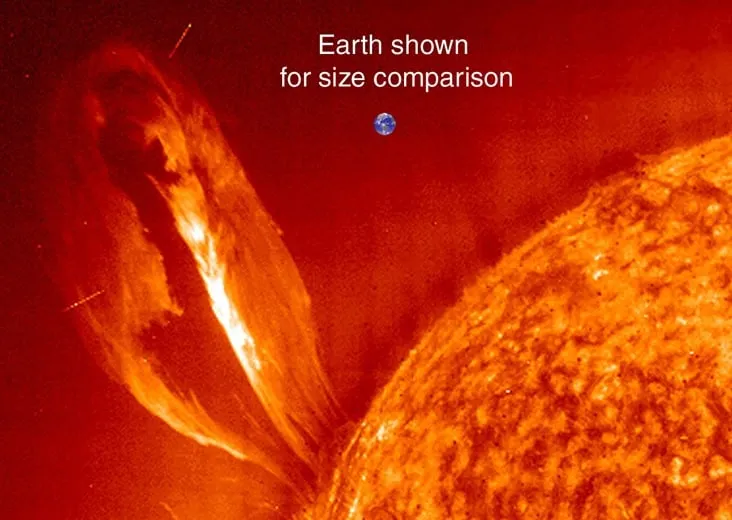
The mean circumference of the Sun is approximately 4,379,000 kilometers (roughly 2,720,984 miles). To put this in perspective, you could fit 109 Earths side-by-side across the Sun’s diameter. However, arriving at this figure requires more than just a telescope and a ruler. It demands a sophisticated tech stack capable of accounting for solar oscillations, gravitational variances, and the lack of a solid surface.
The Computational Challenge of Measuring a Moving Target
Unlike Earth or the Moon, the Sun has no solid crust to serve as a fixed reference point. It is composed of layers of plasma that rotate at different speeds—a phenomenon known as differential rotation. This fluid nature creates a significant challenge for software engineers and astrophysicists attempting to define its exact boundaries.
Defining the Solar Photosphere
Technological measurements of the Sun’s circumference are primarily based on the photosphere, the layer of the Sun’s atmosphere that emits the light we see. To capture this boundary, high-resolution imaging tools use specific filters to block out the overwhelming glare of the corona and focus on the “visible surface.”
Current software models define the solar radius—and by extension, the circumference—at the point where the optical depth is approximately 2/3. This requires massive computational power to analyze light curves and calculate the precise transition from the dense interior to the transparent atmosphere. Without advanced algorithmic smoothing, the Sun’s “surface” would appear as a chaotic, bubbling mess of granules, making a single measurement impossible.
Overcoming Distance and Atmospheric Distortion
Measuring the Sun from Earth is inherently flawed due to atmospheric scintillation—the same effect that makes stars twinkle. This distortion adds a margin of error that is unacceptable for modern solar physics. To solve this, the tech industry has shifted toward space-based observation. By placing sensors outside the Earth’s atmosphere, we can utilize vacuum-environment optics that provide a crystal-clear view of the solar limb (the edge of the Sun).
The “Standard Solar Radius” was officially defined by the International Astronomical Union (IAU) in 2015 as 695,700 kilometers. This value is used by software developers to calibrate global positioning systems and space-navigation algorithms, ensuring that the physical dimensions used in simulations are consistent across all platforms.
Advanced Satellite Technology: From SOHO to the Parker Solar Probe
The precision of our solar measurements is a direct result of the hardware we have launched into orbit. These “gadgets” of the cosmos are some of the most sophisticated pieces of technology ever designed, featuring sensors that can detect changes in solar diameter as small as a few kilometers—an incredible feat considering the Sun is 93 million miles away.
The Solar Dynamics Observatory (SDO) and HMI
The Solar Dynamics Observatory (SDO) is a cornerstone of NASA’s Living With a Star program. One of its most critical instruments is the Helioseismic and Magnetic Imager (HMI). The HMI utilizes a specialized camera system to capture high-definition images of the solar disk across several wavelengths.
By using Doppler imaging tech, the HMI can measure the velocity of the plasma on the Sun’s surface. This allows scientists to use “helioseismology”—essentially using sound waves to map the Sun’s interior—to determine the Sun’s volume and circumference with unprecedented accuracy. The data pipeline for the SDO processes roughly 1.5 terabytes of data every day, requiring robust server architecture and automated data-cleaning scripts.
Space-Based Interferometry
To refine the circumference further, tech specialists use interferometry. This involves combining signals from multiple sensors to create a composite image with the resolution of a much larger telescope. By analyzing the interference patterns of light, engineers can pinpoint the exact edge of the solar disk. This technological approach has revealed that the Sun is actually “flatter” than previously thought, though it remains the most perfect sphere ever measured in nature. The difference between its polar and equatorial diameters is a mere 10 kilometers, a testament to the stability of its internal rotation.
The Role of Artificial Intelligence in Solar Data Processing
As our sensors become more sensitive, the volume of data they generate has exceeded the capacity of human researchers to analyze in real-time. This is where Artificial Intelligence and Machine Learning (ML) have become indispensable tools in the niche of solar measurement and monitoring.
Pattern Recognition in Sunspot Monitoring
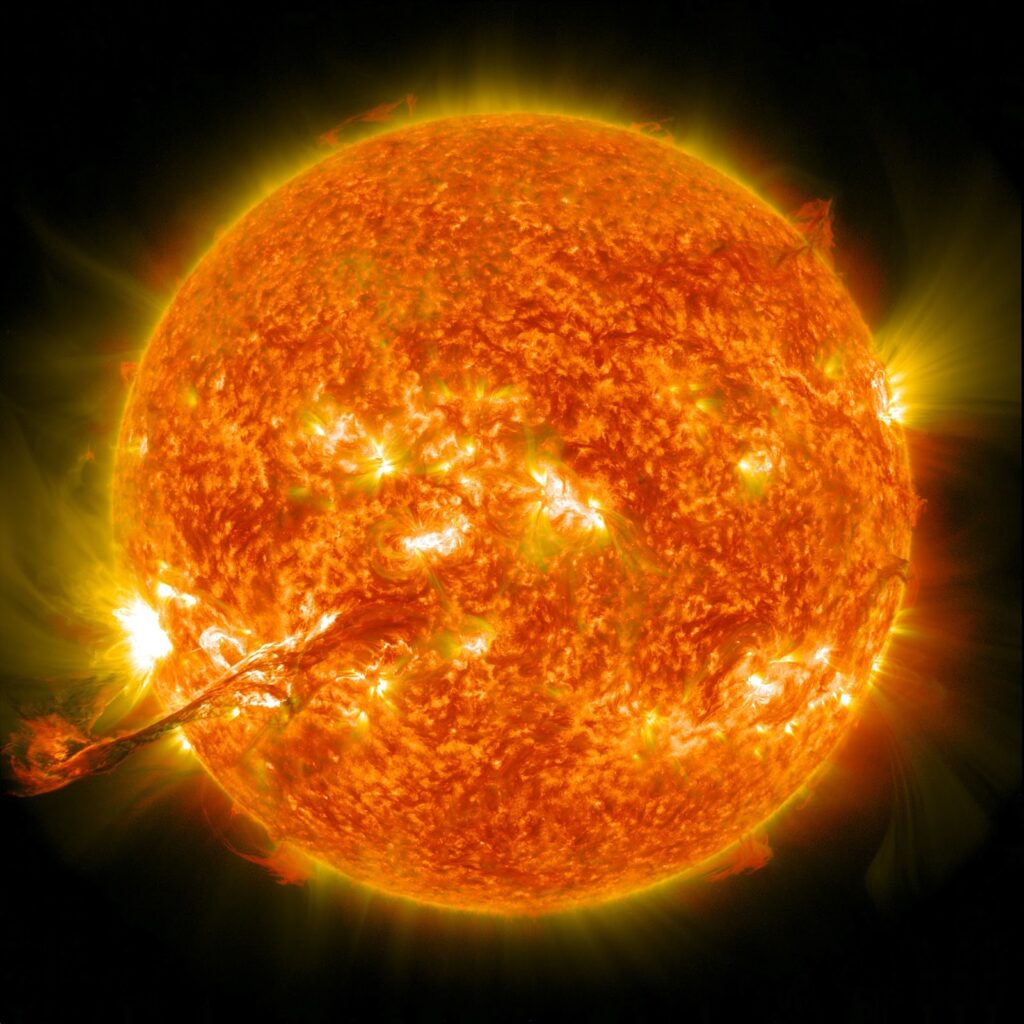
The circumference of the Sun is not perfectly static; it undergoes minute changes during its 11-year solar cycle. AI tools are now used to track sunspots and active regions that can cause the photosphere to bulge or retract slightly. Computer vision algorithms scan thousands of images per hour, identifying these features and calculating their impact on the Sun’s total volume. These AI models are trained on decades of solar data, allowing them to predict shifts in solar behavior with high reliability.
Machine Learning for Solar Radius Correction
Recent software developments have integrated machine learning to correct for “instrumental aging.” Over time, the sensors on satellites like SOHO (Solar and Heliospheric Observatory) degrade due to constant exposure to high-energy solar radiation. AI-driven calibration tools can identify these degradation patterns and automatically adjust the data to ensure that the reported circumference remains accurate. This “self-healing” software approach is critical for long-term missions where manual hardware repairs are impossible.
Why Precision Matters: Technological Implications for Earth
You might wonder why measuring the circumference of a star millions of miles away to the nearest kilometer matters for those of us on Earth. The answer lies in digital security, infrastructure, and the global tech economy.
Solar Weather Prediction and Digital Security
The Sun’s size and activity level are directly linked to solar flares and Coronal Mass Ejections (CMEs). If a major solar storm hits Earth, it can induce massive electrical currents in our power grids and fiber-optic networks. By accurately measuring the Sun’s circumference and monitoring its surface oscillations, tech experts can better predict these events.
Early warning systems powered by solar data allow data centers to enter “safe modes,” protecting the digital security of millions of users. A failure to accurately monitor the Sun could lead to a global “internet apocalypse,” where satellite communication and ground-based digital infrastructure are fried by solar radiation.
Impact on Satellite Communications and GPS
Precision is the backbone of the GPS technology we use every day. GPS satellites must account for general and special relativity, as well as the gravitational pull of the Sun. An accurate measurement of the Sun’s mass and dimensions is essential for the orbital mechanics software that keeps these satellites in their correct positions. If our measurement of the Sun’s circumference were off by even a small percentage, the cumulative error in satellite positioning would eventually render turn-by-turn navigation and synchronized global banking clocks useless.
Future Horizons in Solar Observation Technology
The quest to refine our understanding of the Sun’s dimensions is far from over. New technological trends are emerging that promise even greater insights into the heart of our star.
The development of “CubeSats”—miniaturized satellites—allows for the deployment of swarms of sensors around the Sun. These swarms can provide a multi-angle, 3D view of the solar sphere, allowing software to reconstruct the Sun’s volume in real-time. Additionally, advances in quantum sensing could soon allow us to measure the Sun’s gravitational field with such precision that we could detect changes in its circumference caused by internal core shifts.
Furthermore, as private space tech companies like SpaceX and Blue Origin reduce the cost of launches, the barrier to entry for solar-monitoring hardware is falling. We are entering an era where specialized apps and dashboards can provide real-time solar data to researchers and hobbyists alike, democratizing the science that was once reserved for NASA’s elite teams.
In conclusion, the circumference of the Sun is a fundamental constant that underpins much of our modern technological world. From the satellites that enable our digital communications to the AI tools that protect our power grids, our ability to measure this 4.37-million-kilometer sphere is a crowning achievement of human engineering. As our software and hardware continue to evolve, so too will our understanding of the star that powers our lives, ensuring that we remain prepared for whatever the Sun throws our way.
aViewFromTheCave is a participant in the Amazon Services LLC Associates Program, an affiliate advertising program designed to provide a means for sites to earn advertising fees by advertising and linking to Amazon.com. Amazon, the Amazon logo, AmazonSupply, and the AmazonSupply logo are trademarks of Amazon.com, Inc. or its affiliates. As an Amazon Associate we earn affiliate commissions from qualifying purchases.