
The landscape of international trade and global finance has been fundamentally reshaped by the evolving tariff structures between the United States and China. What began as a series of targeted trade actions in 2018 has matured into a complex, multi-layered fiscal environment that dictates the flow of trillions of dollars in capital. For investors, corporate treasurers, and small business owners, understanding “what the China tariff is now” is no longer just a matter of checking a schedule of duties—it is a critical exercise in risk management and strategic financial planning.
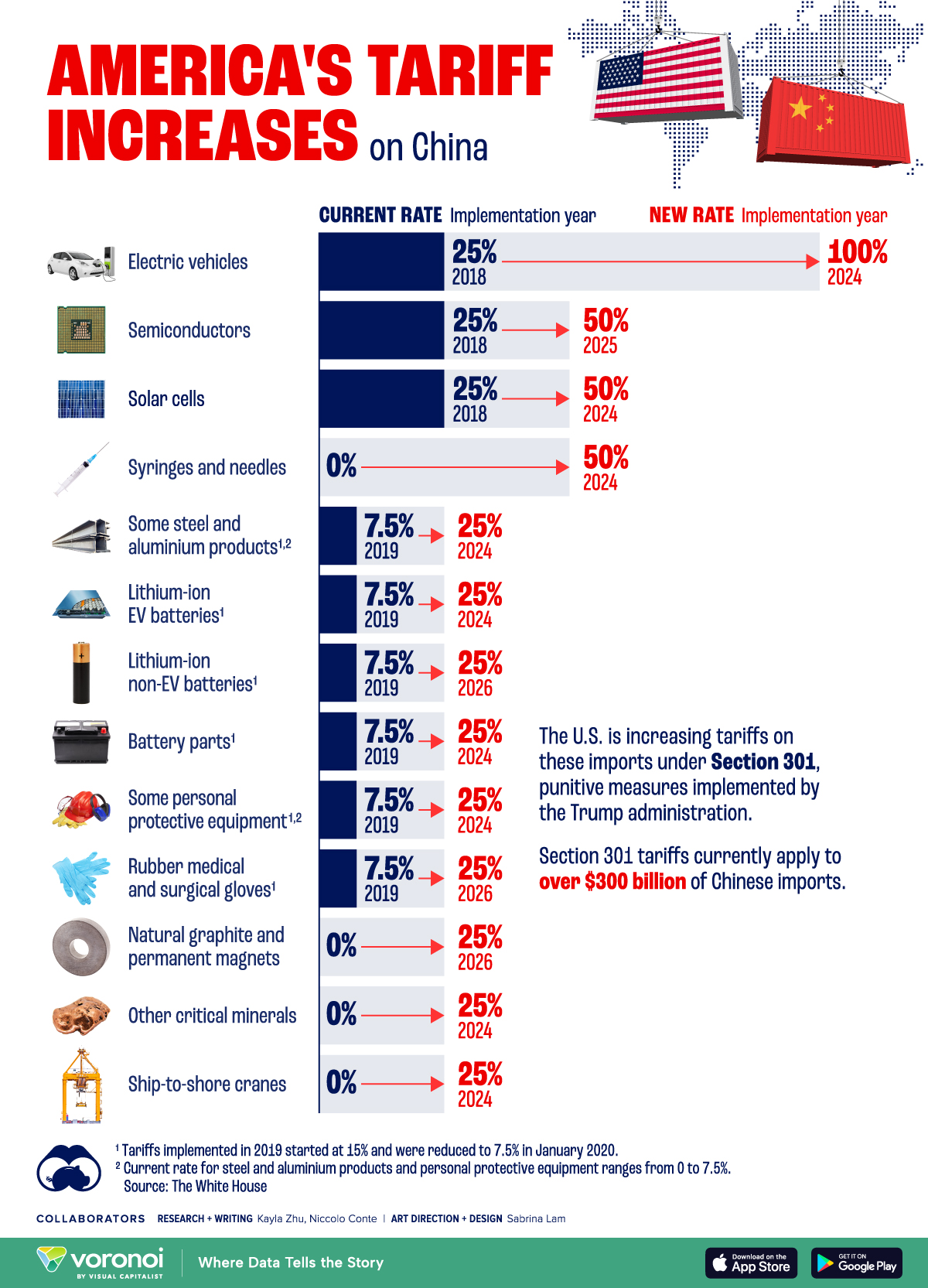
As of 2024, the tariff regime has entered a new phase. While many of the original Section 301 tariffs remain in place, recent executive actions have introduced targeted escalations in strategic sectors. These adjustments are designed to protect domestic industries while recalibrating the cost-benefit analysis of trans-Pacific supply chains. For the financial sector, this translates to margin compression, inflationary pressure, and a heightened need for diversified investment portfolios.
The Current State of Section 301 Tariffs and Recent Escalations
To understand the current tariff environment, one must first look at the foundational “Section 301” duties that have been in effect for several years. These duties cover roughly $350 billion worth of Chinese imports, ranging from industrial machinery to consumer electronics. However, the most significant recent development is the 2024 update, which drastically increased levies on specific high-growth sectors.
Targeted Increases in Strategic Sectors
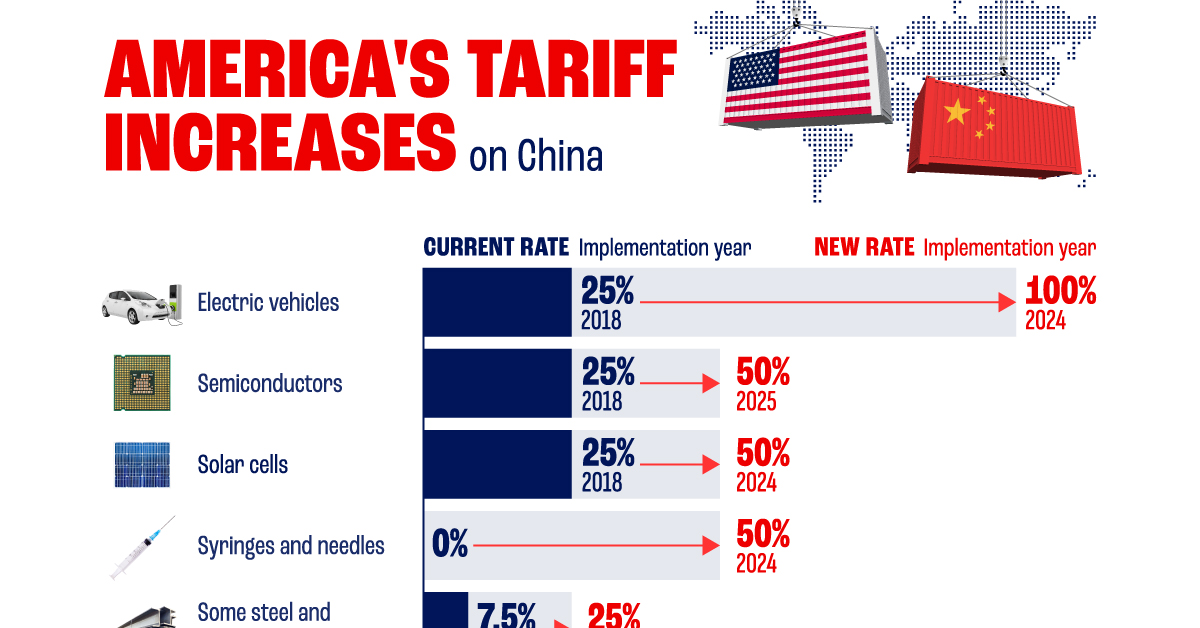
The most aggressive shifts in the tariff landscape are currently focused on the “green economy” and high-tech manufacturing. The U.S. government has significantly increased tariffs on electric vehicles (EVs), rising from 25% to a staggering 100%. This move essentially acts as a financial moat, preventing lower-cost Chinese EVs from disrupting the domestic automotive market and protecting the massive capital investments made by American car manufacturers.
Similarly, tariffs on lithium-ion EV batteries have risen from 7.5% to 25%, while solar cells and semiconductors are seeing jumps to 50%. From a business finance perspective, these increases represent a massive shift in the Cost of Goods Sold (COGS) for companies reliant on these components. Businesses that have not yet diversified their sourcing are facing immediate liquidity challenges as they scramble to cover the increased duty costs at the port of entry.
The Exclusion Process and Financial Relief
While the headline numbers are high, the tariff regime includes an “exclusion” process. This allows businesses to petition for certain products to be exempt from the duties if they can prove that the item is only available in China or that the tariff would cause severe economic harm. For a corporate finance team, managing these exclusions is a vital part of tax planning. However, many of these exclusions have expired or are being phased out, forcing companies to move from a strategy of “waiting it out” to a strategy of permanent supply chain relocation.
The Financial Impact on Corporate Bottom Lines and Small Businesses
The ripple effects of these tariffs extend far beyond the companies directly paying the duties. In the world of business finance, tariffs act as an indirect tax on production, which eventually impacts the bottom line of nearly every sector in the economy.
Margin Compression and Pricing Power
When a business faces a 25% or 50% tariff on a key component, it has three options: absorb the cost, pass it on to consumers, or find a new supplier. For many businesses, especially those in competitive retail markets, passing the full cost to consumers is impossible without losing market share. This leads to margin compression, where the net profit per unit drops significantly.
Investors analyzing quarterly earnings reports now pay closer attention to “gross margin trends” specifically in relation to trade policy. A company with high “pricing power”—the ability to raise prices without a corresponding drop in demand—is much better positioned to survive a high-tariff environment than a low-margin commodity producer.
The Cost of “China Plus One” Strategies
To mitigate financial risk, many corporations are adopting a “China Plus One” strategy, diversifying their manufacturing into countries like Vietnam, India, or Mexico. While this reduces the tax burden of tariffs, the transition itself is a capital-intensive endeavor. Financing the construction of new facilities, training a new workforce, and establishing new logistics networks requires significant upfront capital. In an era of higher interest rates, the cost of financing this transition has become a major line item on corporate balance sheets.
Investment Implications: Navigating Volatility in International Markets
For the individual and institutional investor, the current China tariff situation introduces a layer of “geopolitical risk premium” to the markets. Volatility often spikes following trade announcements, and long-term investment strategies must be adjusted to account for a less globalized, more protectionist world.
Sector-Specific Outlooks
The impact of tariffs is not uniform across the market. Investors must be surgical in their approach:
- Technology and Semiconductors: While tariffs protect domestic production, they can also increase the cost of inputs for hardware companies. Investors should look for firms with robust domestic manufacturing capabilities or those that have successfully “near-shored” their production.
- Consumer Discretionary: Retailers that rely heavily on Chinese manufacturing for apparel or household goods are the most vulnerable. Look for companies that have moved production to the Western Hemisphere to avoid trans-Pacific shipping delays and tariff costs.
- Clean Energy: The 50% tariff on solar cells creates a complex environment. While it protects U.S. manufacturers (potentially boosting their stock value), it increases the cost of project development for utility companies, potentially slowing the rollout of new energy infrastructure.
The Rise of the “Friend-Shoring” Portfolio
Institutional investors are increasingly looking toward “friend-shoring”—investing in nations that have favorable trade agreements with the U.S. Mexico, for example, has seen a surge in foreign direct investment as companies look to utilize the USMCA agreement to bypass China-specific tariffs. Diversifying an investment portfolio to include emerging markets outside of the China-centric supply chain is now a standard defensive move for modern wealth management.
Inflation, Consumer Spending, and Personal Finance
At the level of personal finance, the “China tariff” is often felt most acutely at the cash register. While the goal of tariffs is to protect domestic industry, the immediate effect is often inflationary.
The Hidden Tax on Consumers
When a 25% tariff is placed on a broad range of consumer goods, from luggage to electronic components, it effectively acts as a sales tax. For the average household, this can mean higher prices for laptops, home appliances, and even toys. When combined with broader inflationary trends, these trade costs eat into discretionary income, reducing the amount of money households have available for saving and investing.
Hedging Against Trade-Related Inflation
For savvy individuals looking to protect their purchasing power, hedging against trade-related inflation is essential. This can involve investing in Treasury Inflation-Protected Securities (TIPS) or commodities. Furthermore, as tariffs drive up the cost of imported goods, domestic producers may gain a competitive edge, making “Made in USA” focused funds an interesting niche for those looking to align their investments with current trade realities.
Looking Ahead: Long-Term Financial Strategies in a Protectionist Era
The era of “hyper-globalization” characterized by low tariffs and seamless trade is largely over. The current China tariff structure represents a shift toward a more fragmented global economy. In this environment, financial success belongs to those who can adapt their business models and investment portfolios to a world of higher trade barriers.
Redefining Risk Management
Financial risk management now requires a deep understanding of trade law and geopolitical trends. Businesses should consider “tariff audits” to identify vulnerabilities in their supply chains and explore the use of Foreign Trade Zones (FTZs) to defer or reduce duty payments. From a personal finance perspective, maintaining a flexible and globally diversified portfolio is the best defense against the sudden policy shifts that can occur in a trade-heavy environment.

The Opportunity in Infrastructure and Domestic Manufacturing
Every challenge presents an opportunity. The same tariffs that create costs for importers create a massive tailwind for domestic manufacturing and infrastructure development. The “reshoring” of American industry is backed by billions in government incentives and protected by the very tariffs currently in place. Investors who can identify the companies at the forefront of this industrial renaissance stand to benefit from a long-term structural shift in the American economy.
In conclusion, “what the China tariff is now” is a multi-faceted fiscal policy that touches every corner of the financial world. It is a cost of doing business, a factor in inflation, a driver of supply chain relocation, and a primary source of market volatility. By viewing these tariffs through a professional financial lens, businesses and investors can move beyond reacting to news cycles and start building resilient, long-term strategies that thrive in this new economic reality.
aViewFromTheCave is a participant in the Amazon Services LLC Associates Program, an affiliate advertising program designed to provide a means for sites to earn advertising fees by advertising and linking to Amazon.com. Amazon, the Amazon logo, AmazonSupply, and the AmazonSupply logo are trademarks of Amazon.com, Inc. or its affiliates. As an Amazon Associate we earn affiliate commissions from qualifying purchases.