
In the realm of personal finance, travel often represents one of the most significant discretionary expenses for households and businesses alike. Unlike fixed costs such as rent or insurance, the price of an airline ticket is highly volatile, shifting by the hour based on complex algorithms, global demand, and fuel price fluctuations. Mastering the timing of airfare purchases is not merely a matter of convenience; it is a critical component of strategic financial management. By understanding the mechanics of revenue management systems and identifying the optimal windows for booking, consumers can reclaim a substantial portion of their annual travel budget.

The Economics of Dynamic Pricing and Revenue Management
To understand when to buy a ticket, one must first understand how airlines set their prices. Modern carriers utilize sophisticated “Revenue Management Systems” (RMS) that employ artificial intelligence and historical data to maximize the profit per seat. This is why a passenger in seat 14A may have paid $200 while the passenger in 14B paid $600 for the exact same service.
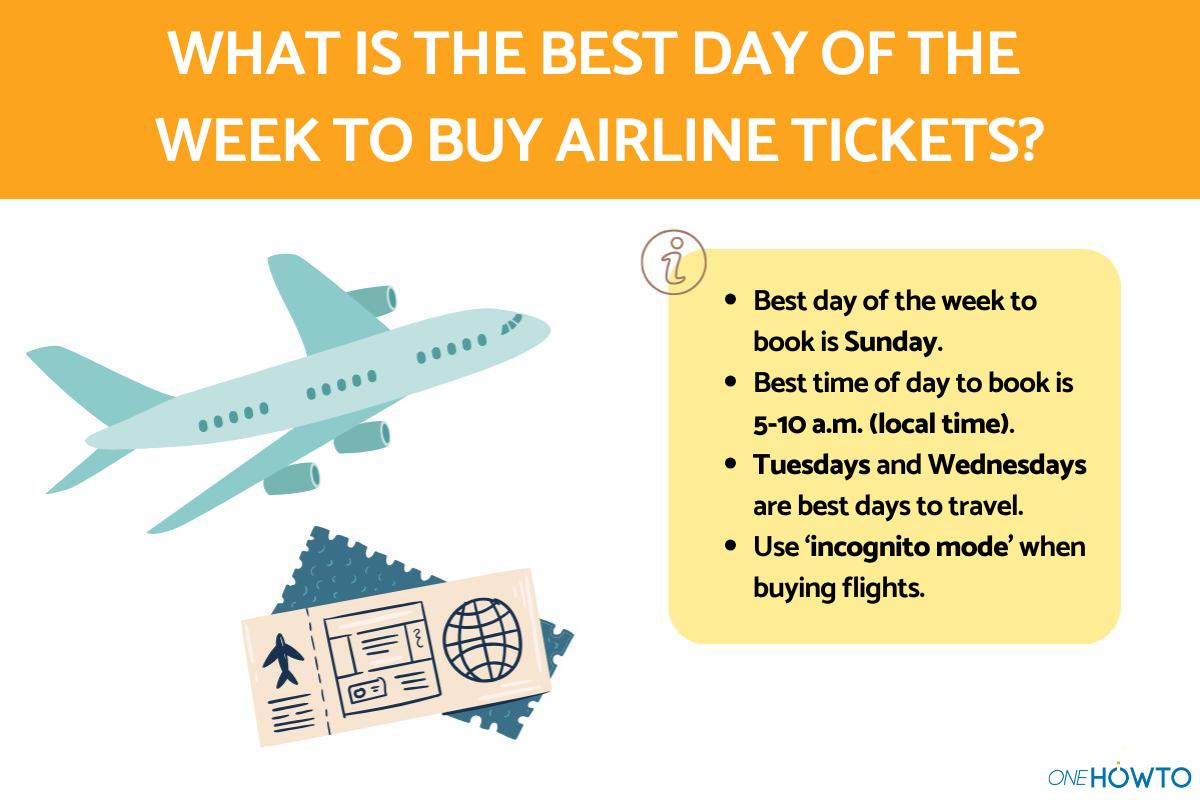
The Myth of the “Magic Tuesday”
For years, the conventional wisdom in personal finance circles was that Tuesday at 3:00 PM EST was the definitive moment to click “purchase.” This belief originated from a time when airlines manually updated their weekly fares and launched sales on Monday nights, forcing competitors to react by Tuesday afternoon. In the modern digital economy, however, pricing is automated and continuous.
While the “Tuesday Myth” has lost much of its potency, there is still a grain of truth regarding mid-week pricing. Data across various financial tracking platforms suggests that airlines are more likely to offer discounted “fare buckets” during the middle of the week when business travel booking volume stabilizes. However, the financial benefit of booking on a specific day of the week has largely been superseded by the “booking window”—the number of days between the purchase and the departure.
Fare Buckets and Inventory Control
Airlines do not sell every seat at a single price. Instead, they divide the cabin into “buckets.” A certain number of seats are allocated to the “Deep Discount” bucket, others to “Standard Economy,” and the final few to “Last-Minute Business.” As a savvy financial planner, your goal is to access the lowest bucket before it evaporates. Once the five or ten seats in the cheapest bucket are sold, the price automatically jumps to the next tier, regardless of what day of the week it is.
Strategizing the Booking Window for Maximum ROI
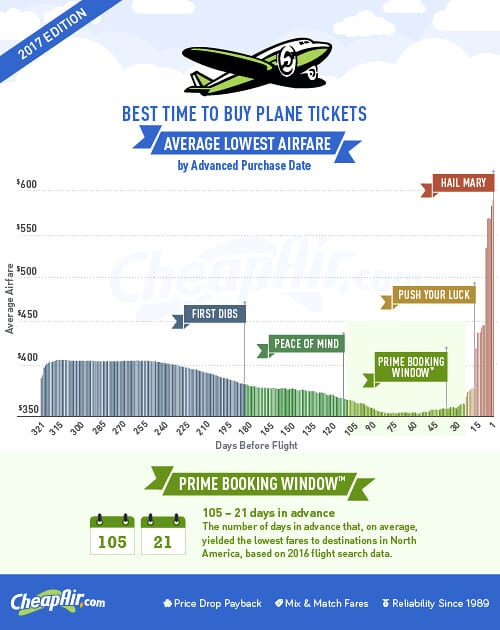
In personal finance, we often discuss the importance of “market timing.” Booking airfare is perhaps the most literal application of this concept. The “Goldilocks Zone” is the period during which prices are at their statistical low point before the surge of last-minute demand.
Domestic vs. International Timelines
For domestic travel within the United States or within a single continent, the optimal booking window generally falls between 28 and 60 days before departure. Within this window, airlines have a clear picture of their remaining inventory and are most likely to lower prices to ensure the aircraft departs at full capacity. Booking too early (six months out) can be a financial mistake, as airlines often set high “baseline” prices before they begin to aggressively manage the yield for that specific flight.
For international travel, the financial stakes are higher, and the window shifts earlier. To secure the best rates on transcontinental flights, the ideal booking period is typically 3 to 6 months in advance. Because international routes have fewer daily frequencies, the demand-to-supply ratio is tighter, meaning the “discount buckets” disappear much faster than they do on domestic routes.
The Significance of the Day of Travel
While the day you buy the ticket is important, the day you fly often has a greater impact on the total cost. From a budgetary perspective, flying on a Tuesday or Wednesday is almost universally cheaper than flying on a Friday or Sunday. Business travelers typically depart on Monday and return on Thursday or Friday, while leisure travelers dominate the weekend. By positioning your travel during the mid-week “lull,” you can often save 20% to 40% on the base fare, providing more capital for investment or other lifestyle expenses.
Financial Tools and Fare Optimization Strategies
High-net-worth individuals and disciplined savers rarely pay “sticker price” for airfare. Instead, they treat travel booking as a form of financial arbitrage, using technology and credit structures to minimize out-of-pocket costs.
Price Tracking and Predictive Analytics
In the modern personal finance toolkit, apps like Google Flights, Hopper, and Kayak are indispensable. These tools use “Big Data” to forecast whether a fare is likely to rise or fall. Using a “Price Tracking” feature allows you to monitor a specific route without committing capital. From a cash-flow perspective, this is a superior strategy to “panic buying.” By waiting for a price drop alert, you ensure that you are buying at the bottom of the volatility curve.
Credit Card Rewards and Points Arbitrage
One of the most effective ways to lower the cost of airfare is to disconnect the purchase from your primary cash reserves. Strategic use of travel-reward credit cards allows consumers to earn “points” or “miles” on everyday spending, which can then be redeemed for flights.
In many cases, the “value per point” increases when booking during specific windows. For example, if a flight costs $500 or 30,000 miles, you are receiving roughly 1.6 cents per mile. If the cash price spikes to $800 but the mileage cost remains 30,000, your “return on investment” for those points has significantly improved. Savvy travelers look for these arbitrage opportunities to maximize the purchasing power of their rewards.
The Hidden City and Multi-City Strategy
A more advanced financial maneuver involves “Hidden City” ticketing, where a traveler books a flight with a layover in their actual destination because it is cheaper than a direct flight to that city. While this requires careful navigation of airline terms of service, it represents a form of price discovery that can save hundreds of dollars. Similarly, “Open-Jaw” tickets—where you fly into one city and out of another—can often reduce the total cost of a multi-leg journey by eliminating redundant backtracking.
Seasonal Fluctuations and the Cost of Convenience
The law of supply and demand is never more visible than during peak holiday seasons. From a wealth-management perspective, traveling during “Peak Season” (December, July, and August) is a high-cost activity that offers the lowest value for money.
The Shoulder Season Advantage
The “Shoulder Season”—the period between peak and off-peak—is the “sweet spot” for the financially conscious traveler. This typically includes late April to early June, and September through October. During these months, demand from families and students drops significantly, forcing airlines to lower prices to attract business and solo travelers. Planning your major annual trips during the shoulder season can result in thousands of dollars in savings over a decade, which, if invested in a diversified portfolio, can contribute significantly to long-term wealth.
Last-Minute Booking: A High-Risk Financial Gamble
In the past, “standby” travel was a way to get cheap seats at the last minute. In today’s high-load-factor environment, where flights are regularly 90% full, last-minute booking is almost always a financial penalty. Airlines know that if you are booking 48 hours before departure, you are likely a business traveler with a corporate expense account or a person in an emergency situation. In both cases, your “price elasticity” is low, meaning you are willing to pay a premium. Avoid booking within the 14-day window unless absolutely necessary, as this is when prices see their most aggressive upward adjustments.
Integrating Travel Savings into a Broader Financial Plan
Optimizing the days you buy airline tickets is not just about the individual transaction; it is about the cumulative effect on your net worth. If an individual saves $300 per flight and takes four flights a year, that is $1,200 in annual savings. Over thirty years, if that $1,200 is invested at a 7% annual return, it grows to nearly $115,000.
Automated Savings and Travel Funds
To treat travel as a serious financial category, consider setting up a dedicated “Sinking Fund.” By automating a monthly transfer into a high-yield savings account designated for travel, you can wait for the “cheapest day” to buy without worrying about cash flow. When the price tracking alert notifies you that a fare has hit its seasonal low, you have the liquidity ready to execute the purchase immediately.
The Impact of Flexibility on Wealth
Ultimately, the most significant “hidden” factor in cheap airfare is the value of your own time and flexibility. The ability to shift your departure by 24 hours or fly out of a secondary airport (such as choosing Oakland over San Francisco) is a form of “flexibility equity.” Those who can afford to be flexible with their schedules can capture the lowest prices in the market, effectively “trading” their time for a lower cash price.
By viewing airline tickets through the lens of personal finance and market dynamics, you move from being a passive consumer to an active market participant. Whether it is leveraging the mid-week lull, monitoring the 28-day domestic window, or using points to hedge against inflation, the goal remains the same: to minimize the cost of the journey so that more of your capital remains working for you in your investments and long-term financial goals. In the modern economy, the “cheapest day” is not a fixed point on the calendar, but a strategic intersection of data, timing, and financial discipline.
aViewFromTheCave is a participant in the Amazon Services LLC Associates Program, an affiliate advertising program designed to provide a means for sites to earn advertising fees by advertising and linking to Amazon.com. Amazon, the Amazon logo, AmazonSupply, and the AmazonSupply logo are trademarks of Amazon.com, Inc. or its affiliates. As an Amazon Associate we earn affiliate commissions from qualifying purchases.