
The quest for affordable airfare is a universal pursuit for travelers worldwide. In an age where digital platforms like Expedia have revolutionized how we plan and book our journeys, a common question echoes through the minds of budget-conscious explorers: “What is the cheapest day to buy tickets on Expedia?” While the allure of a single, definitive answer is strong, the reality of airline pricing is far more complex, driven by sophisticated algorithms, market demand, and strategic airline decisions. This article will delve into the intricacies of finding the best deals on Expedia, dissecting common myths, revealing actionable strategies, and providing a comprehensive guide to maximizing your travel budget. Understanding these dynamics is crucial for anyone looking to make smarter financial decisions when it comes to travel, transforming potential savings into additional experiences at your destination.
Debunking the “Magic Day” Myth: Understanding Dynamic Pricing
The idea of a fixed “cheapest day” to purchase airline tickets is largely a relic of a bygone era. Modern airline pricing, facilitated by online travel agencies (OTAs) like Expedia, operates on a highly dynamic and fluid model. It’s less about a specific day of the week and more about a confluence of factors that constantly shift.
The Algorithm’s Influence
Expedia, like other major booking platforms, doesn’t simply list static prices. Instead, it aggregates data from hundreds of airlines, applying complex algorithms that analyze a multitude of variables in real-time. These algorithms consider current demand for specific routes, historical booking patterns, competitor pricing, capacity on flights, fuel costs, and even external factors like holidays or major events. This means that a ticket price can fluctuate multiple times within a single day, let alone over the course of a week. The system is designed to optimize revenue for airlines, making it incredibly responsive to market changes. For the consumer, this translates into a constantly moving target, where vigilance and strategic timing become paramount. Expedia’s technology is the interface, but the underlying pricing intelligence comes from the airlines themselves, all striving to fill seats at the most profitable rates.
Supply and Demand Fundamentals
At its core, dynamic pricing is an advanced application of basic economic principles: supply and demand. When demand for a particular flight or route is high (e.g., during peak season, school holidays, or around major events), prices will naturally increase because airlines know people are willing to pay more. Conversely, when demand is low, or when an airline needs to fill seats closer to departure, prices may drop to stimulate sales. This principle applies not just to specific flights but also to booking windows. If everyone rushes to book tickets for a popular destination three months out, prices may climb. However, if a surge of bookings then subsides, prices might dip again before rising sharply in the final weeks before departure when only last-minute travelers remain. Understanding this fundamental interplay is key to comprehending why prices are so volatile and why there isn’t a single “cheapest day” that holds true universally.
The Role of Airlines
It’s important to remember that Expedia is an intermediary. The primary pricing decisions are made by the airlines themselves. Airlines often release new fare sales or adjust prices based on their own internal strategies, competitive landscape, and how quickly their inventory is selling. These adjustments can happen at any time. While some studies suggest airlines might initiate sales mid-week, the reality is that major price drops or increases can occur spontaneously. Expedia then reflects these changes almost immediately. Therefore, while Expedia provides the platform to search and purchase, the underlying economic engine driving the prices is firmly within the domain of the airline’s revenue management teams.
Empirical Evidence: Best Days to Book and Best Days to Fly
While the concept of a single “magic day” to book is a myth, historical data and industry analyses do reveal patterns that can guide savvy financial decisions for travelers. These patterns distinguish between the optimal days to make your purchase and the most economical days to take your flight.
The Sweet Spot for Booking
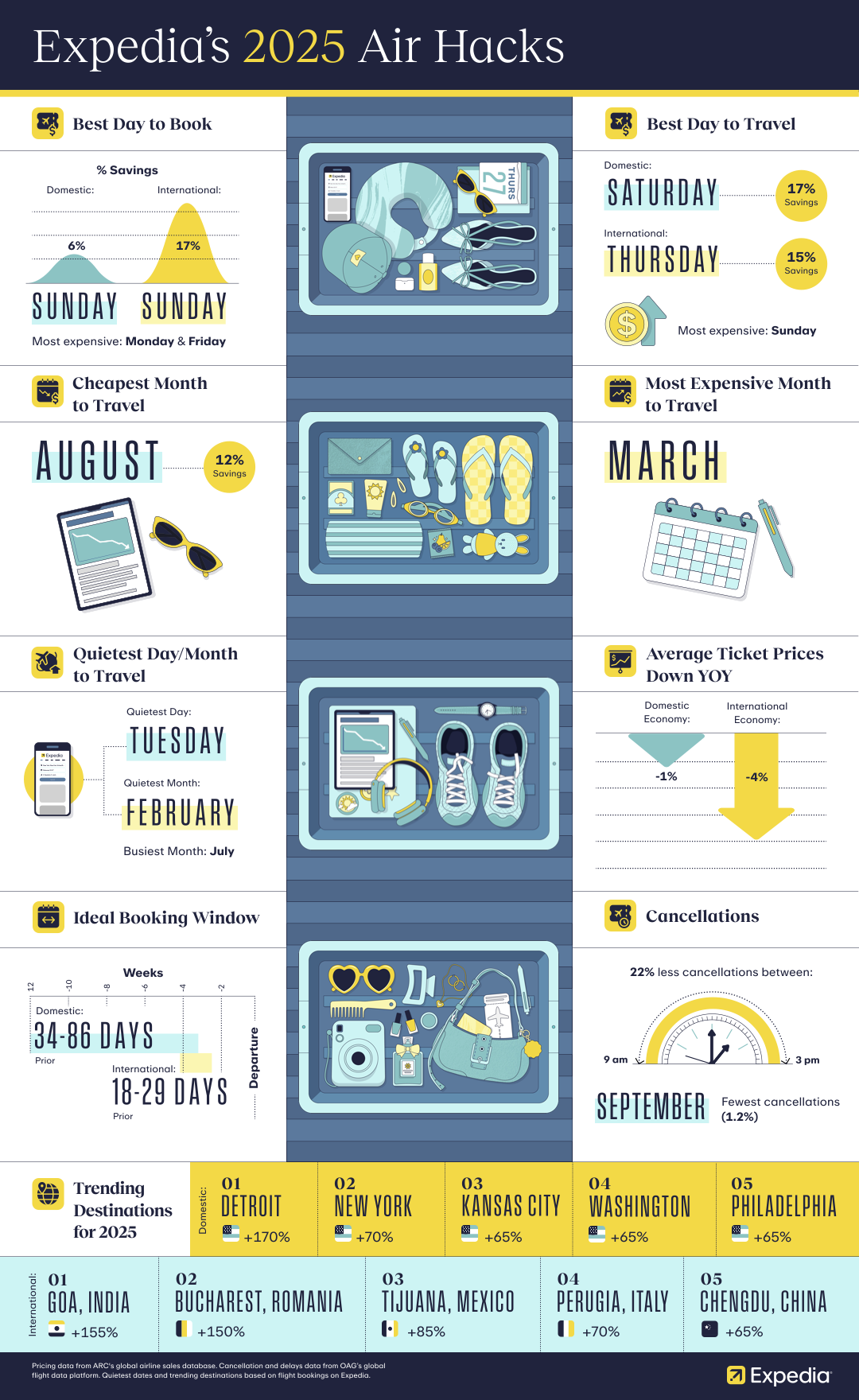
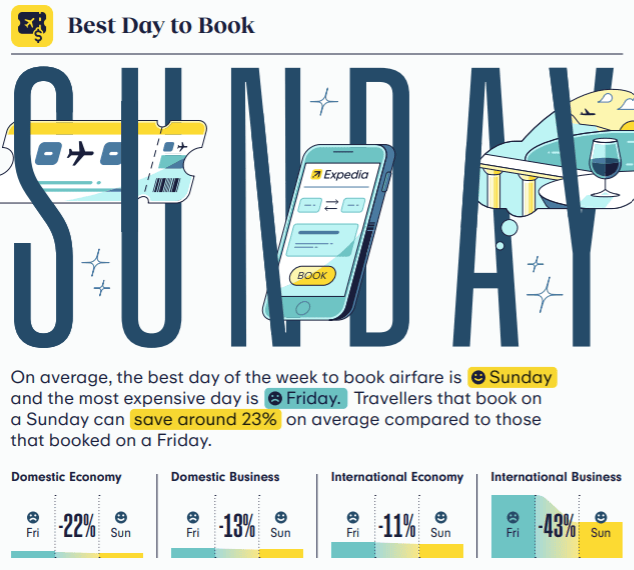
Various studies, including those by Expedia itself and other travel analytics firms, often point to Tuesday or Wednesday as potentially the best days to book a flight. The rationale behind this trend is rooted in competitive dynamics. Airlines frequently release new sales or adjust prices on Monday evenings or early Tuesday mornings. Other airlines then monitor these changes and may match or slightly undercut those prices by Tuesday afternoon or Wednesday. This creates a brief window of increased competition, potentially leading to lower fares. By Thursday or Friday, the weekend booking rush begins, and prices tend to creep up in anticipation of higher demand from leisure travelers. While this isn’t a guaranteed rule, it serves as a general guideline worth considering when planning your purchase. Checking prices mid-week offers a slightly higher statistical probability of catching a good deal.
Cheapest Days to Depart
Perhaps more consistently reliable than the best booking day are the cheapest days to fly. Airfare tends to be significantly lower for flights departing mid-week, specifically Tuesday and Wednesday. This is largely due to reduced demand from both business travelers (who often fly at the beginning and end of the week) and leisure travelers (who prefer long weekends). Saturdays can also sometimes offer good value, especially for international flights, as it avoids the peak Friday departures and Sunday returns. Conversely, Friday and Sunday are almost invariably the most expensive days to fly, driven by the strong demand from weekend leisure trips and business travel. If your schedule allows for flexibility, opting for a mid-week departure and return can often shave a substantial amount off your ticket price, directly impacting your personal finance.
The Impact of Time of Day
Beyond the day of the week, the time of day you choose to fly can also influence the cost. Early morning flights (before 8 AM) and late-night flights (after 9 PM) are often cheaper. This is because these inconvenient times are less desirable for most travelers, leading to lower demand. While it might mean an extra-early alarm or a late arrival, the financial savings can be considerable, making it a worthwhile trade-off for budget-conscious individuals. Furthermore, some anecdotal evidence suggests that searching for flights very early in the morning or late at night might sometimes reveal slightly lower prices, possibly due to fewer users actively searching at those times, which could momentarily influence dynamic pricing algorithms.
Beyond the Day of the Week: Crucial Factors for Maximizing Savings

While understanding optimal booking and flying days provides a good starting point, truly maximizing your savings on Expedia requires a holistic approach that considers several other critical factors. These elements collectively empower you to make more informed financial decisions.
The Optimal Booking Window
One of the most significant determinants of airfare price is when you book in relation to your departure date. Booking too early can sometimes be expensive because airlines haven’t yet released all their promotional fares, and they might initially price flights higher. Booking too late, especially within a few weeks of departure, almost always leads to inflated prices as demand solidifies and airlines cater to last-minute travelers with urgent needs. The “sweet spot” or “Goldilocks zone” for booking typically varies by destination and season but generally falls within:
- Domestic Flights: 1 to 3 months in advance.
- International Flights: 2 to 8 months in advance.
Within these windows, airlines often adjust prices based on how quickly seats are selling, offering opportunities for those who monitor fares diligently. Deviating too far from this window, either too early or too late, statistically increases your chances of paying more.
Flexibility is King
Perhaps the single most powerful tool in a budget traveler’s arsenal is flexibility. If you can be flexible with your:
- Dates: Shifting your travel by just a day or two can yield hundreds of dollars in savings, especially if it means avoiding a peak travel day.
- Times: As mentioned, flying at less convenient times (early morning, late night) is often cheaper.
- Airports: Checking nearby alternative airports, even if they require a short drive, can sometimes reveal significantly cheaper fares. A flight into a smaller, secondary airport might be more economical than flying directly into a major hub.
- Routes: Being open to connecting flights instead of direct ones can also lead to savings, though it adds to travel time.
Expedia’s flexible search tools, which allow you to view prices across a calendar month, are invaluable for identifying these cost-saving opportunities.
Leveraging Fare Alerts and Price Trackers
In the dynamic world of airfare pricing, staying constantly updated can be tedious. This is where technology becomes your ally. Expedia often provides options to set up price alerts for specific routes. When the fare for your desired flight drops, you’ll receive an email notification. Additionally, independent third-party apps and websites specialize in tracking flight prices and notifying users of significant drops or deals. By setting up these alerts, you effectively outsource the constant monitoring, ensuring you don’t miss out on a sudden price reduction that could save you a considerable sum.
Consider Connecting Flights and Alternate Airports
Direct flights are convenient, but they often come with a premium. If time isn’t your absolute highest priority, considering flights with layovers can significantly reduce the cost. Sometimes, flying into a larger, more competitive hub and then taking a separate, often cheaper, regional flight or ground transportation to your final destination can be more economical than a single direct ticket to a smaller airport. Similarly, as mentioned above, looking at airports within a reasonable driving distance of your ultimate destination might reveal better deals. Always weigh the time saved against the money saved to determine the best financial fit for your travel plans.
Strategic Tips for Expedia Users
Leveraging the features and understanding the operational nuances of Expedia can further enhance your ability to secure the cheapest tickets, allowing you to manage your travel budget more effectively.
Utilize Expedia’s Filter and Sort Options
Expedia’s platform is designed with powerful search and filtering capabilities that many users underutilize. When you search for flights, pay close attention to the filter options on the left-hand side. You can sort results by price, duration, number of stops, airline, and even departure/arrival times. Experimenting with these filters, for instance, by deselecting preferred airlines to see if budget carriers offer a better deal, or by expanding your search to include more stops, can uncover cheaper options you might otherwise overlook. Always sort by “price (lowest)” first to quickly identify the base cost.
Bundle Deals (Flight + Hotel/Car)
Expedia is renowned for its package deals. Often, booking a flight and hotel together, or a flight, hotel, and rental car, can be significantly cheaper than purchasing each component separately. This is because OTAs like Expedia have negotiated bulk rates with hotels and car rental companies, and they pass on some of these savings to consumers who bundle. Even if you only need a hotel for a portion of your trip, it’s worth checking if a flight+hotel package for the entire duration saves you money compared to buying the flight alone, and then simply not using the hotel for the days you don’t need it (though always check cancellation policies). This strategy can lead to substantial overall savings on your travel budget.
Loyalty Programs and Rewards
Expedia offers its own loyalty program, Expedia Rewards, where users earn points on eligible bookings. These points can then be redeemed for discounts on future flights, hotels, and other travel components. While the earning rate might seem modest, for frequent travelers, these points can accumulate over time, leading to tangible savings. Furthermore, remember that booking through Expedia often still allows you to earn miles or points with the airline’s own loyalty program. Always enter your frequent flyer number during the booking process to double-dip on rewards, maximizing your financial return on travel spending. Some travel credit cards also offer bonus points for travel purchases, adding another layer of rewards.
Incognito Mode and Clearing Cookies
A common piece of advice in online travel booking is to use incognito mode or clear your browser’s cookies, based on the theory that websites track your searches and potentially increase prices on repeat visits. While this might have been more prevalent in the past, major platforms like Expedia use sophisticated caching and real-time pricing from airlines, making the impact of cookies and incognito mode minimal, if not negligible, on current pricing. Prices are primarily driven by overall demand and airline algorithms, not individual browsing history. However, using incognito mode doesn’t hurt and can provide a cleaner search experience, so some travelers still prefer it out of habit or for peace of mind. Focus more on the other concrete strategies mentioned, as they have a far greater impact on your wallet.
Conclusion
The quest to find the cheapest day to buy tickets on Expedia is less about uncovering a mystical date and more about adopting a strategic, informed approach to travel planning. While Tuesday and Wednesday might offer a statistical edge for booking, and mid-week flights often present the best value, these are merely guidelines within a complex, dynamically priced market.
True savings stem from understanding the underlying economics of supply and demand, leveraging Expedia’s powerful tools, and embracing flexibility. By being adaptable with your travel dates, considering alternative airports, utilizing price alerts, and exploring bundled deals, you empower yourself to make intelligent financial decisions that significantly reduce your travel expenses. The ultimate takeaway is that proactive research, consistent monitoring, and a willingness to adapt your plans are your most potent allies in the pursuit of affordable airfare. With these insights, Expedia transforms from a simple booking platform into a powerful financial tool that, when wielded skillfully, unlocks a world of travel possibilities without breaking the bank.
aViewFromTheCave is a participant in the Amazon Services LLC Associates Program, an affiliate advertising program designed to provide a means for sites to earn advertising fees by advertising and linking to Amazon.com. Amazon, the Amazon logo, AmazonSupply, and the AmazonSupply logo are trademarks of Amazon.com, Inc. or its affiliates. As an Amazon Associate we earn affiliate commissions from qualifying purchases.