
The quest for affordable airfare is a universal pursuit for budget-conscious travelers and savvy financial planners alike. In an era where travel has become more accessible yet increasingly complex in its pricing, understanding the optimal time to secure flight tickets can translate into significant savings, directly impacting one’s personal finance goals. Dispelling myths and navigating the ever-shifting landscape of airline pricing requires a blend of insight, strategic planning, and a keen eye on market dynamics. This article delves into the nuances of airfare booking, moving beyond simplistic advice to offer a comprehensive, financially-minded approach to securing the best possible deals. We aim to equip you with the knowledge to make informed decisions that safeguard your travel budget and enhance your overall financial well-being.
The Evolving Science of Airfare Pricing and Its Impact on Your Wallet
The days of static flight prices are long gone. Modern airfare pricing is a sophisticated, data-driven science, making the search for the “cheapest day” a more intricate endeavor than many realize. Understanding the underlying mechanisms is the first step towards smarter spending.
Dynamic Pricing Algorithms: How Airlines Manipulate Your Budget
Airlines employ highly advanced dynamic pricing algorithms that constantly adjust fares based on a multitude of factors. These algorithms analyze real-time data, including demand for specific routes, competitor pricing, seat availability, historical booking patterns, fuel costs, and even the type of device or location from which a search originates. This means that the price of a flight can change not just daily, but sometimes within hours or even minutes. From a financial perspective, this continuous fluctuation presents both a challenge and an opportunity. For the unaware, it can lead to overspending; for the informed, it opens avenues for strategic booking. The goal of these algorithms is simple: maximize revenue by selling each seat at the highest possible price the market will bear at any given moment, effectively segmenting passengers by their willingness to pay.
Supply and Demand Fundamentals: The Core Economic Driver
At its heart, airfare pricing remains rooted in the fundamental economic principles of supply and demand. High demand for a particular route or travel date, coupled with limited supply of seats, inevitably drives prices up. Conversely, low demand or an abundance of available seats can lead to price drops as airlines try to fill planes. Seasonality plays a huge role here: peak travel seasons (summer holidays, Christmas, spring break) inherently see higher demand and thus higher prices. Major events, festivals, or conferences in a destination also create localized demand spikes. Understanding these demand cycles is crucial for a financially astute traveler. Booking during off-peak seasons or shoulder seasons (just before or after peak) often presents better value, directly reducing the expenditure on air travel.
The Myth of a Single “Cheapest Day”: Beyond Oversimplification
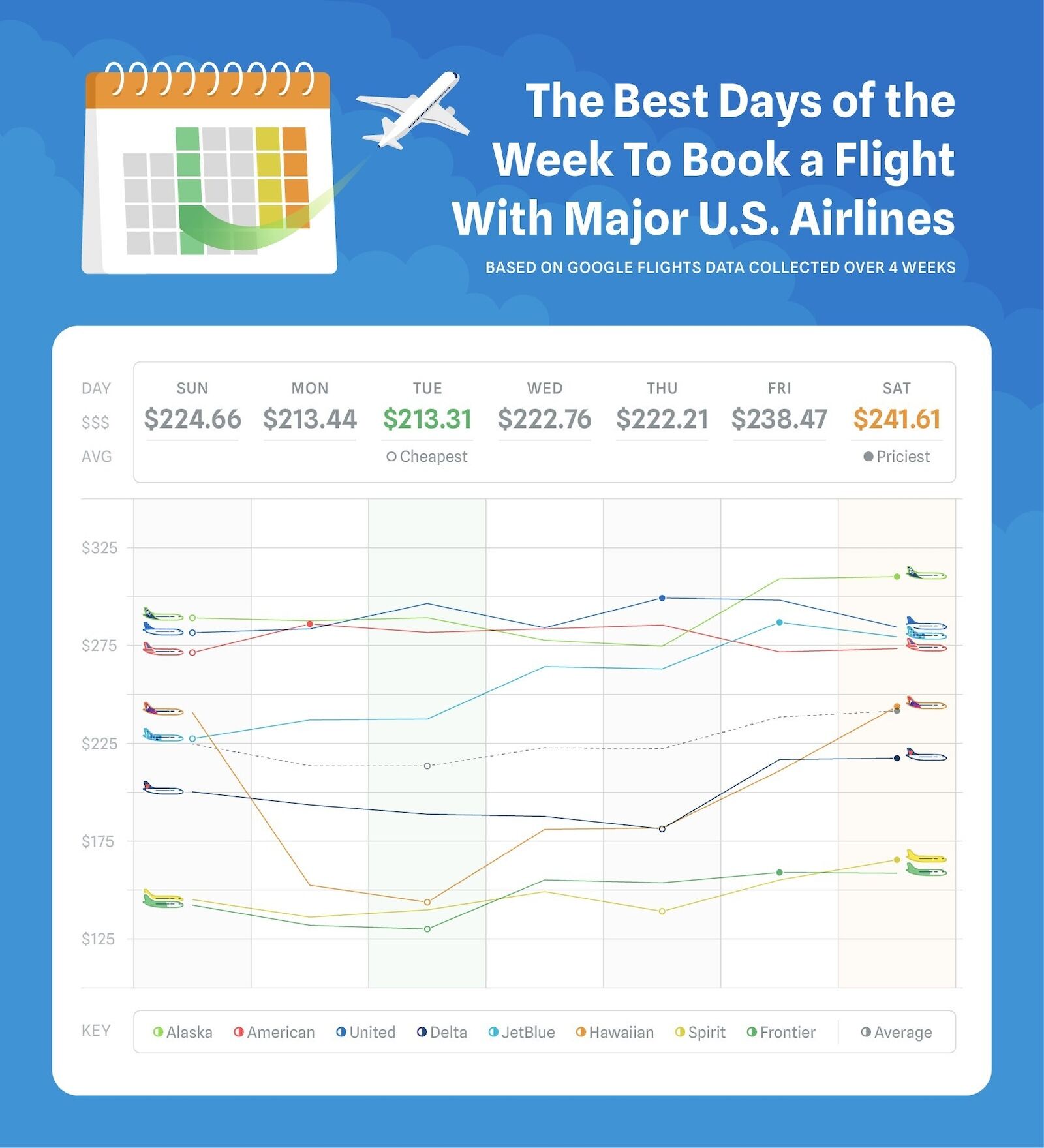
While many sources confidently declare Tuesday or Wednesday as the cheapest day to book airfare, this is largely an oversimplification in today’s dynamic pricing environment. The idea originated from a time when airlines would launch weekly sales on Monday nights, leading to competitors matching those prices on Tuesday mornings. While this pattern can still influence some price drops, it’s far from a guaranteed rule. The reality is that the “cheapest day” to purchase a ticket is less about a specific calendar day and more about the confluence of market conditions, booking window, and airline strategies. Focusing solely on a particular day of the week can distract from more impactful financial strategies, such as booking at the right time before departure, or being flexible with your travel dates. For smart financial management, it’s more productive to understand the broader trends rather than chase an elusive single-day “sweet spot” for booking.
Unpacking the Best Time to Purchase Tickets for Maximum Savings
Beyond the elusive “cheapest day,” there are more reliable temporal strategies that can lead to significant savings on your airfare. These insights are derived from extensive data analysis of booking patterns and airline pricing behaviors, offering a more robust financial approach to travel planning.
The “Sweet Spot” Booking Window: Timing is Everything
Data consistently shows that there’s an optimal window for booking flights, which varies depending on whether you’re traveling domestically or internationally. For domestic flights, the “sweet spot” typically falls between 1 to 3 months (approximately 28 to 100 days) prior to departure. Within this window, prices tend to be lower than booking too early (when airlines might still be gauging demand) or too late (when demand firms up and limited seats push prices higher). For international flights, the window widens due to longer planning cycles and greater competition, often ranging from 3 to 6 months (approximately 90 to 180 days) out. Booking within these windows allows you to capitalize on a period where airlines are balancing the need to fill seats with the desire to maximize profit, before last-minute demand inflates prices. Missing this window often means paying a premium, directly impacting your travel budget.
Early Bird vs. Last-Minute Deals: Assessing Financial Risks
The allure of “early bird” or “last-minute” deals can be strong, but each comes with its own financial risks and rewards. Booking too early (e.g., 6-12 months out for domestic) can sometimes mean paying more, as airlines haven’t yet fine-tuned their pricing strategy and might offer higher initial fares to capture early planners. The risk is that prices could drop significantly closer to the departure date. Conversely, waiting for last-minute deals (within two weeks of departure) is a high-stakes gamble. While airlines occasionally release cheap seats to fill empty spots, more often, prices skyrocket as demand outweighs limited availability. This strategy is particularly risky if your travel dates are inflexible or you’re heading to a popular destination. From a personal finance perspective, consistently aiming for the “sweet spot” window offers the most reliable path to savings, mitigating the financial risks associated with extreme early or late bookings.
The Role of Day of the Week for Purchasing: Understanding the Nuance
While the “cheapest day to book” is a myth, there’s still a kernel of truth in the idea that certain days might present better opportunities for finding deals. Tuesdays and Wednesdays are often cited, not because airlines necessarily set lower base fares on these days, but because:
- Sales Cycles: Airlines traditionally launch sales on Monday evenings or early Tuesday mornings. Competitors then have a chance to match these sales, leading to a flurry of competitive pricing throughout Tuesday and Wednesday. This can create temporary price drops that a vigilant consumer can capitalize on.
- Lower Demand for Shopping: Fewer people are typically shopping for flights mid-week compared to weekends, when leisure travelers have more time. Lower traffic can sometimes coincide with price adjustments.
However, these fluctuations are often short-lived and require proactive monitoring. Relying on a specific day for booking is less effective than using price alerts and remaining flexible. The financial takeaway is to be aware of these potential mid-week dips but not to blindly wait for them, as a better deal might appear on any given day.
Strategic Considerations Beyond the Booking Day for Enhanced Savings
Optimizing your airfare costs extends far beyond just when you click the “book” button. A holistic approach to travel planning, integrating flexibility and smart choices about when and how you travel, can yield substantial financial benefits.
Flying on Cheaper Days of the Week: Minimizing Travel Costs
While the day you book might be fluid, the day you fly has a much more consistent impact on ticket prices. Generally, the cheapest days to fly are Tuesdays, Wednesdays, and Saturdays. These are typically the days with the lowest demand from both business travelers (who often fly Monday-Friday) and weekend leisure travelers. Conversely, Fridays and Sundays are almost universally the most expensive days to fly. Shifting your travel by just one day, from a Friday departure to a Thursday night or Saturday morning, can often result in noticeable savings. This flexibility directly translates into more disposable income for your trip or for other financial goals.
Avoiding Peak Travel Periods: The Ultimate Budget Hack
No amount of booking wizardry can entirely offset the price inflation that occurs during peak travel seasons. Avoiding major holidays (Christmas, New Year’s, Thanksgiving), school breaks (spring break, summer vacation), and popular event dates in your destination is perhaps the most impactful strategy for saving money. Airlines know demand will be high during these times and price accordingly. If your schedule allows, traveling during the “shoulder seasons” (e.g., late spring or early fall) or the true off-season can drastically reduce airfare costs. This strategic avoidance of peak demand periods is a fundamental principle of financially savvy travel.
Flexibility is Your Financial Friend: Unlocking Hidden Value
The more flexible you can be with your travel plans, the greater your chances of finding a cheaper flight.
- Flexible Dates: Instead of rigid departure and return dates, use search engines that allow you to view prices across a month or use a “flexible dates” option. Shifting your trip by a few days can sometimes save hundreds of dollars.
- Flexible Airports: Consider flying into or out of alternative, smaller airports near your destination. These might be served by budget airlines or simply have less demand, leading to lower fares. Factor in the cost and time of ground transportation, but often the airfare savings outweigh these.
- Flexible Destinations: If your primary goal is simply to travel and explore, consider being open to different destinations based on where the best flight deals are. “Explore Everywhere” features on search engines can be a goldmine for budget travelers.

Each layer of flexibility you add empowers you to exploit market inefficiencies and secure better prices, directly contributing to your personal savings.
Leveraging Stopovers and Indirect Routes: Trading Time for Money
Direct flights are convenient, but that convenience often comes at a premium. Opting for flights with one or more stopovers, or even choosing indirect routes that connect through less common hubs, can often be significantly cheaper. While this strategy adds to your travel time, it’s a direct trade-off where you exchange time for financial savings. For those with more flexible schedules and a tight budget, this can be an excellent way to reduce overall travel expenditure. Always compare the total travel time, layover durations, and potential for missed connections against the savings, but for many, the financial benefit makes the extra travel time worthwhile.
Advanced Tools and Tactics for Airfare Savings
In the digital age, a plethora of tools and tactics exist to help you navigate the complexities of airfare pricing and secure the best deals. Leveraging these can be a critical component of your financial travel strategy.
Price Comparison Websites and Aggregators: Your Digital Scout
Utilizing comprehensive price comparison websites and aggregators is non-negotiable for finding the cheapest flights. Platforms like Google Flights, Skyscanner, Kayak, Momondo, and Expedia search across hundreds of airlines and online travel agencies (OTAs) to present you with a wide array of options. Each platform has its unique strengths – some are better for flexible date searches, others for multi-city itineraries, or finding budget carriers. Don’t rely on just one; cross-referencing between a few can sometimes reveal hidden deals. These tools empower you to quickly compare prices, filter by stops, airlines, and departure times, making it an indispensable part of financially smart flight booking.
Price Alerts and Tracking: Letting Technology Do the Work
Given the dynamic nature of airfare pricing, constantly checking flight prices manually is inefficient and impractical. This is where price alerts and tracking tools become invaluable. Most major search engines (Google Flights, Skyscanner, Kayak) offer the ability to set up email alerts for specific routes and dates. When the price for your desired flight drops, you’ll receive a notification, allowing you to snatch up the deal before it disappears. This passive yet proactive strategy ensures you don’t miss out on potential savings without having to dedicate hours to monitoring. It’s an excellent example of using technology to optimize your financial outcomes.
Incognito Mode and VPNs: Dispelling Myths and Exploring Real Benefits
A common piece of advice is to search for flights using incognito mode in your browser or a Virtual Private Network (VPN) to mask your location, supposedly to prevent airlines from raising prices based on repeated searches or your geographical location. While there’s no definitive, widespread evidence that airlines consistently implement this specific tactic to dramatically inflate prices for individual users, using incognito mode can still be beneficial. It clears cookies, ensuring that your previous searches aren’t influencing what you see. For VPNs, their primary benefit for flight searching isn’t usually price manipulation but rather accessing localized pricing: sometimes, booking a flight from the airline’s website in the country of origin (via a VPN) can yield different, potentially lower, prices. However, these are often marginal and require more effort, so focus on broader strategies first.
Airline Loyalty Programs and Credit Card Perks: Earning Your Way to Savings
For frequent flyers, leveraging airline loyalty programs and travel-focused credit cards can lead to substantial financial benefits. Earning miles or points through flying or everyday spending allows you to redeem them for free flights, upgrades, or discounts. Many travel credit cards also offer valuable perks like sign-up bonuses, airport lounge access, free checked bags, travel insurance, and no foreign transaction fees, all of which contribute to reducing the overall cost of travel. Strategically accumulating and redeeming points requires financial planning but can significantly cut down on out-of-pocket airfare expenses.
Budget Airlines vs. Full-Service Carriers: Understanding the Trade-Offs
When comparing prices, always understand what’s included in the fare. Budget airlines (e.g., Ryanair, Spirit, Frontier, Allegiant) often offer incredibly low base fares, but they unbundle services, charging extra for everything from seat selection and checked baggage to carry-on bags and even water on board. While these can be excellent for short, no-frills trips, these add-on fees can quickly erode any initial savings if you’re not careful. Full-service carriers might appear more expensive initially, but their fares often include baggage allowances, in-flight meals, and entertainment. From a financial perspective, always calculate the total cost of your flight, including all potential fees, before making a booking decision.
Holistic Financial Planning for Travel
Securing cheap airfare is just one piece of the puzzle. A truly financially intelligent approach to travel integrates these savings into a broader personal finance strategy.
Budgeting for Travel: Setting Realistic Financial Goals
Before you even start searching for flights, establish a realistic travel budget. This means determining how much you can comfortably spend on the entire trip – including flights, accommodation, food, activities, and incidentals – without compromising your other financial goals (savings, debt repayment, investments). A well-defined budget acts as your financial guardrail, ensuring that your pursuit of wanderlust doesn’t derail your fiscal health.
The Opportunity Cost of Expensive Flights: What Else Could That Money Buy?
Every dollar spent on an expensive flight is a dollar that cannot be used elsewhere. Understanding the “opportunity cost” is key for financial mindfulness. Could the extra $200 you saved on airfare instead go towards an emergency fund, a down payment, a retirement account, or even fund a significant portion of your next trip? By prioritizing cost-effective travel, you free up capital that can be redirected to higher-priority financial objectives, reinforcing the value of smart airfare booking.
Long-Term Savings Strategies: Building a Travel Fund
For those who travel regularly, establishing a dedicated “travel fund” is an excellent financial strategy. Treat it like any other savings goal, setting aside a small amount regularly. This proactive saving ensures that when a great flight deal appears, you have the funds readily available to capitalize on it, rather than having to dip into other savings or accrue debt. It shifts travel from an occasional expense to an integrated part of your financial plan.
Travel Insurance as a Financial Safeguard: Protecting Your Investment
While seemingly an additional cost, travel insurance can be a critical financial safeguard, particularly for expensive international trips or those booked far in advance. It protects your investment against unforeseen circumstances like trip cancellations, medical emergencies abroad, lost luggage, or flight delays. The cost of comprehensive travel insurance is often a small fraction of your total trip cost, but it can prevent catastrophic financial losses should something go wrong. It’s an essential part of responsible travel budgeting and risk management.

Conclusion
The pursuit of the cheapest day to book airfare is less about pinpointing a specific calendar date and more about adopting a strategic, financially savvy approach to travel planning. By understanding the dynamic nature of airline pricing, leveraging optimal booking windows, embracing flexibility in travel dates and destinations, and utilizing modern price tracking tools, you can consistently secure better deals. Integrating these practices into your broader personal finance strategy – through diligent budgeting, thoughtful saving, and wise spending – ensures that your travel adventures enhance rather than detract from your financial well-being. Smart travel is, ultimately, smart money management.
aViewFromTheCave is a participant in the Amazon Services LLC Associates Program, an affiliate advertising program designed to provide a means for sites to earn advertising fees by advertising and linking to Amazon.com. Amazon, the Amazon logo, AmazonSupply, and the AmazonSupply logo are trademarks of Amazon.com, Inc. or its affiliates. As an Amazon Associate we earn affiliate commissions from qualifying purchases.