
At the heart of every smartphone, every cloud server, and every electric vehicle lies a single, immutable physical constant: the charge of an electron. While a physicist might define it as approximately $-1.602176634 times 10^{-19}$ coulombs, for the technology industry, this number represents the bedrock of modern civilization. The “charge” for an electron is not a monetary cost, but a physical property that facilitates the movement of information and energy.
In the tech sector, understanding this charge is more than a scientific exercise; it is the engineering hurdle that determines the limits of Moore’s Law, the efficiency of our power grids, and the future of artificial intelligence. By exploring the mechanics of this elementary charge, we can better understand the trajectory of hardware evolution and the digital tools that define our era.

The Architecture of Information: Electrons in Semiconductors
The entire software industry—from the simplest mobile app to the most complex Large Language Model (LLM)—is built upon the manipulation of electron flow. In a semiconductor, the presence or absence of this charge is what allows a transistor to function as a binary switch (0 or 1).
The Evolution of the Transistor
In the early days of computing, vacuum tubes were used to control the flow of electrons. These were bulky, inefficient, and prone to failure. The transition to solid-state transistors revolutionized technology by allowing engineers to control electron flow within a crystalline lattice, usually silicon. As we move toward 2-nanometer (nm) and 1-nm process nodes, the “charge” of the electron becomes increasingly difficult to manage. At these microscopic scales, “electron tunneling”—a phenomenon where electrons jump across barriers they shouldn’t—becomes a major hurdle for chip designers like TSMC and Intel.
Gate-All-Around (GAA) Architecture
To combat the leakage of charge at sub-3nm scales, the tech industry has shifted from FinFET (Fin Field-Effect Transistor) designs to Gate-All-Around (GAA) nanosheets. This architecture allows for better electrostatic control over the channel, ensuring that the electron’s charge is precisely where it needs to be to maintain signal integrity. Without this precise mastery of a single electron’s behavior, the high-performance computing required for AI would be physically impossible due to heat and power leakage.
Doping and Charge Carriers
Semiconductors aren’t just pure silicon; they are “doped” with impurities to create an abundance of charge carriers. “N-type” semiconductors have an excess of electrons, while “P-type” have an abundance of “holes” (the absence of an electron). The interaction between these two—the movement of the negative charge toward the positive void—is what creates the diode and the transistor. This fundamental dance of charges is the silent engine behind every line of code ever written.
Powering the Mobile Revolution: Electrons and Battery Chemistry
If semiconductors are the “brain” of technology, then the movement of electron charges through batteries is the “blood.” The modern tech economy is increasingly mobile, and our reliance on lithium-ion (Li-ion) technology is essentially an exercise in managing the flow of electrons between an anode and a cathode.
The Mechanics of Lithium-Ion Storage
When you charge your laptop or smartphone, you are using an external power source to push electrons into the battery’s anode. Simultaneously, lithium ions move through an electrolyte to balance the charge. When you use the device, the process reverses: the electrons flow out through your device’s circuitry to do work—lighting up pixels or running a processor—before returning to the cathode. The “charge” of the electron determines the energy density and the discharge rate of these units.
The Shift to Solid-State Tech
One of the most anticipated trends in the gadget and EV space is the move to solid-state batteries. Current liquid electrolytes are flammable and limit how fast we can move electrons. Solid-state technology aims to replace the liquid with a solid ceramic or polymer, allowing for faster electron transfer and higher safety. For the consumer, this means “charging” an electron-hungry EV in five minutes rather than fifty, fundamentally changing the tech landscape of transportation.
Energy Efficiency in AI Data Centers
As AI tools like ChatGPT and Midjourney scale, the tech industry is facing a massive energy crisis. The “charge” of an electron generates heat as it moves through resistance (Ohm’s Law). Data centers now consume a significant percentage of global electricity. Tech giants are responding by designing “AI-first” silicon, such as Google’s TPUs and NVIDIA’s Blackwell architecture, which are optimized to move these charges with minimal resistance, maximizing “performance per watt.”
Quantum Computing: Beyond the Binary Charge
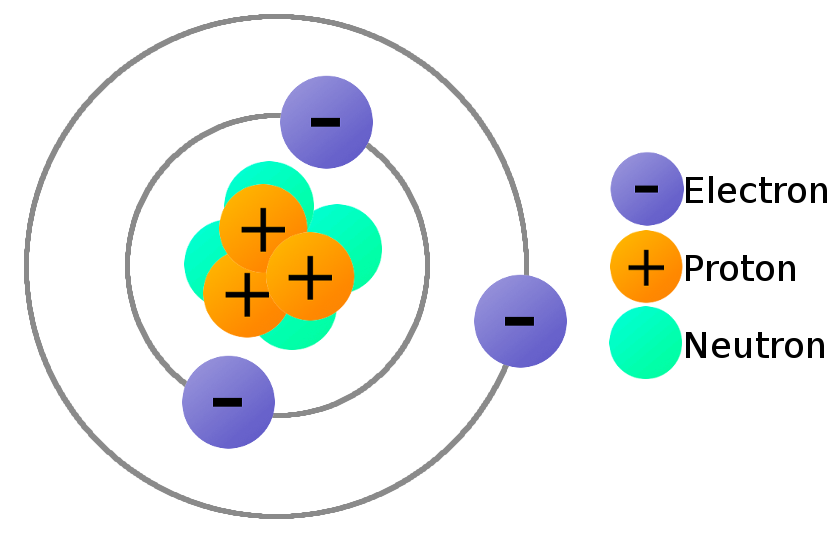
While classical tech relies on the presence of an electron’s charge to represent data, the next frontier—Quantum Computing—leverages other properties of the electron, such as its “spin” and its position in a state of superposition.
Qubits and Superposition
In a quantum system, a “qubit” can represent a 1, a 0, or both simultaneously. Tech leaders like IBM, IonQ, and Rigetti are experimenting with “trapped ion” and “superconducting” qubits. In these systems, the charge of the electron is used to trap the particle in an electromagnetic field, while its spin is manipulated to perform calculations that would take classical supercomputers millennia to solve.
The Challenge of Decoherence
The biggest tech challenge in quantum computing is “noise.” Because the electron’s charge is so small, it is incredibly sensitive to environmental interference. Even a slight change in temperature can cause “decoherence,” where the quantum state collapses. This has led to the development of massive dilution refrigerators—tech gadgets the size of a room that keep processors at near absolute zero—just to keep a few electrons in a stable state for computation.
Spintronics: The Future of Storage
A rising sub-field of tech known as “spintronics” (spin electronics) looks to use the intrinsic spin of the electron, rather than just its electrical charge, to store and process data. This could lead to memory chips (MRAM) that are non-volatile like a hard drive but fast like RAM, all while using a fraction of the energy required to move a traditional charge.
Digital Security and the Physics of the Electron
In an era of rising cyber threats, the physical properties of the electron are being used to create unhackable systems. Digital security is no longer just a software problem; it is a hardware and physics problem.
Hardware-Level Encryption
Modern secure enclaves in Apple’s A-series chips or Google’s Titan M2 chips use physical “True Random Number Generators” (TRNGs). These tools often rely on “shot noise”—the unpredictable fluctuations in the flow of electron charges—to create truly random keys. Unlike software-based randomness, which can be predicted with enough computing power, the movement of an individual electron’s charge is governed by quantum uncertainty, making it a perfect source for cryptographic security.
Quantum Key Distribution (QKD)
As we look toward a post-quantum world, “Quantum Key Distribution” is becoming a critical tech trend for digital security. QKD uses the properties of individual particles (like electrons or photons) to transmit encryption keys. Because the act of measuring a charge or a spin changes its state, any attempt by a hacker to intercept the “charge” would be immediately detectable. This represents the pinnacle of digital security, rooted entirely in particle physics.
Biometrics and Capacitance
Even the way we unlock our phones relies on the electron’s charge. Capacitive fingerprint sensors work by measuring the minute electrical charge held between your finger and the sensor plate. Your unique ridges and valleys change the “capacitance” (the ability to hold a charge) across the grid. This integration of human biology and electron physics is a testament to how deeply tech has integrated fundamental science into daily life.
The Future of the Electron in a Post-Silicon Era
As we reach the physical limits of silicon, the tech industry is scouting for new materials that can handle the electron’s charge more efficiently.
Graphene and Carbon Nanotubes
Graphene, a single layer of carbon atoms, allows electrons to move at speeds far exceeding those in silicon. If tech companies can solve the mass-production hurdles, graphene-based processors could lead to clock speeds in the terahertz range. Here, the “charge for an electron” isn’t the issue; it’s the “mobility”—how fast that charge can zip through the circuit without hitting an atom and turning into heat.
Neuromorphic Computing
Inspired by the human brain, neuromorphic chips aim to mimic the way neurons and synapses process information. Instead of a constant stream of electron charges, these chips use “spikes” of electricity only when needed. This “event-driven” architecture is the focus of companies like Intel (with their Loihi chip), aiming to create AI that consumes milliwatts instead of kilowatts.

Conclusion: The Tiny Unit that Built an Empire
When we ask “what is the charge for an electron,” the tech-centric answer is that it is the most valuable currency in the modern world. It is the fundamental unit of the digital age. From the microscopic gates in a 3nm processor to the massive battery arrays of a Tesla Megapack, our entire technological roadmap is defined by our ability to move, store, and manipulate this tiny negative charge.
As we move toward a future of AI, quantum supremacy, and sustainable energy, our mastery over the electron will remain the primary driver of innovation. We are no longer just building tools; we are orchestrating the movement of subatomic particles to simulate reality, secure our data, and power our lives. The charge of the electron is constant, but the technology we build upon it is infinitely evolving.
aViewFromTheCave is a participant in the Amazon Services LLC Associates Program, an affiliate advertising program designed to provide a means for sites to earn advertising fees by advertising and linking to Amazon.com. Amazon, the Amazon logo, AmazonSupply, and the AmazonSupply logo are trademarks of Amazon.com, Inc. or its affiliates. As an Amazon Associate we earn affiliate commissions from qualifying purchases.